

 русский
 Español
Self-lubricating bearings eliminate the need for external grease or oil by releasing lubricant from within the bearing material itself — making them ideal for maintenance-free, high-temperature, or contamination-sensitive environments. They are made from materials such as sintered bronze, PTFE composites, graphite-embedded metals, and engineered polymers, each suited to different load, speed, and temperature conditions.
What Are Self-Lubricating Bearings Made Of?
The performance of a self-lubricating bearing depends almost entirely on its base material. Different formulations serve radically different operating conditions.
| Material | Lubricant Mechanism | Max Temp (°C) | Typical Load Capacity |
|---|---|---|---|
| Sintered Bronze (Oil-Impregnated) | Oil stored in porous matrix; released under heat/pressure | 120°C | Medium |
| PTFE Composite | PTFE transfers a thin film to mating surface | 280°C | Low–Medium |
| Graphite-Embedded Bronze/Steel | Solid graphite plugs smear onto shaft during rotation | 400°C+ | High |
| Carbon-Graphite | Intrinsic graphite crystalline structure provides lubrication | 500°C+ | Low–Medium |
| Engineered Polymers (PEEK, Nylon, Acetal) | Low-friction polymer matrix; sometimes PTFE-filled | 250°C (PEEK) | Low–Medium |
| Bimetal (Steel-backed PTFE/Bronze) | PTFE or lead-bronze overlay on steel shell | 280°C | High |
Sintered Bronze (Oil-Impregnated)
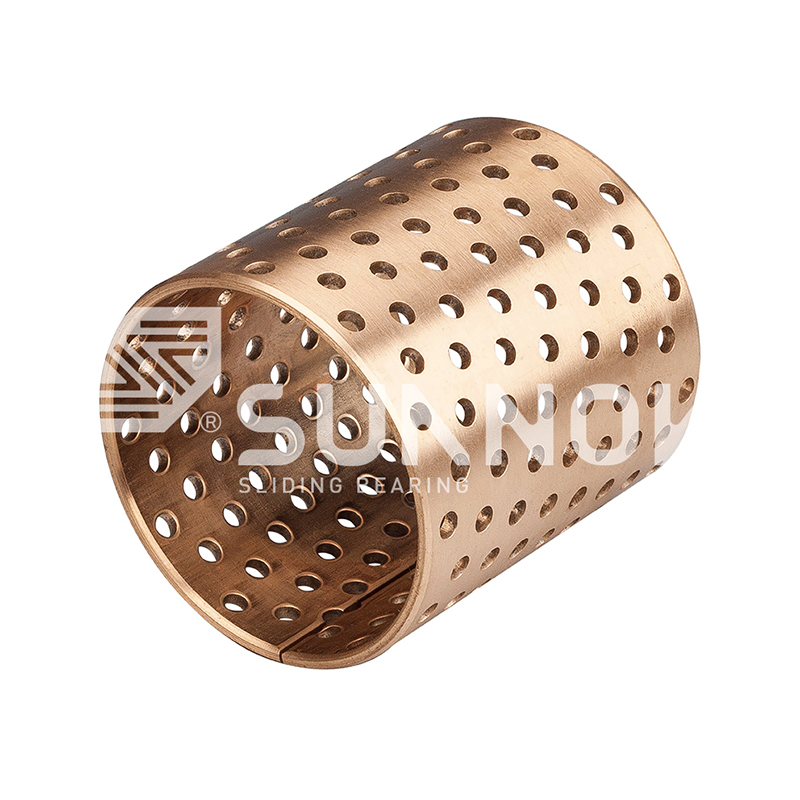
Also called "oilite" bearings, these are manufactured by compacting bronze powder and sintering it at high temperature — leaving a porous structure that is then vacuum-impregnated with oil. The oil content typically accounts for 15–30% of the bearing volume. Under shaft rotation, heat and pressure draw oil to the surface, forming a lubricating film. When the shaft stops, oil is drawn back into the pores by capillary action.
PTFE Composite Bearings
Polytetrafluoroethylene (PTFE) has one of the lowest friction coefficients of any solid material (μ ≈ 0.04–0.10). In bearing form, PTFE is typically mixed with fillers — glass fiber, bronze, carbon, or graphite — to improve its load capacity and wear resistance. As the shaft runs against the bearing, a thin PTFE transfer film forms on the mating surface, providing ongoing lubrication.
Graphite-Embedded Metal Bearings
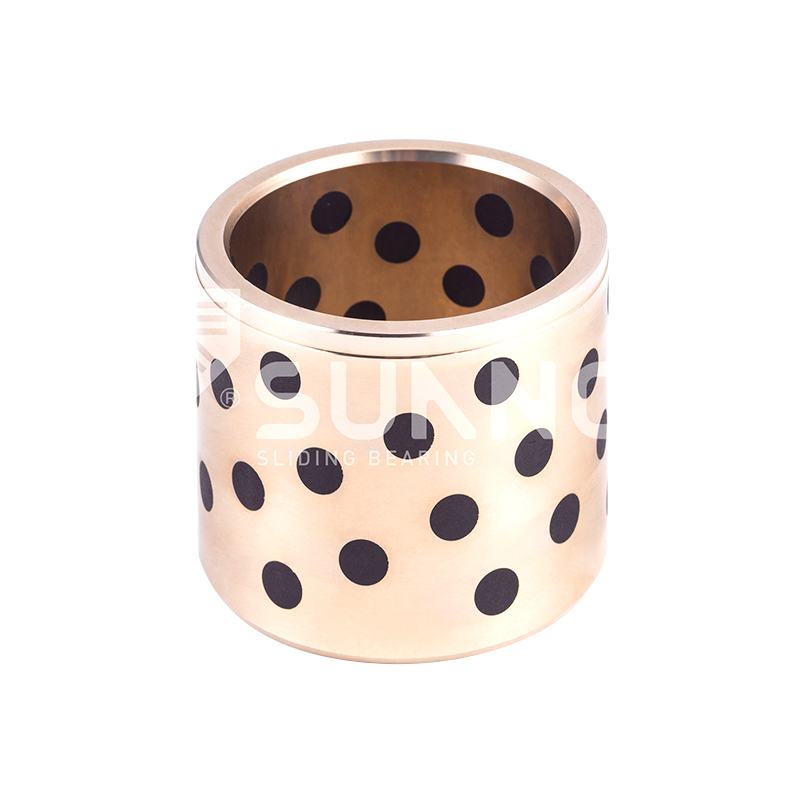
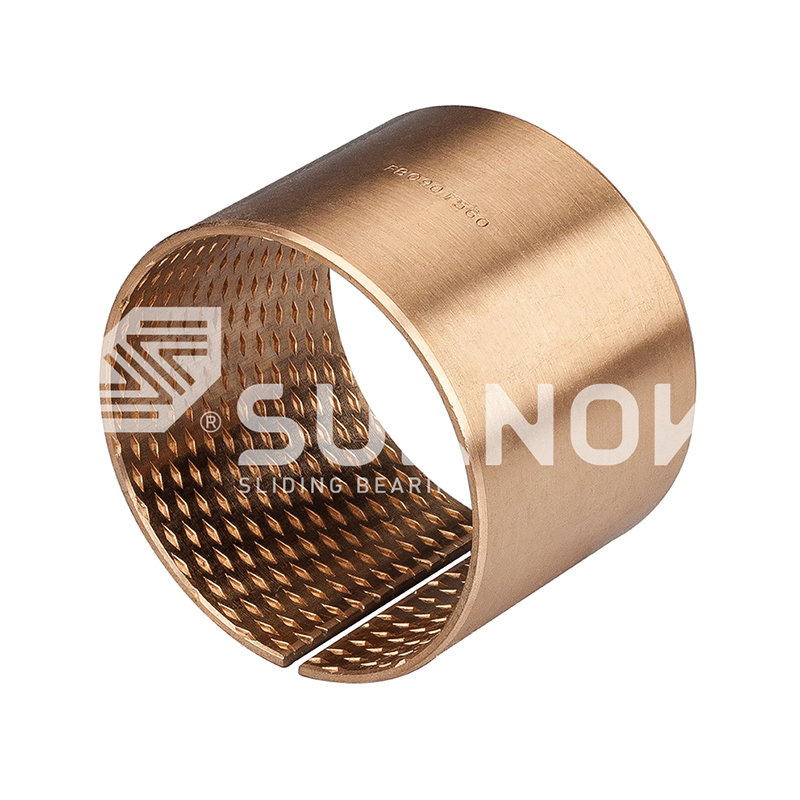
These bearings are cast or sintered bronze or steel with cylindrical graphite plugs pressed into precisely machined holes. The graphite plugs account for 20–35% of the bearing surface area. As the shaft rotates, graphite smears across the contact zone, acting as a solid lubricant. This makes them particularly suited to environments where oils would burn off, wash away, or contaminate products — such as ovens or food processing lines.
Carbon-Graphite
Pure carbon-graphite bearings rely on the layered crystalline structure of graphite, where atomic layers slide easily over one another. They are chemically inert, dimensionally stable, and effective in steam, acids, and temperatures exceeding 500°C — conditions that would destroy any lubricated metal bearing.
Engineered Polymer Bearings
Materials like PEEK (polyether ether ketone), acetal (POM), and nylon are inherently low-friction and can be compounded with PTFE or molybdenum disulfide (MoS₂) for even lower wear rates. They are lightweight, corrosion-resistant, and electrically non-conductive — key advantages in medical devices and electronics.
How Do Self-Lubricating Bearings Work?
The working principle varies by material type, but all self-lubricating bearings share a common goal: delivering lubricant to the contact interface without an external supply.
Fluid Film Release (Porous/Sintered Bearings)
In sintered bearings, lubrication is hydrodynamic. When the shaft begins rotating, frictional heat and mechanical pressure cause the stored oil to migrate from the pores to the bearing surface, forming a continuous fluid film. The shaft effectively "floats" on this film, preventing metal-to-metal contact. A well-designed sintered bronze bearing can operate for 3,000–10,000 hours without re-lubrication under moderate conditions (speeds below 3 m/s, loads below 7 MPa).
Solid Film Transfer (PTFE and Graphite Bearings)
Solid lubricant bearings work through tribological film transfer. In the first few cycles of operation, a microscopic layer of PTFE or graphite is deposited onto the mating shaft surface. This transfer film — typically 0.1–1 μm thick — is highly adherent and acts as a permanent low-friction interface. Friction coefficients as low as 0.03–0.08 are achievable after the run-in period.
Boundary Lubrication (Bimetal Bearings)
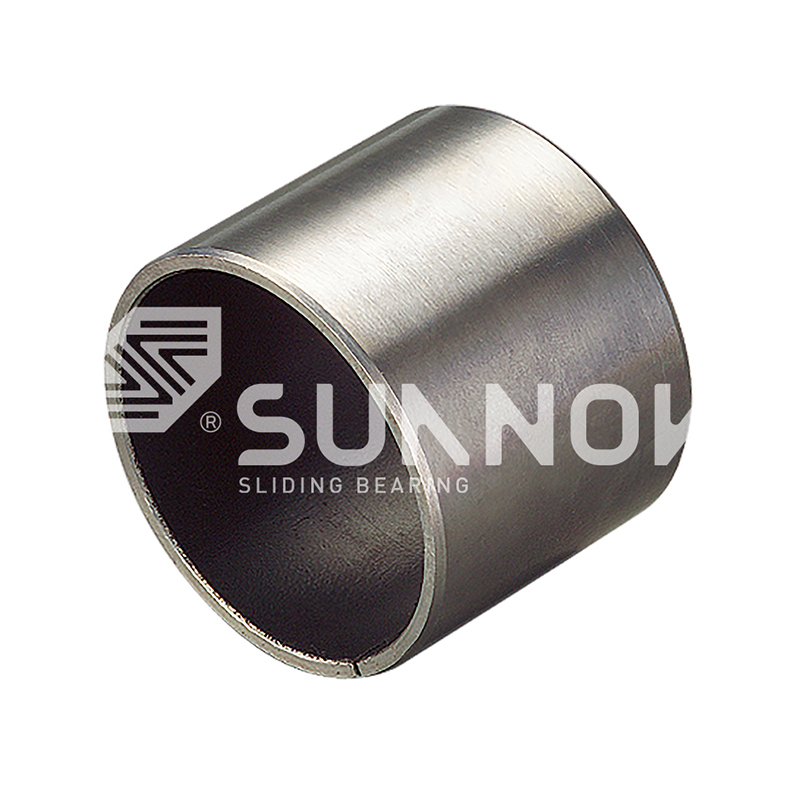
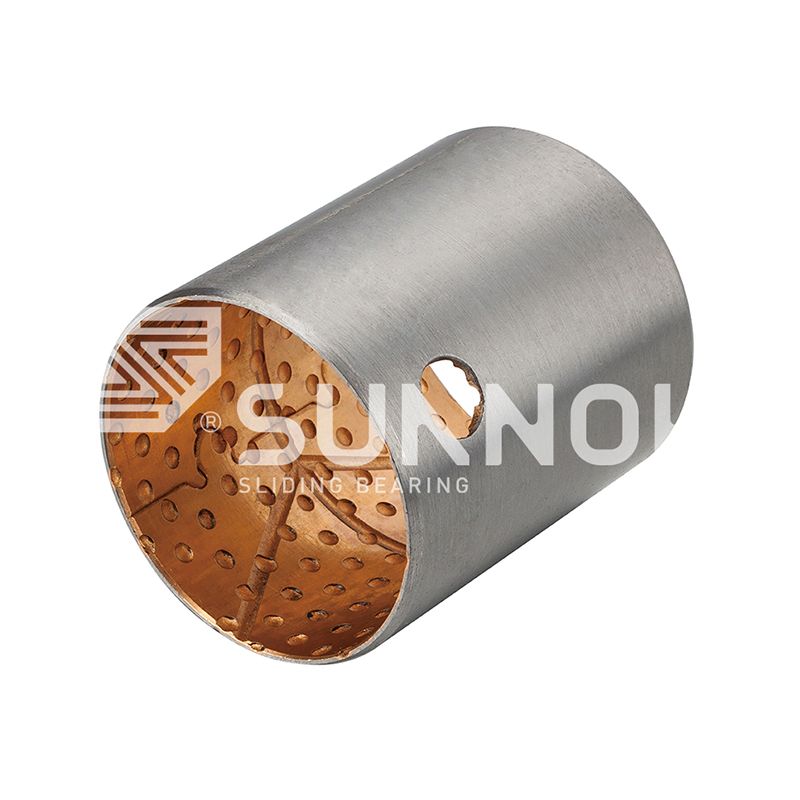
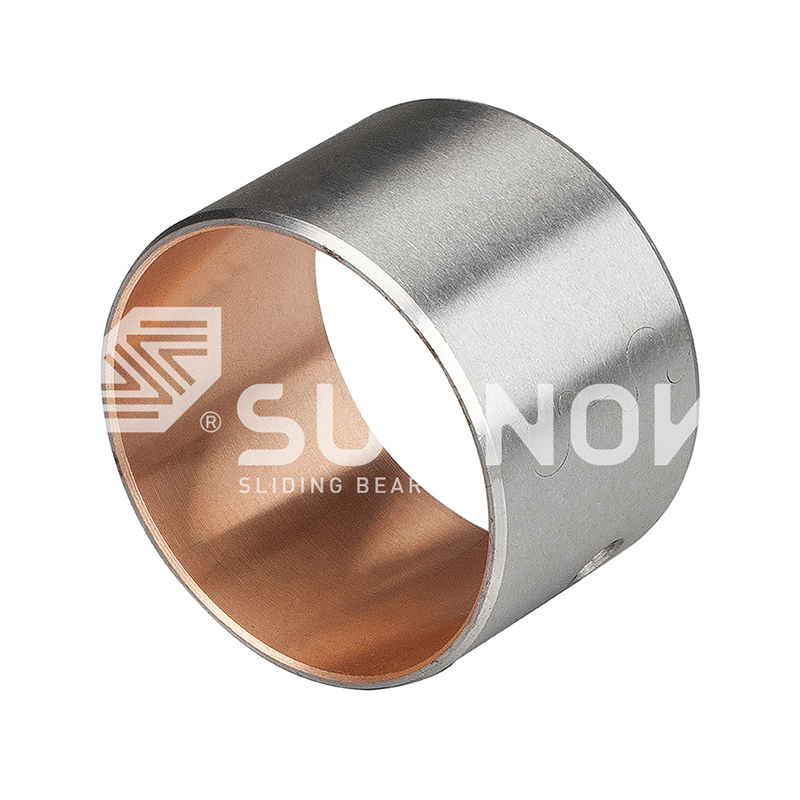
Bimetal bearings, such as DU-type (steel backing + sintered bronze interlayer + PTFE/lead surface), operate at the boundary between fluid and solid lubrication. The PTFE surface layer handles low-speed, high-load conditions where a full fluid film cannot form. This makes them among the highest load-capacity self-lubricating bearings available — capable of handling dynamic loads up to 250 MPa in some DU-type designs.
Which Material Is Best for Self-Lubricating Bearings?
There is no single "best" material — the right choice depends on load, speed, temperature, environment, and shaft material. Use the following criteria to narrow your selection:
- High speed, moderate load, clean environment: Sintered bronze (oil-impregnated) is the standard choice. It is cost-effective, widely available in ISO and ANSI standard sizes, and performs well in electric motors, pumps, and office equipment.
- High load, low speed, oscillating or intermittent motion: Bimetal DU-type bearings or graphite-embedded bronze are optimal. Oscillating motion (as in vehicle suspension or construction equipment linkages) prevents hydrodynamic film formation, so solid lubricants are essential.
- High temperature (>200°C): Graphite-embedded metal bearings or carbon-graphite are required. Oilite and polymer bearings degrade above 120–150°C.
- Chemical or corrosive environments: PTFE composites or carbon-graphite are best. They are inert to most acids, alkalis, and solvents.
- Food, medical, or cleanroom applications: PTFE-based or FDA-compliant polymer bearings eliminate contamination risk from oils or greases.
- Lightweight or non-conductive applications: Engineered polymers (PEEK, acetal) reduce bearing mass by up to 80% compared to bronze equivalents and provide electrical isolation.
For most general industrial applications where cost, load, and moderate speed are the primary factors, sintered bronze remains the most widely used self-lubricating bearing material globally. For demanding applications requiring zero maintenance and high reliability, bimetal PTFE-lined bearings (DX or DU series) are the engineering benchmark.
Where Are Self-Lubricating Bearings Used?
Their maintenance-free nature and versatility make self-lubricating bearings standard components across a broad range of industries.
Automotive and Transportation
Bimetal and PTFE-composite bearings are used extensively in vehicle suspension systems, steering linkages, door hinges, seat adjusters, and transmission components. These locations are difficult to re-grease in service and often exposed to water, mud, and wide temperature swings (-40°C to +150°C). Major automotive suppliers specify DU-type bearings for suspension ball joints and shock absorber mounts due to their ability to handle oscillating loads without lubricant.
Aerospace and Defense
Aircraft control surfaces, landing gear mechanisms, and engine accessories use PTFE-composite or carbon-graphite bearings. Weight saving is critical — a polymer bearing in a flight control rod can save 60–70% of the mass of a lubricated steel equivalent. The FAA and MIL-SPEC standards govern bearing performance in many of these applications.
Food and Beverage Processing
Conveyor systems, packaging machines, and bottling lines require bearings that can withstand washdowns with water or caustic cleaners and cannot risk oil contamination. Graphite-embedded stainless steel bearings and FDA-approved PTFE bearings are the dominant choices, with operating temperatures often reaching 120–180°C in baking or sterilization tunnels.
Hydroelectric and Heavy Industry
Large carbon-graphite bearings are used in water turbines and submersible pumps, where the water itself acts as a supplementary lubricant alongside the graphite. Sizes up to 500 mm diameter are manufactured for turbine guide bearings, and service intervals of 20+ years are achievable.
Construction and Mining Equipment
Excavator arms, bulldozer pins, crane slewing rings, and drill rig pivot points operate under extreme loads with slow oscillating motion — exactly the conditions where grease-lubricated bearings fail fastest (grease is ejected under high contact stress). Graphite-embedded bronze or bimetal bearings are standard in these pivot points, with some designs rated for contact pressures exceeding 100 MPa.
Medical Devices and Laboratory Equipment
MRI machines, surgical robots, and diagnostic equipment require bearings that are non-magnetic, non-conductive, sterilizable, and completely oil-free. PEEK and PTFE-composite bearings meet all these requirements and are used in linear guides, scanning mechanisms, and pump heads across this sector.
Consumer Electronics and Office Equipment
Printers, scanners, computer fans, and disk drives use small sintered bronze or polymer bearings that must operate quietly and reliably for 5,000–15,000 hours without any user maintenance. The low cost and small form factor of these bearings (often 3–10 mm bore diameter) make sintered bronze the dominant choice at high production volumes.