


 русский
 Español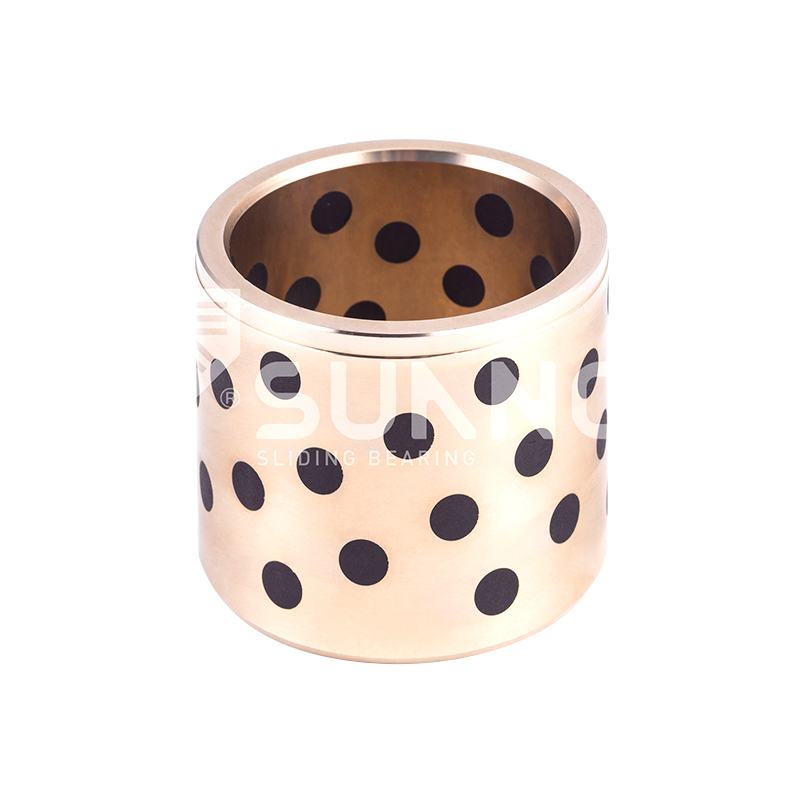

-
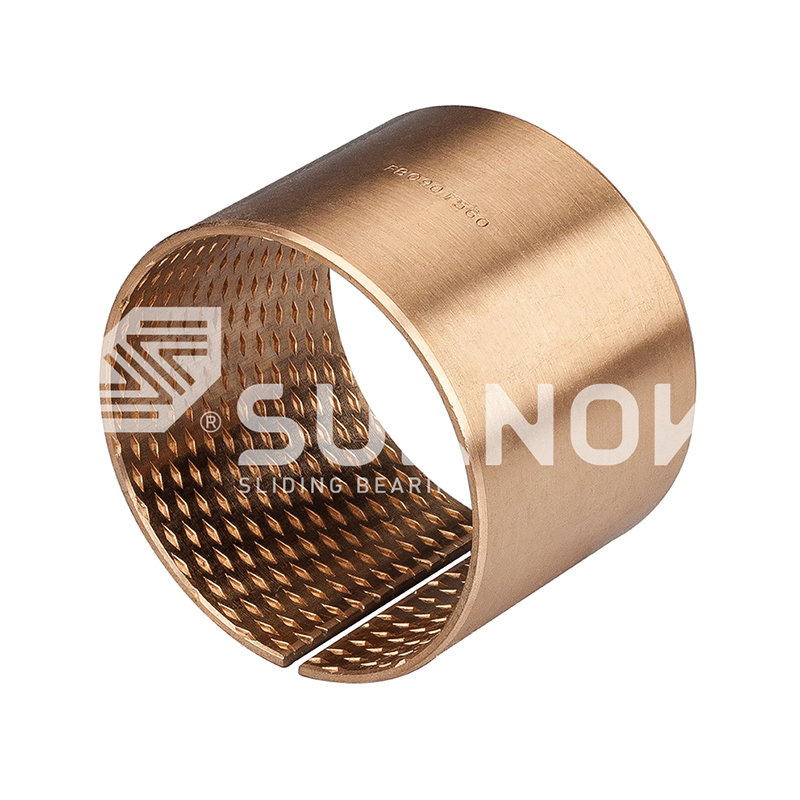 Industry News- Factors Affecting Bronze Bushing Service Life: Materi...
A bronze bushing that fails after six weeks and one from the same production batch that keeps running for six years can be identical in all...
-
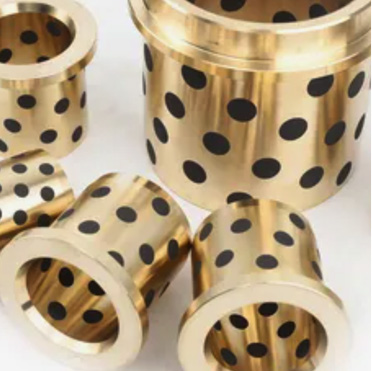 Industry News- Self Lubricating Bronze Bushing Manufacturing: Castin...
An engineer pulls a failed bushing from a press link: the bore is scored, the outer shell shows galling tracks, and the lubrication line wa...
-
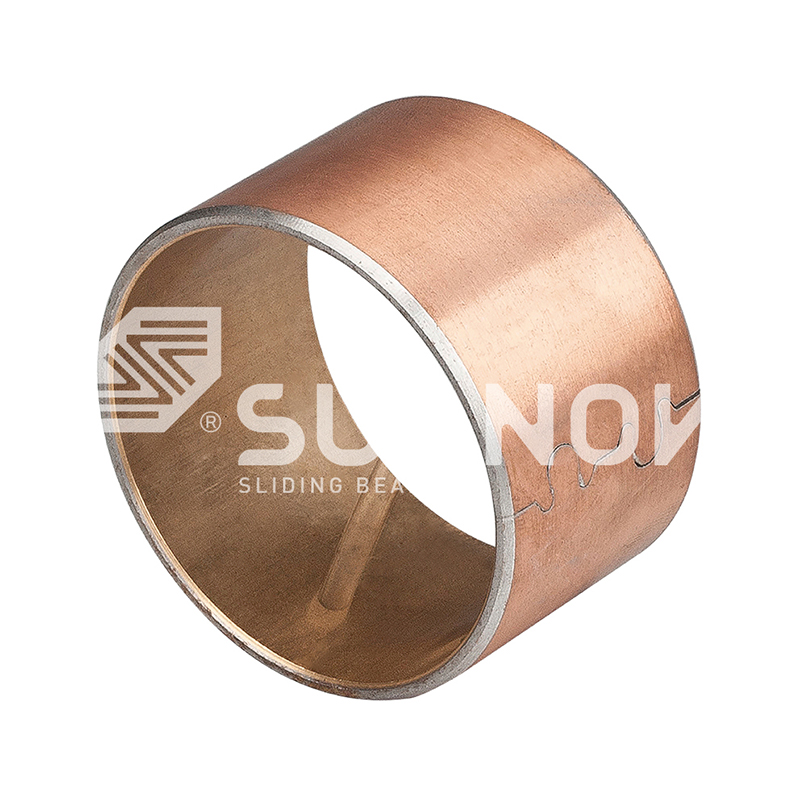 Industry News- Self-Lubricating vs Traditional Lubricated Bearings
A self-lubricating bearing and a traditional grease-lubricated bearing can carry the same radial load rating on paper, yet perform complete...
-
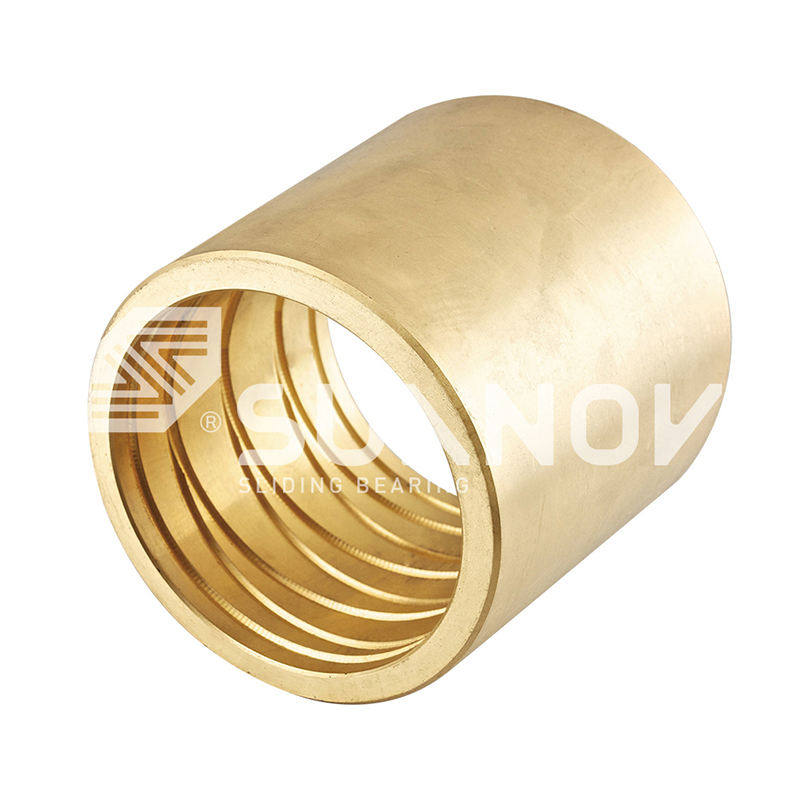 Industry News- Bronze Bushings vs Steel Bushings: Key Differences Ex...
Bronze Bushings vs Steel Bushings: The Engineering Trade-Off When a maintenance engineer opens a machine after a bushing failure, the first...
-
 Industry News- How to Choose a Reliable Self-Lubricating Bronze Bush...
A purchasing engineer comparing six quotes for a nominally identical bronze bushing once saw the price spread reach 42 percent. The expensi...
Solid-Lubricating Bronze Bearing Manufacturers
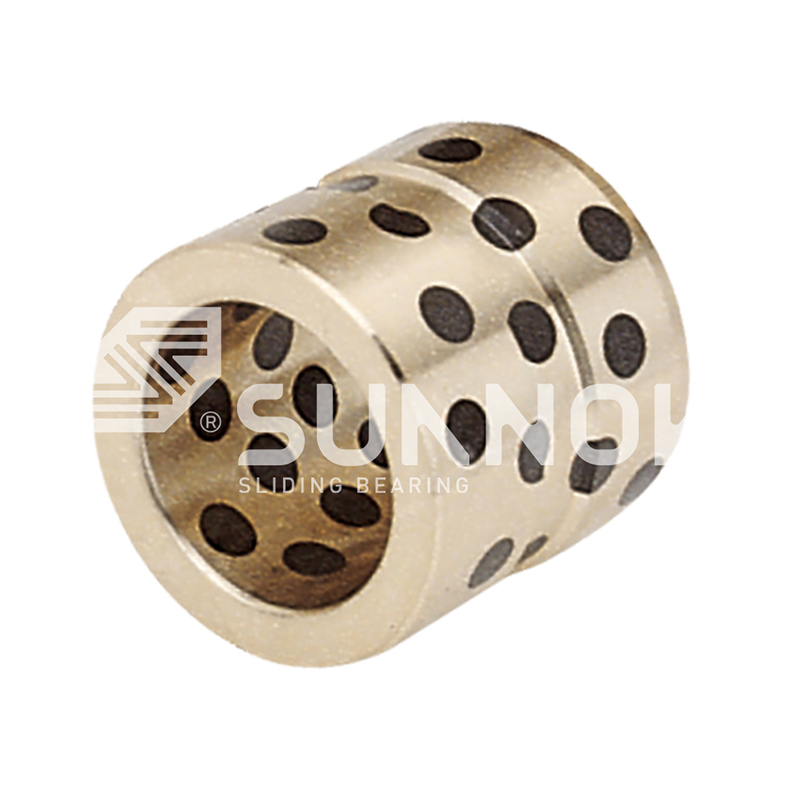
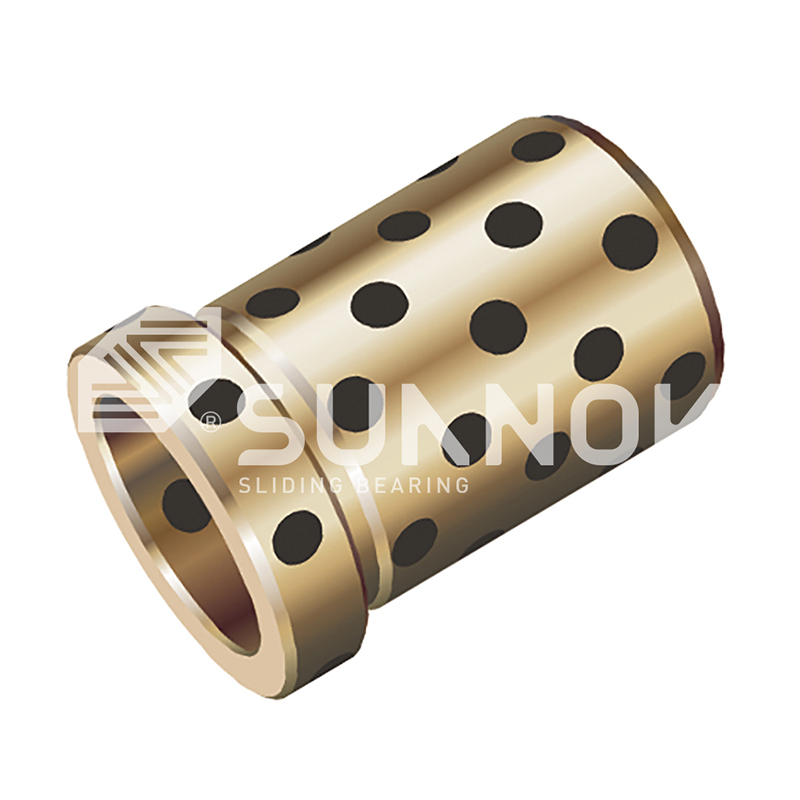
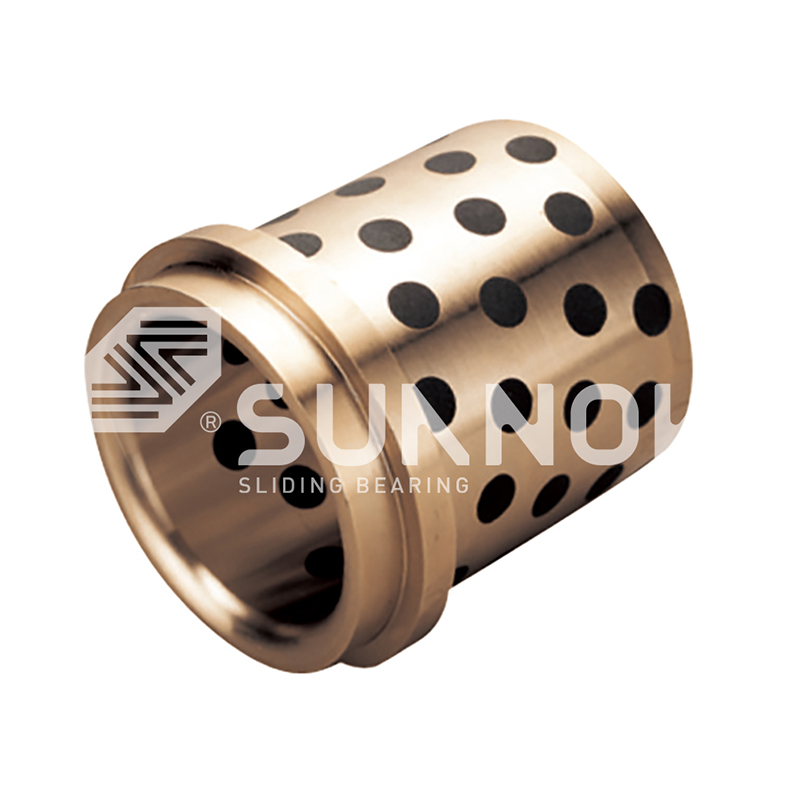
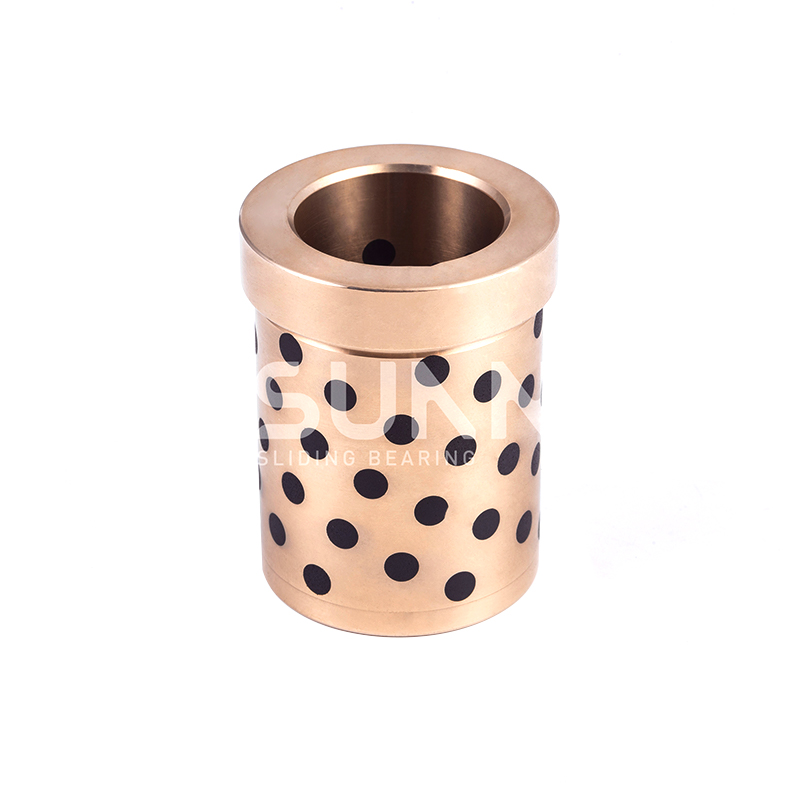
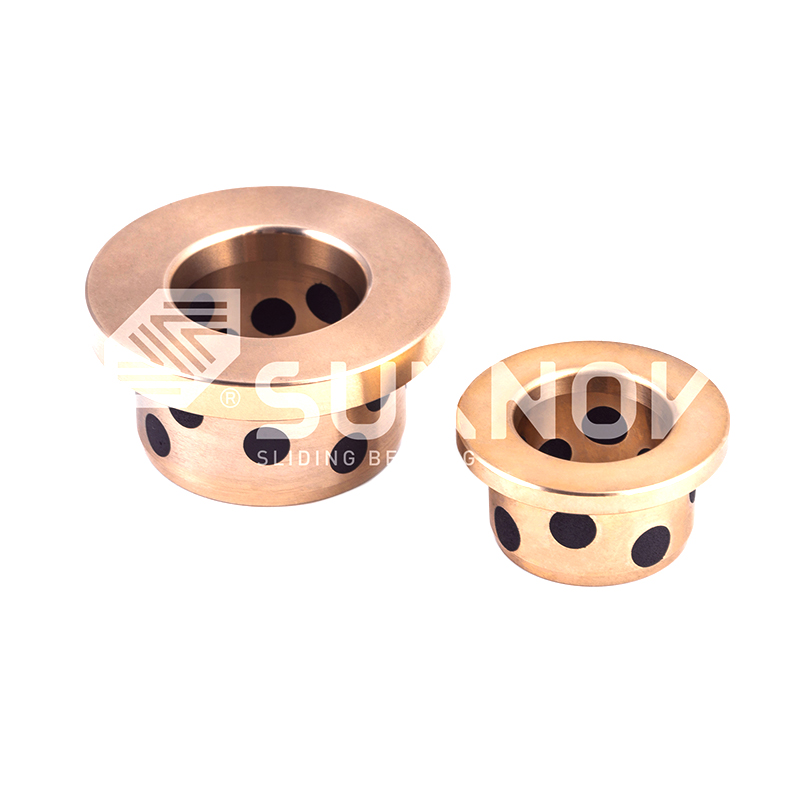
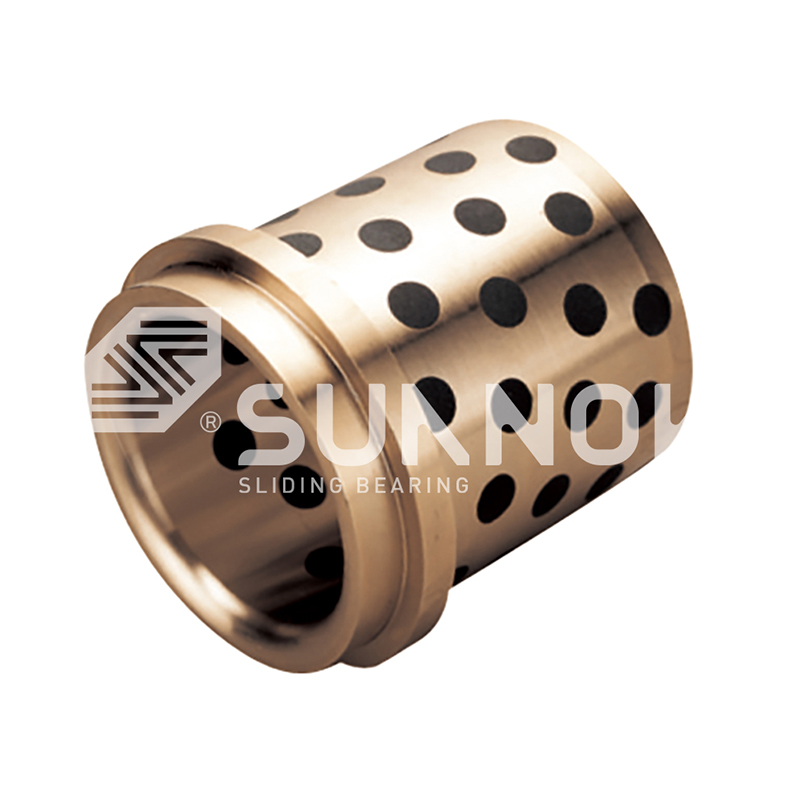
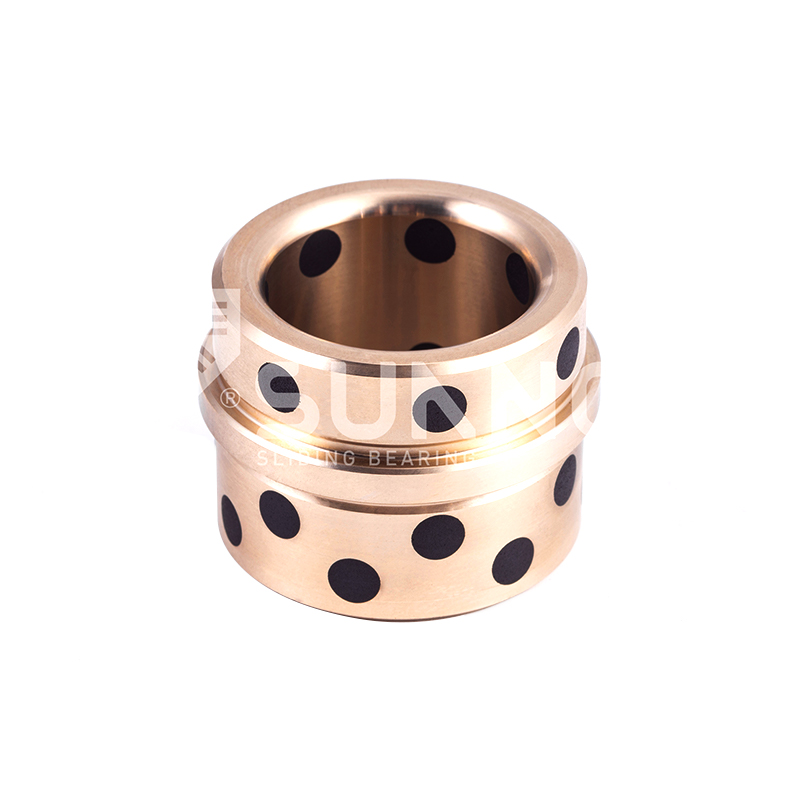
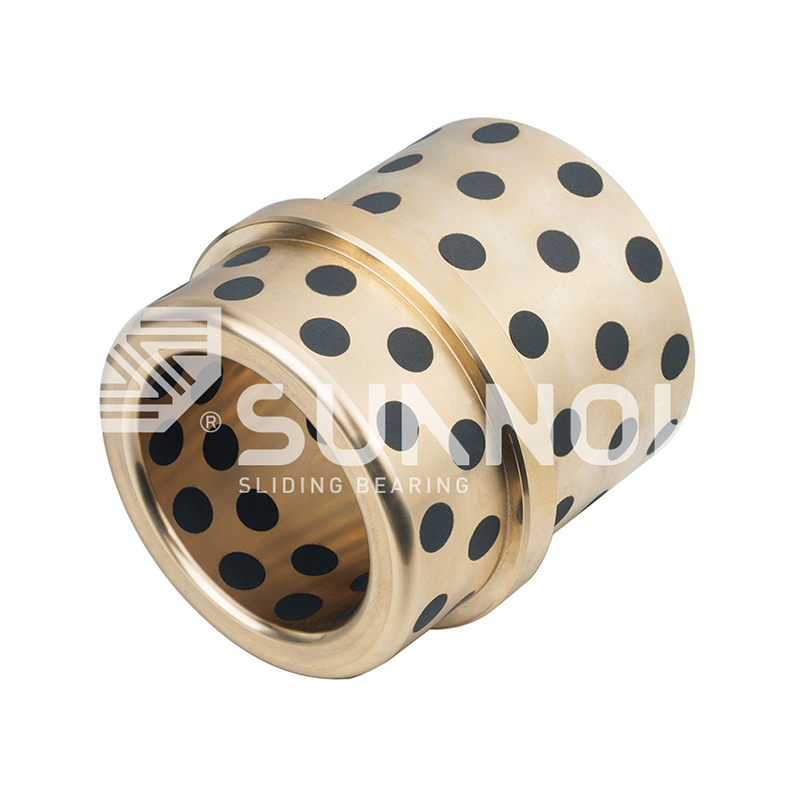
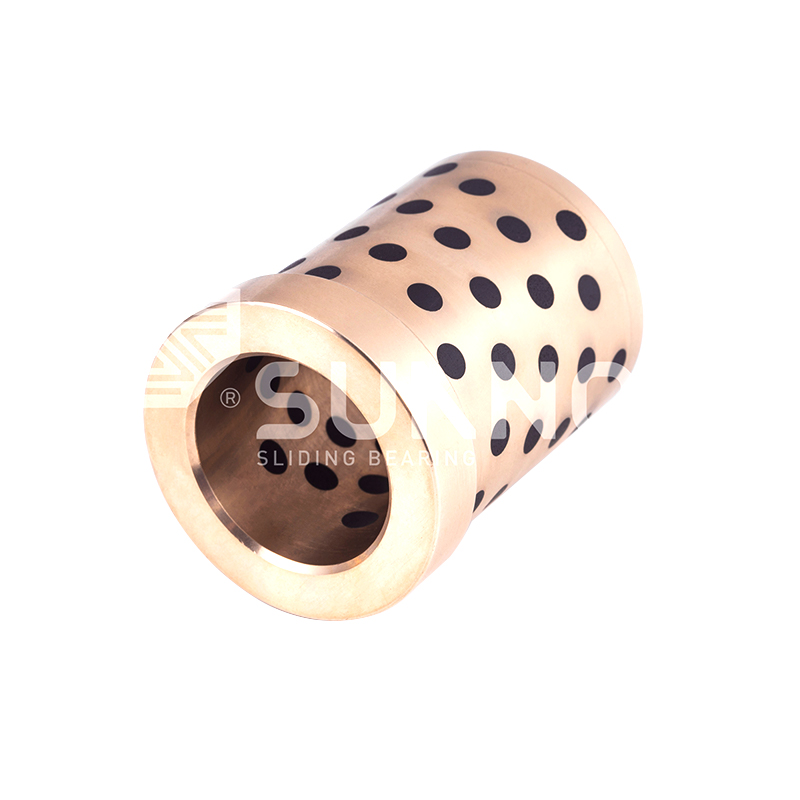
JDB Solid inlaid lubricated bearings are manufactured using high-strength copper alloy as the base material. Based on specific operating conditions, the working surface is precision-machined with holes, which are then filled with a precisely proportioned blend of solid lubricants.
The high-strength copper alloy ensures exceptional load-bearing capacity, while the embedded solid lubricants create low-friction mating surfaces.
Under dry friction conditions, these bearings feature a pre-lubricating film on their surface. This design enables rapid transfer of solid lubricant to the opposing component, promptly establishing an effective solid lubrication layer.
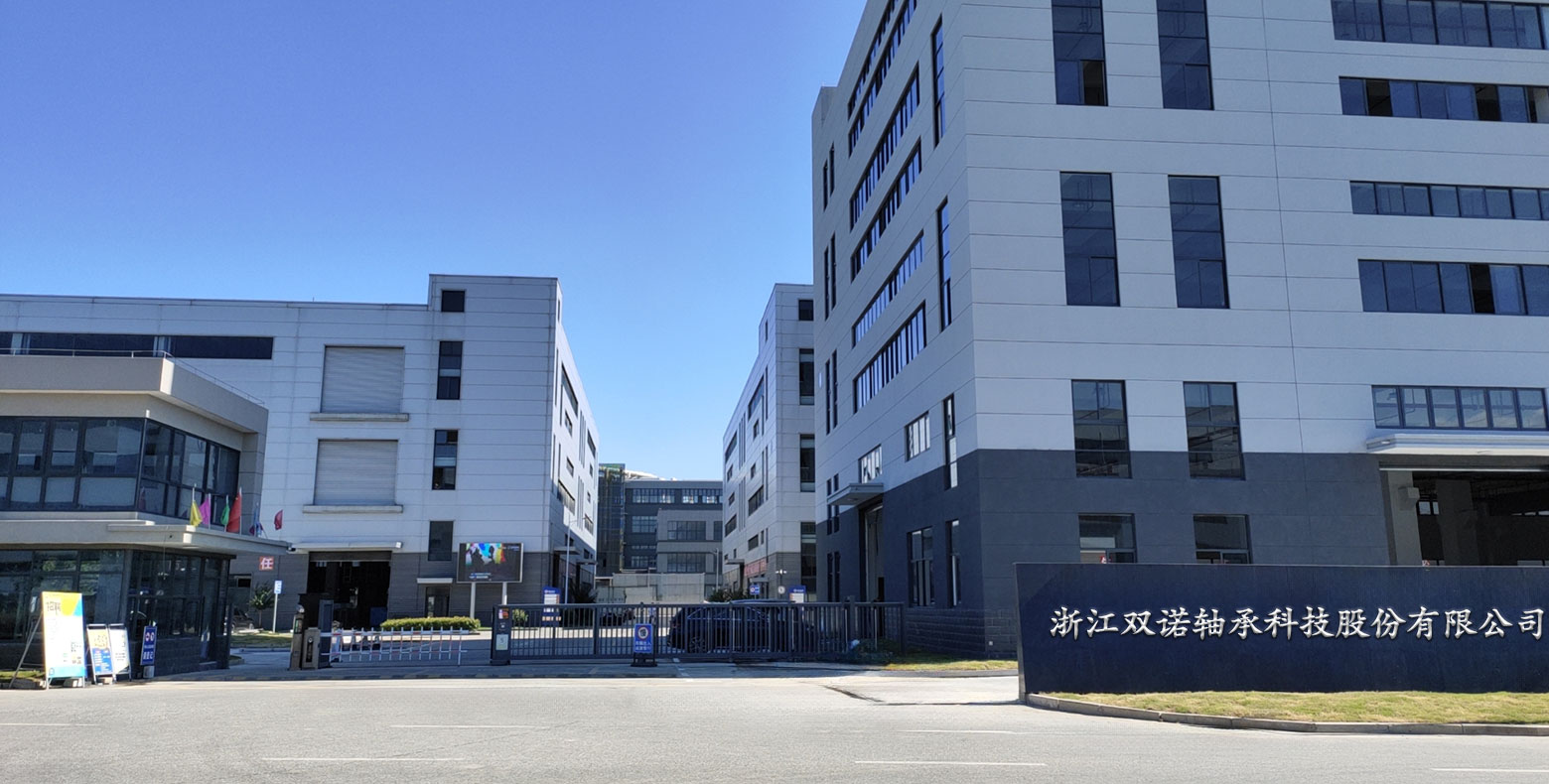

Zhejiang Shuangnuo Bearing Technology Co., Ltd.
Zhejiang Shuangnuo Bearing Technology Co., Ltd. is
China Solid-Lubricating Bronze Bearing Manufacturers and
Custom ODM/OEM Solid-Lubricating Bronze Bearing Factory, we are a manufacturer specializing in producing various self-lubricating copper alloy products using centrifugal casting, continuous casting, metal mold casting, and other processes. Its main products include brass, aluminum bronze, tin bronze, and others produced according to national standard grades. It processes and produces various solid inlaid self-lubricating bearing products on this basis
. At the same time, it uses sintering technology to produce bimetallic products and many other types of products. Since its establishment nearly 10 years ago, the company has focused on the research development, and production of various new self-lubricating bearings.
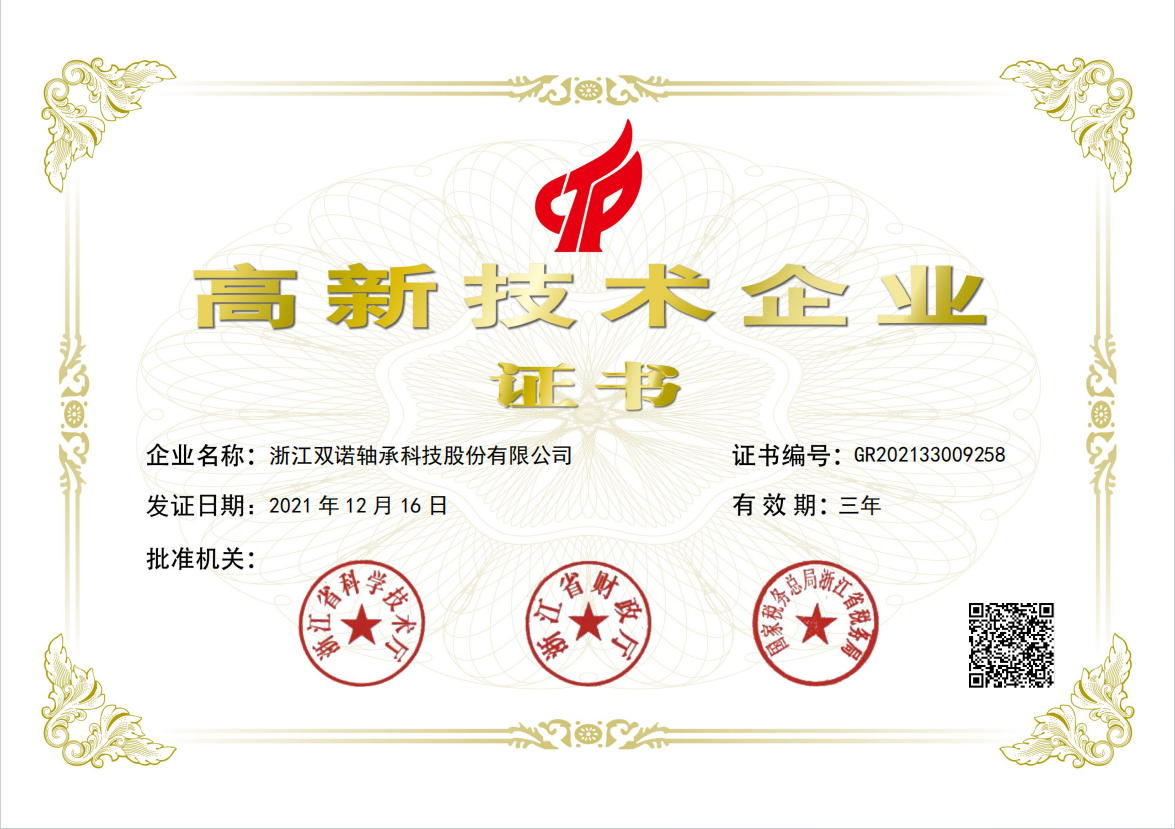
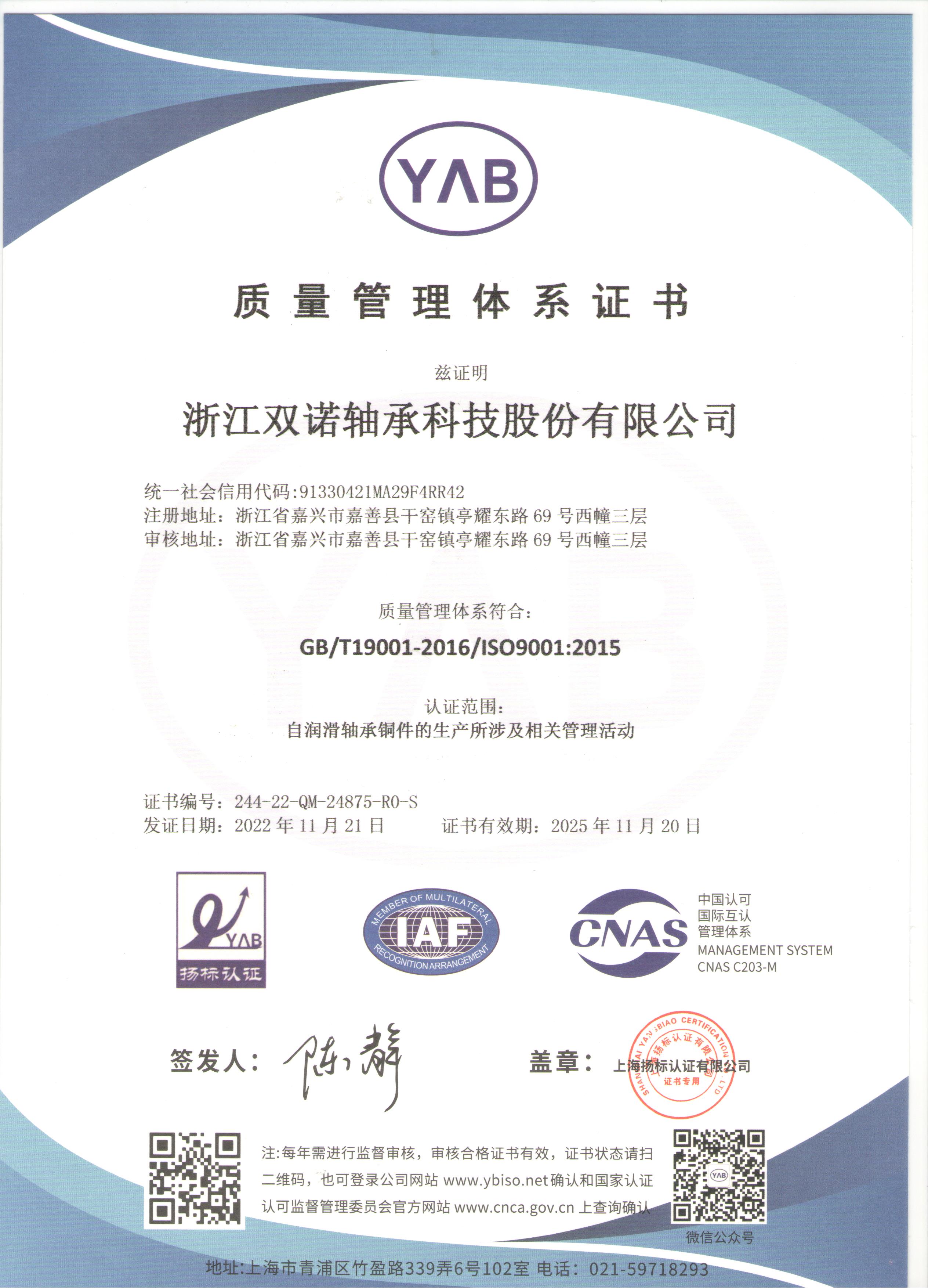
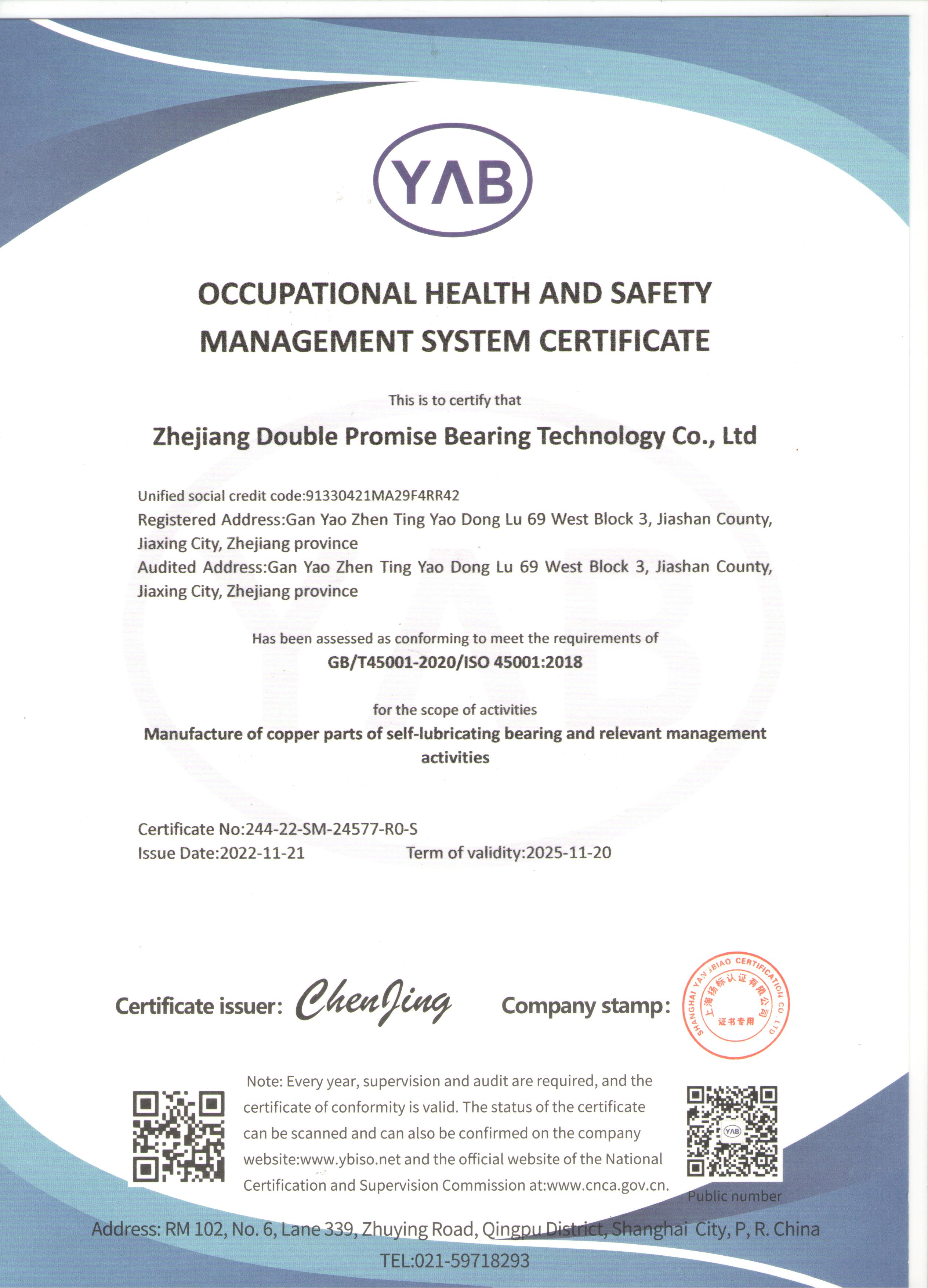
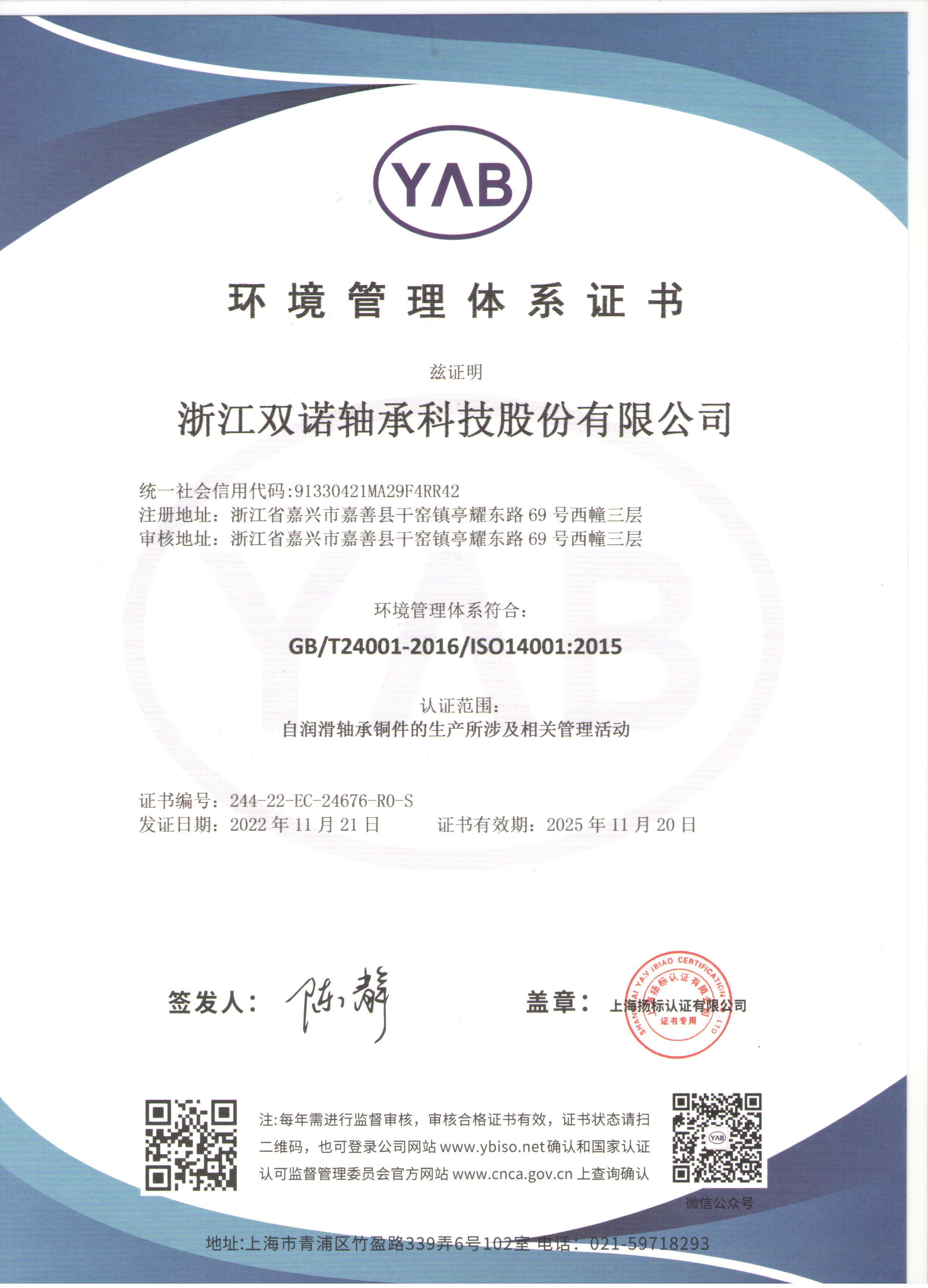
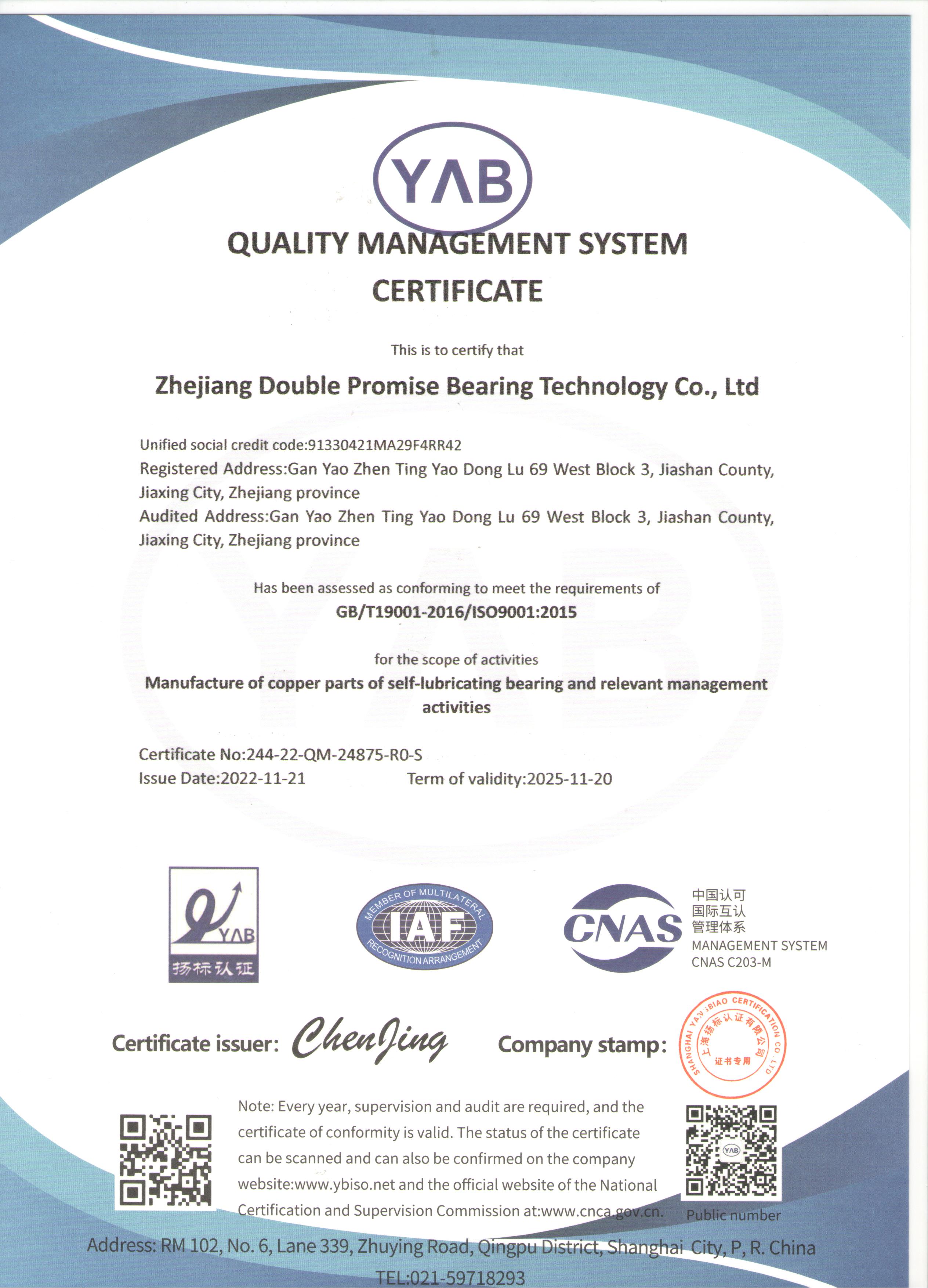
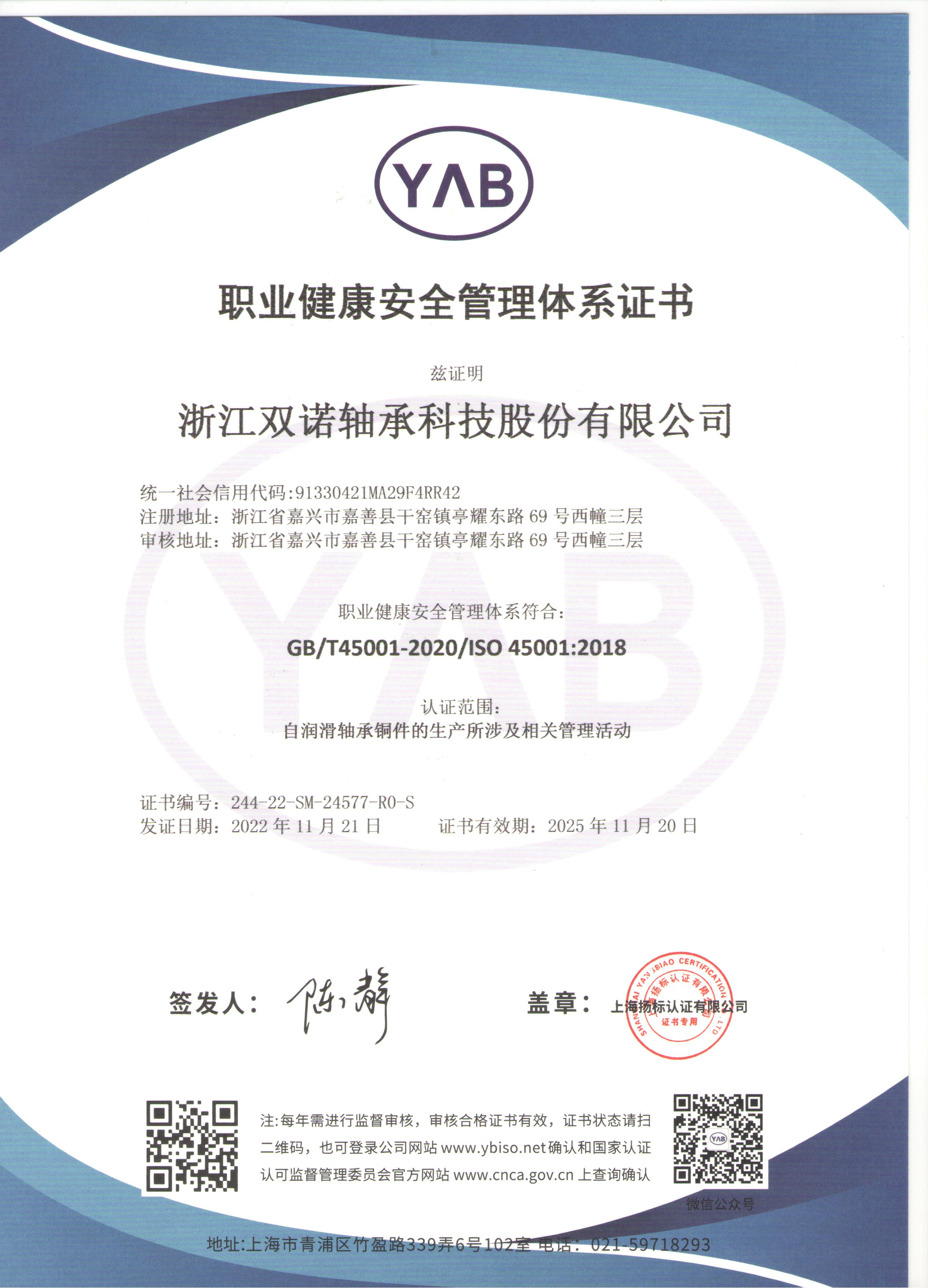
In the process of product production, our company has always insisted on independent casting production of raw materials to ensure the quality of products from the source; during the casting process, the whole process is monitored, and the finished product is tested by spectrometer three times before, in and after the furnace to confirm the material composition of the product. The national testing agency is regularly commissioned to test the material composition and mechanical properties of the product, and authoritative test reports can be provided to customers in need; the company implements integrated production from material to finished product processing and has more than 80 sets of advanced CNC machine tools, CNC lathes, machining centers, and other major equipment. The strong production capacity ensures that the material production is organized for customers for the first time, shortening the production cycle.
-
0+Establishment
Founded in 2014, Shuangnuo has 10 years of experience in the industry.
-
0+Advanced Equipment
Strong production capacity ensures that we can organize material production for customers as soon as possible and shorten the production cycle.
-
0+Happy Clients
There are more than 5,000 cooperative customers around the world.
Our News //
News & Insights.
Our Honor //
Honor.
JDB Solid-lubricating Bearing Industry knowledge
JDB Solid-lubricating Bearing manufacturer
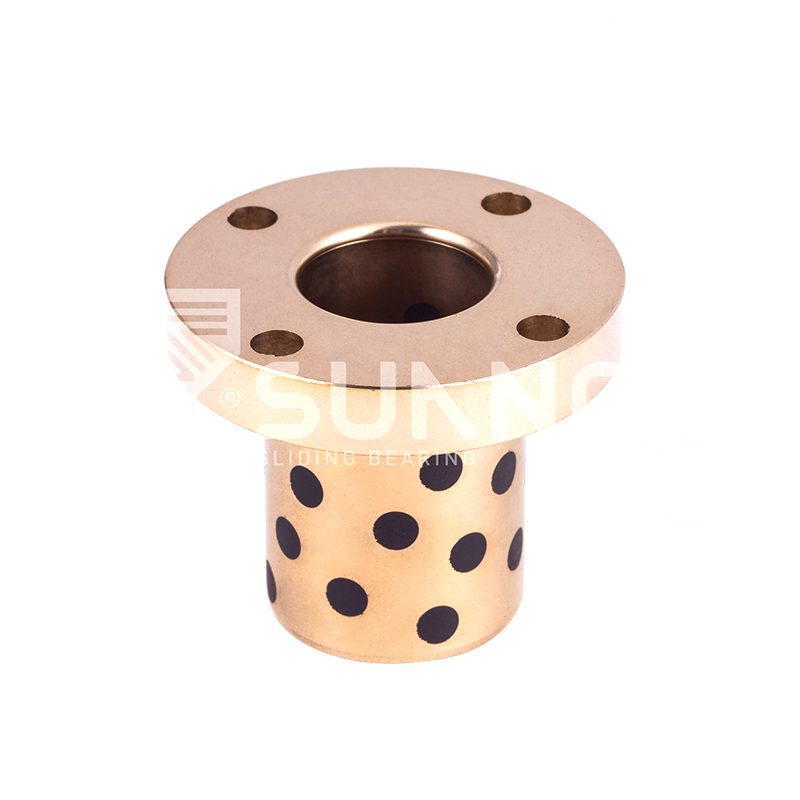
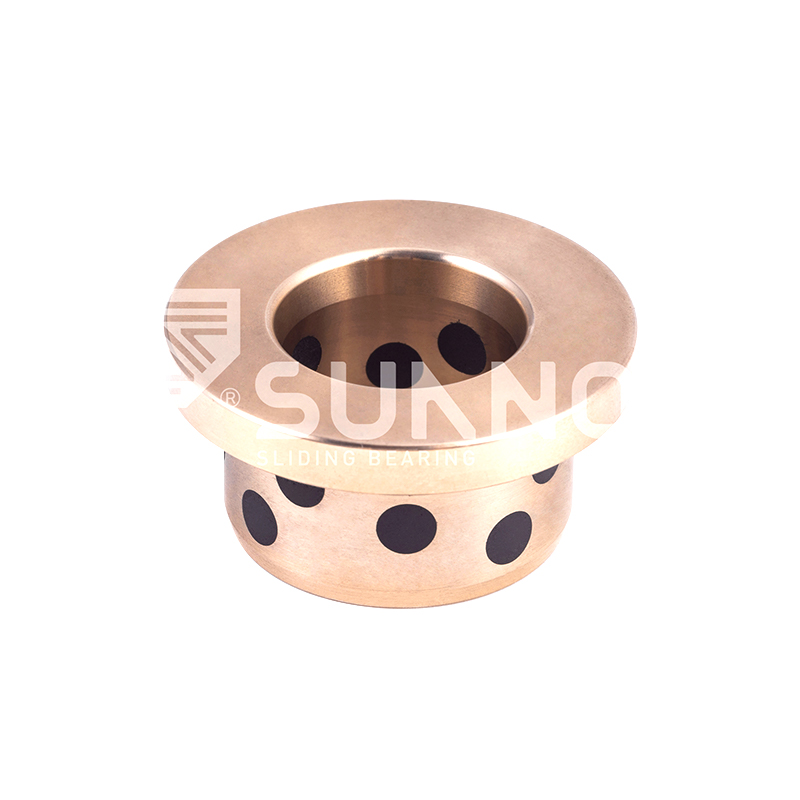
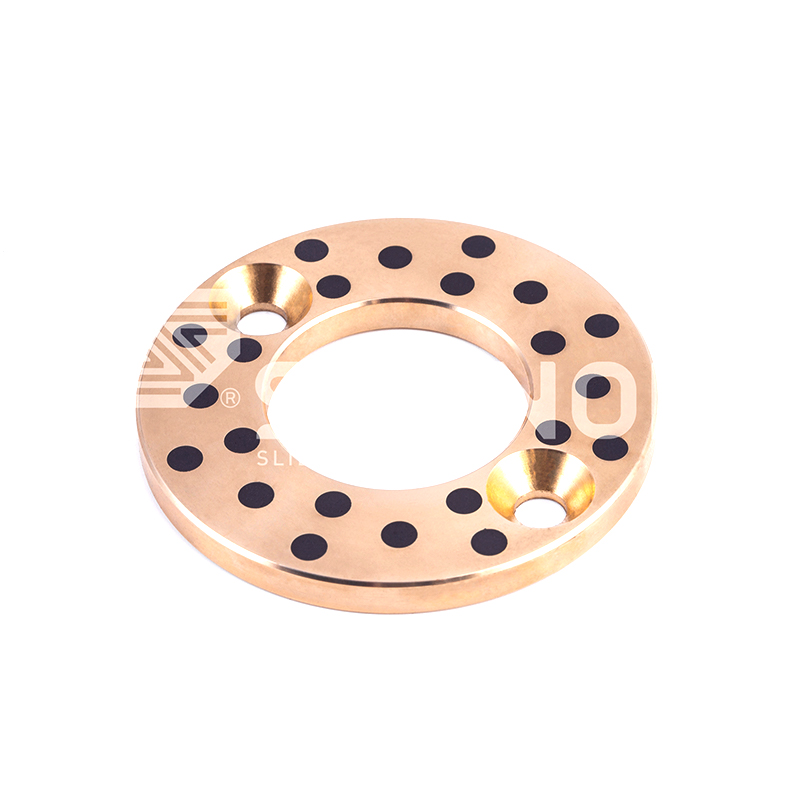
Zhejiang Shuangnuo Bearing Technology Co., Ltd. is a specialized JDB Solid-lubricating Bearing manufacturer and supplier in China, producing solid inlaid self-lubricating bearings from high-strength copper alloys. Our range covers cylindrical, flanged, thrust washer, and guide bearing configurations, engineered for applications where external lubrication is impractical or undesirable. We control the entire process from raw material casting to finished machining, ensuring consistent material properties and precise dimensions for demanding industrial projects.
With nearly a decade of focused development, we have built a factory that integrates centrifugal casting, continuous casting, and metal mold casting with over 80 CNC machines and machining centers. This vertical integration allows us to offer custom ODM/OEM solutions, short production cycles, and reliable quality assurance backed by in-house spectrometer testing and third-party verification.
Product Range and Application Fit
Our JDB solid-lubricating bearing line includes several series, each tailored to specific load, speed, and environmental conditions. The table below summarizes the main types and their typical uses:
| Series | Base Material | Key Features | Typical Applications |
|---|---|---|---|
| JDB650 | CuZn24Al6 brass | High load, corrosion resistance, -40°C to 200°C | Agricultural machinery, construction equipment, automotive linkages |
| JFB650 | CuSn8 bronze | Flanged design, axial location, ISO 3547-2 metric | Hydraulic cylinders, linear actuators, mold clamping units |
| JFBB | CuSn7Pb6Zn3 bronze | Graphite plugs on bore and flange, high wear resistance | Heavy machinery, material handling, industrial automation |
| JTW | Bronze | Thrust washer, handles axial loads | Rotary tables, thrust applications |
| JGB/JGBF | High-temp brass | Ejector guide bearings, high temperature resistance | Injection molds, die casting |
For more details on specific series, explore our Product catalog, including related categories like JDB-600 Casting Bronze Bearing and SF-1 Oilless Bearing.
Engineering and Manufacturing Approach
We produce JDB bearings using high-strength copper alloys such as brass, aluminum bronze, and tin bronze, selected based on load, speed, and environmental requirements. The working surface is precision-machined with holes that are filled with a precisely proportioned blend of solid lubricants, typically graphite and MoS₂. Under dry friction, a pre-lubricating film forms, enabling rapid transfer of lubricant to the mating shaft.
Our manufacturing process begins with in-house casting of raw materials, which we monitor throughout. Each batch undergoes three spectrometer tests—before, during, and after the furnace—to confirm material composition. We also commission national testing agencies for periodic verification of mechanical properties, and we can provide authoritative test reports upon request.
With integrated production from material to finished part, we maintain tight control over tolerances. Standard inner diameter tolerance is H8 per ISO 286-2, with H7 or H9 available on request. For flanged series, flange perpendicularity is held within 0.04 mm, and surface finish is typically Ra 0.8 micrometers or better.
Critical Specifications and Performance Data
When selecting a JDB bearing for your application, consider the following parameters that we use to validate our designs:
- Load capacity: Static loads up to 250 N/mm² (JDB650), dynamic loads up to 120 N/mm². Flanged types handle axial loads up to 40 N/mm² on the flange face.
- Sliding speed: Continuous operation up to 0.5 m/s (JDB650) or 0.4 m/s (JFB650); intermittent speeds up to 1.0 m/s.
- PV limit: Up to 3.0 N/mm²·m/s with grease lubrication, 1.5 N/mm²·m/s dry (JDB650).
- Temperature range: Typically -40°C to +200°C, with short-term excursions up to 250°C under reduced load.
- Friction coefficient: 0.06 to 0.16 depending on load and surface finish.
- Wear rate: ≤0.06 mm per 100 km under standard test conditions.
These values are based on standard test conditions; we can adjust material and lubricant formulations for specific operating environments.
Configuration Options and Customization
We offer a wide range of standard sizes in metric and inch series, but we also specialize in custom configurations. You can specify:
- Dimensions: Inner diameters from 6 mm to 120 mm, lengths and flange diameters per your drawing.
- Lubricant pattern: 45° or 90° insert patterns, with coverage typically 20-28% of the sliding surface.
- Base material: Brass, aluminum bronze, tin bronze, or bimetallic options for higher loads.
- Features: Flanges, thrust washers, oil grooves, mounting holes, or special chamfers.
Our engineering team works with you to select the right material and design, ensuring optimal performance and service life.
Quality Assurance and Testing
Quality is built into every step. We perform spectrometer analysis on every melt, and we regularly send samples to national laboratories for independent verification of composition and mechanical properties. Our finished bearings are inspected for dimensional accuracy, surface finish, and lubricant distribution. We can provide material certificates and test reports with each shipment.
Our factory is equipped with advanced CNC lathes and machining centers, allowing us to achieve tight tolerances and consistent quality even for large production runs. We also support first-article inspection and can adapt our processes to meet your specific acceptance criteria.
Installation and Maintenance Guidance
Proper installation is critical to bearing performance. We provide detailed recommendations for housing preparation, press-fit procedures, and shaft specifications. For example, for flanged bushings, we recommend a counterbore depth equal to flange thickness plus 0.1 mm clearance, and a lead-in chamfer of 1 mm x 15°. Press-fit tooling should contact the flange face only, never the bore or lubricant area.
JDB bearings are designed to be maintenance-free, but periodic inspection is advised. Signs of wear include increased noise, radial play exceeding 0.15 mm, or visible depletion of graphite (less than 15% of lubricant area). Replacement is straightforward, and we can supply spare parts or complete assemblies as needed.
Information We Use to Configure Your Solution
To prepare a precise proposal and quotation, we need the following details about your application:
- Operating conditions: Load (radial/axial), speed, motion type (rotating, oscillating, linear), and duty cycle.
- Environment: Temperature range, humidity, exposure to chemicals or water, and any contamination risks.
- Shaft details: Material, hardness, surface finish, and diameter.
- Housing details: Bore size, tolerance, and material.
- Dimension requirements: Drawing or desired inner/outer diameter, length, flange dimensions.
- Quantity and lead time: Annual volume and delivery schedule.
With this information, we can recommend the appropriate series, material, and lubricant configuration, and provide a detailed quotation.
Frequently Asked Questions
Q1: Can JDB bearings operate without any initial lubrication?
Yes. The solid graphite inserts provide immediate lubrication upon startup. No initial grease or oil is required, though applying assembly paste during installation can reduce break-in wear.
Q2: What shaft material and finish do you recommend?
We recommend hardened carbon steel with a hardness of 45-55 HRC and surface roughness Ra 0.2-0.4 micrometers. Chrome-plated or stainless steel shafts may increase wear rates; avoid shaft hardness below 40 HRC for loads exceeding 60 N/mm².
Q3: What causes premature wear in JDB bearings?
Common causes include exceeding the dynamic load limit (e.g., 120 N/mm² for JDB650), sliding speeds above 0.5 m/s continuous, operating temperatures beyond 200°C, shaft roughness outside Ra 0.2-0.8 micrometers, or abrasive contamination. We can help you analyze your operating conditions to avoid these issues.
Q4: Do you provide custom sizes and materials?
Yes, we offer full customization. We can produce bearings with inner diameters from 6 mm to 120 mm, and we can adjust the base alloy (brass, aluminum bronze, tin bronze) and lubricant type to suit your application. Provide your drawings or specifications, and we will engineer the solution.
Q5: How do you ensure material quality?
We cast all raw materials in-house and perform spectrometer tests three times per batch—before, during, and after the furnace. We also commission national testing agencies for periodic verification, and we can supply authoritative test reports with your order.
Contact Us //
Have Questions? Get in Touch!

Zhejiang Shuangnuo Bearing Technology Co., Ltd. specializes in the production of various self-lubricating copper alloy products such as Solid-Lubricating Bronze Bearing Bushing.
Quick Links
Related Products
Contact
- Add: No. 69, Tingyao East Road, Ganyao Town Industrial Zone, Jiashan County, Zhejiang Province, China
- Tel: +86-15957371801
- Fax: +86-0573-84038630
- Email: [email protected]
[email protected]
© 2024 Zhejiang Shuangnuo Bearing Technology Co., Ltd.
Custom Solid-Lubricating Bronze Bearing Manufacturers
