


 русский
 Español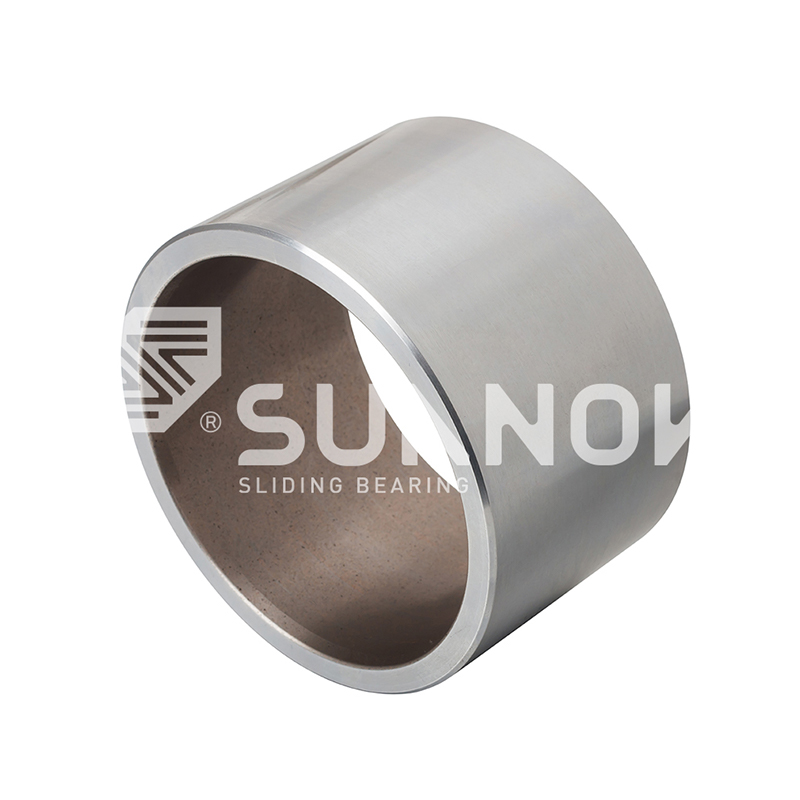

-
 Industry News- Factors Affecting Bronze Bushing Service Life: Materi...
A bronze bushing that fails after six weeks and one from the same production batch that keeps running for six years can be identical in all...
-
 Industry News- Self Lubricating Bronze Bushing Manufacturing: Castin...
An engineer pulls a failed bushing from a press link: the bore is scored, the outer shell shows galling tracks, and the lubrication line wa...
-
 Industry News- Self-Lubricating vs Traditional Lubricated Bearings
A self-lubricating bearing and a traditional grease-lubricated bearing can carry the same radial load rating on paper, yet perform complete...
-
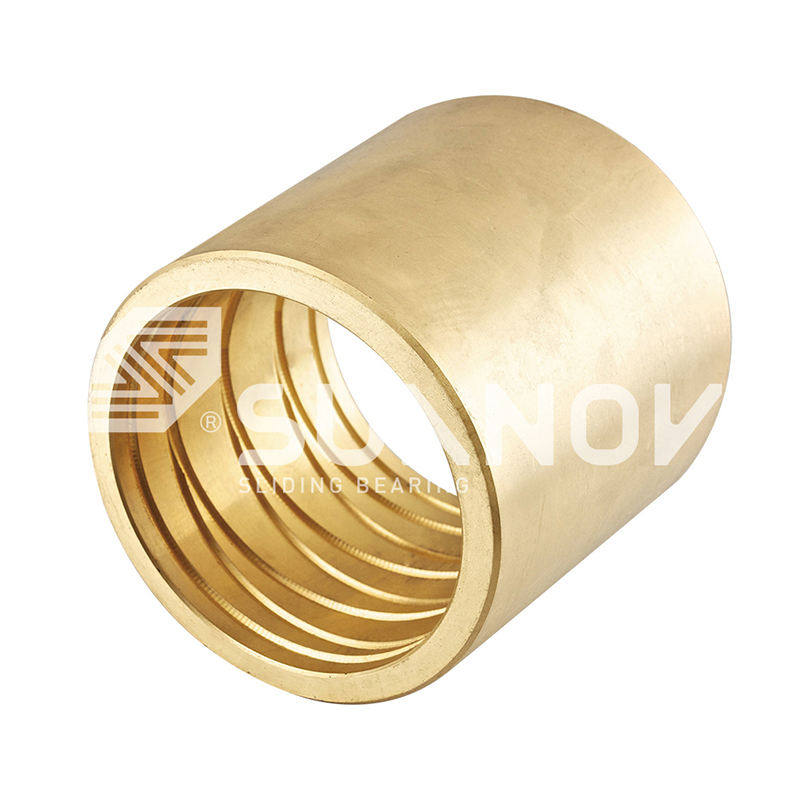 Industry News- Bronze Bushings vs Steel Bushings: Key Differences Ex...
Bronze Bushings vs Steel Bushings: The Engineering Trade-Off When a maintenance engineer opens a machine after a bushing failure, the first...
-
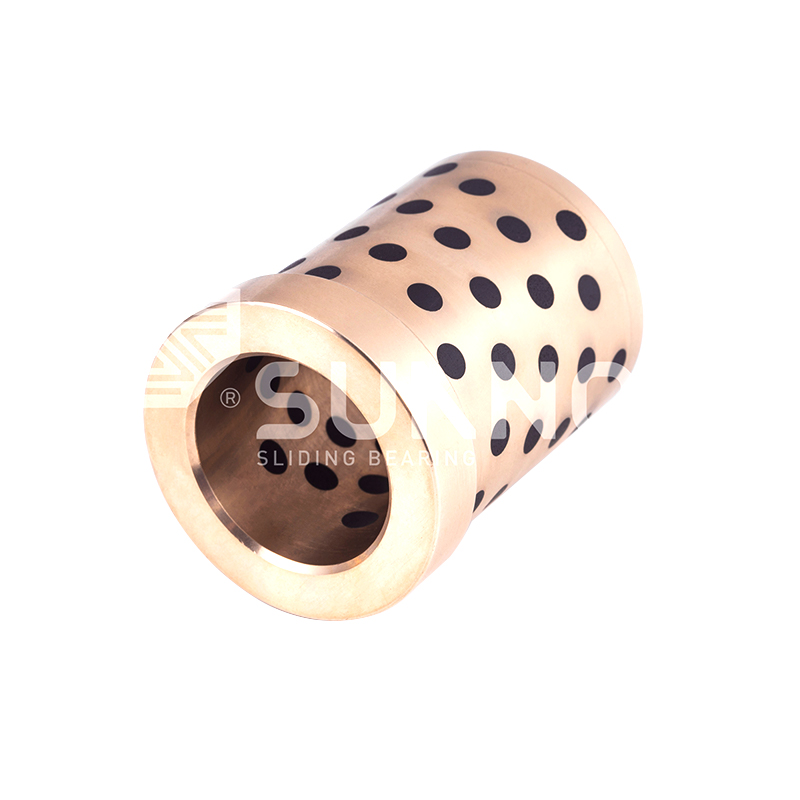 Industry News- How to Choose a Reliable Self-Lubricating Bronze Bush...
A purchasing engineer comparing six quotes for a nominally identical bronze bushing once saw the price spread reach 42 percent. The expensi...
Oil-retaining Bimetallic Bearing Manufacturers
This metal composite self-lubricating bearing uses high-quality low-carbon steel as the base material, the middle layer is a sintered spherical porous copper powder layer, and the surface is a PTFE (polytetrafluoroethylene) based wear-resistant lubricating material as the bearing working layer. This material has excellent mechanical load-bearing performance. The copper powder layer can not only conduct the heat generated during the operation of the bearing in a timely manner, but also enhance the bonding strength between the plastic layer and the substrate.
PTFE material is designed for completely dry friction conditions, and a variety of derivative materials can be developed according to lubrication requirements, friction coefficients and durability requirements. The PTFE metal composite material developed by SNNOV can show excellent performance under various load, speed and temperature conditions, whether with or without external lubrication.
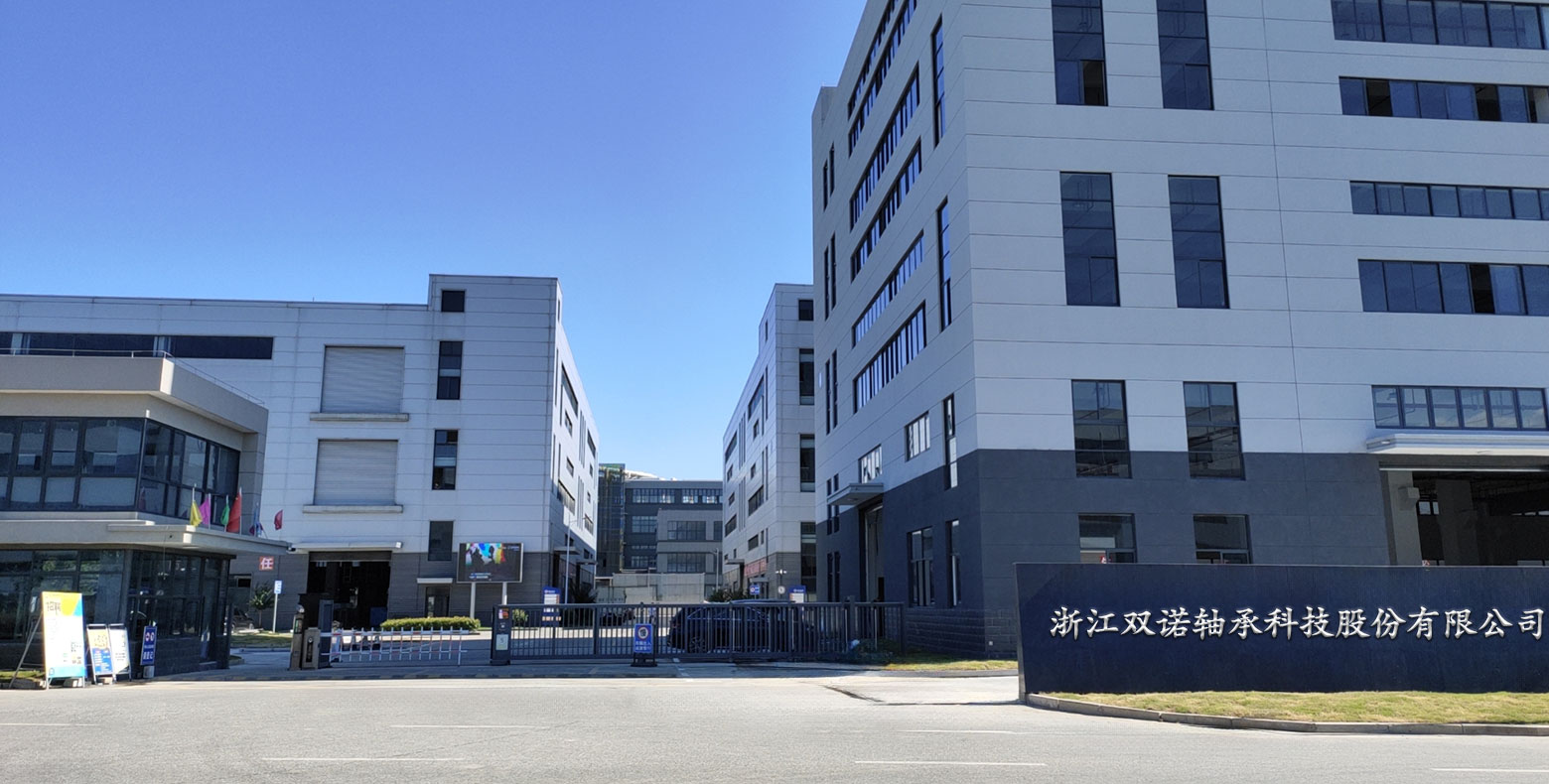

Zhejiang Shuangnuo Bearing Technology Co., Ltd.
Zhejiang Shuangnuo Bearing Technology Co., Ltd. is
China Oil-retaining Bimetallic Bearing Manufacturers and
Custom ODM/OEM Oil-retaining Bimetallic Bearing Factory, we are a manufacturer specializing in producing various self-lubricating copper alloy products using centrifugal casting, continuous casting, metal mold casting, and other processes. Its main products include brass, aluminum bronze, tin bronze, and others produced according to national standard grades. It processes and produces various solid inlaid self-lubricating bearing products on this basis
. At the same time, it uses sintering technology to produce bimetallic products and many other types of products. Since its establishment nearly 10 years ago, the company has focused on the research development, and production of various new self-lubricating bearings.
In the process of product production, our company has always insisted on independent casting production of raw materials to ensure the quality of products from the source; during the casting process, the whole process is monitored, and the finished product is tested by spectrometer three times before, in and after the furnace to confirm the material composition of the product. The national testing agency is regularly commissioned to test the material composition and mechanical properties of the product, and authoritative test reports can be provided to customers in need; the company implements integrated production from material to finished product processing and has more than 80 sets of advanced CNC machine tools, CNC lathes, machining centers, and other major equipment. The strong production capacity ensures that the material production is organized for customers for the first time, shortening the production cycle.
-
0+Establishment
Founded in 2014, Shuangnuo has 10 years of experience in the industry.
-
0+Advanced Equipment
Strong production capacity ensures that we can organize material production for customers as soon as possible and shorten the production cycle.
-
0+Happy Clients
There are more than 5,000 cooperative customers around the world.
Our News //
News & Insights.
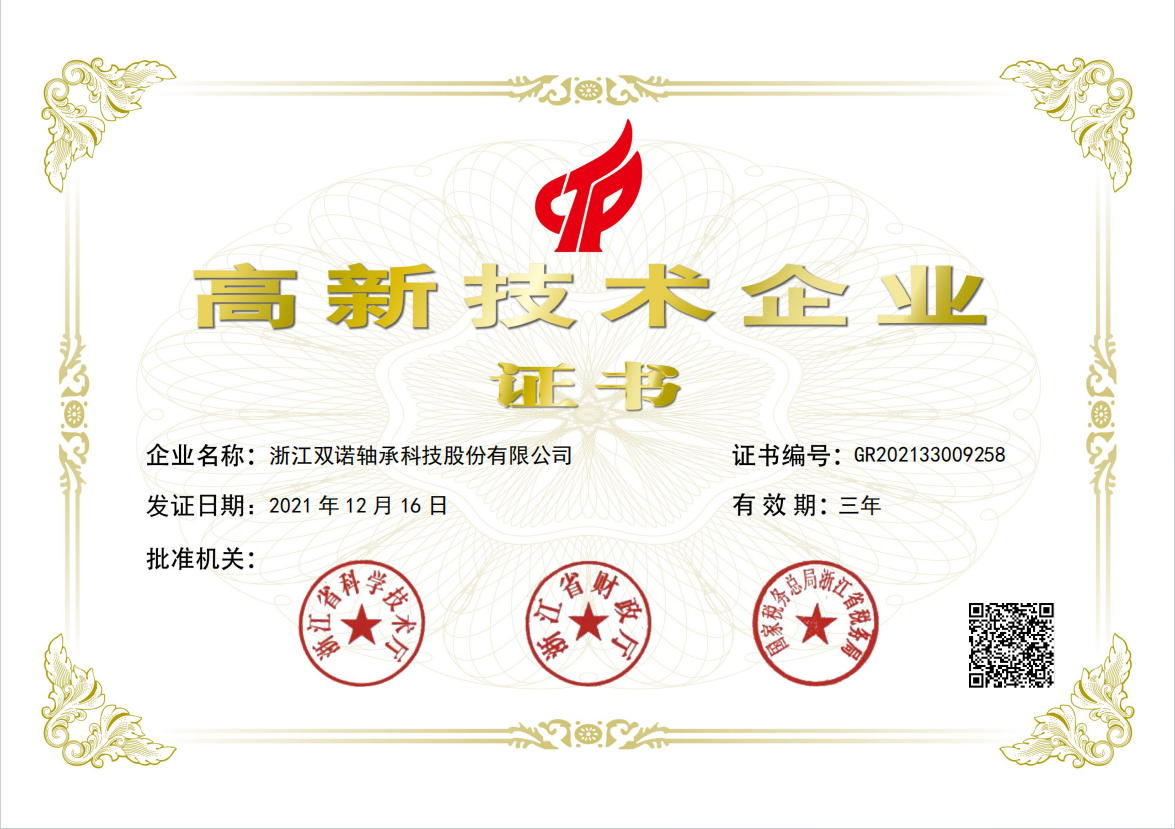
Our Honor //
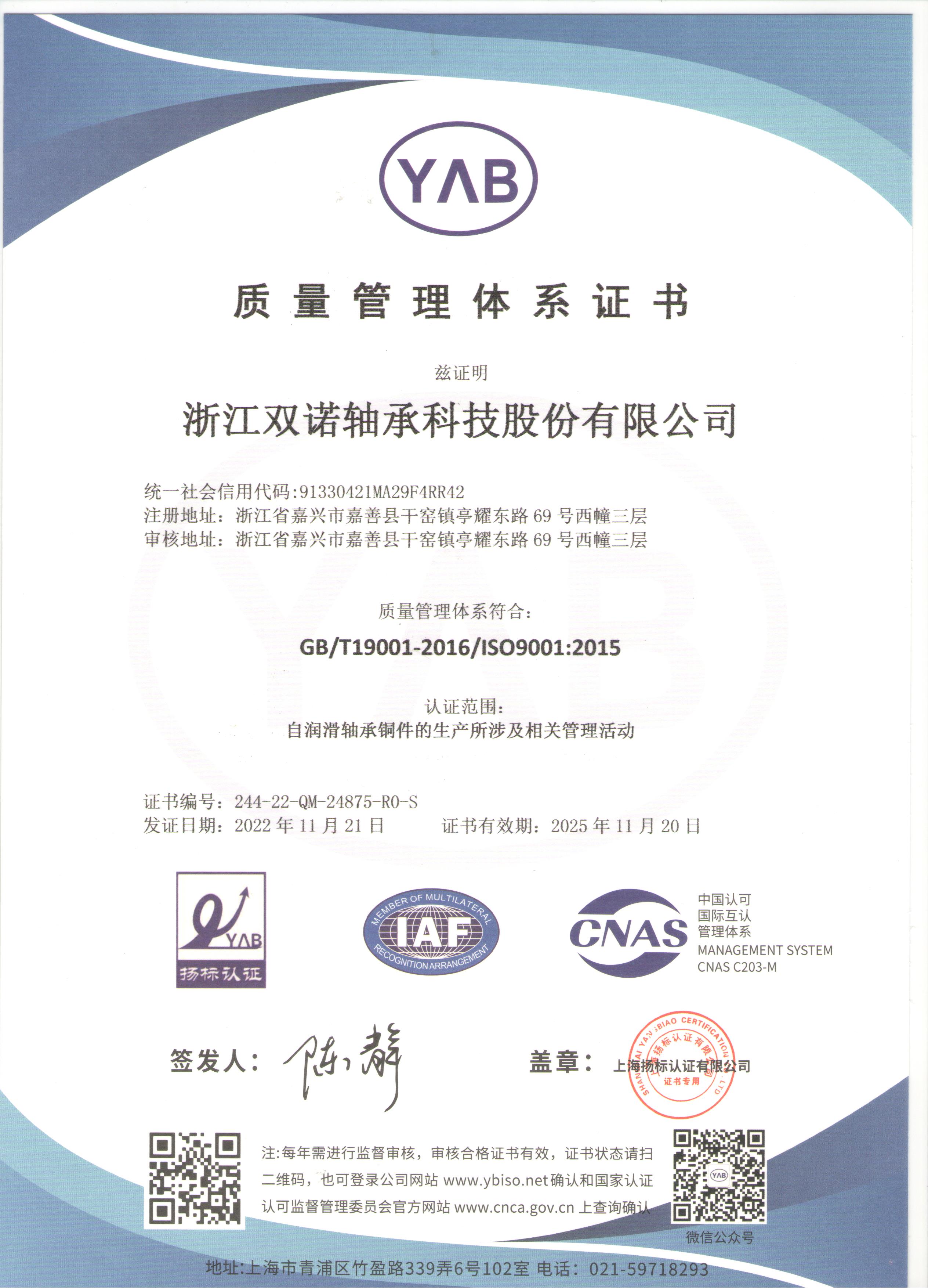
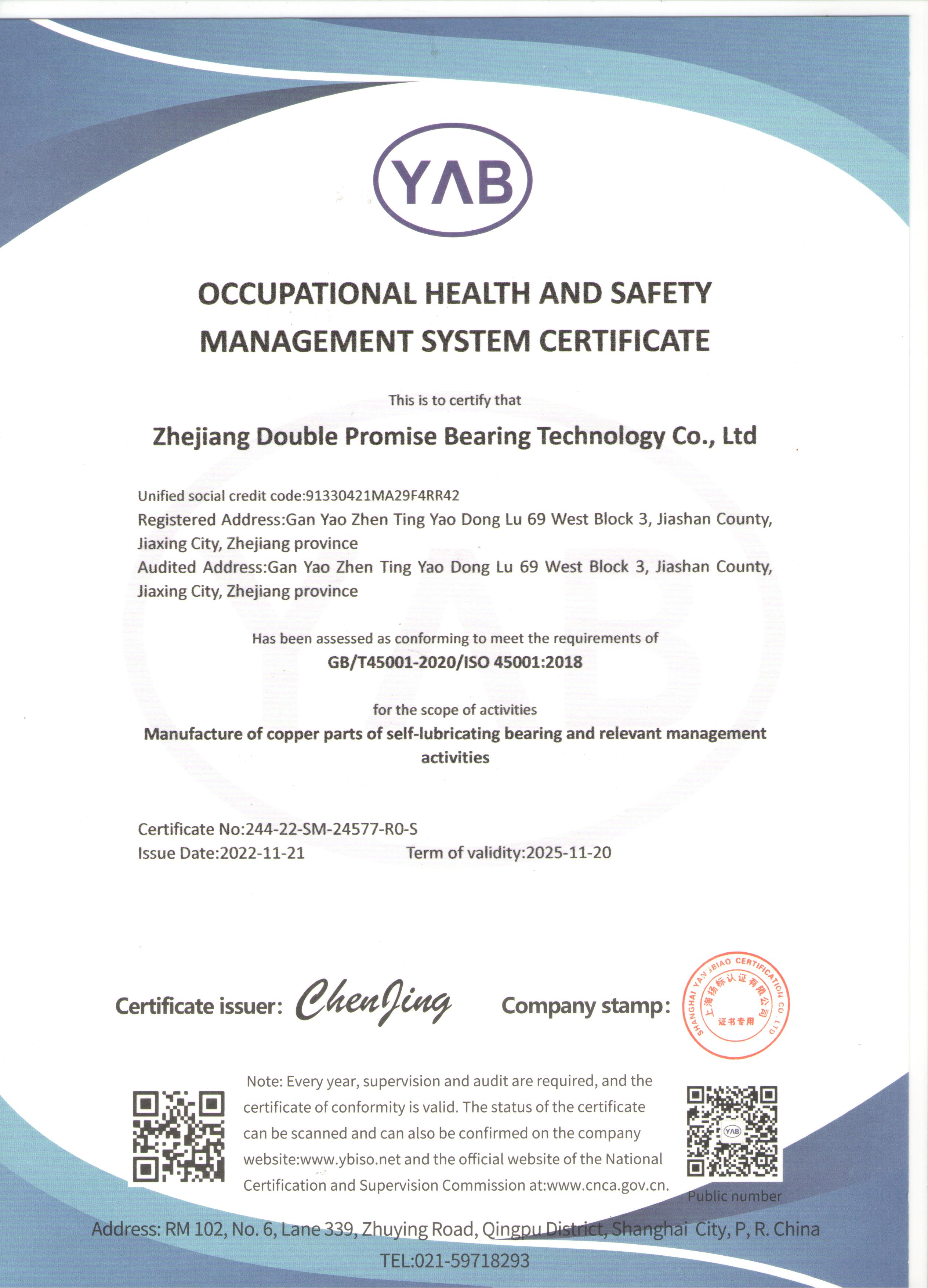
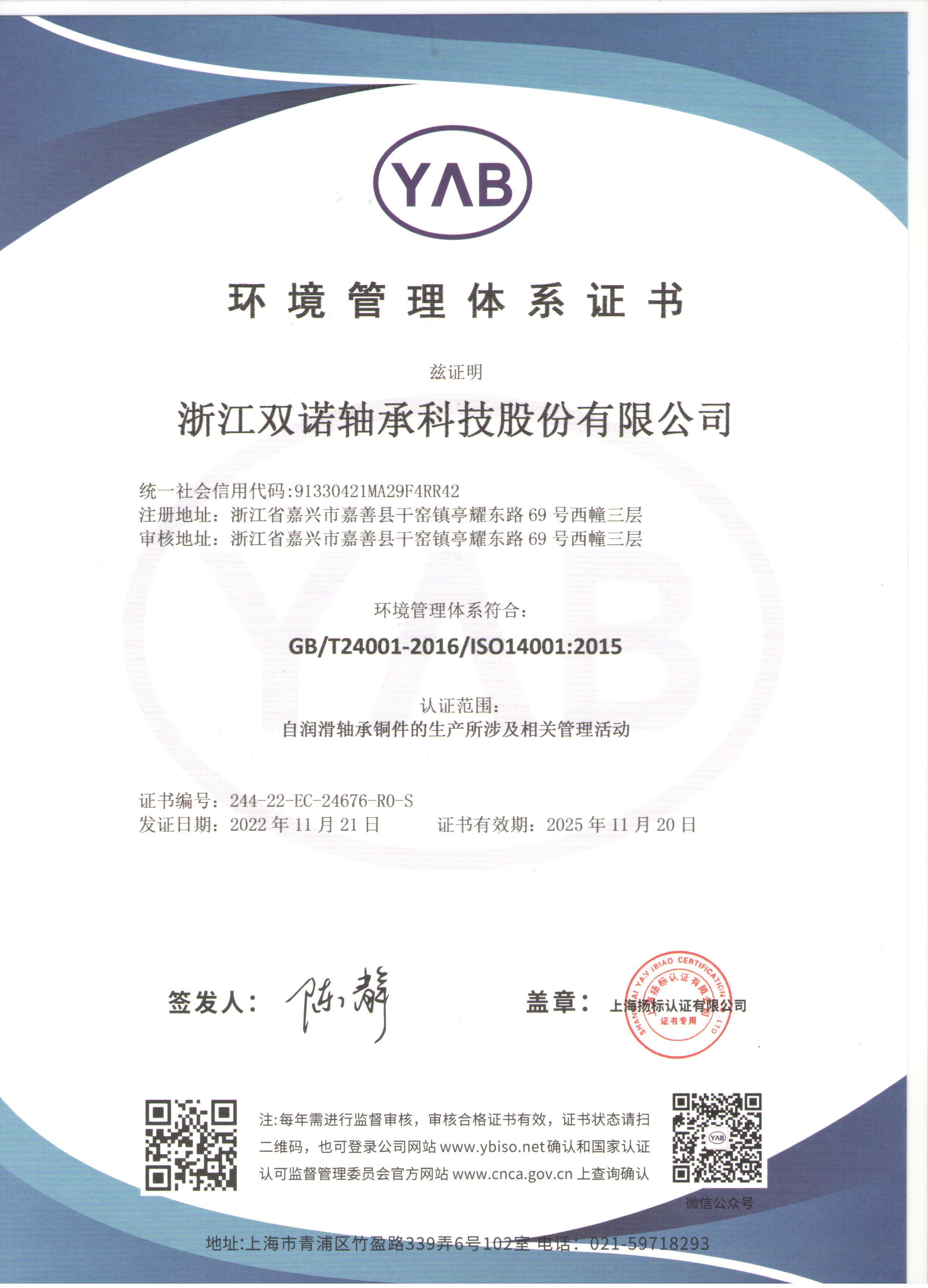
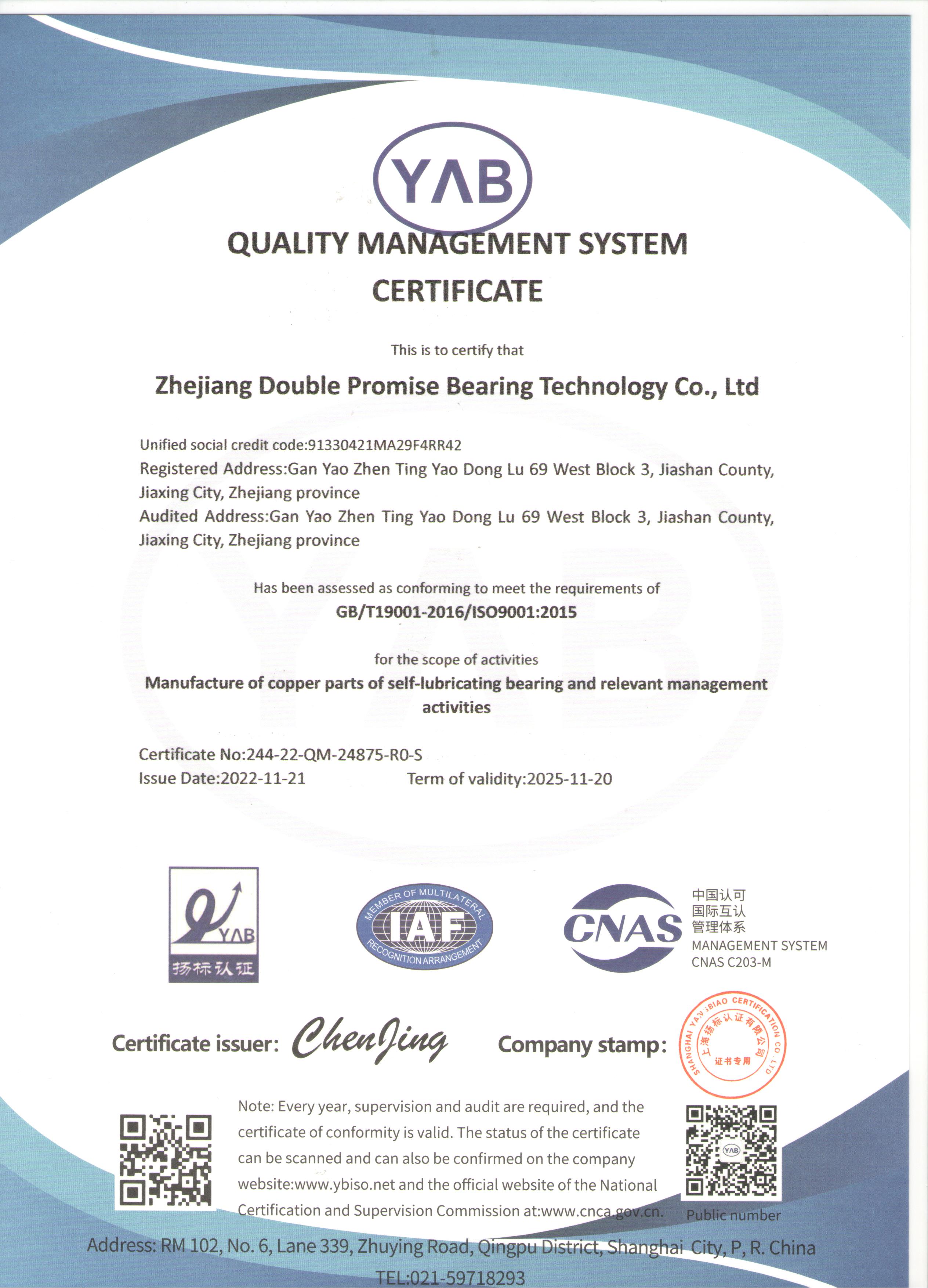
Honor.
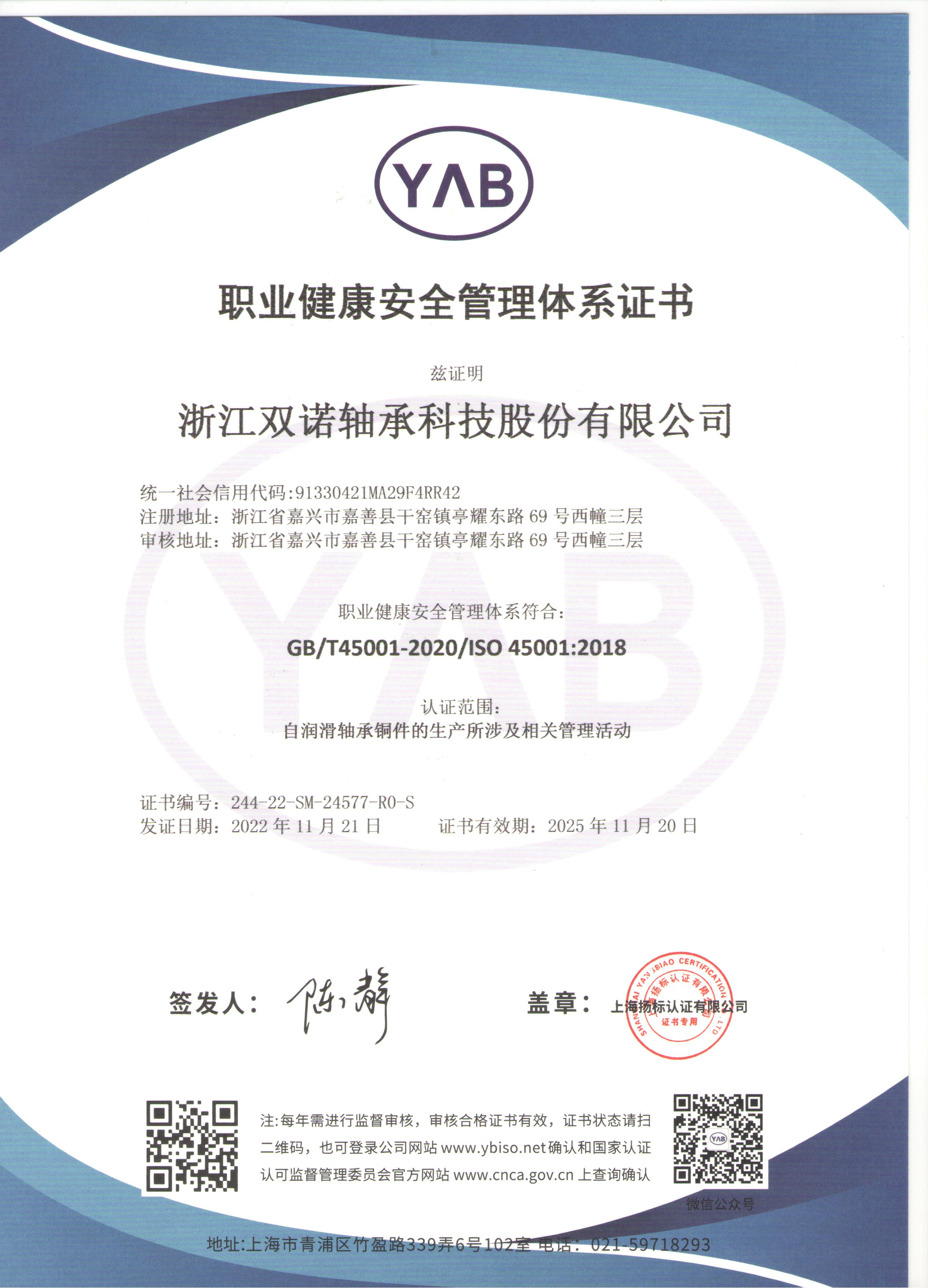
Oil-retaining Bimetallic Bearing Industry knowledge
Oil-retaining Bimetallic Bearing Manufacturer
Zhejiang Shuangnuo Bearing Technology Co., Ltd. is a China-based manufacturer and factory specializing in oil-retaining bimetallic bearings. We combine a steel backing with a sintered porous copper alloy layer, then optionally add solid lubricants or rely on oil retention for boundary lubrication. Our range includes cylindrical bushings, flanged bushings, and wear plates, all produced with in-house casting and precision CNC machining.
We serve heavy machinery, automotive systems, hydraulic pumps, construction equipment, and industrial sliding applications where high load capacity and maintenance-free operation are required. As an ODM/OEM supplier, we configure materials, dimensions, and lubrication patterns to match your working point.
Explore our Product range or contact us directly for a tailored proposal.
Our Oil-retaining Bimetallic Bearing Range
We manufacture three main product forms under this category, each designed for specific mounting and loading conditions:
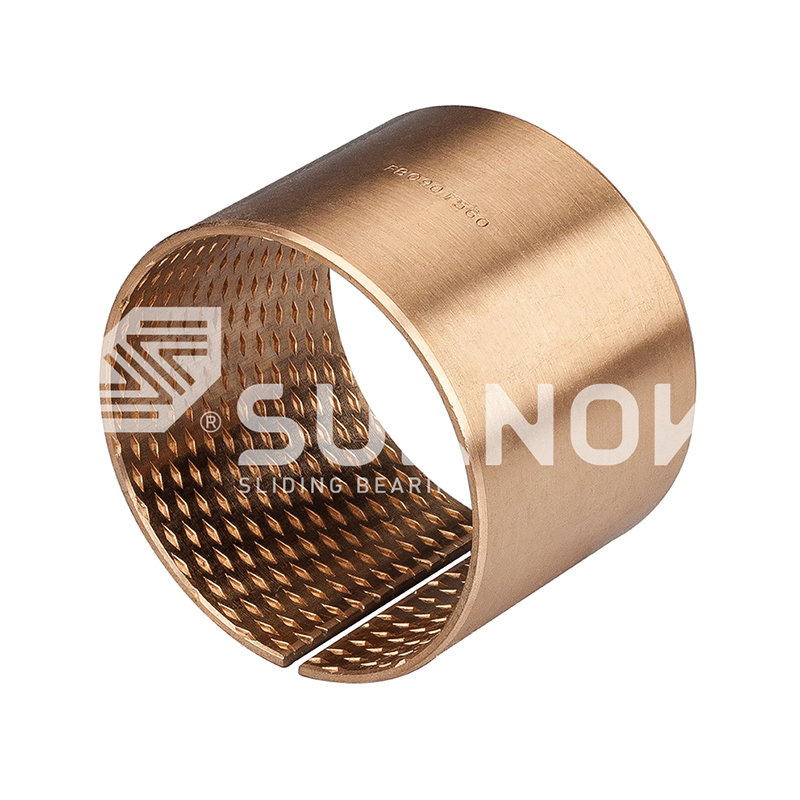
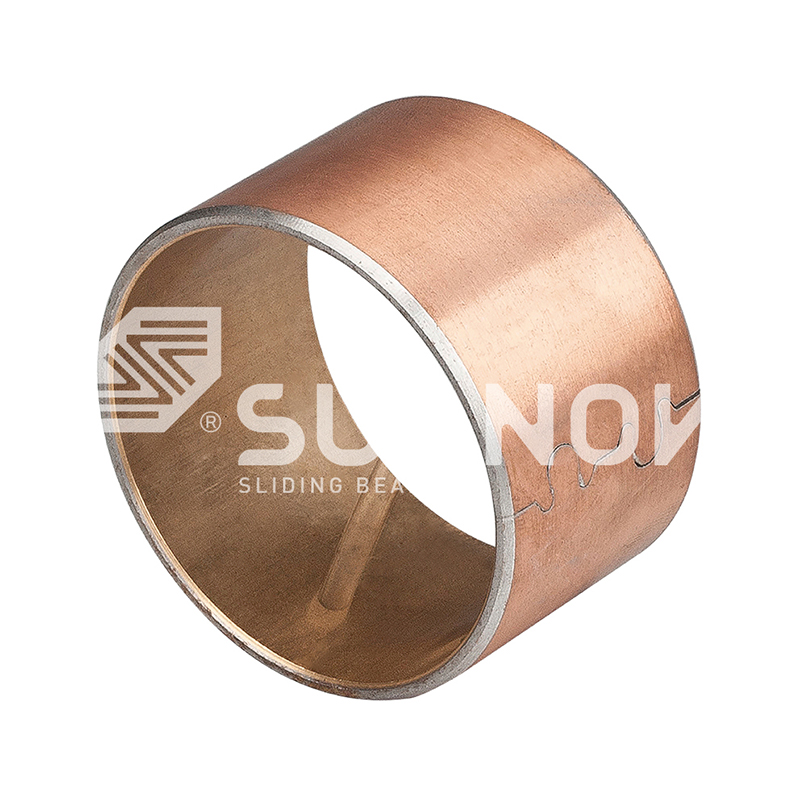
200#B Cylindrical Bushings
Steel-backed with a sintered copper alloy lining. Supports loads up to 220 N/mm². Ideal for gearboxes, pivot bearings, and hydraulic cylinders.
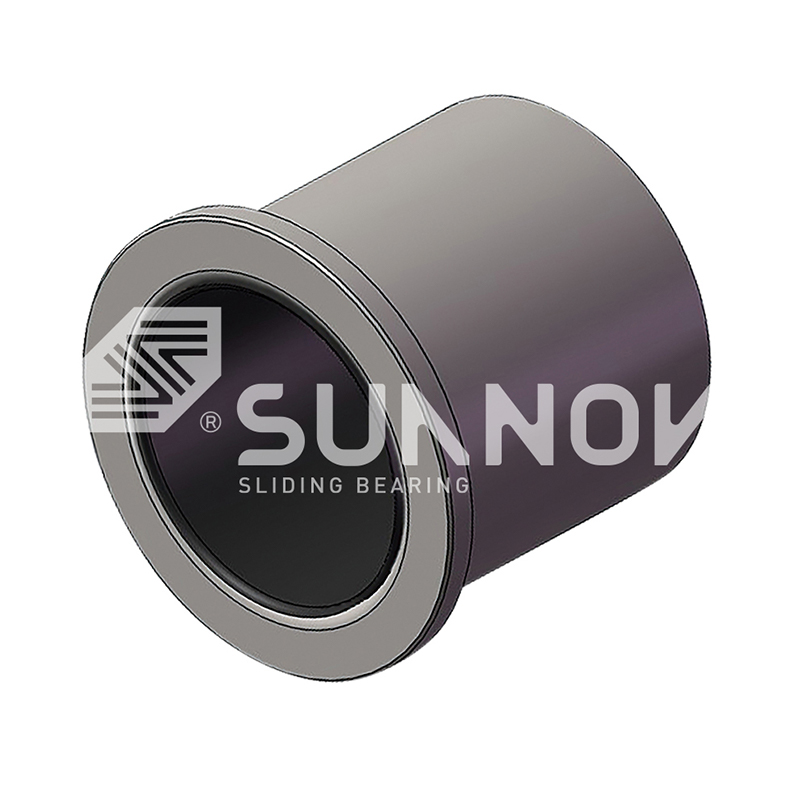
200#F Flanged Bushings
Integral flange for axial location, eliminating separate thrust washers. Load capacity up to 180 N/mm². Suitable for automotive suspensions and robotic joints.
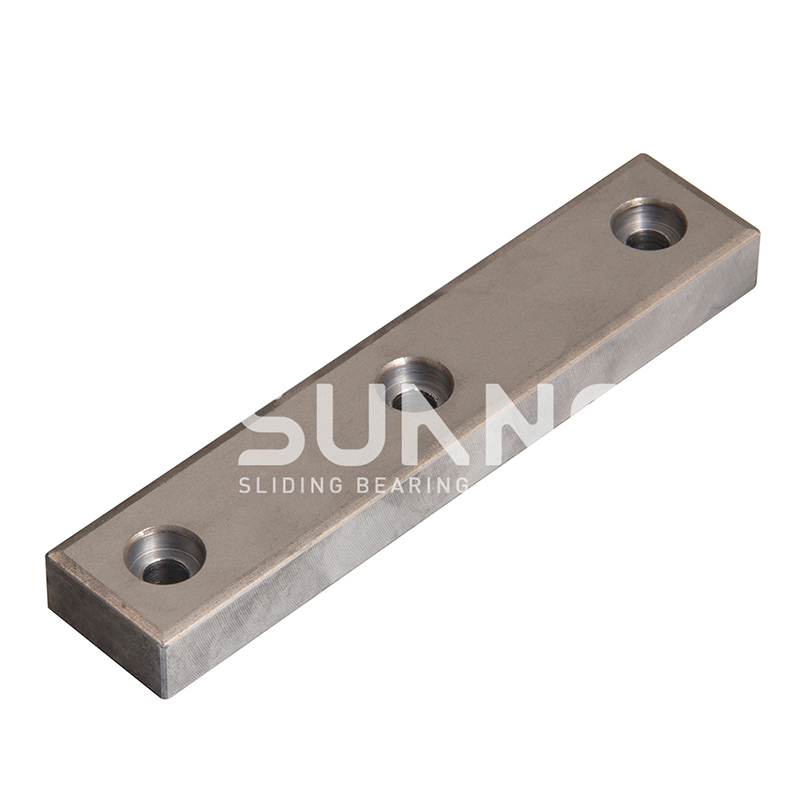
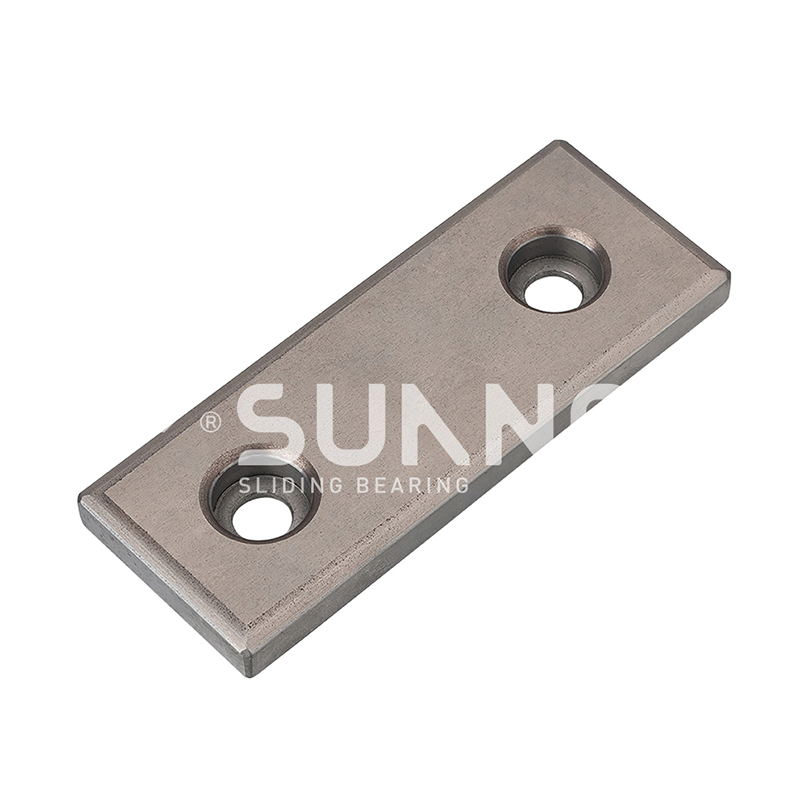
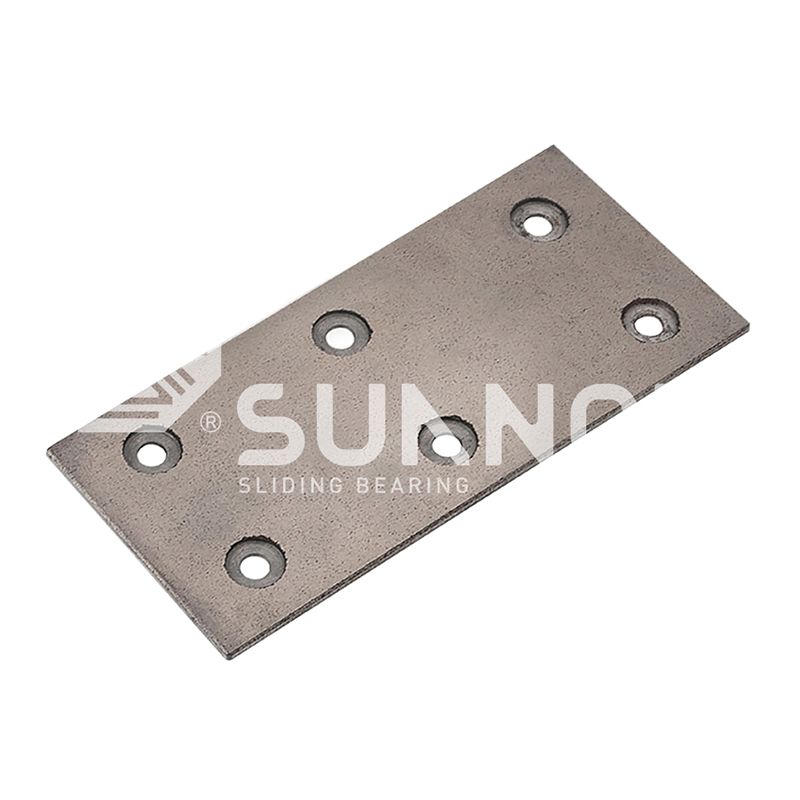
200#P Wear Plates
Steel substrate with graphite inserts for dry lubrication. Load capacity up to 200 N/mm². Used in machine tool guides and heavy slide surfaces.
Each type can be customized in dimensions, alloy composition, and lubrication configuration. We also produce related self-lubricating products such as JDB Solid-lubricating Bearing and JF-800 Bi-metal Bearing.
How Oil Retention Works in Our Bearings
The sintered copper layer contains a network of microscopic pores that store lubricating oil. During operation, frictional heat causes the oil to expand and flow to the bearing surface, providing a continuous lubricating film. When the equipment stops and cools, the oil is reabsorbed into the matrix, ready for the next start-up.
This mechanism is particularly effective in applications where external lubrication is impractical or where maintenance access is limited. The steel backing provides structural rigidity, while the copper alloy ensures good thermal conductivity and wear resistance.
We control the porosity of the sintered layer during production to match the oil release rate to your specific load and speed conditions.
Technical Specifications and Performance
Our oil-retaining bimetallic bearings are engineered for demanding conditions. The table below summarizes typical performance parameters for our standard configurations:
| Parameter | 200#B Bushing | 200#F Flanged | 200#P Wear Plate |
|---|---|---|---|
| Max Load | 220 N/mm² | 180 N/mm² | 200 N/mm² |
| Operating Temp | -40°C to 280°C | -40°C to 250°C | -40°C to 300°C |
| Lubrication | Oil-retaining or solid lubricant | Embedded solid lubricant | Graphite inserts |
| Bore Tolerance | ISO H8 | ISO H8 | Thickness ISO h9 |
| Typical Applications | Gearboxes, hydraulic cylinders | Suspensions, linkages | Machine guides, slide plates |
For specific applications, we can adjust the copper alloy composition (tin bronze, lead bronze, aluminum bronze) and lining thickness (0.3–1.5 mm) to optimize performance.
Manufacturing and Quality Assurance
We produce our own raw materials through centrifugal, continuous, and metal mold casting. This vertical integration allows us to control alloy quality from the start. During casting, we perform spectrometer tests three times—before, during, and after the furnace—to verify chemical composition. We also commission national testing agencies for periodic mechanical property verification and can provide authoritative test reports on request.
Our factory is equipped with more than 80 CNC machines, including lathes and machining centers, enabling integrated production from raw material to finished component. This shortens lead times and ensures dimensional accuracy.
Application Fit and Customization
Oil-retaining bimetallic bearings are best suited for applications with moderate to high loads and speeds where oil film maintenance is critical. They are commonly used in:
- Automotive chassis and suspension components
- Hydraulic pumps and motors
- Construction and agricultural machinery
- Industrial gearboxes and compressors
- Marine propulsion systems
We offer customization in inner/outer diameters, length, flange dimensions, alloy grade, lining thickness, and oil groove patterns. For wear plates, we can adjust graphite coverage (typically 18–22%) and mounting hole configurations.
Information We Use to Configure Your Solution
To prepare a precise quotation and engineering proposal, we need the following details from your side:
- Bearing type (bushing, flanged, wear plate) and preferred dimensions
- Operating load (N/mm²) and speed (m/s)
- Temperature range and environmental conditions (dust, moisture, chemicals)
- Lubrication availability (oil, grease, or completely dry)
- Shaft or mating surface material and hardness
- Required tolerances and surface finish
- Production volume and target lead time
With this information, we can recommend the appropriate copper alloy, porosity level, and lubrication system to ensure reliable performance.
Frequently Asked Questions
What is the advantage of bimetallic over solid bronze bearings?
Bimetallic bearings combine the structural strength of a steel backing with the sliding properties of a copper alloy lining. This provides higher load capacity and better dimensional stability than solid bronze, often at a lower material cost for large sizes.
Can you provide oil-retaining bearings for high-temperature environments?
Yes. Our standard operating range goes up to 280°C for bushings and 300°C for wear plates. For higher temperatures, we can select appropriate copper alloys and solid lubricants like graphite or MoS₂.
Do you offer custom dimensions and tolerances?
Absolutely. We can machine bushings with inner diameters from 10 mm to 250 mm and outer diameters up to 300 mm. Flanged bushings range from 8 mm to 120 mm bore. Wear plates can be cut to any length and width with custom mounting holes.
How do you ensure material quality?
We cast our own raw materials and perform spectrometer analysis three times during the casting process. We also regularly send samples to national testing agencies for mechanical property verification, and we can provide these reports to customers.
What is the typical lead time for custom orders?
Thanks to our integrated production and in-house casting, we can often start material production immediately upon order confirmation. Exact lead times depend on quantity and complexity, but our CNC capacity helps shorten cycles.
Contact Us //
Have Questions? Get in Touch!

Zhejiang Shuangnuo Bearing Technology Co., Ltd. specializes in the production of various self-lubricating copper alloy products such as Oil-retaining Bimetallic Bearing.
Quick Links
Related Products
Contact
- Add: No. 69, Tingyao East Road, Ganyao Town Industrial Zone, Jiashan County, Zhejiang Province, China
- Tel: +86-15957371801
- Fax: +86-0573-84038630
- Email: [email protected]
[email protected]
© 2024 Zhejiang Shuangnuo Bearing Technology Co., Ltd.
Custom Oil-retaining Bimetallic Bearing Manufacturers
