


 русский
 Español
-
-
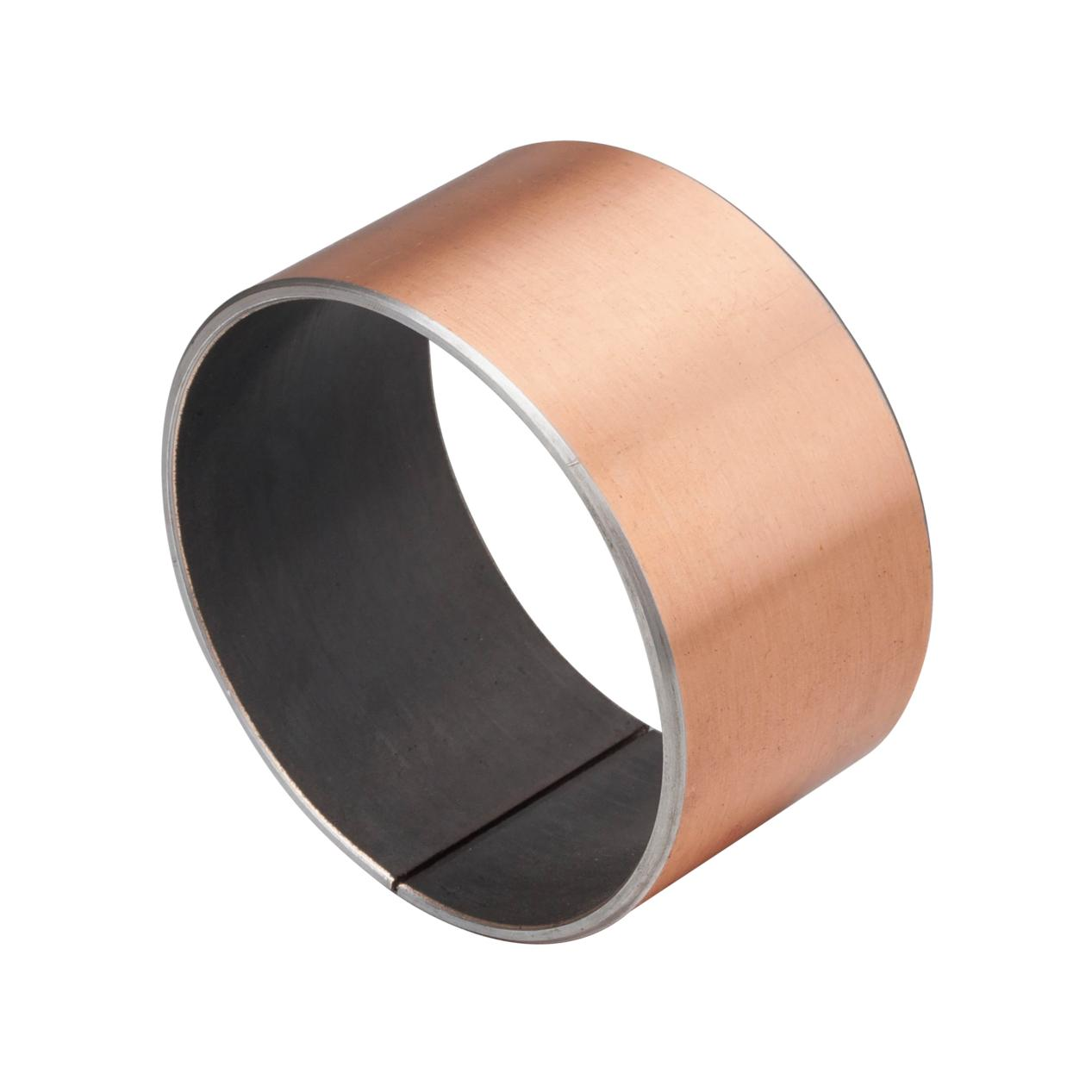
 SF-2 Boundary Lubricating Bearing SF-2Y Boundary Self-lubricating Bearing - Low Friction Dry Lubricant Bushings for Industrial Machinery
 -
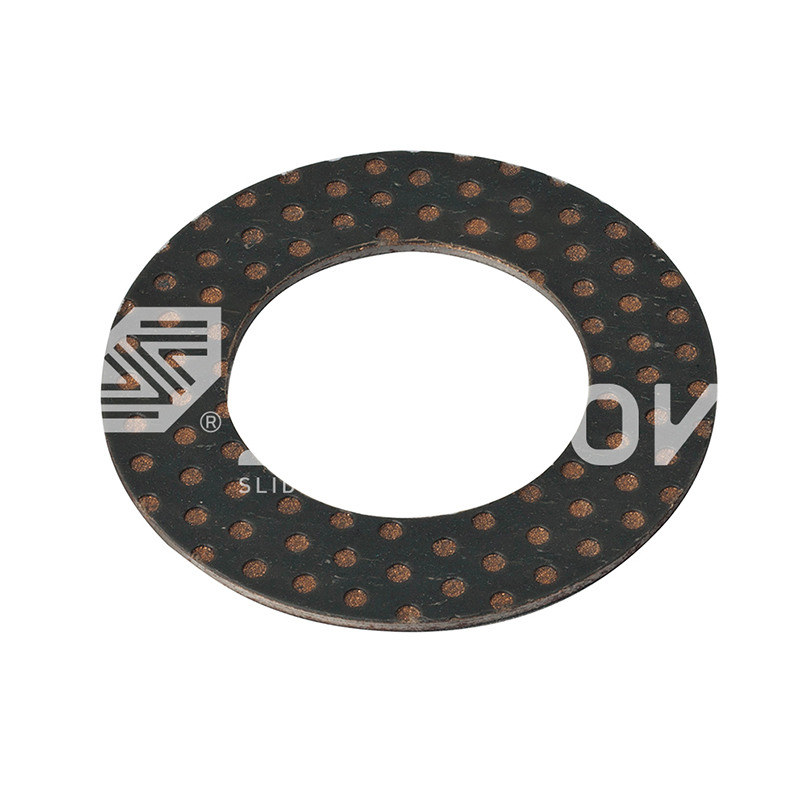 SF-2 Boundary Lubricating Bearing SF-2WC Standard Metric Self-Lubricating Compound Thrust Washer Sliding Washers
 -
-
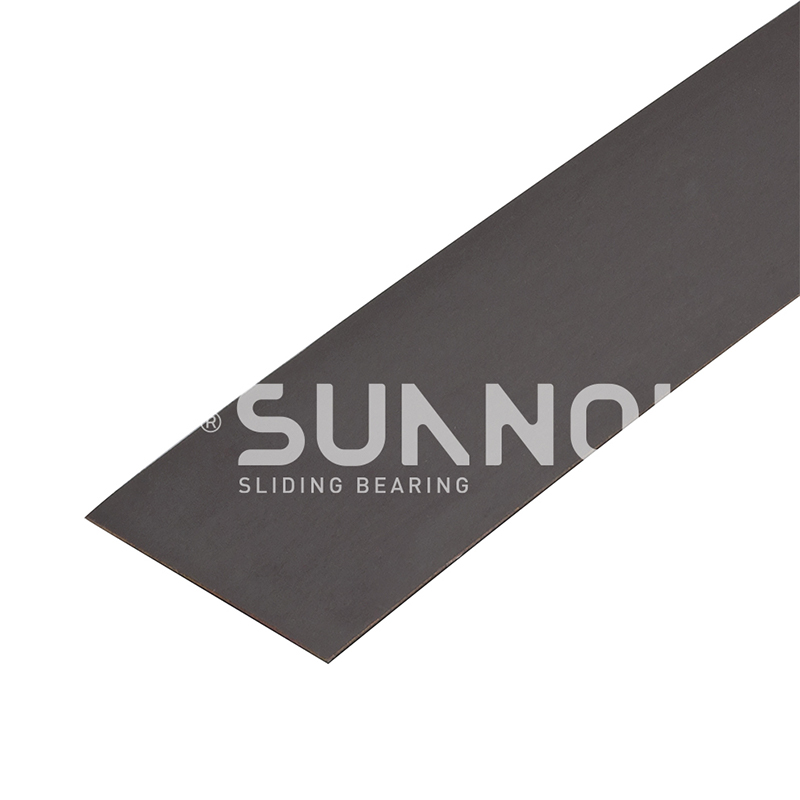 SF-1 Oilless Bearing SF-1SP Strip Standard Metric Size Self-Lubricating Composite Slide Strip
 -
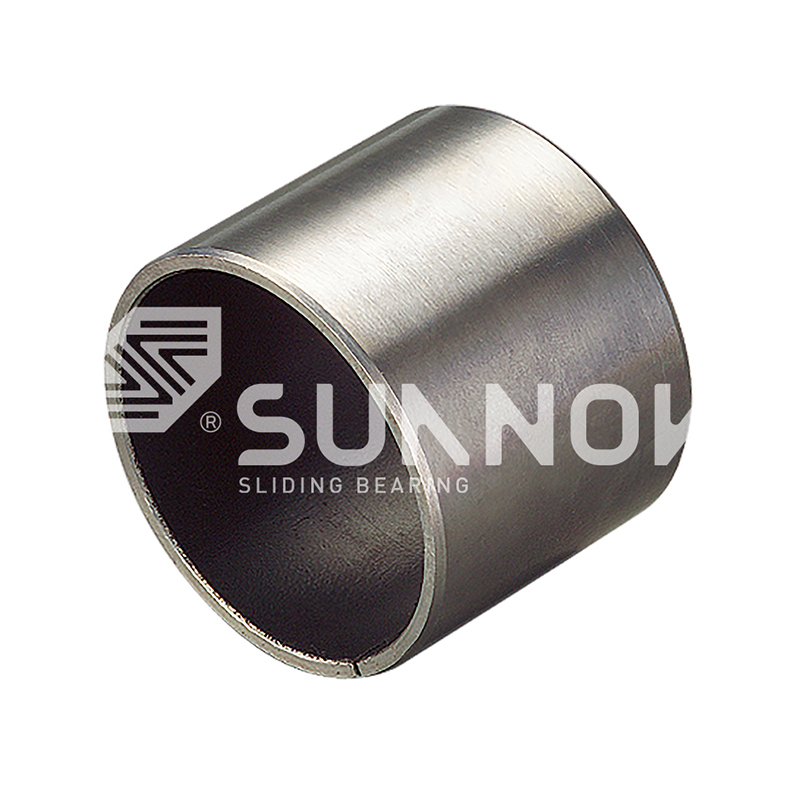 SF-1 Oilless Bearing Self Lubricating SF-1T Metal Gear Pump Bearing Bronze Bushings
 -
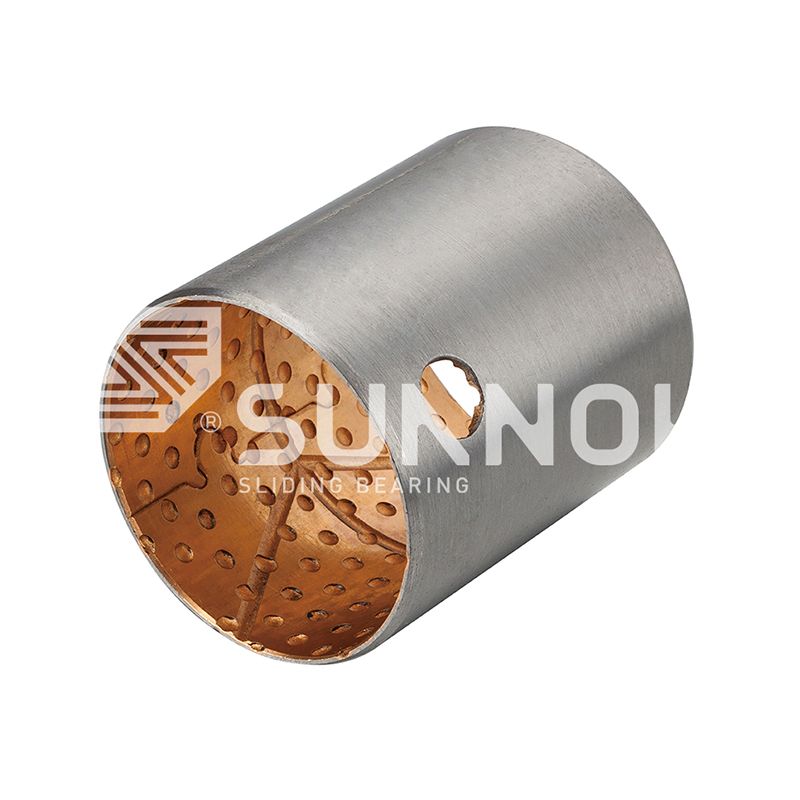 JF-800 Bi-metal Bearing JF-750 Self-Lubricating Lead Free Bi-Metal Bearing for Heavy Duty Engines Low Friction
 -
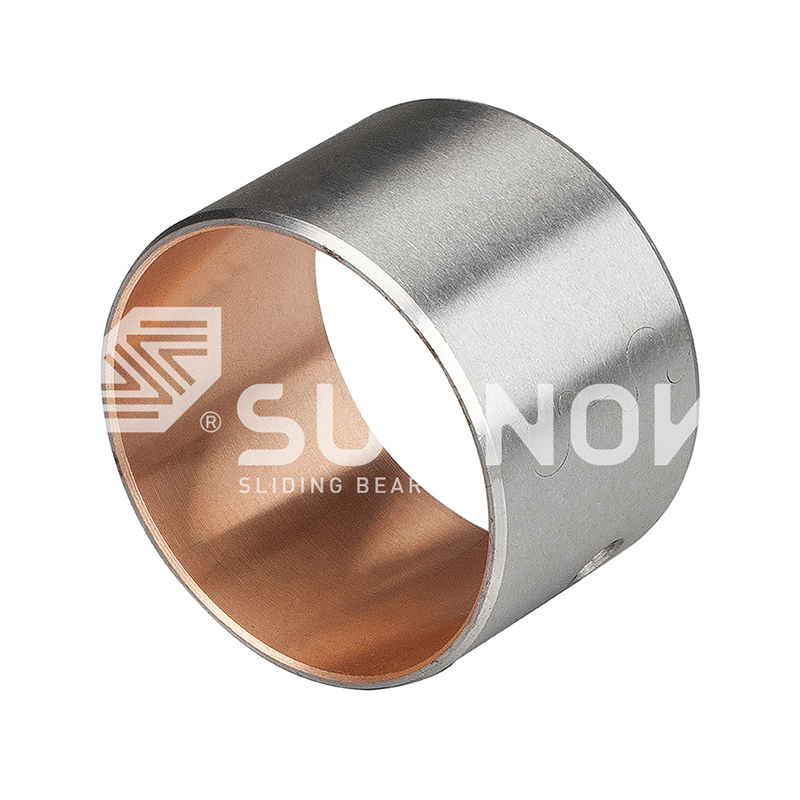 JF-800 Bi-metal Bearing JF-700 Bi-Metal Bearing Heavy Duty Self-Lubricating Sleeve Bushings
How to Choose Metric Self Lubricating Bushings for Industrial Machinery, Automotive Systems and Heavy Load Applications
Industry News-Content
- 1 What Are Metric Self Lubricating Bushings and How Do They Work in Mechanical Systems?
- 2 What Materials Are Used in Self Lubricating Metric Bushings?
- 3 Where Are Metric Self Lubricating Bushings Commonly Used?
- 4 What Performance Properties Should Self Lubricating Bushings Provide?
- 5 How Are Self Lubricating Bushings Manufactured?
- 6 How Do Metric Self Lubricating Bushings Compare With Traditional Lubricated Bearings?
- 7 How Do You Select the Right Metric Self Lubricating Bushing?
- 8 What Are Common Problems or Limitations of Self Lubricating Bushings?
- 9 What Is the Future Trend of Self Lubricating Bushing Technology?
- 10 Frequently Asked Questions
Grease fittings that get skipped, oil lines that run dry, moving parts that seize without warning — most of these failures trace back to lubrication that simply did not happen on schedule. Metric self lubricating bushings remove that dependency entirely, carrying their own internal lubrication so machinery keeps sliding smoothly with far less maintenance overhead. This guide covers how they work, what they are made of, and how to size and select the right one.
01 / BASICS
What Are Metric Self Lubricating Bushings and How Do They Work in Mechanical Systems?
A self lubricating bushing definition starts with a simple idea: a sliding bearing component that carries its own lubricant, either embedded in its material structure or applied as a permanent internal coating, so it never needs external grease or oil.
A metric plain bearing bushing works by letting a shaft rotate or slide against a low-friction internal surface rather than rolling elements like balls or rollers. As a dry running bearing sleeve, it relies on that internal lubricant — PTFE, graphite, or embedded oil — to keep friction low even without any external lubrication supply.
What makes this a maintenance free bushing system is the removal of scheduled grease intervals entirely, which matters most in hard-to-access or high-cycle machinery. As a sliding bearing mechanical component, it supports both rotating and reciprocating motion. What self lubricating bushings are used for typically comes down to one goal: reducing wear at a pivot or sliding joint without ongoing service. How dry running bushings reduce friction is through a thin, consistent lubricating film built directly into the bearing surface — the core principle of self lubricating sleeve bearings.
02 / MATERIALS
What Materials Are Used in Self Lubricating Metric Bushings?
| Material | Lubrication Method | Typical Fit |
| PTFE lined bushing | Bonded low-friction liner | Precision, low-load sliding joints |
| Bronze self lubricating bearing | Oil-impregnated sintered structure | Moderate to heavy load applications |
| Graphite impregnated bushing | Solid graphite plugs or matrix | High-temperature environments |
| Composite polymer bearing sleeve | Embedded solid lubricant layer | Lightweight, corrosion-prone settings |
| Sintered metal bushing material | Porous structure holding oil | General industrial machinery |
What materials are used in self lubricating bushings depends mostly on load, temperature, and exposure to moisture or chemicals. A PTFE vs bronze self lubricating bushing comparison usually favors PTFE for precision and low friction, while bronze wins on load capacity and long-term durability. Which material is best for dry running bushings is rarely a single universal answer — it depends on matching lubrication method to the specific operating environment.
03 / APPLICATIONS
Where Are Metric Self Lubricating Bushings Commonly Used?
Automotive Suspension
An automotive suspension bushing absorbs motion at pivot points without needing periodic grease service.
Industrial Machinery
Industrial machinery sliding bearing points benefit from reduced downtime for maintenance.
Hydraulic Pivots
A hydraulic cylinder pivot joint sees repeated cycling that favors dry, low-maintenance bearing surfaces.
Agricultural Equipment
Agricultural equipment bushings must tolerate dust, moisture, and infrequent service access.
Construction Machinery
Construction machinery wear parts rely on bushings that hold up under heavy, repetitive loading.
Self lubricating bushings for heavy machinery applications are chosen specifically because scheduled greasing is often impractical in the field. Where metric bushings are used in automotive systems tends to concentrate around suspension and steering pivots that see constant small-range motion. The industrial use of maintenance free bushings extends well beyond any single sector, wherever a sliding joint needs to run reliably with minimal upkeep.
04 / PERFORMANCE
What Performance Properties Should Self Lubricating Bushings Provide?
Low Friction Surface
A low friction bearing surface keeps energy loss and heat generation to a minimum.
Wear Resistance
A wear resistant sliding material maintains dimensional accuracy over extended service life.
Load Capacity
High load capacity bushing designs distribute pressure evenly across the bearing surface.
Corrosion Resistance
A corrosion resistant bearing sleeve holds up in humid or chemically exposed environments.
How strong self lubricating bushings are under load depends on both material choice and wall thickness relative to shaft diameter. Key performance features of dry running bushings generally combine several of these properties at once, since a bushing strong under load but poor at dry lubrication performance still wears prematurely. The advantages of maintenance free bushings in machinery become most apparent in equipment that runs continuously with limited access for servicing.
05 / MANUFACTURING
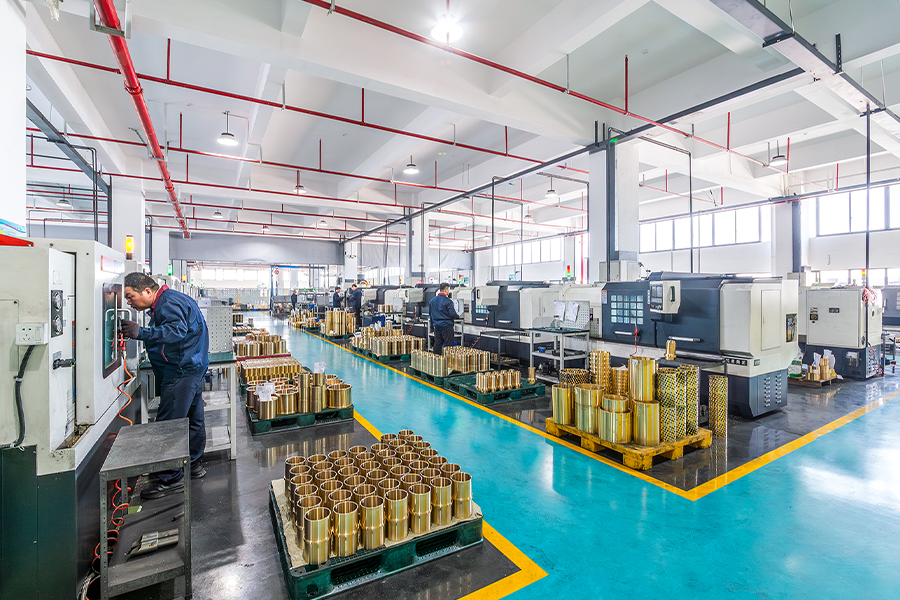
How Are Self Lubricating Bushings Manufactured?
-
Sintered metal forming — the sintered metal forming process compresses metal powder into a porous bushing shape.
-
Liner application — a PTFE coating bonding process applies a low-friction internal layer where used.
-
Precision machining — precision machining of the sleeve bushing brings bore and outer diameter to exact tolerance.
-
Composite layering — composite layering technology builds up multi-material bushings where a single material cannot meet every requirement.
-
Oil impregnation — the oil impregnation process for bearings saturates porous sintered structures with lubricant before final inspection.
How self lubricating bushings are made generally follows this same sequence, adjusted for the specific material and lubrication method chosen. The manufacturing process of PTFE lined bushings places particular weight on bond strength between liner and substrate, since a poorly bonded liner can delaminate under load. How sintered bronze bushings are produced depends heavily on controlling porosity, which determines how much oil the finished part can retain.
06 / COMPARISON
How Do Metric Self Lubricating Bushings Compare With Traditional Lubricated Bearings?
Self Lubricating
No scheduled maintenance, simpler installation, and consistent performance without a grease lubricated bearing comparison to manage.
Traditional / Greased
Often higher raw load capacity, but requires ongoing service to maintain the same friction coefficient comparison over time.
A rolling bearing vs plain bearing discussion often centers on speed and load: rolling bearings tend to handle higher rotational speeds, while plain bearings — especially self lubricating types — favor simplicity and lower maintenance. In a maintenance free vs greased system comparison, the deciding factor is usually access: hard-to-reach joints favor self lubricating designs regardless of the raw friction coefficient comparison. Differences in service life between bearing systems often come down to whether contamination or missed maintenance intervals are a realistic risk in the actual operating environment. Self lubricating bushing vs ball bearing differences also show up in noise and vibration, where plain bearings tend to run quieter under moderate loads. Are dry bushings better than greased bearings is really a question of maintenance access rather than raw performance — the advantages of maintenance free bearing systems are most visible when service intervals are unreliable.
07 / SELECTION
How Do You Select the Right Metric Self Lubricating Bushing?
- 1
Shaft diameter selection — confirm the exact metric shaft size the bushing needs to fit.
- 2
Load rating calculation — estimate the expected static and dynamic load the bushing must carry.
- 3
Temperature resistance — check the operating temperature range against the material's rated limits.
- 4
Speed limit — confirm the bearing sleeve's rated surface speed matches the application's cycling rate.
- 5
Material compatibility — verify the material tolerates any chemical or moisture exposure in the environment.
How to choose metric self lubricating bushings starts with the shaft diameter and load, since these two figures narrow down suitable materials quickly. Selecting bushing size for industrial machinery also means checking clearance tolerances, since a bushing fit too tight can bind and one fit too loose can rattle under load. A practical guide to choosing PTFE or bronze bushings usually comes down to whether precision and low friction matter more than raw load capacity for the specific joint in question.
08 / LIMITATIONS
What Are Common Problems or Limitations of Self Lubricating Bushings?
No bearing type is failure-proof. Understanding where self lubricating bushings are weakest helps set realistic expectations for demanding applications.
Wear under extreme load is the most common limitation, since the internal lubricant layer has a finite thickness and eventually thins under sustained heavy pressure. Misalignment sensitivity in these bearings can accelerate wear unevenly across the bushing surface if the shaft is not properly aligned during installation. Temperature degradation of the material — particularly with polymer-based liners — can soften or weaken the bearing surface outside its rated range.
Installation tolerance issues arise when bore or shaft dimensions fall outside the bushing's intended fit, leading to premature wear or excess play. Contamination effects on the bearing surface are another real concern, since dust or abrasive particles can embed into a soft liner and accelerate scoring. Disadvantages of self lubricating bushings rarely rule them out entirely, but they do explain when dry bushings fail and why the limitations of PTFE lined bearings matter most in high-load or high-contamination settings.
09 / OUTLOOK
What Is the Future Trend of Self Lubricating Bushing Technology?
Advanced polymer composites are extending load and temperature ranges beyond older PTFE formulations.
Eco friendly lubrication free systems are reducing reliance on petroleum-based greases across industrial fleets.
High performance dry bearings are closing the load-capacity gap with traditional greased systems.
Smart maintenance free components are beginning to integrate wear indicators into the bushing itself.
The future of self lubricating bearing technology points toward materials engineered for narrower, more demanding niches rather than one general-purpose formulation. Trends in maintenance free bushings increasingly emphasize traceable wear data over purely passive components. Innovation in dry sliding bearing materials continues to push low friction engineering materials further into applications once considered too demanding for anything but greased, rolling-element bearings.
 |
 |
FAQ
Frequently Asked Questions
| Question | Answer |
| What are metric self lubricating bushings? | Sliding bearings that carry their own internal lubrication, sized to metric shaft standards. |
| Do self lubricating bushings need grease? | No, their internal lubricant is designed to eliminate the need for external grease or oil. |
| How long do dry bushings last? | Service life varies by load and environment, but properly selected bushings often run for years without maintenance. |
| What is a PTFE bushing used for? | Precision, low-friction sliding applications where consistent, low-maintenance performance matters. |
| Are self lubricating bushings better than bearings? | They are better suited to low-maintenance needs; rolling bearings may still suit higher-speed applications better. |
| Can bushings run without oil? | Yes, that is the defining feature of self lubricating designs — they are built to run dry. |
Recommended NEWS:
Bronze Wrapped Bushings for Heavy Machinery: Durable Solutions for Demanding Applications
Self-Lubricating Bronze Bushings: Benefits, Cost Savings, and Selection Guide
SF-1S Self-Lubricating Stainless Steel Bushings: Key Applications and Benefits
Self-Lubricating Copper Alloy Bearings: The Future of Solid-Lubricating Bearings and JDB-600 Casting Bronze Bearings
The Rise of Self-Lubricating Bearings: A Guide to Maintenance-Free Performance
Optimizing Industrial Performance: A Comprehensive Guide to Solid Bronze Bushings
Recommended LINS:
Contact Us //
Have Questions? Get in Touch!

Zhejiang Shuangnuo Bearing Technology Co., Ltd. specializes in the production of various self-lubricating copper alloy bushing bearings products
Quick Links
Related Products
Contact
- Add: No. 69, Tingyao East Road, Ganyao Town Industrial Zone, Jiashan County, Zhejiang Province, China
- Tel: +86-15957371801
- Fax: +86-0573-84038630
- Email: [email protected]
[email protected]
© 2024 Zhejiang Shuangnuo Bearing Technology Co., Ltd.
Custom Self-Lubricating Copper Alloy Bearings
