

 русский
 Español
What Are Self-Lubricating Bushings?
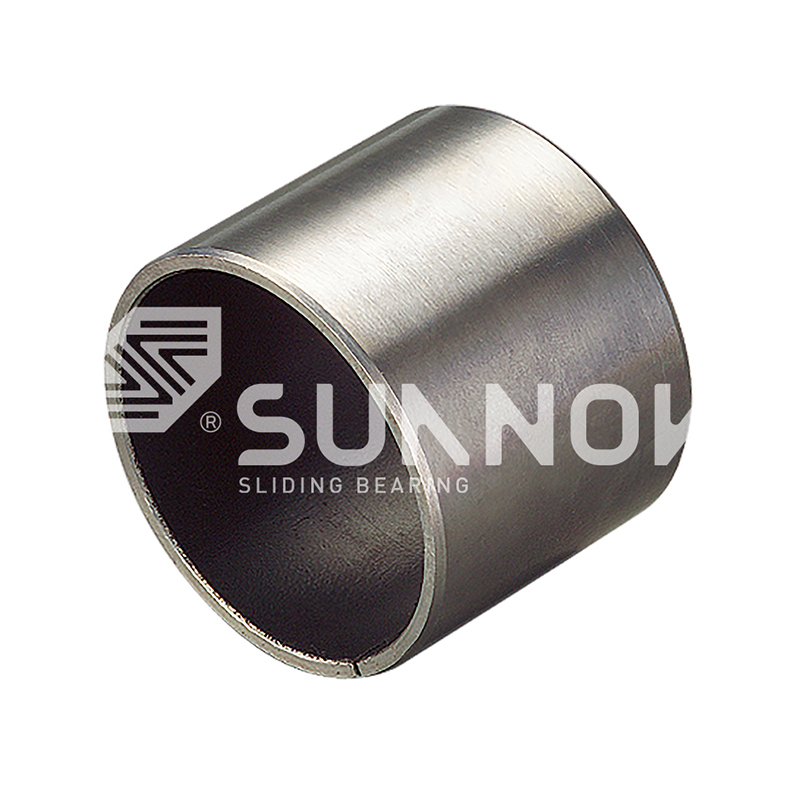
Self-lubricating bushings are plain bearings engineered to operate without any external grease or oil supply. They achieve this by incorporating solid lubricant — most commonly graphite, PTFE, or molybdenum disulfide (MoS2) — directly into the bushing material or in machined reservoirs within the bore. When the shaft rotates or oscillates, friction generates a thin, self-replenishing transfer film that continuously lubricates the contact surface.
The direct answer: self-lubricating bushings do not need external lubrication to function. They are the correct choice for applications where re-greasing is impossible, unsafe, or too costly — such as food processing machinery, agricultural equipment, construction pivots, and high-temperature industrial systems.
Are Brass Bushings Self-Lubricating?
Standard brass bushings are not self-lubricating. Plain brass (typically CuZn alloys such as CuZn39Pb3 or CuZn40Pb2) offers good corrosion resistance and moderate load capacity, but it requires external lubrication — grease or oil — to reduce friction and prevent wear at the shaft interface. Without lubrication, a plain brass bushing will score, seize, or wear rapidly under load.
However, there is a specific class of brass-based bushings that are genuinely self-lubricating:
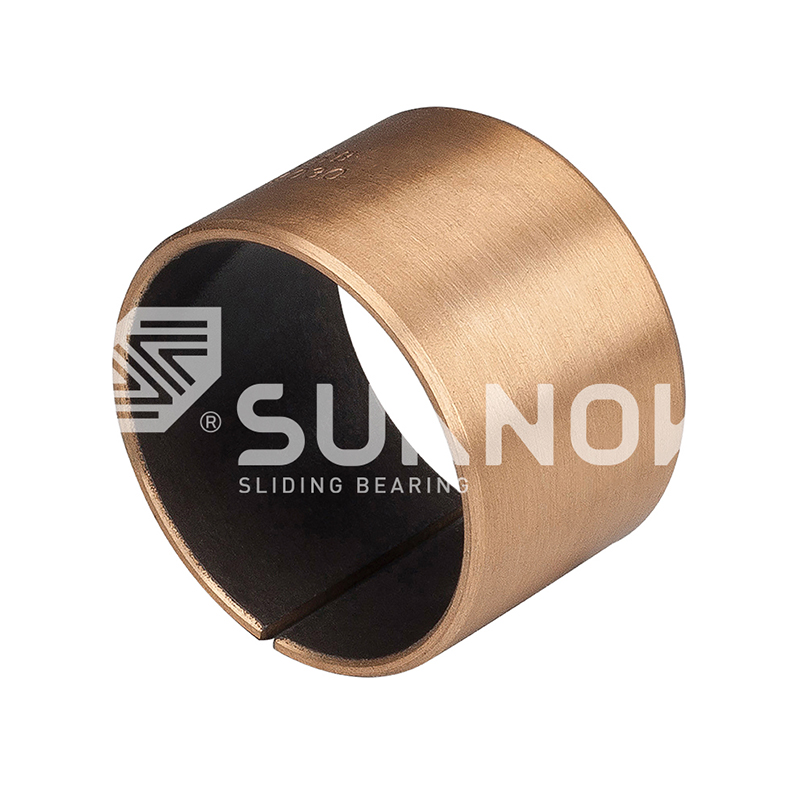
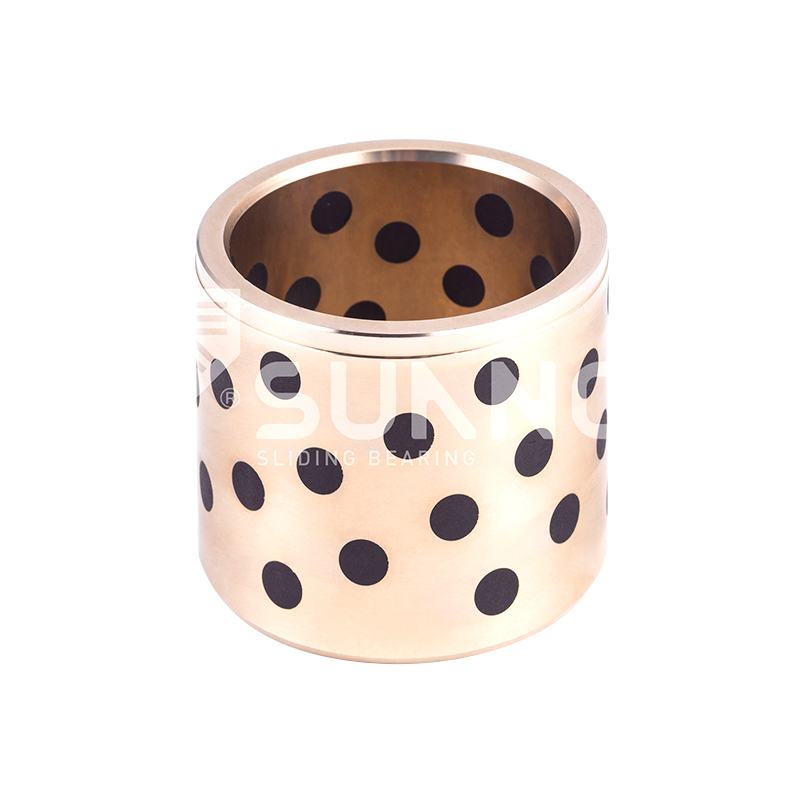
- Graphite-plugged bronze/brass bushings: These have cylindrical graphite plugs pressed into machined holes distributed around the bore and faces. The graphite content typically ranges from 15% to 30% by surface area. As the shaft wears against the bore, graphite transfers onto the shaft surface, forming a dry lubricant film. These are rated for temperatures up to 400 °C and PV values up to 0.5 MPa·m/s in low-speed, high-load applications.
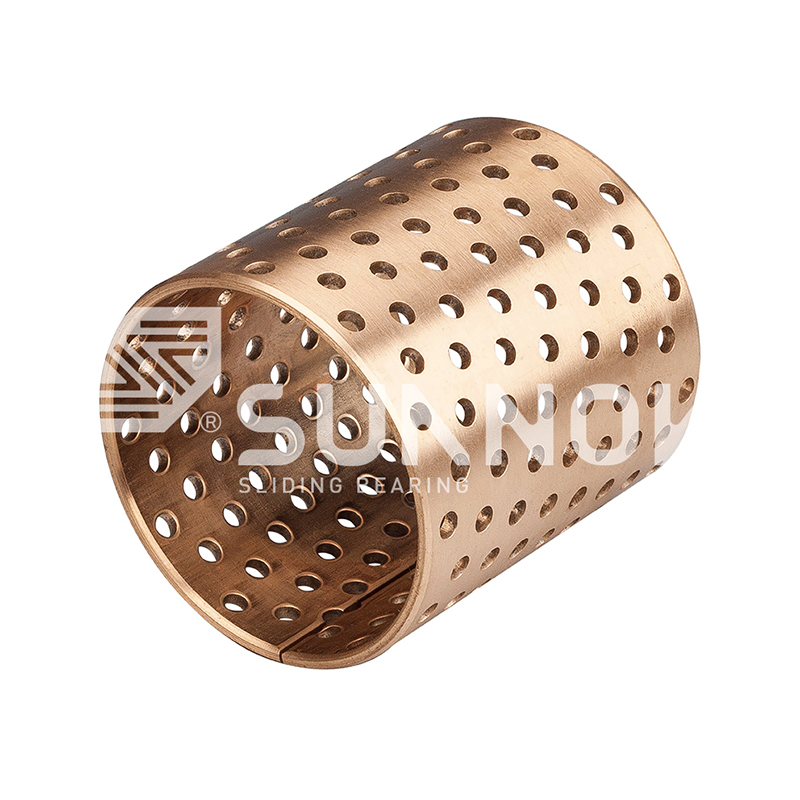
- Oil-impregnated sintered bronze (SAE 841): Technically a porous bronze rather than brass, these bushings are manufactured by sintering bronze powder and then vacuum-impregnating the porous structure with oil (typically 18–22% oil by volume). Under operation, shaft rotation and heat draw oil to the surface; when the shaft stops, capillary action reabsorbs the oil. Rated for shaft speeds up to 2.5 m/s and loads up to 3.5 MPa.
If your application uses standard wrought brass bushings and you are relying on them to run dry, expect accelerated wear. Specify graphite-plugged or sintered bronze variants explicitly if self-lubrication is required.
Do Bushings Need to Be Lubricated?
It depends entirely on the bushing type. The table below summarises lubrication requirements by material class:
| Bushing Type | External Lube Required? | Typical Lube Interval | Dry-Run Capable? |
|---|---|---|---|
| Plain brass / bronze (wrought) | Yes | Every 50–200 operating hours | No |
| Cast iron | Yes | Every 100–500 hours | No |
| Sintered bronze (SAE 841) | Optional top-up | Re-oil at major service only | Short periods only |
| Graphite-plugged bronze | No | None required | Yes — design intent |
| PTFE-lined / composite | No | None required | Yes — design intent |
| Polymer (nylon, acetal, PEEK) | No (some benefit from occasional oil) | None to annual | Yes at moderate PV |
| Bi-metal (steel + PTFE/bronze overlay) | No | None required | Yes — continuous |
For critical equipment, even self-lubricating bushings benefit from a light film of compatible grease during initial installation. This "run-in" lubrication protects the bushing before the transfer film fully develops — typically within the first 1–4 hours of operation at rated load.
Consequences of Running an Unlubricated Standard Bushing
In a plain bronze bushing operating dry at a PV (pressure × velocity) of just 0.1 MPa·m/s, surface temperatures can rise 40–80 °C above ambient within minutes. This accelerates oxidation, increases the coefficient of friction from a lubricated value of 0.05–0.10 to a dry value of 0.20–0.35, and can reduce bushing service life by 70–90% compared to properly lubricated operation. In high-load pivots — excavator arm pins, for example — an unlubricated plain bushing may fail in under 100 hours where a self-lubricating equivalent would last 5,000+ hours.
How to Lubricate Bushings That Require It
When you are working with bushing types that do require external lubrication, correct technique is critical. Poor lubrication practice is the leading cause of premature bushing failure in field equipment.
Choosing the Right Lubricant
| Application Condition | Recommended Lubricant | Typical Grade / Type |
|---|---|---|
| General machinery, moderate speed | Lithium-based grease | NLGI 2, ISO VG 100–150 base oil |
| High load, low speed (pivots, pins) | Extreme-pressure (EP) grease | NLGI 2 EP, molybdenum-fortified |
| High temperature (>120 °C) | Calcium-sulphonate or ceramic grease | NLGI 2, rated to 200 °C+ |
| Food-grade / washdown | NSF H1 food-grade grease | NLGI 2, white mineral or PAO base |
| Water immersion / marine | Waterproof marine grease | NLGI 2 calcium-complex or calcium-sulphonate |
| Light-duty, high-speed spindles | Light mineral oil | ISO VG 32–46, drip or wick feed |
How to Apply Grease to a Bushing Correctly
- Clean before re-lubricating: Old, contaminated grease acts as an abrasive. Before applying fresh grease, purge the old grease by pumping new grease through the fitting until clean grease emerges, or disassemble and wipe the bore clean if the bushing has no grease fitting.
- Apply grease at rest or low load: Grease applied under full load does not distribute evenly across the bore. Relieve load on the joint or rotate the shaft slowly while greasing to ensure full coverage.
- Use a calibrated grease gun: Over-greasing is a common and damaging mistake. For a standard 40 mm diameter x 40 mm long bronze bushing, a single pump stroke (approximately 1.4 g) of NLGI 2 grease is typically sufficient to replenish the film without overpressurising seals.
- Check the grease nipple / zerk fitting: A blocked nipple means no grease is reaching the bushing. Test by feeling for back-pressure; if the gun plunger barely moves, the nipple or passage is blocked. Clear with a nipple cleaning tool or replace the fitting.
- Establish a lubrication schedule: For construction equipment pivots, the OEM standard is typically every 50 operating hours or weekly, whichever comes first. High-cycle machinery may need daily lubrication. Automated central lubrication systems eliminate human variability entirely.
Lubrication During Installation (All Bushing Types)
Regardless of whether a bushing is self-lubricating or not, always apply a thin film of compatible lubricant to the outer diameter (OD) before pressing the bushing into its housing bore. This reduces press-fit friction, prevents galling of the housing bore surface, and ensures the bushing seats squarely without shear damage. For self-lubricating PTFE-lined bushings, use only a compatible grease — silicone or PTFE-based — as petroleum-based oils can degrade some polymer linings.
Types of Self-Lubricating Bushings Compared
Selecting the right self-lubricating bushing requires matching the bushing's PV limit, temperature range, and chemical compatibility to the application. The four main types in industrial use:
| Type | Max Load (MPa) | Max Speed (m/s) | Temp Range (°C) | Coefficient of Friction | Key Advantage |
|---|---|---|---|---|---|
| Graphite-plugged bronze | Up to 140 | Up to 1.5 | -200 to +400 | 0.10 – 0.20 | High load, extreme temperature |
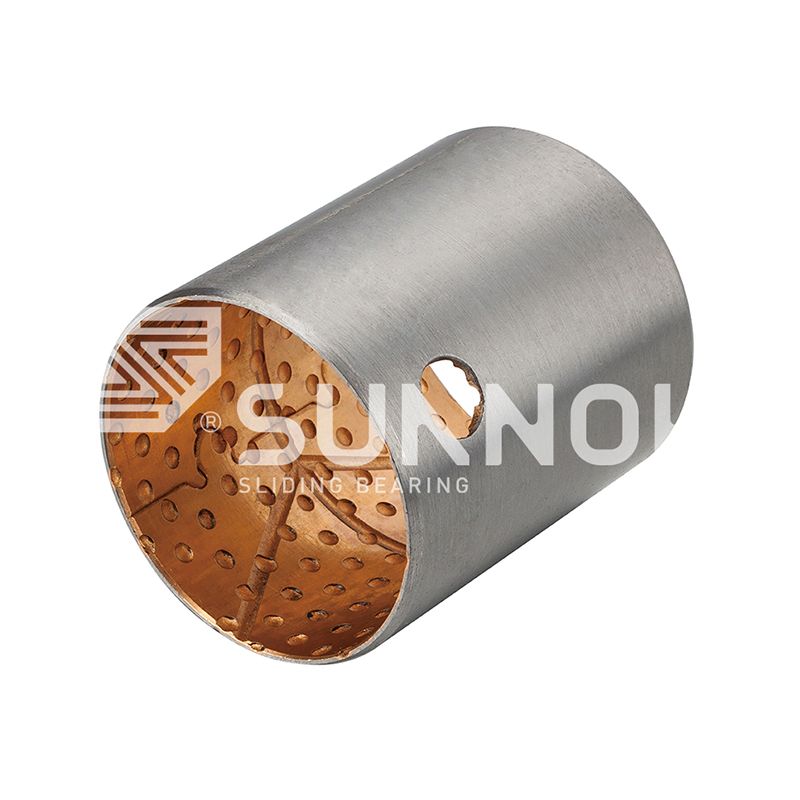
| Bi-metal (steel + PTFE/Pb-free overlay) | Up to 250 | Up to 3.0 | -195 to +280 | 0.03 – 0.15 | Highest load capacity, compact |
| PTFE/fiber composite | Up to 150 | Up to 0.5 | -200 to +250 | 0.04 – 0.20 | Chemical resistance, lightweight |
| Sintered bronze (SAE 841) | Up to 14 | Up to 6.0 | -40 to +120 | 0.05 – 0.15 | Low cost, high-speed compatibility |
| Polymer (nylon / acetal / PEEK) | Up to 60 | Up to 3.0 | -40 to +250 (PEEK) | 0.10 – 0.35 | Corrosion-free, electrically insulating |
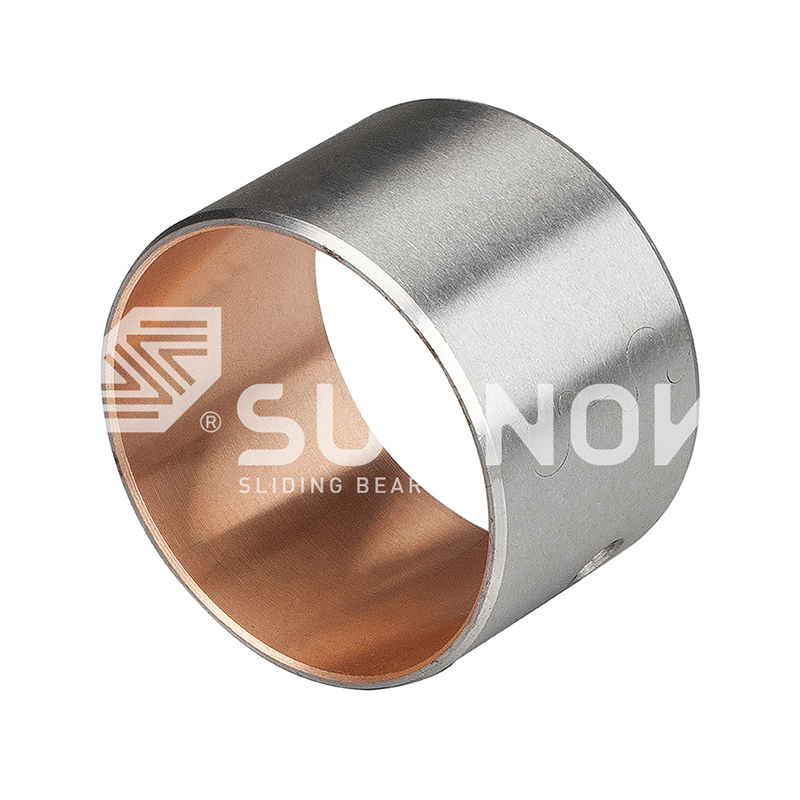
For demanding pivoting or oscillating applications — construction linkages, agricultural implement pins, marine steering gear — bi-metal bushings with a PTFE overlay are the industry benchmark. SKF, Igus, and GGB all publish independently tested PV curves for their product lines; always cross-reference the actual operating PV against the rated maximum with a safety factor of at least 1.5.
Installation and Maintenance Tips for Long Bushing Life
- Press fit, do not hammer: Use an arbor press or hydraulic press with a suitable mandrel for consistent, straight installation. Hammering distorts the bore and crushes the self-lubricating overlay. Maximum press-fit interference for most self-lubricating bushings is 0.01–0.04 mm on diameter.
- Check shaft hardness and finish: For bi-metal and PTFE-lined bushings, the mating shaft should be hardened to at least 45 HRC and ground to Ra 0.4–0.8 µm. A soft or rough shaft destroys the transfer film and drastically shortens bushing life.
- Align the housing and shaft: Misalignment exceeding 0.5 degrees concentrates load at one edge of the bushing, increasing local contact pressure by up to 3x and causing rapid edge wear. Use spherical or self-aligning variants where shaft deflection or assembly misalignment is expected.
- Protect from contamination: Even self-lubricating bushings wear faster when abrasive particles reach the bore. Use dust seals, wiper rings, or labyrinth seals in dirty environments such as earthmoving equipment and cement plants.
- Monitor wear by checking shaft play: Most self-lubricating bushings have a maximum allowable diametric clearance of 0.5–1.0% of shaft diameter before replacement is required. For a 50 mm shaft, maximum acceptable play is typically 0.25–0.50 mm. Exceeding this causes impact loading and accelerated wear on both bushing and shaft.
Summary
Self-lubricating bushings eliminate the need for external grease or oil by incorporating solid lubricants — graphite, PTFE, or MoS2 — into their structure. Standard brass and plain bronze bushings are not self-lubricating and will fail rapidly without a proper lubrication schedule. When lubrication is required, selecting the correct lubricant grade, applying it at the right interval, and ensuring the grease actually reaches the bearing surface are the three most critical factors in maximising bushing service life. For maintenance-free operation, bi-metal PTFE-overlay and graphite-plugged bronze bushings represent the highest-performance options across the widest range of industrial conditions.