


 русский
 Español
-
-
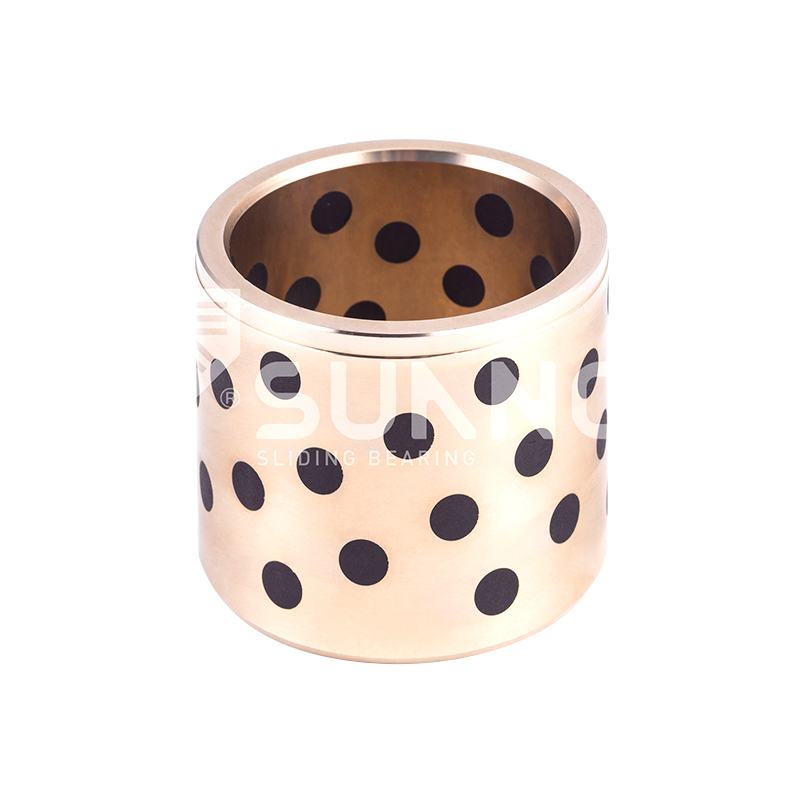 JDB Solid-lubricating Bearing JDB650 Self-Lubricating Brass Bushing Oilless Bearings
 -
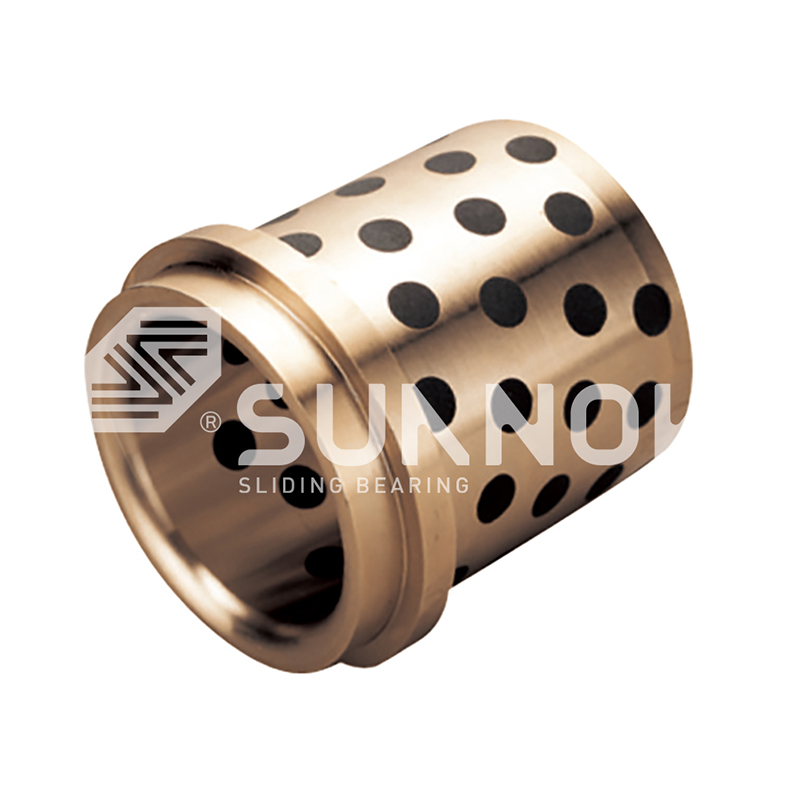 JDB Solid-lubricating Bearing Maintenance-Free With Collar Brass Din9834 Oilless Guide Bushing Bearing
 -
-
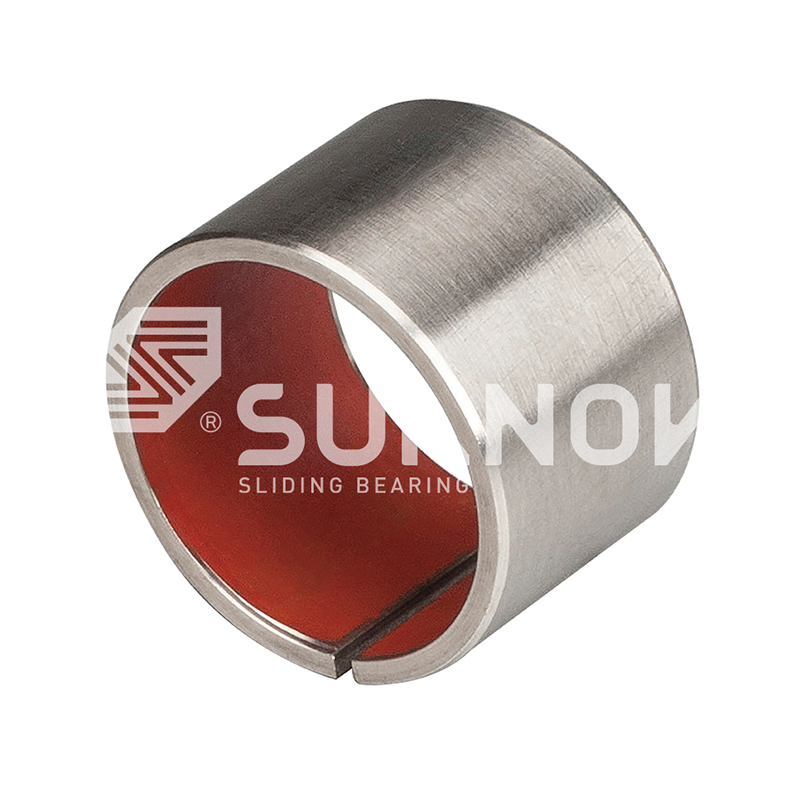
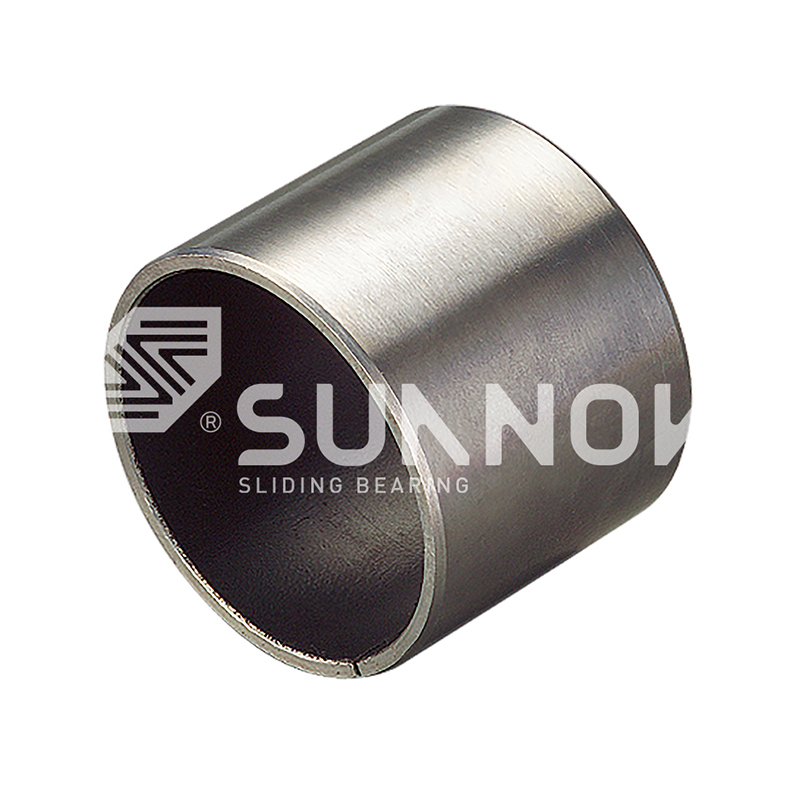 SF-1 Oilless Bearing Self Lubricating SF-1T Metal Gear Pump Bearing Bronze Bushings
 -
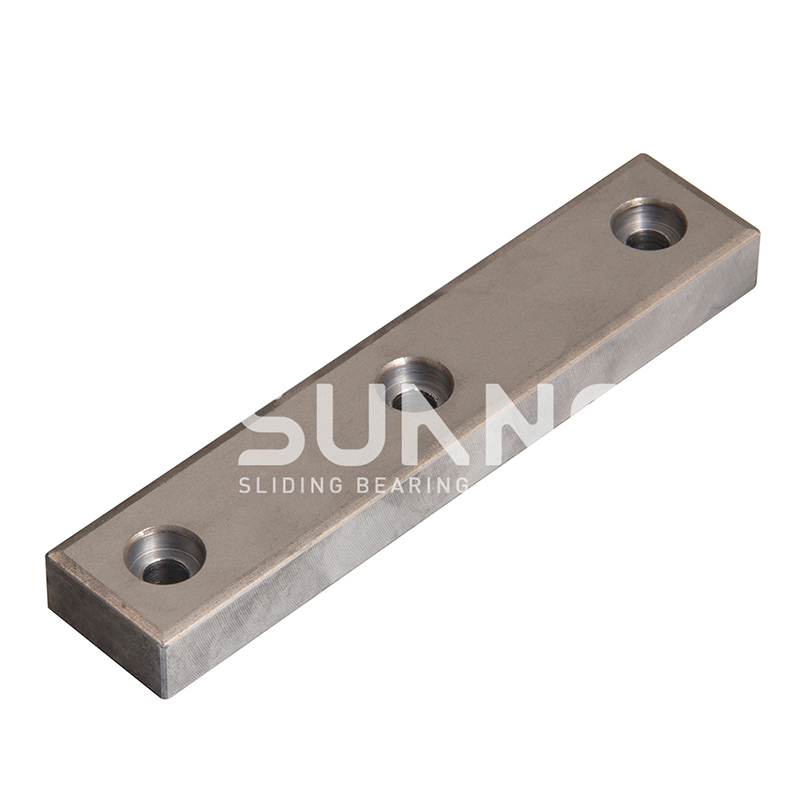 Oil-retaining Bimetallic Bearing Self-Lubricating 200# P20 Steel Graphite Insert Wear Plate / Steel Oilless Wear Strip
 -
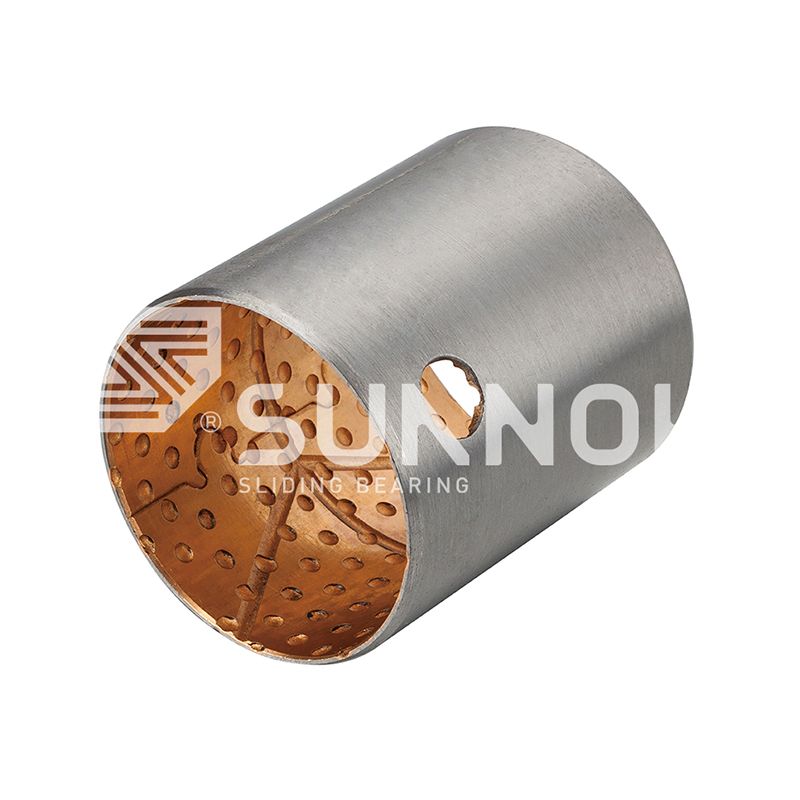 JF-800 Bi-metal Bearing JF-750 Self-Lubricating Lead Free Bi-Metal Bearing for Heavy Duty Engines Low Friction
 -
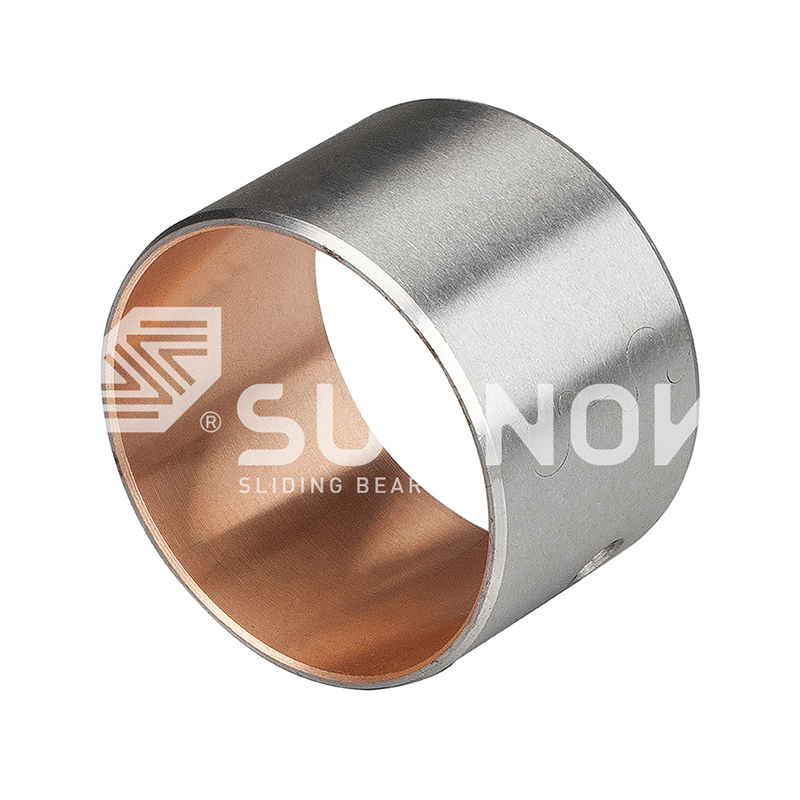 JF-800 Bi-metal Bearing JF-700 Bi-Metal Bearing Heavy Duty Self-Lubricating Sleeve Bushings
Self-Lubricating Bushings vs Brass | Maintenance-Free Bearings
Industry News-Content
- 1 What Is a Self-Lubricating Bushing?
- 2 How Self-Lubricating Bushings Work: The Mechanism in Detail
- 3 Do Brass Bushings Need Lubrication?
- 4 Can You Lubricate Bushings — and Should You?
- 5 Selecting the Right Self-Lubricating Bushing: Application-Based Guide
- 6 Installation, Maintenance, and End-of-Life Indicators
- 7 Technical Questions on Self-Lubricating Bushings Answered
Technical Overview
Self-Lubricating Bushings — What They Are, How They Work, When to Use Them
Self-lubricating bushings are bearing elements engineered with built-in lubricant reservoirs — typically solid lubricants embedded in or bonded to a metallic or polymer matrix — that eliminate the need for external grease or oil application throughout the service life of the component. They work by releasing microscopic quantities of lubricant under the heat and pressure of sliding contact, maintaining a continuous protective film between the shaft and bushing bore without human intervention.
Brass bushings, by contrast, are not self-lubricating and will accelerate wear without proper lubrication maintenance. External lubrication of standard bushings is possible and extends service life, but requires a maintenance schedule that self-lubricating designs eliminate entirely. For maintenance-free, high-temperature, clean-room, or remote-location applications, self-lubricating bushings are the technically and economically superior choice.
Operating Temperature -200°C to +350°C (material-dependent)
Load Capacity Up to 250 MPa (bronze/graphite)
Service Life Extension 3–10× vs unlubricated standard bushings
Friction Coefficient 0.03–0.20 (dry operation)
Key Industries Automotive, construction, food processing, aerospace
What Is a Self-Lubricating Bushing?
A self-lubricating bushing is a cylindrical plain bearing that contains its own internal lubricant supply — eliminating the external grease fittings, oil reservoirs, or maintenance intervals that conventional bushings require. The term "self-lubricating" describes a functional property rather than a single material or design: several distinct engineering approaches achieve this outcome, each suited to different operating conditions.
At the microscopic level, all self-lubricating bushing technologies operate on the same principle: the friction and heat generated by shaft-to-bushing contact triggers the release of a controlled quantity of lubricant from within the bushing material. This lubricant migrates to the bearing surface, forms a low-friction transfer film, reduces wear, and — critically — replenishes itself as long as the reserve within the material is not exhausted. In well-designed products under correct operating conditions, this cycle continues for the entire machine service life without intervention.
Self-Lubricating Bushing Technology Types
Sintered Bronze / Porous Metal
Oil-impregnated porous bronze (up to 30% oil by volume). Heat from operation expands oil out of pores; cooling draws it back. Excellent for moderate loads, continuous rotation, 20–80°C.
Graphite-Embedded Bronze
Solid bronze with graphite plugs pressed into the bore surface. Graphite smears onto shaft under load, creating a dry solid-lubricant film. Ideal for high-temp, heavy-load, oscillating service.
PTFE-Lined Composite
Steel or bronze backing with a thin PTFE/fibre composite liner. The lowest friction of any bushing type (μ = 0.03–0.08). Thin cross-section; suitable for oscillating, reciprocating, and slow rotation.
Polymer / PEEK / PA
Engineered thermoplastic with lubricant additives (PTFE, MoS₂, graphite). Lightweight, corrosion-immune, FDA-compliant grades available. Suited for light-medium loads and clean environments.
How Self-Lubricating Bushings Work: The Mechanism in Detail
The working mechanism varies by bushing type, but the outcome in all cases is the same: a sacrificial lubricant film forms between the bushing bore and the rotating or oscillating shaft. Understanding the specific mechanism for each technology explains why operating conditions — speed, load, temperature, motion type — determine which type is appropriate for a given application.
01
Oil-Impregnated Sintered Bronze: Thermal Pump Effect
Sintered bronze bushings are manufactured by compacting and sintering bronze powder to create a rigid but intentionally porous structure — typically 20–30% void volume by design. This pore network is vacuum-impregnated with mineral or synthetic oil under pressure. During operation, the frictional heat at the shaft interface raises the local temperature, expanding the oil in the pores and forcing it outward to the bearing surface. When the bearing cools (during a stop cycle, for example), the oil contracts back into the pores by capillary action. This thermal pumping cycle is entirely passive — it requires no control system and operates continuously as long as oil reserves remain in the porous structure.
Key performance parameter: oil content. Standard sintered bronze achieves 18–24% oil by volume. Higher-performance grades reach 28–30%. At 18% oil content, a typical bushing operating 8 hours per day will run lubrication-free for approximately 15,000–25,000 operating hours before the oil reserve is significantly depleted — effectively a 5–8 year service life in two-shift manufacturing applications.
02
Graphite-Plugged Bronze: Solid Film Transfer
In graphite-embedded bronze bushings, cylindrical graphite plugs are pressed into precision-drilled holes in the bore surface, typically arranged in a circumferential pattern at 30–60 degree intervals. The graphite concentration at the bore surface is typically 20–35% by area. As the shaft rotates or oscillates, it contacts the graphite plugs and smears a thin, continuous graphite film over both the shaft and bushing surfaces. Graphite's lamellar crystal structure allows its layers to slide over each other with extremely low shear resistance, creating a dry solid lubricant film with friction coefficients of 0.05–0.15.
This mechanism operates effectively at temperatures from -50°C to +450°C — well beyond the limits of any oil-based lubrication system. Graphite-plugged bronze is the standard choice for steel mill equipment, glass handling machinery, kiln conveyor systems, and any application where operating temperature exceeds 150°C or where oil contamination cannot be tolerated. The graphite reserve is effectively inexhaustible in most applications — wear of the bronze matrix and graphite occurs at similar rates, maintaining consistent lubrication through the full bushing service life.
03
PTFE-Lined Composite: Transfer Film Formation
PTFE (polytetrafluoroethylene) composite bushings consist of a thin liner — typically 0.2–0.5mm — bonded to a metallic backing. The liner comprises PTFE fibres woven or pressed with reinforcing materials such as bronze powder, glass fibres, carbon fibres, or woven fabric. Under load and motion, PTFE molecules transfer from the liner surface to the shaft, building up a coherent transfer film 0.1–10 μm thick on the shaft surface. Once this film is established (typically within the first few hours of operation, called the "run-in" period), the PTFE-to-PTFE sliding interface provides the lowest friction coefficient achievable in a dry bearing system: 0.03–0.08.
PTFE composite bushings are exceptional for slow-speed, high-load oscillating applications — agricultural equipment pivot pins, construction machinery linkages, automotive suspension joints — where the oscillating motion would sweep away conventional grease and where re-lubrication access is impractical. Critical specification note: PTFE composites must not be used in continuous high-speed rotation without additional cooling considerations, as the low thermal conductivity of PTFE allows heat to build up in the thin liner, potentially causing delamination from the backing.
04
Polymer Bushings: Additive-Based Internal Lubrication
Engineering polymer bushings — PEEK, PA46, POM, UHMWPE — achieve self-lubrication by incorporating solid lubricant particles (PTFE, MoS₂, graphite) directly into the polymer matrix at the compounding stage. These additives are uniformly distributed throughout the material at concentrations of 10–30% by weight. As the bushing surface wears progressively during operation, fresh lubricant particles are continuously exposed at the sliding surface, maintaining a constant lubricant supply as long as any wall thickness remains. Unlike metallic bushing types, there is no distinct "lubricant reserve" that can be depleted — the lubricant is intrinsic to the entire material volume.
Polymer bushings provide unique advantages that metallic types cannot: complete corrosion immunity, electrical non-conductivity, compliance with FDA 21 CFR 177 and EU 10/2011 food-contact regulations, noise damping, and the ability to tolerate some shaft misalignment through elastic deformation. Weight is 6–8 times lower than bronze equivalents. The primary limitation is load capacity: maximum PV value (pressure × velocity) for most polymer bushings is 0.1–0.3 MPa·m/s versus 0.5–2.0 MPa·m/s for metallic types.
Do Brass Bushings Need Lubrication?
Yes — standard brass (copper-zinc alloy) bushings require external lubrication and will experience accelerated wear without it. This is a critical distinction from true self-lubricating designs: brass itself has no inherent lubrication mechanism. What creates confusion is that brass has relatively low friction against steel compared to ferrous metals, and this inherent sliding property is sometimes mischaracterised as "self-lubricating" in non-technical contexts. It is not.
Standard Brass Bushing
Friction Coefficient (dry)
0.25–0.45
Friction Coefficient (lubricated)
0.05–0.15
Dry operation outcome
Rapid wear, galling risk
Lubrication requirement
Mandatory; scheduled intervals
Max PV (lubricated)
0.5–1.5 MPa·m/s
Typical lubrication interval
500–2,000 operating hours
Brass bushings perform well when properly lubricated. Their value is in machinability, corrosion resistance, and lower cost — not self-lubrication.
Self-Lubricating Bronze/Graphite Bushing
Friction Coefficient (dry operation)
0.05–0.15
External lubrication
None required
Dry operation outcome
Normal operation (designed for this)
Lubrication requirement
None; maintenance-free life
Max PV (dry)
0.3–2.0 MPa·m/s (type-dependent)
Typical service life
15,000–50,000+ operating hours
Self-lubricating designs are specified where maintenance access is limited, contamination must be avoided, or total lifecycle cost justifies higher initial price.
The Copper-Graphite Exception: The Alloy That Actually Self-Lubricates
One "brass-family" material genuinely self-lubricates: leaded bronze (copper-tin-lead alloy, CuSn5Pb5Zn5 or similar). Lead in the bronze matrix migrates under frictional heat to the bearing surface, creating a thin lead film that reduces friction and prevents adhesive wear. This is a true self-lubricating mechanism — not an external additive — and it is why leaded bronzes have been used as plain bearings for over a century in automotive connecting rod and main bearings, hydraulic pump bushing bores, and pump shaft bushings. However, REACH regulation in the EU restricts lead content in new designs, driving replacement with tin-bronze or aluminium-bronze with solid graphite plugs.
Can You Lubricate Bushings — and Should You?
Yes, external lubrication can be applied to most bushing types — but whether it should be applied depends entirely on the bushing type, and in some cases, external lubrication actively harms performance. This is one of the most common field errors in bearing maintenance practice.
| Bushing Type | External Lubrication | Effect on Performance | Recommended Action |
|---|---|---|---|
| Standard brass bushing | Required | Reduces friction from 0.35 to 0.08; extends life 3–5× | Apply grease every 500–2,000 hrs; use grease nipple if accessible |
| Sintered bronze (oil-impregnated) | Optional / Beneficial | Additional surface oil extends service life; beneficial for heavily loaded applications | Light oil application at installation; avoid grease (blocks pores) |
| Graphite-plugged bronze | Avoid if possible | Oil can wash out graphite film and contaminate contact surface; reduces self-lubrication effectiveness | Dry operation preferred; if contamination present, clean rather than oil |
| PTFE composite liner | Not recommended | Oil or grease prevents PTFE transfer film formation; degrades the mechanism the bushing depends on | Never lubricate; install dry; allow run-in period without grease |
| Polymer (PEEK/PA/POM) | Generally avoid | Most polymer bushings run dry by design; oil may cause swelling in some polymers | Consult manufacturer; water lubrication sometimes beneficial for nylon grades |
| Cast iron bushing | Required | Free graphite in cast iron provides minimal inherent lubrication; insufficient for most applications without external oil | Continuous oil lubrication; oil groove in bore strongly recommended |
What Happens When Bushings Run Without Correct Lubrication
The failure sequence for an unlubricated or under-lubricated non-self-lubricating bushing follows a predictable progression. Understanding this sequence helps maintenance engineers identify early warning signs before catastrophic failure:
Stage 1
Boundary Lubrication Breakdown (0–100 hours)
The protective lubricant film thins below critical thickness (typically 1–5 μm). Metal-to-metal asperity contact begins at surface peaks. Friction coefficient rises from 0.08 to 0.15–0.20. Heat generation increases proportionally. Surface roughness Ra begins to increase from wear at asperity tips.
Stage 2
Adhesive Wear Onset (100–500 hours)
Sustained metal contact causes micro-welding of asperities. Small particles are torn from both shaft and bushing surfaces, creating three-body abrasive wear — the torn particles act as abrasive grit between the sliding surfaces. Dimensional clearance increases. Operating noise and vibration become measurable. Temperature of bearing housing rises above ambient by 15–30°C.
Stage 3
Accelerating Wear (500–2,000 hours)
Clearance exceeds design tolerance; shaft begins to run eccentric. Dynamic forces increase as eccentricity amplifies vibration. Wear debris accumulates in lubricant or contamination zone. Shaft surface may show scoring lines visible to the naked eye. Continued operation causes shaft wear in addition to bushing wear — at this stage, both components typically require replacement rather than bushing-only change.
Stage 4
Catastrophic Failure (Terminal)
Thermal runaway — friction heat generation exceeds the system's ability to dissipate heat — causes rapid temperature rise. Bronze bushings may soften and plastically deform, seizing onto the shaft. Polymer bushings may melt. In extreme cases, the exothermic seizure event causes damage to adjacent components including housings, seals, and shaft journals. The economic consequence is a 5–15× increase in repair cost versus what preventive maintenance or a correctly specified self-lubricating bushing would have cost.
Selecting the Right Self-Lubricating Bushing: Application-Based Guide
The correct self-lubricating bushing for an application is determined by four primary parameters: load (pressure), speed (velocity), temperature, and motion type. The PV value — the product of bearing pressure P (MPa) and sliding velocity V (m/s) — is the primary engineering metric for bushing selection. Every bushing material has a maximum PV limit above which it will fail by thermal wear regardless of lubrication.
| Application Profile | Recommended Type | Max PV (MPa·m/s) | Temp Range | Key Advantage |
|---|---|---|---|---|
| Light load, continuous rotation, clean environment | Sintered bronze (oil-impregnated) | 0.5–0.8 | -20°C to +120°C | Low cost; quiet operation; proven technology |
| Heavy load, slow speed, high temperature | Graphite-plugged bronze | 1.5–2.0 | -50°C to +450°C | Extreme temp capability; no oil contamination risk |
| Oscillating / reciprocating, high load | PTFE composite liner | 0.1–0.5 | -200°C to +280°C | Lowest friction; ideal for pivots, linkages, hinges |
| Corrosive environment, food contact, light load | Polymer (PEEK/PA/POM-filled) | 0.1–0.3 | -40°C to +250°C | Corrosion-proof; FDA-compliant; lightweight |
| Combined high load + high speed | Bimetal (steel/bronze) + PTFE | 0.8–1.2 | -40°C to +150°C | High load + low friction; compact cross-section |
| Shock loading, mining, construction equipment | Cast bronze + graphite (large OD) | 2.0–3.0 | -30°C to +300°C | Maximum load capacity; shock-tolerant |
Industries and Applications Where Self-Lubricating Bushings Dominate
Automotive
- Suspension pivot pins and control arm bushings
- Steering rack bushings and tie-rod ends
- Seat recliner mechanisms
- Throttle and brake pedal pivots
- Convertible roof pivot points
Construction Machinery
- Excavator bucket pin and boom bushings
- Loader lift arm pivot bushings
- Bulldozer blade trunion bushings
- Crane sheave and hook block bushings
- Compactor pivot pins
Food Processing
- Conveyor chain link bushings (FDA-grade polymer)
- Mixer and blender pivot shafts
- Packaging machine cam follower bushings
- Bottle filling machine guide bushings
- Washdown-area equipment pivots
Steel and Metallurgy
- Rolling mill roll neck bushings
- Continuous caster segment bushings
- Furnace conveyor roller bushings
- Scale breaker pivot bushings
- Hot strip table roller end bushings
Installation, Maintenance, and End-of-Life Indicators
Self-lubricating bushings require less maintenance than conventional bushings, but correct installation practice remains critical. Errors at the installation stage — incorrect interference fit, surface contamination, wrong shaft hardness — cause premature failure that is often misattributed to the bushing type rather than the installation procedure.
Installation Best Practices
- Press-fit interference: 0.02–0.05mm for metallic bushings in steel housings; 0.03–0.08mm in aluminium (different expansion coefficients)
- Use a cylindrical mandrel or hydraulic press — never hammer directly on the bushing end face, which distorts the bore geometry and immediately compromises the designed clearance
- Minimum shaft hardness: 55 HRC for graphite-plugged types to prevent shaft scoring by graphite abrasion; 45 HRC minimum for sintered bronze types
- Surface roughness of shaft: Ra 0.4–0.8 μm (N6–N7) for metallic bushings; Ra 0.2–0.4 μm for PTFE composite types — too rough tears the transfer film; too smooth prevents it from forming
- Clean the housing bore and shaft thoroughly before installation — any contamination caught in the interference fit permanently distorts the bushing bore
- Verify bore diameter after installation with a calibrated internal micrometer — press-fitting always closes the bore slightly; confirm running clearance is within design specification
End-of-Life Indicators: When to Replace
- Diametral clearance has reached 0.5–1% of nominal bore diameter — a 50mm bore bushing should be replaced when clearance exceeds 0.25–0.50mm
- Visible loss of graphite plugs at the bore surface (graphite-plugged type) — bore surface appears as uninterrupted metal without graphite inclusion pattern
- PTFE liner thickness below 0.05mm (composite type) — measured by profilometer or when the backing metal substrate becomes visible on the bore surface
- Abnormal operating noise — metallic ringing or knocking indicates loss of clearance control from excessive wear
- Elevated housing temperature — a temperature rise of more than 20°C above normal operating temperature indicates loss of lubrication effectiveness
- Shaft surface scoring visible to naked eye — at this point both shaft and bushing require simultaneous replacement; replacing the bushing alone on a scored shaft causes immediate repeat failure
Technical Questions on Self-Lubricating Bushings Answered
How long do self-lubricating bushings last compared to standard bushings?
In applications where a standard bushing receives correct lubrication on schedule, service lives are broadly comparable — 15,000–50,000 hours in each case. The critical distinction is in real-world operating conditions, where lubrication intervals are frequently missed, under-lubrication is common, and access to grease points is difficult. In these conditions, self-lubricating bushings consistently outperform standard bushings by a factor of 3–10× in observed service life. For inaccessible or sealed mechanisms — automotive suspension joints, agricultural equipment, sealed industrial machines — self-lubricating bushings are the only practical option for achieving design service life without scheduled disassembly for re-greasing.
Can self-lubricating bushings be used in submerged or wet environments?
It depends on the type. Graphite-plugged bronze bushings are the most suitable for wet environments — graphite is unaffected by water, and bronze has good corrosion resistance, though not in seawater or strong acid. PTFE composite bushings also perform well in water and dilute chemical environments; PTFE itself is inert to virtually all fluids. Sintered bronze oil-impregnated bushings perform poorly when submerged — water displaces the oil from the pores, permanently degrading the lubrication system. Polymer bushings (nylon grades) can actually benefit from water absorption, which reduces friction, but swell dimensionally and must be specified with additional clearance allowance for wet service.
Are self-lubricating bushings suitable for vacuum or cleanroom applications?
Yes — this is one of their strongest application areas. Oil-impregnated sintered bronze bushings are unsuitable (oil vapour pressure causes contamination and outgassing). Graphite-plugged bronze and PTFE composite bushings are the standard choices for semiconductor fabrication equipment, medical devices, and vacuum chambers. Graphite operates effectively in vacuum — its lubricating properties are actually enhanced in the absence of water vapour. PTFE composite generates very low particulate contamination. MoS₂-filled polymer bushings operate in ultra-high vacuum environments where graphite would cause contamination issues. Always verify the specific bushing type with the manufacturer for cleanroom class requirements and outgassing specifications before specification.
What is the difference between a self-lubricating bushing and a bearing?
In engineering terminology, "bearing" is the general category — any component that supports a load while allowing relative motion. "Bushing" is a specific type of plain (sliding) bearing distinguished by its cylindrical sleeve form factor and its use as a liner in a housing bore. All bushings are bearings, but not all bearings are bushings — rolling element bearings (ball bearings, roller bearings) are also bearings but are not bushings. The term "self-lubricating" can technically apply to any bearing type: self-lubricating ball bearings (greased-for-life sealed designs) and self-lubricating bushings both eliminate external lubrication requirements but through different mechanisms and for different load and speed profiles.
Recommended NEWS:
The Rise of Self-Lubricating Bearings: A Guide to Maintenance-Free Performance
Understanding the Features of JDB650 Self-Lubricating Brass Bushing Oilless Bearings
Self-Lubricating Copper Alloy Bearings: A Comparative Analysis with JDB-600 Casting Bronze and Oil-Retaining Bimetallic Bearings
JDB650 Oilless Bearings: Advanced Self-Lubricating Brass Bushing Technology
Self-Lubricating Copper Alloy Bearings: The Future of Solid-Lubricating Bearings and JDB-600 Casting Bronze Bearings
Self-Lubricating Bronze Bushings: Benefits, Cost Savings, and Selection Guide
Recommended LINS:
Contact Us //
Have Questions? Get in Touch!

Zhejiang Shuangnuo Bearing Technology Co., Ltd. specializes in the production of various self-lubricating copper alloy bushing bearings products
Quick Links
Related Products
Contact
- Add: No. 69, Tingyao East Road, Ganyao Town Industrial Zone, Jiashan County, Zhejiang Province, China
- Tel: +86-15957371801
- Fax: +86-0573-84038630
- Email: [email protected]
[email protected]
© 2024 Zhejiang Shuangnuo Bearing Technology Co., Ltd.
Custom Self-Lubricating Copper Alloy Bearings
