


 русский
 Español
-
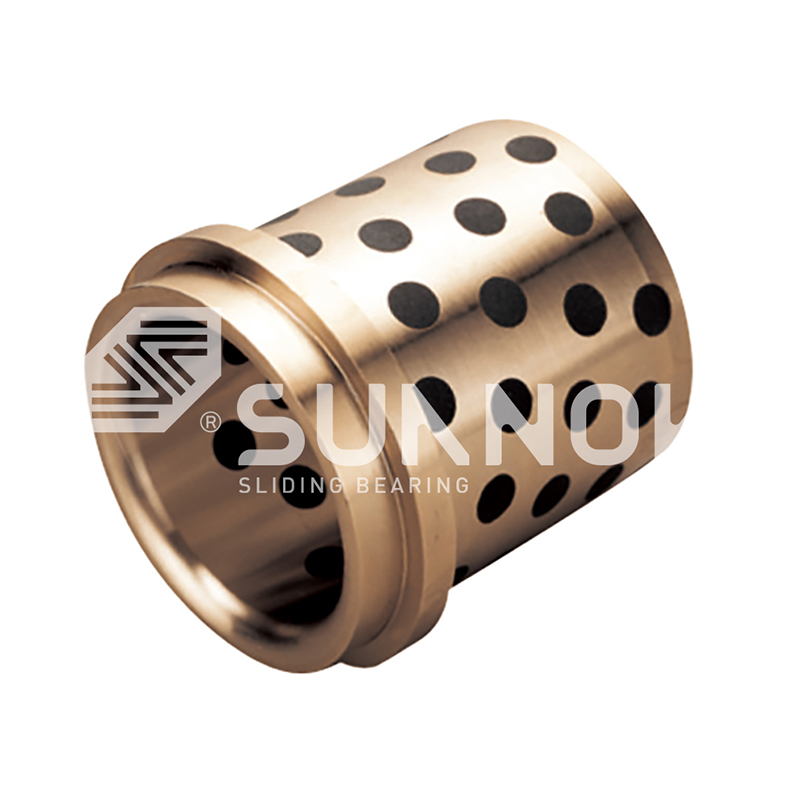 JDB Solid-lubricating Bearing Maintenance-Free With Collar Brass Din9834 Oilless Guide Bushing Bearing
-
 SF-2 Boundary Lubricating Bearing SF-2Y Boundary Self-lubricating Bearing - Low Friction Dry Lubricant Bushings for Industrial Machinery
-
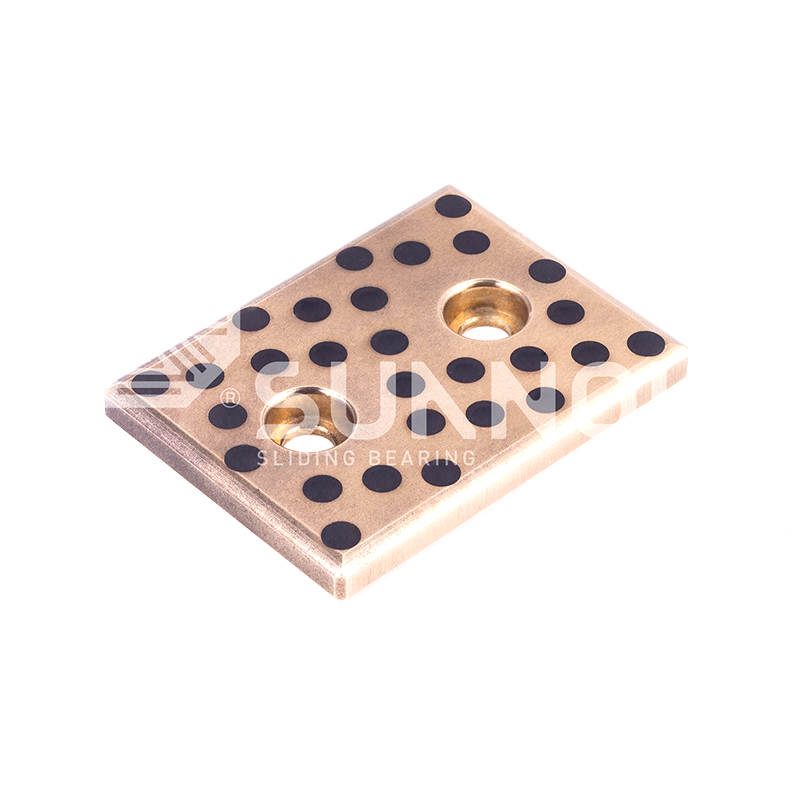 JDB Solid-lubricating Bearing Rectangular Embedded Graphite Bronze Wear Pad, Maintenance Free Bronze Guide Plate For Mold JTWP
-
-
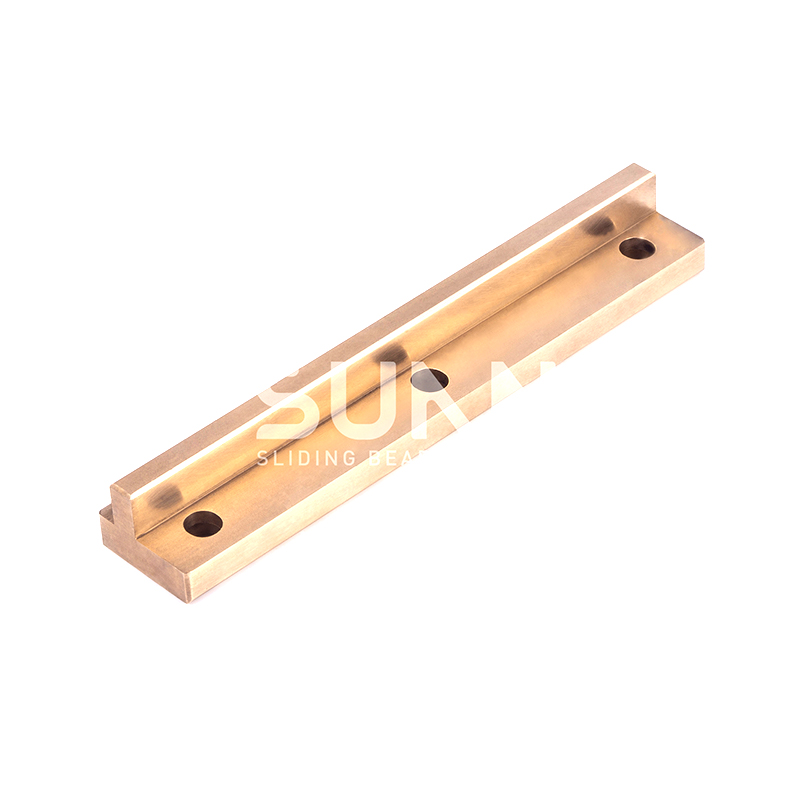 JDB Solid-lubricating Bearing T-Slot Guide Self-lubricating Bronze Slide Plate, JSOL Embedded Bronze Oilless Wear Plate
-
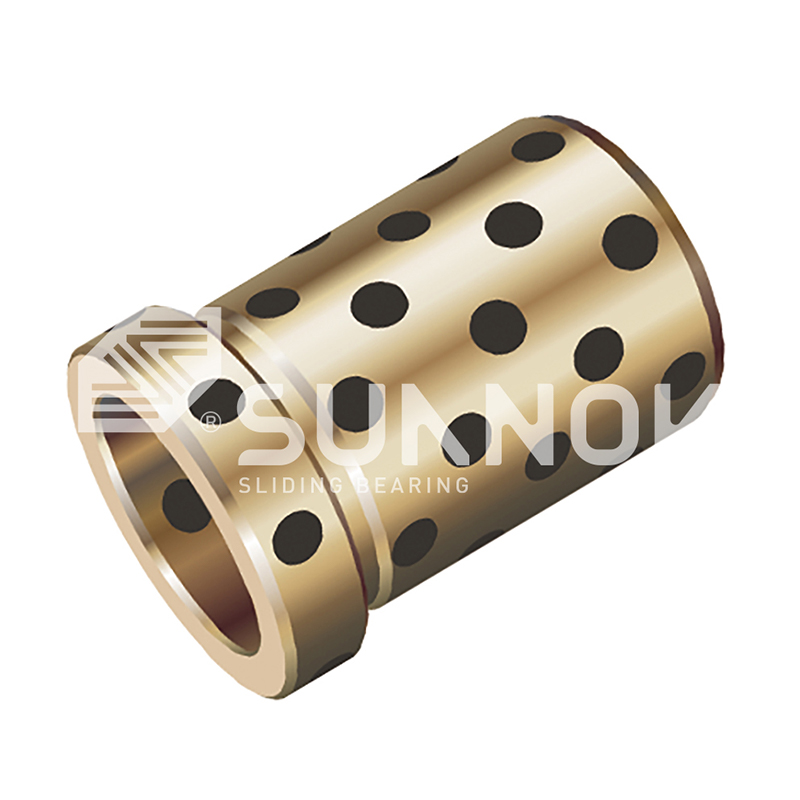 JDB Solid-lubricating Bearing JGBF Brass Oilless Ejector Flanged Guide Bearings Bushings
-
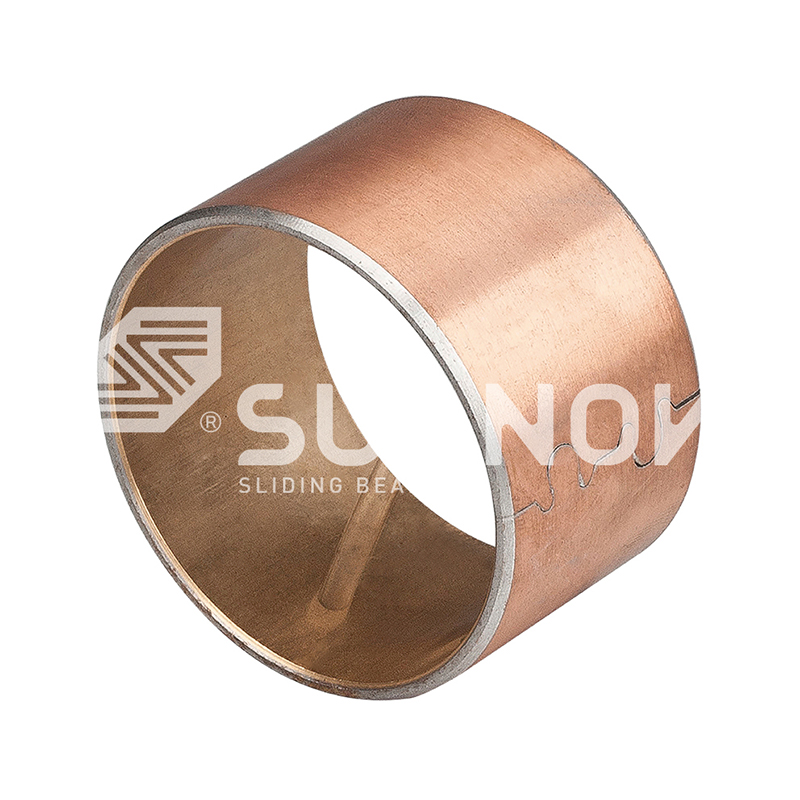 JF-800 Bi-metal Bearing JF-720 Tin Bi-Metal Bearing Bushings Sleeves For Low Friction and Wear-Resistant Applications
-
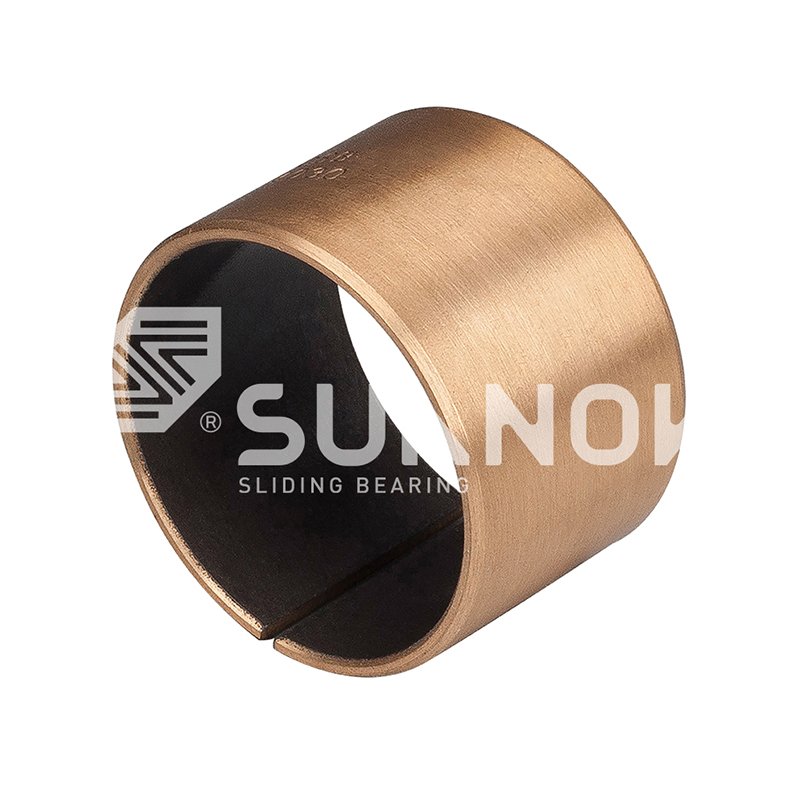
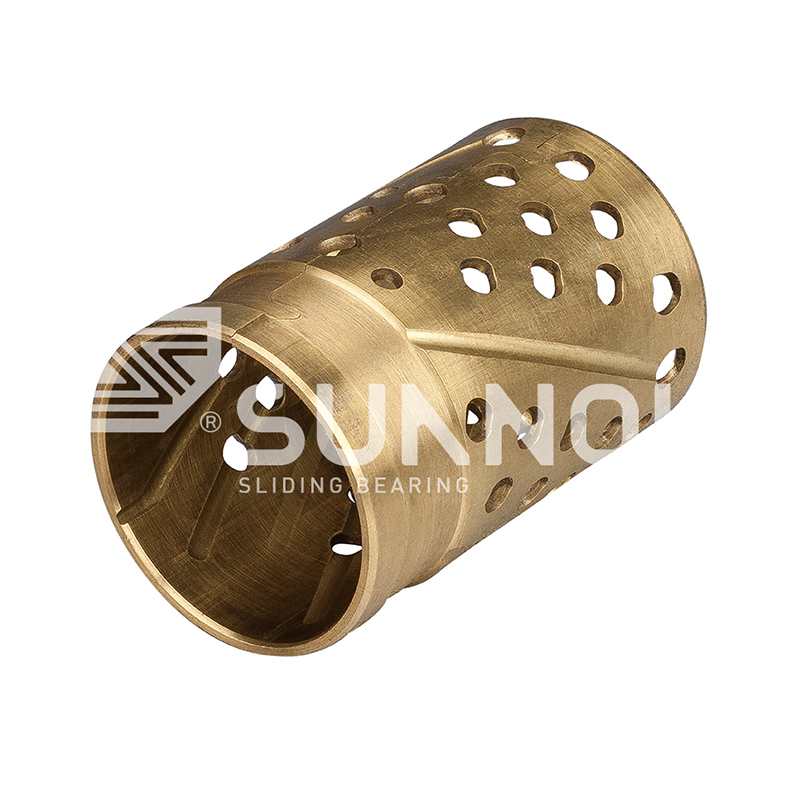 FB090 Bronze Wrapped Bearing FB091 High-Performance Copper Wrapped Bearing & Bushing | Bronze Bush
Bronze Bushings for Agricultural Machinery: Selection, Materials, and Maintenance Guide
Industry News-Content
- 1 Why Bronze Bushings for Agricultural Machinery
- 2 Where Bronze Bushings Are Used in Farm Equipment
- 3 Bronze Grades and Alloy Selection
- 4 Self-Lubricating Bronze Bushings for Dusty and Wet Conditions
- 5 Load Capacity, PV Limits, and Shaft Requirements
- 6 Tolerances, Installation, and Maintenance
- 7 Choosing a Bronze Bushing Supplier
- 8 Quick Selection Summary
A baler plunger linkage seizes in the middle of the second cutting. A combine header auger pivot measures oval after 400 working hours. A planter row-unit arm develops free play that shifts seed spacing by centimeters. Each failure traces back to the same root cause: a plain bushing specified without regard to the dust, moisture, and shock load that agricultural machinery faces daily.
The conclusion comes first: bronze bushings for agricultural machinery are the proven response to those failures. A correctly selected bronze bushing, particularly a self-lubricating design, carries high radial loads, tolerates abrasive contamination that destroys rolling-element bearings, and eliminates routine greasing at inaccessible pivot points. Whether a bushing lasts one season or five depends on material selection, lubrication design, and installation detail.
Why Bronze Bushings for Agricultural Machinery
Bronze is a family of copper alloys, not a single metal, and that distinction determines how well a bushing performs in a given position. Three properties explain why bronze dominates plain bearings in farm equipment.
Load capacity. Bronze bushings resist deformation and surface fatigue under the shock loads common in tillage, baling, and loader work. Cast tin bronze and aluminum bronze grades retain compressive strength under edge loading and momentary overloads that would crack polymer bushings or brinell rolling-element bearings.
Abrasive tolerance. Hard soil particles that enter a plain bearing bed into the softer bronze surface instead of scoring the shaft. The bushing becomes the sacrificial element, which is cheaper and easier to replace in the field. The shaft should still be hardened to 45 HRC or above so that abrasive particles cannot cut a groove into a component that is far more expensive to repair.
Lubrication flexibility. Bronze bushings operate with conventional grease, oil-impregnated sintered layers, or solid lubricant plugs embedded in the bore. The last option works best in dusty and wet environments because it keeps lubricating even after pressure washing strips away grease. For a wider comparison, see choosing self-lubricating copper alloy bearings.
Where Bronze Bushings Are Used in Farm Equipment
Agricultural machines place bushed pivot points wherever motion changes direction: hitch linkages, steering pivots, baler cranks, combine reel arms, header augers, planter parallel arms, and loader bucket pivots. The dominant load type and contamination level differ at each position, and these variables drive material selection.
| Application | Load type | Motion | Dominant risk |
|---|---|---|---|
| Hitch and linkage pivots | High radial | Oscillating | Dust and wear |
| Baler plunger and knotters | High shock | Cyclic | Impact and misalignment |
| Combine header and reel arms | Medium radial | Rotating | Chaff and moisture |
| Planter row-unit arms | Medium, repeated | Oscillating | Free play and contamination |
| Loader bucket pivots | Very high | Low oscillation | Edge loading and shock |
For hitch pins and baler linkages that are difficult to grease, self-lubricating bronze bushings eliminate the scheduled maintenance that often gets skipped during the busy season.
Bronze Grades and Alloy Selection
Not every bronze bushing is interchangeable. The alloy group determines strength, wear performance, corrosion resistance, and cost. The four groups below cover almost all agricultural applications.
- Tin bronze (CuSn12, CuSn8PbP): balanced strength, wear resistance, and corrosion resistance for general-purpose pivot bushings.
- Aluminum bronze (CuAl10Fe5Ni5): the highest strength and wear resistance among standard grades, suited to loader pins and articulated joints exposed to sand.
- Brass (CuZn alloys): economical and free-machining, adequate for interior levers and lightly loaded positions.
- Lead-free bronze: required where environmental, hydraulic, or operator-safety regulations restrict lead content.
| Alloy group | Strength | Wear resistance | Best suited to |
|---|---|---|---|
| Tin bronze | Medium-high | Good | General pivot bushings |
| Aluminum bronze | High | Excellent | Heavy loader and header joints |
| Brass | Medium | Moderate | Cost-sensitive light pivots |
| Lead-free bronze | Medium-high | Good | Hydraulic and regulated environments |
The rule is simple: if the original bushing wore evenly and lasted an acceptable time, replace it with the same alloy. If it wore quickly or the shaft became scored, move up to a stronger grade or to a self-lubricating design.
Self-Lubricating Bronze Bushings for Dusty and Wet Conditions
Most field failures of bronze bushings are not caused by insufficient alloy strength. They are caused by lubrication loss: grease washes out, grease fittings are unreachable, or the grease itself collects abrasive particles and becomes grinding paste. Self-lubricating designs remove all three failure modes at once.
Solid Bronze Bushings with Embedded Lubricant Plugs
In this construction, a cast bronze body contains graphite or solid lubricant plugs machined into recesses along the bore. As the shaft oscillates, the plugs transfer a microscopic film onto the shaft surface, providing continuous lubrication without an external oil or grease supply. For most agricultural pivot points, the JDB650 self-lubricating brass bushing is the most cost-effective variant: a brass base with graphite plugs that keep working long after pressure washing has stripped grease from the joint.
 Wholesale JDB650 Self-Lubricating Brass Bushing Oilless Bearings Suppliers, CompZhejiang Shuangnuo Bearing Technology Co., Ltd. Is China JDB650 Self-Lubricating Brass Bushing Oilless Bearings Suppliers, Company, We Wh...View Product →
Bronze Wrapped Bushings for Compact High-Load Positions
A bronze wrapped bushing combines a thin bronze layer with a steel backing, giving a compact radial wall that fits tight housings while still supporting high unit loads. Choose it when the housing has limited radial space but pin loads have increased with larger attachments. The FB090 bronze wrapped bushing is a typical solution, and its performance in heavy equipment is covered in our review of bronze wrapped bushings for heavy machinery.
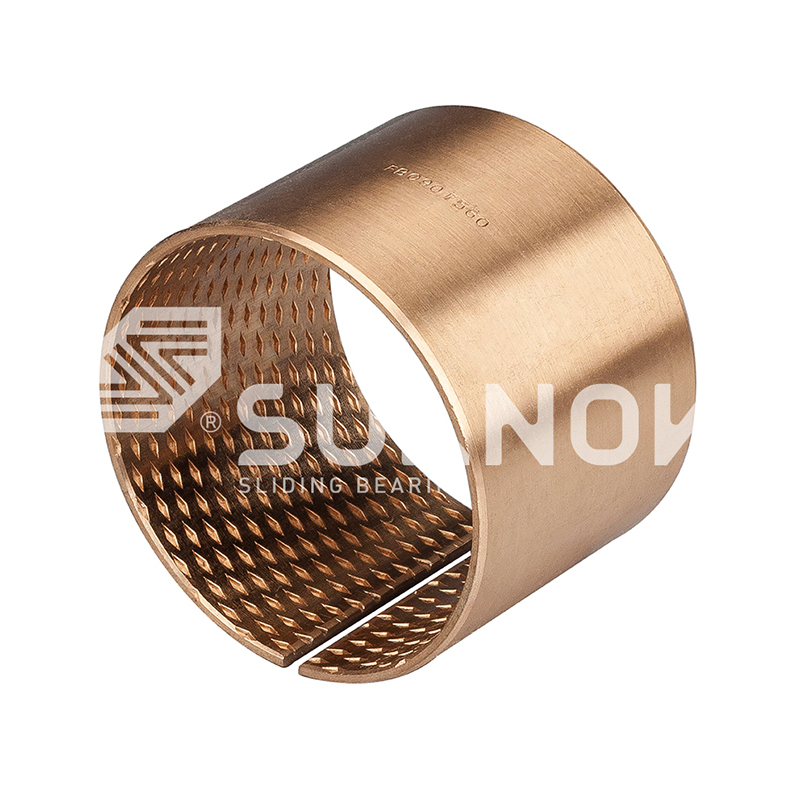 Wholesale FB090 Bronze Wrapped Bearing | Self-Lubricating Bushing & Sleeve SupplZhejiang Shuangnuo Bearing Technology Co., Ltd. Is China FB090 Bronze Wrapped Bearing | Self-Lubricating Bushing & Sleeve Suppliers, Comp...View Product →
Oil-Retaining Bimetallic Bushings
For rotating applications with moderate loads, an oil-retaining bimetallic bushing uses a steel backing and a sintered bronze layer impregnated with lubricating oil. The porous structure acts as a built-in oil reservoir, releasing lubricant during operation and reabsorbing it when the shaft stops. This construction suits driveshaft spacers, mower spindles, and other rotating positions where re-greasing is impractical.
Load Capacity, PV Limits, and Shaft Requirements
Alloy selection alone does not guarantee life. The interaction between load, surface speed, shaft hardness, and surface finish determines actual performance, and the PV value — pressure multiplied by velocity — is the fundamental design parameter.
For dry-running self-lubricating bronze bushings, typical PV limits fall in the range of 1.5 to 2.5 N/mm²·m/s, and the manufacturer's data sheet should always be consulted for the specific alloy and construction. Because most pivot joints in farm machines oscillate at low surface speeds, the velocity term stays small and allowable pressure becomes high; continuous rotation generates more frictional heat and requires a lower pressure for the same PV limit.
Practical shaft requirements for self-lubricating bronze bushings:
- Shaft hardness: 45 to 55 HRC for embedded lubricant types
- Shaft surface finish: Ra 0.2 to 0.4 µm
- Housing bore tolerance: H7
- Shaft-to-bushing clearance: h7 or f7, depending on whether the shaft rotates or oscillates in the bushing
- Running-in: gradually increase the load during the first hours of operation to establish a uniform transfer film
For the heaviest positions — articulated loader joints, large baler cranks, and high-capacity harvesters — a JDB600 cast bronze bearing provides the thick wall section and heat capacity that thin-walled designs cannot offer. Centrifugally or continuously cast bronze is machined to final tolerances and handles very high static and dynamic loads while accepting minor misalignment.
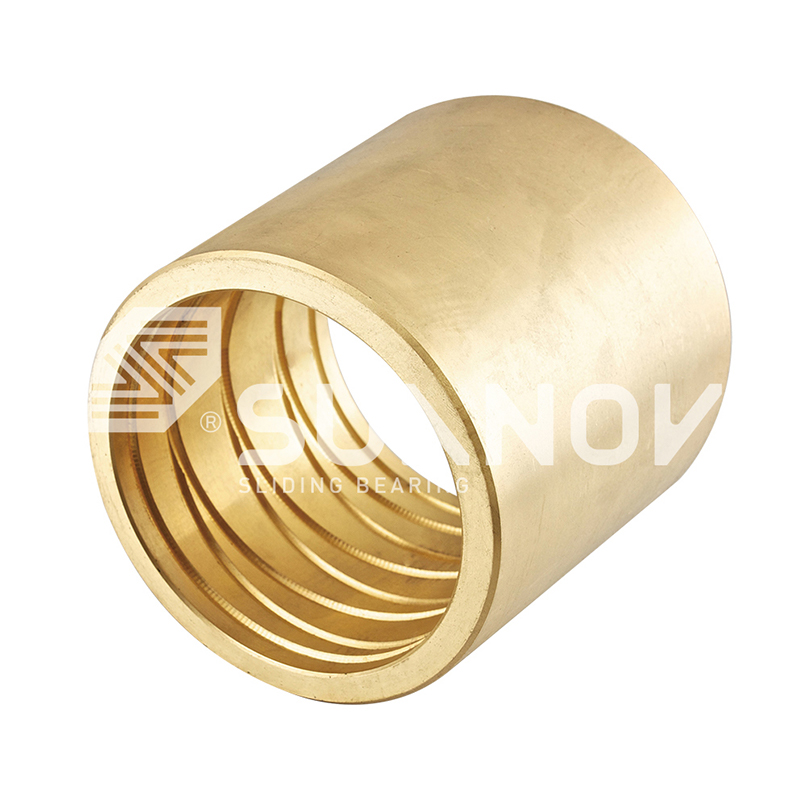 Wholesale JDB-600 Cast Self-Lubricating Bronze Guide Bushing Bearing Suppliers, Zhejiang Shuangnuo Bearing Technology Co., Ltd. Is China JDB-600 Cast Self-Lubricating Bronze Guide Bushing Bearing Suppliers, Company, W...View Product →
Tolerances, Installation, and Maintenance
Installation quality matters as much as alloy selection. A well-chosen bushing can fail in weeks if pressed in crooked, reamed after fitting, or run against a rough shaft.
Press-Fit Rules
- Chamfer the housing bore and the bushing outside diameter to avoid shearing material during pressing
- Use an arbor press, never a hammer; impact loads deform the bore shape locally
- Support the bushing with a correctly sized mandrel so it reaches the proper depth without buckling
- Never ream a self-lubricating bushing after installation — reaming cuts out solid lubricant plugs and destroys the self-lubricating surface
Field Wear Checks
Measure the bushing bore with an inside micrometer at two points 90 degrees apart. Replace the bushing when bore wear exceeds the manufacturer's limit, typically 2 to 3 percent of nominal bore diameter in agricultural applications. Replace it sooner if the bushing spins inside the housing, which indicates lost interference fit, or if the shaft shows scoring, which points to contamination ingress or lubrication loss. A complete field checklist is available in our guide to maintenance tips that extend the life of self-lubricating bronze bushings.
Choosing a Bronze Bushing Supplier
A bushing is only as reliable as the foundry that casts it, and this is where procurement decisions have lasting consequences. Agricultural machinery OEMs, repair shops, and aftermarket distributors should verify five quality gates before committing to a supplier.
- In-house casting: a supplier that casts its own copper alloys controls material composition from the furnace stage instead of relying on a third-party foundry's chemistry.
- Composition verification: spectrometer checks at multiple process points confirm that the alloy matches the specified standard, whether tin bronze, aluminum bronze, or brass.
- Third-party test reports: independent laboratory verification of material composition and mechanical properties provides evidence for engineering and warranty decisions.
- Machining capacity: CNC turning and milling in the same factory shorten lead times because raw castings and finished bushings are produced under one roof.
- Non-standard dimensions: farm equipment frequently requires special bores, flanges, oil grooves, and hole patterns. A supplier that machines custom dimensions without a large minimum order supports both OEM production and aftermarket repair.
Zhejiang Shuangnuo Bearing Technology Co., Ltd. operates this way: it casts its own bronze alloys, monitors composition with spectrometers before, during, and after casting, commissions third-party laboratory tests, and runs more than 80 CNC machines to shorten production cycles. For an OEM, a batch of bushings with incorrect composition means a recall; for a repair shop, it means doing the same job twice. These five checks prevent both outcomes.
Quick Selection Summary
The core message: bronze bushings for agricultural machinery are the correct choice when loads are high, speeds are low, and contamination is unavoidable. Four questions reduce the selection to a practical decision.
- Is the joint oscillating and hard to reach with a grease gun? Choose a JDB650 self-lubricating brass bushing.
- Is the load very high and the motion slow? Choose a JDB600 cast bronze bearing.
- Is the housing compact and the unit pressure high? Choose an FB090 bronze wrapped bushing.
- Is the application continuously rotating? Choose an oil-retaining bimetallic bushing.
Define the load, motion, contamination level, and shaft condition first; material grade and lubrication design follow from those inputs. Bronze bushings fail for reasons that are identifiable and preventable, and the difference between a bushing that survives the harvest and one that does not usually comes down to how carefully it was specified.
Recommended NEWS:
Bronze Wrapped Bushings for Heavy Machinery: Durable Solutions for Demanding Applications
Self-Lubricating Bronze Bushings: Benefits, Cost Savings, and Selection Guide
Solid-Lubricating Bronze Bearings: A Guide to Performance and Selection
Solid Lubricant Embedded Bushings: The Ultimate Guide to Maintenance-Free Performance
Optimizing Industrial Performance: A Comprehensive Guide to Solid Bronze Bushings
Why Solid-Lubricating Bronze Bearings Are the Future of Low-Maintenance Machinery
Recommended LINS:
Contact Us //
Have Questions? Get in Touch!

Zhejiang Shuangnuo Bearing Technology Co., Ltd. specializes in the production of various self-lubricating copper alloy bushing bearings products
Quick Links
Related Products
Contact
- Add: No. 69, Tingyao East Road, Ganyao Town Industrial Zone, Jiashan County, Zhejiang Province, China
- Tel: +86-15957371801
- Fax: +86-0573-84038630
- Email: [email protected]
[email protected]
© 2024 Zhejiang Shuangnuo Bearing Technology Co., Ltd.
Custom Self-Lubricating Copper Alloy Bearings
