


 русский
 Español
-
-
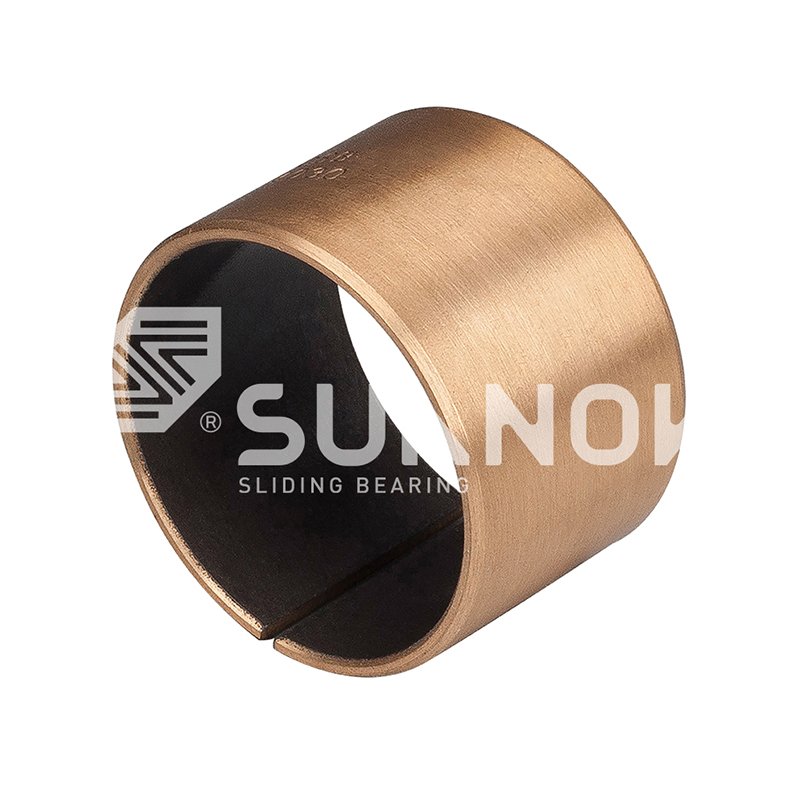
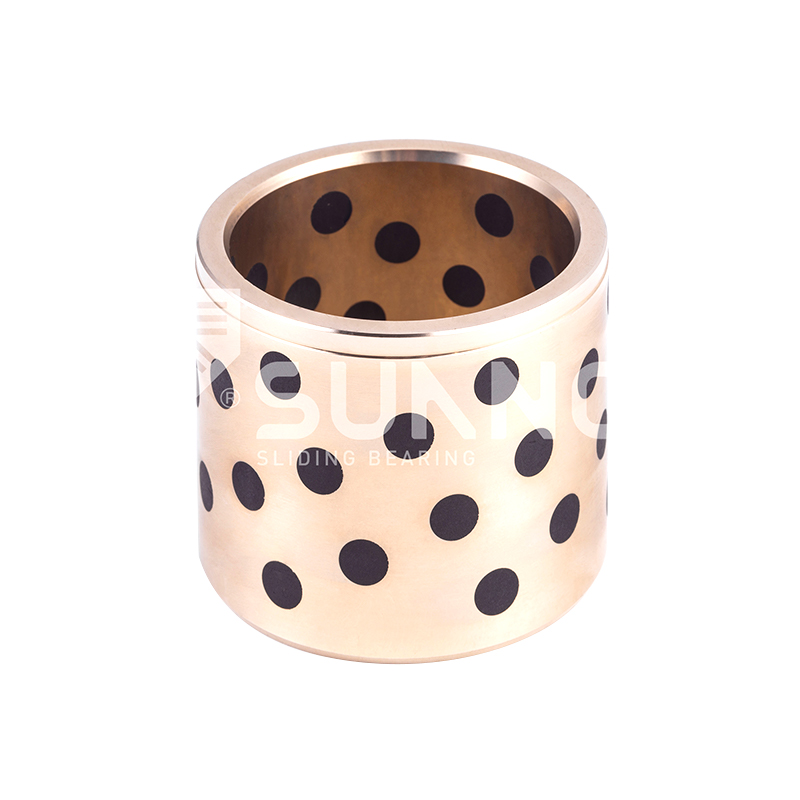 JDB Solid-lubricating Bearing JDB650 Self-Lubricating Brass Bushing Oilless Bearings
-
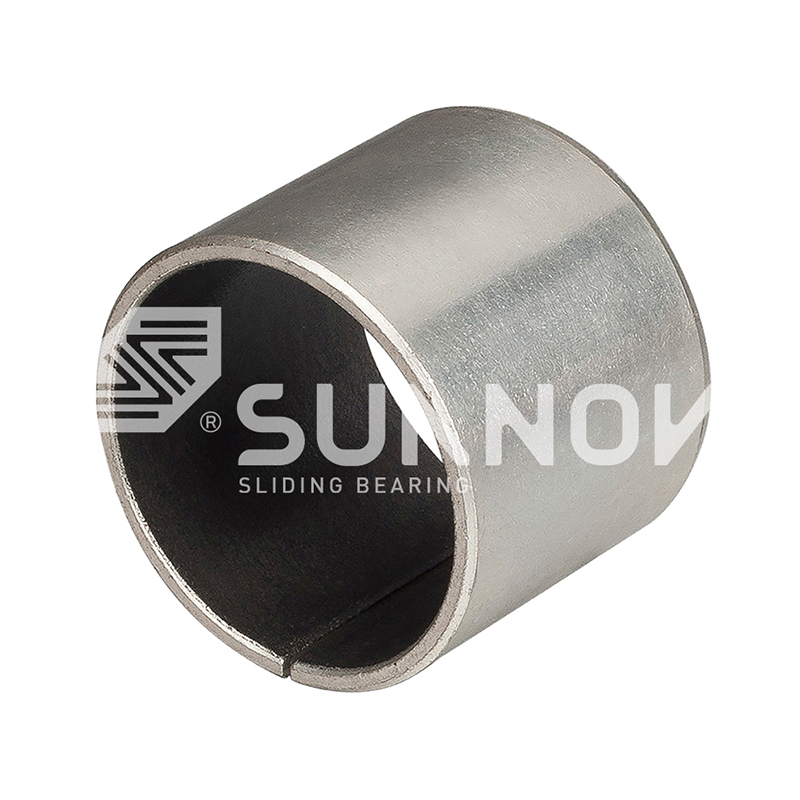
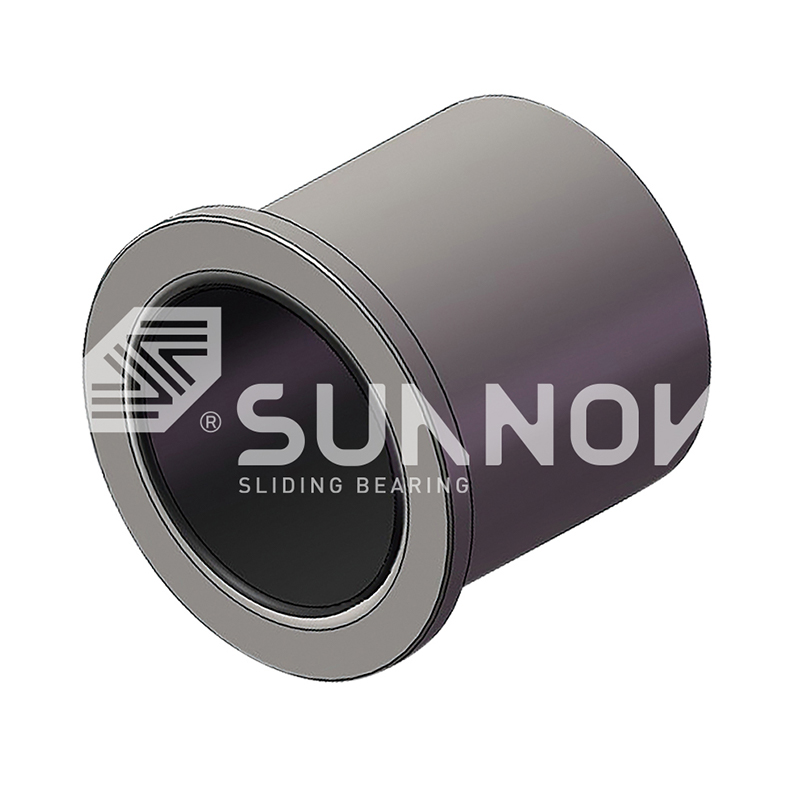 Oil-retaining Bimetallic Bearing Flanged Self-lubricating Composite Bushing, Oilless Flanged Bushing 200#F
-
-
-
-
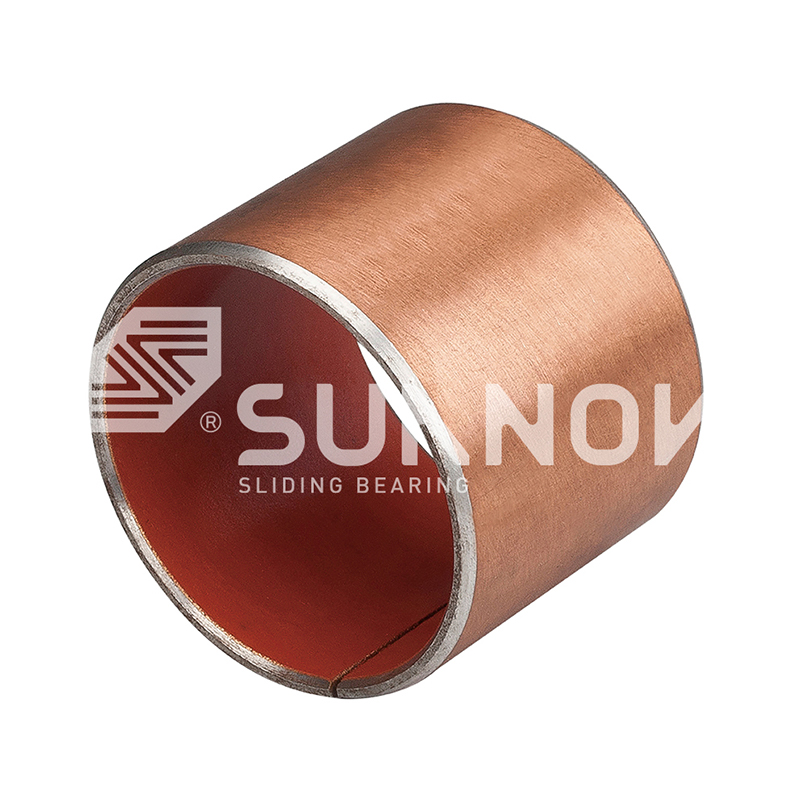
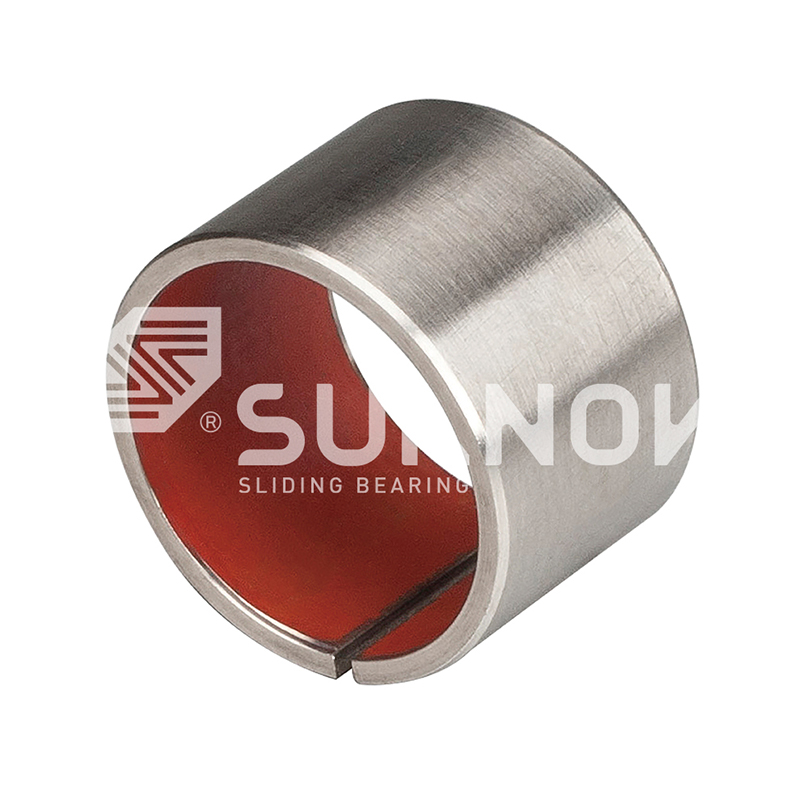
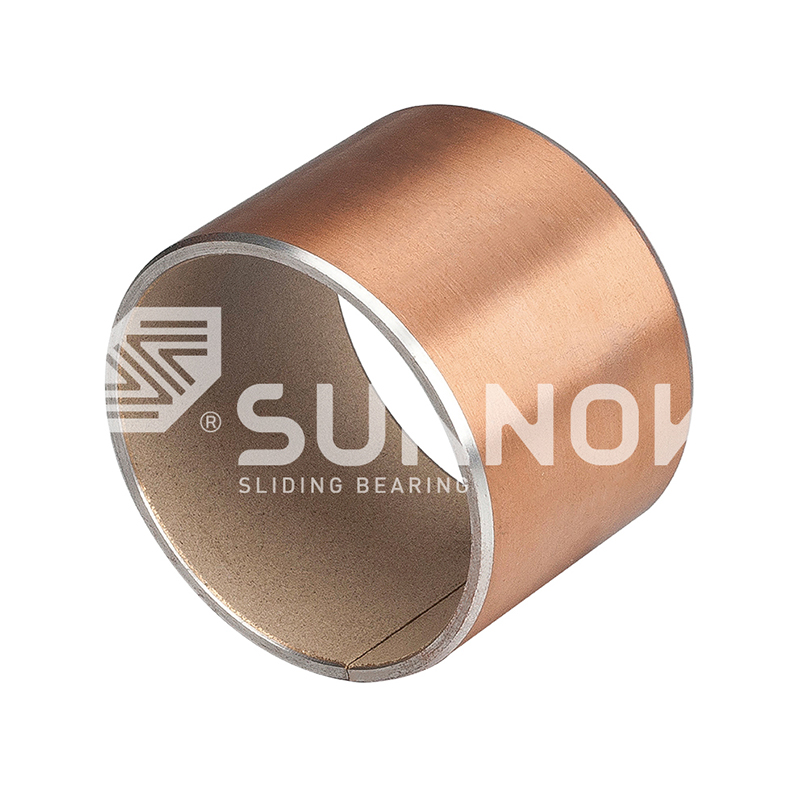 SF-1 Oilless Bearing SF-1P Reciprocating Motion Composite Bushing, DD2 Oilless Plain Bearing
-
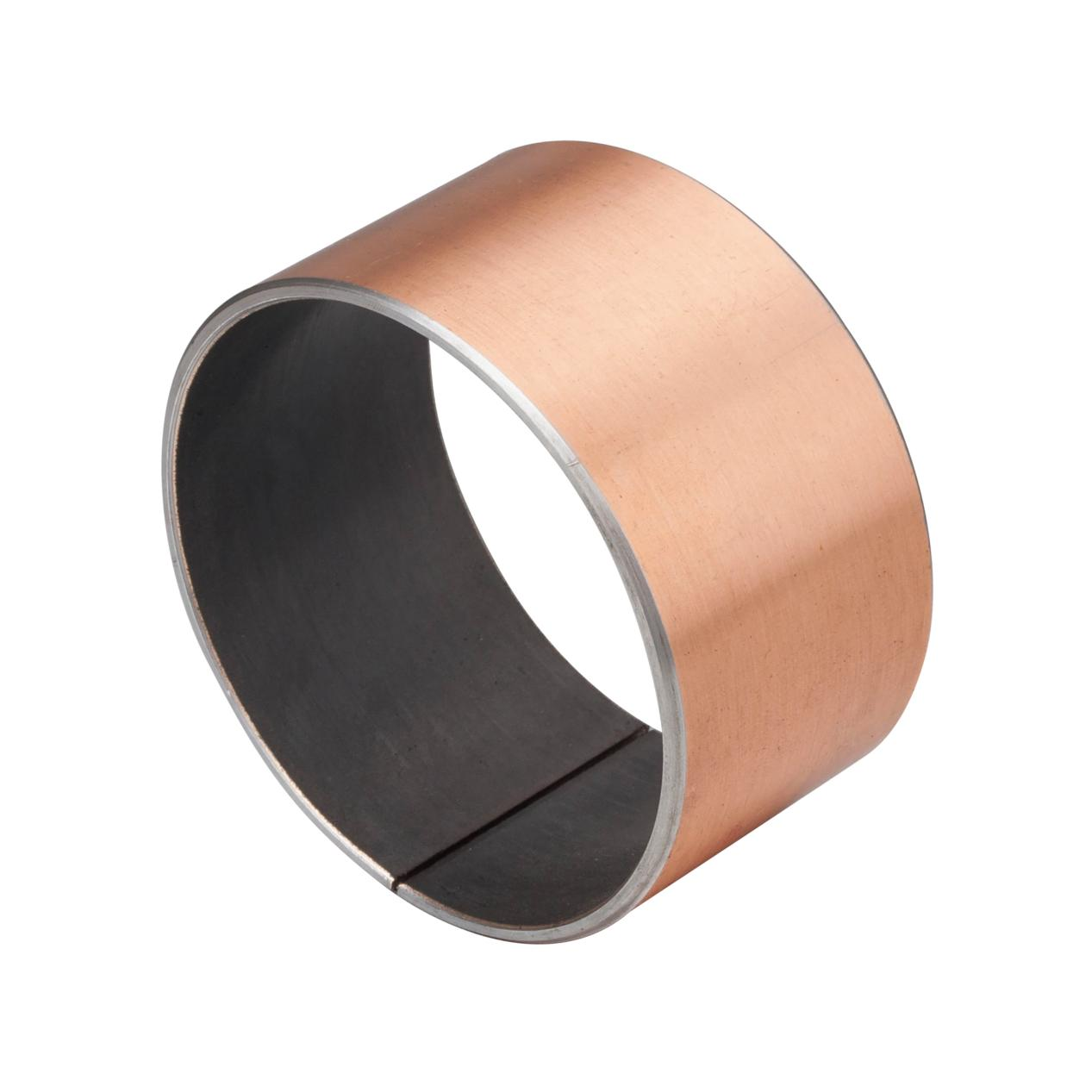
Oil-Retaining Bimetallic Bearings: Composite Structure for Reliable Operation
Industry News-Content
A hydraulic pump on a concrete batch plant failed after 1,400 service hours when its solid bronze shaft bushing seized. The grease schedule was correct, the shaft was hardened to 45 HRC, and the housing bore was within tolerance. The bearing itself was the weak link: a homogeneous bronze bushing with no internal lubricant reservoir. Replacing it with an oil-retaining bimetallic bearing from Zhejiang Shuangnuo Bearing Technology Co., Ltd. pushed the same pump past 8,000 hours with no measurable bore wear.
The reason is not a different bronze recipe. It is the composite structure of the bearing itself: a steel backing, a sintered porous bronze layer, and solid lubricant dispersed throughout the pores. Each layer carries out one mechanical job, and together they manage load, friction, and heat in a way no single-material bushing can match.
8,000+ hours of service life in the same hydraulic pump: that is the measured gap between a homogeneous cast bronze bushing and a steel-backed oil-retaining bimetallic bearing.
What Is an Oil-Retaining Bimetallic Bearing?
An oil-retaining bimetallic bearing is a steel-backed plain bearing with a sintered porous bronze layer whose pores are impregnated with oil and solid lubricant, forming a self-contained lubrication system.
An oil-retaining bimetallic bearing is a three-layer composite: a low-carbon steel backing for structural strength, a sintered tin-bronze layer for the wear surface, and oil or solid lubricant dispersed inside the bronze porosity.
Unlike a cast bronze bushing, which is one material doing every job, the bimetallic construction separates the tasks. The steel back carries the structural load. The bronze layer provides a low-wear sliding surface. The dispersed lubricant releases a fresh film exactly when it is needed. This separation of functions is why the bearing type performs well in hydraulic pumps, gearboxes, construction machinery, and agricultural equipment where space is tight and load is high.
Shuangnuo produces this construction as the 200-B series, with the copper sinter layer bonded directly to the steel backing and solid lubricant dispersed through the sintered structure.
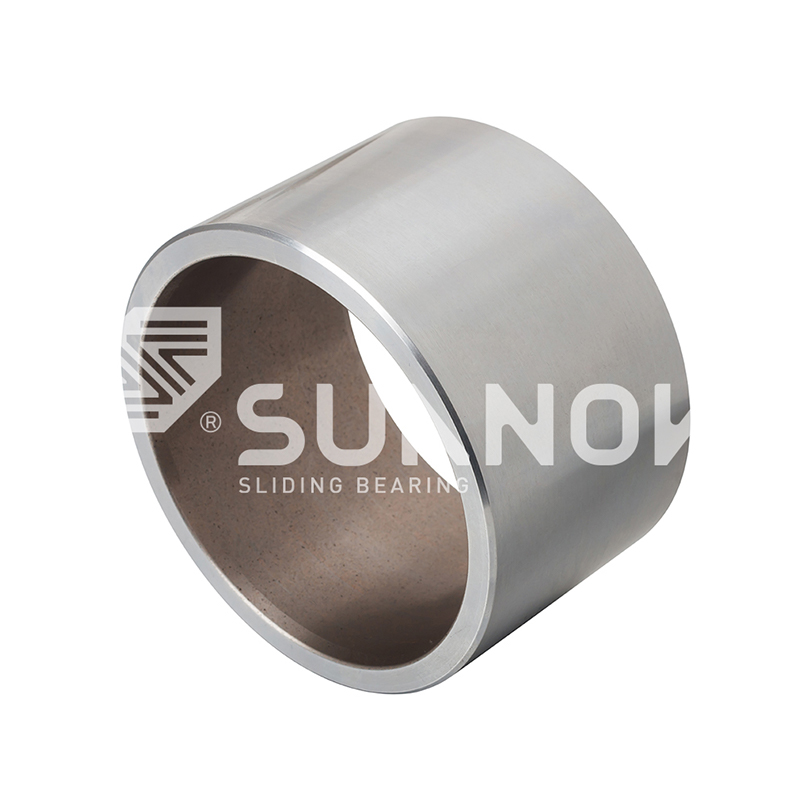 200#B Steel-Backed Copper Alloy Bimetal Bushing for Heavy-Duty Sliding ApplicationsThis bushing combines a steel backing with a sintered copper alloy layer and dispersed solid lubricant, offering high load capacity and maintenance-free operation. Its construction suits high-load, low-to-medium-speed conditions common in heavy machinery and automotive systems.View Product →
Three Layers, Three Jobs: Anatomy of the Composite Structure
Reliability in an oil-retaining bimetallic bearing comes from each layer acting on a specific failure mechanism: the steel backing resists deformation, the bronze layer resists wear, and the dispersed lubricant cancels the boundary-friction moment.
Steel Backing: The Load Carrier
The steel layer, typically 1.0 to 2.5 mm thick, gives the bearing its press-fit rigidity and prevents plastic deformation under edge loading. A cast bronze bushing of the same wall thickness yields at roughly half the static load. The steel back also conducts friction heat toward the housing, keeping the contact zone cooler.
Sintered Bronze Layer: The Wear Surface
Tin-bronze powder, typically CuSn6 or CuSn10 grade, is sintered onto the steel at high temperature, leaving a controlled porosity of 20 to 30 percent by volume. This porous skeleton holds the lubricant and transfers load to the steel back without cracking or delaminating under repeated stress cycles.
Dispersed Oil and Solid Lubricant: The Self-Lubricating Reservoir
The pores are vacuum-impregnated with oil plus a solid lubricant such as graphite or PTFE. Under shaft rotation, frictional heat raises the oil pressure inside the pores; oil exudes to the surface and forms a film. At standstill, the oil is re-absorbed. This internal pumping action is what makes the bearing reliable during start-stop cycles and after long idle periods.
- Steel backing prevents fatigue failure at high static loads
- Sintered bronze resists surface welding and scoring
- Dispersed lubricant supplies film in both rotation directions
The composite structure turns a plain bearing into a self-regulating lubrication system. No grease lines, no oil drip, no scheduled re-lubrication.
How the Composite Structure Delivers Reliable Performance
The composite structure eliminates the three most common plain-bearing failure modes: adhesive wear, bore fatigue, and shaft scoring.
Adhesive wear happens when two metal surfaces contact directly. The sintered bronze layer with dispersed lubricant prevents direct metal-to-metal contact even before a full film forms. Bore fatigue happens under cyclic load; the steel backing distributes the stress and prevents the bore from ovaling. Shaft scoring is avoided because the lubricant film separates the shaft from the bronze surface.
250max static load, N/mm2
140max dynamic load, N/mm2
2.5max sliding speed, m/s
4.0PV limit, N/mm2 x m/s
Maximum Static Load by Bearing Construction
Oil-retaining bimetallic
Bronze wrapped
Cast bronze
In dry start-up, oil squeezed from the pores by thermal expansion forms a boundary layer within the first few shaft revolutions. This is exactly when most grease-lubricated bushings fail.
| Property | Oil-retaining bimetallic | Cast bronze | Bronze wrapped |
| Steel backing | Yes | No | Yes |
| Static load, N/mm2 | 250 | 100 | 140 |
| Lubricant storage | Dispersed in pores | Plug inserts | Plug inserts |
| Typical wall thickness | 1.0 to 2.5 mm | 3 to 10 mm | 0.5 to 1.0 mm |
| Main advantage | Compact high-load | Custom heavy housings | Thin-wall repair |
When the load path is analyzed under a 120 N/mm2 hydraulic pump duty cycle, the steel backing carries about 85 percent of the total stress, while the bronze layer keeps the friction coefficient between 0.05 and 0.15 in boundary conditions.
Real Applications and the Payback Pattern
Hydraulic machinery, construction equipment, agricultural machines, and automotive chassis systems are the primary users of oil-retaining bimetallic bearings because all of them combine high loads with intermittent or marginal lubrication.
- Hydraulic pumps and motors: main shaft and gear pump bushings; the flanged 200-F version simplifies axial location inside pump bodies.
- Construction equipment: outrigger slide pads and pivot pins use wear plates such as the 200-P5 where a thick cast bushing cannot fit.
- Agricultural machinery: PTO shafts and linkage pins where grease access is physically blocked by the machine frame.
- Automotive: suspension arms and steering columns where package size rules out thick cast bushings.
The common thread is high static load with low to medium sliding speed. In these conditions, the steel backing carries the force and the dispersed lubricant covers the weakly lubricated phases of the cycle.
Flanged Self-Lubricating Composite Bushing with Integral Axial LocationFeaturing an integral flange, this oilless bushing simplifies assembly by eliminating retaining hardware and thrust washers. Its embedded solid lubricants enable maintenance-free operation under heavy loads, low speeds, and harsh environments such as dusty or wash-down conditions.View Product → 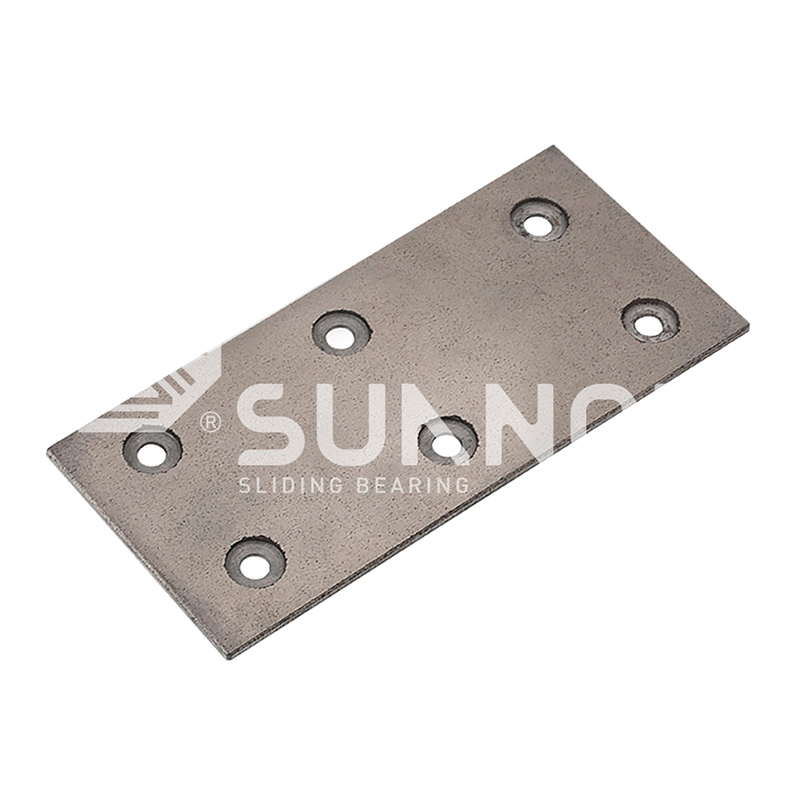 200#P5 Thin Steel Wear Plate with Graphite Inserts and Six Countersunk HolesThis low-profile wear plate uses graphite plugs for self-lubrication and six countersunk holes for secure flush mounting. Its thin steel substrate maintains high strength in limited-clearance applications while the graphite surface reduces friction and eliminates lubrication maintenance.View Product →
Maintenance records from construction equipment fleets show outrigger slide wear plates made from 200-P5 lasting two to three operating seasons before first replacement.
Engineers who want the complete production route can read the detailed explanation of oil-containing bimetallic bearings.
Selecting Oil-Retaining Bimetallic Bearings: Key Criteria
Choose an oil-retaining bimetallic bearing when the application needs steel-backed load capacity, a thin wall, and a lubricant reservoir in the same component.
- Confirm the maximum static load stays below the rated value with a safety factor of at least 1.5.
- Check the sliding speed and PV factor; for continuous rotation above 0.5 m/s, verify that the oil film can form within the operating temperature window.
- Specify a shaft hardness of at least 45 HRC and a surface finish of Ra 0.3 to 0.8 micrometers.
- Decide whether a flanged version or a wear plate version reduces the total part count in the assembly.
If the bore diameter fits standard metric sizes and the load exceeds 140 N/mm2, an oil-retaining bimetallic bearing is usually the first choice over wrapped bronze or cast bronze.
When the application requires non-standard dimensions, Shuangnuo can produce the sintered strip to custom bore sizes and tolerances, with spectrometric composition checks on every melt.
Frequently Asked Questions
How long do oil-retaining bimetallic bearings last in hydraulic pumps?
Under aligned installation, shaft hardness above 45 HRC, and a surface finish around Ra 0.4, service life typically reaches 8,000 to 15,000 hours in hydraulic pump applications. The dominant wear variable is the PV factor; keeping the operating PV below the rated limit is the single most effective way to extend service life.
Do these bearings need external oil or grease?
No. The dispersed oil and solid lubricant form a self-contained lubrication system. If an external oil supply is present, load capacity and life improve further, but the bearing remains functional even when the external supply is interrupted.
Can the same bearing run dry in high-temperature environments?
For continuous dry operation above 100 C, specify a variant with a higher solid-lubricant ratio and a lower oil fraction. Standard oil-impregnated grades depend on oil viscosity, which drops sharply above 100 C.
What happens to the lubricant over the bearing life?
Oil is consumed gradually through evaporation and oxidation. A typical 1.5 mm wall 200-B bearing carries enough dispersed oil for thousands of hours. When the oil is depleted, the solid lubricant still provides a boundary film, but the PV limit decreases and replacement is recommended.
Recommended NEWS:
Self-Lubricating Copper Alloy Bearings: A Comparative Analysis with JDB-600 Casting Bronze and Oil-Retaining Bimetallic Bearings
SF-1 Oilless Bush: How Its Multi-Layer Composite Structure Achieves Self-Lubrication
The Benefits of Maintenance-Free Solid Lubricant Bearings for Industrial Applications
JFBB Metric Self-lubricating Oilless Graphite Flanged Bearings Bushings: Oil-free self-lubricating solutions
Extend Equipment Lifespan with Oil-Embedded Flanged Sleeve Bearings
Oil-containing bimetallic bearings: the key to solving common lubrication problems in heavy equipment
Recommended LINS:
Contact Us //
Have Questions? Get in Touch!

Zhejiang Shuangnuo Bearing Technology Co., Ltd. specializes in the production of various self-lubricating copper alloy bushing bearings products
Quick Links
Related Products
Contact
- Add: No. 69, Tingyao East Road, Ganyao Town Industrial Zone, Jiashan County, Zhejiang Province, China
- Tel: +86-15957371801
- Fax: +86-0573-84038630
- Email: [email protected]
[email protected]
© 2024 Zhejiang Shuangnuo Bearing Technology Co., Ltd.
Custom Self-Lubricating Copper Alloy Bearings
