


 русский
 Español
-
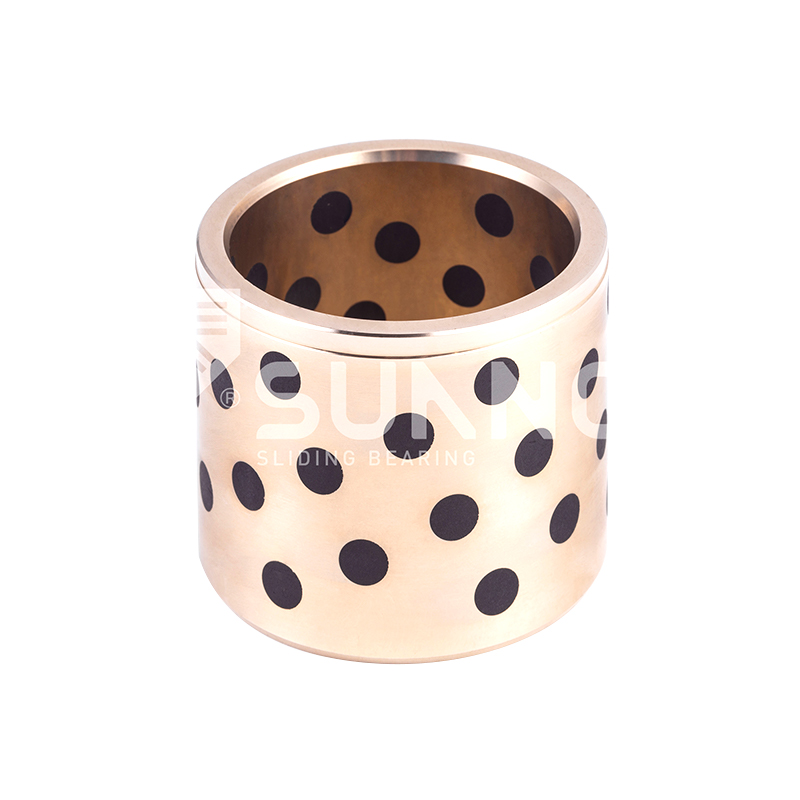 JDB Solid-lubricating Bearing JDB650 Self-Lubricating Brass Bushing Oilless Bearings
-
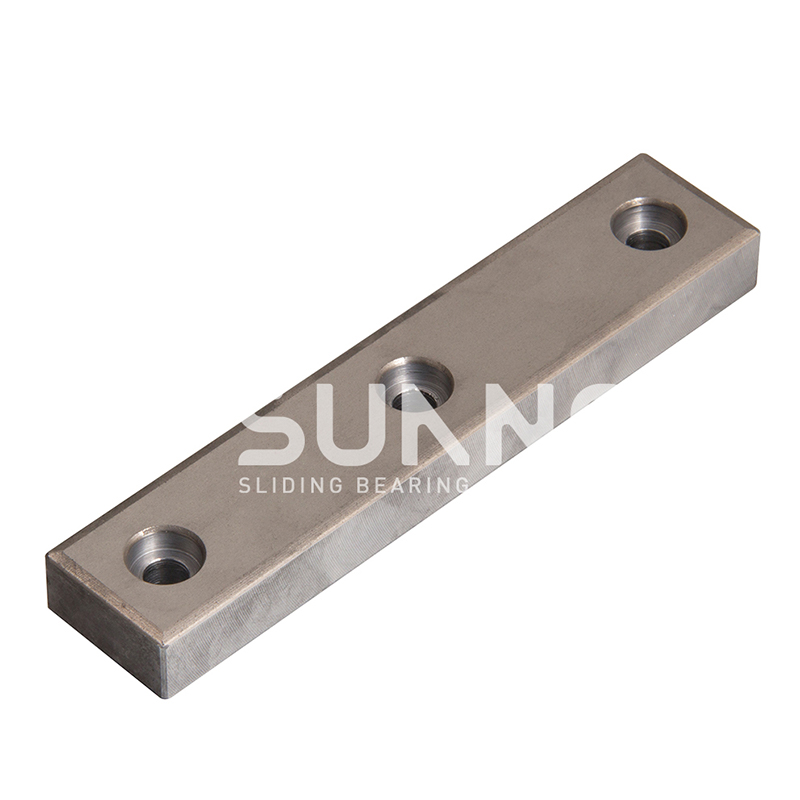 Oil-retaining Bimetallic Bearing Self-Lubricating 200# P20 Steel Graphite Insert Wear Plate / Steel Oilless Wear Strip
-
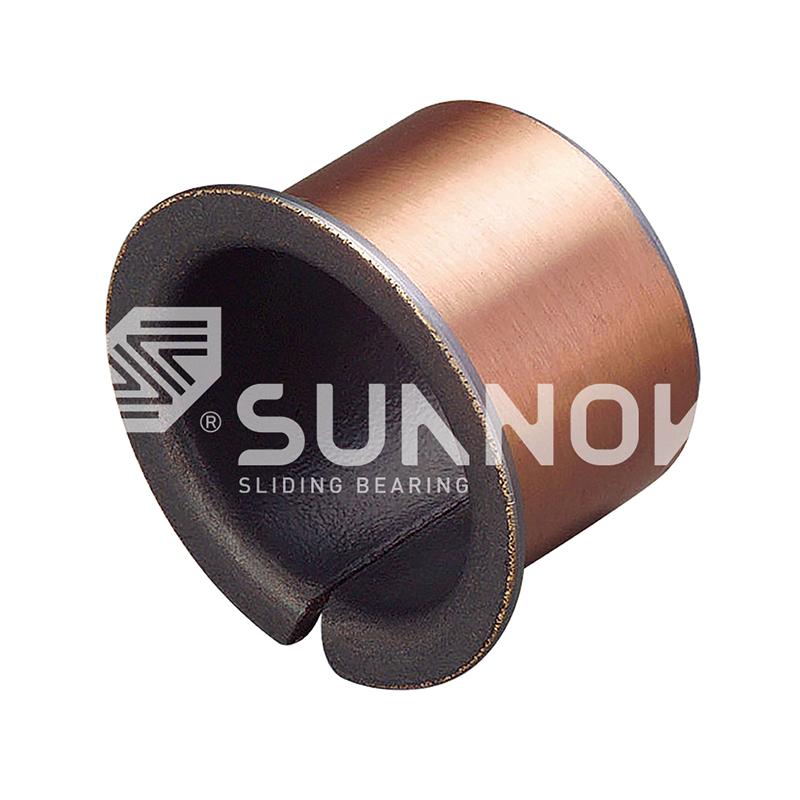
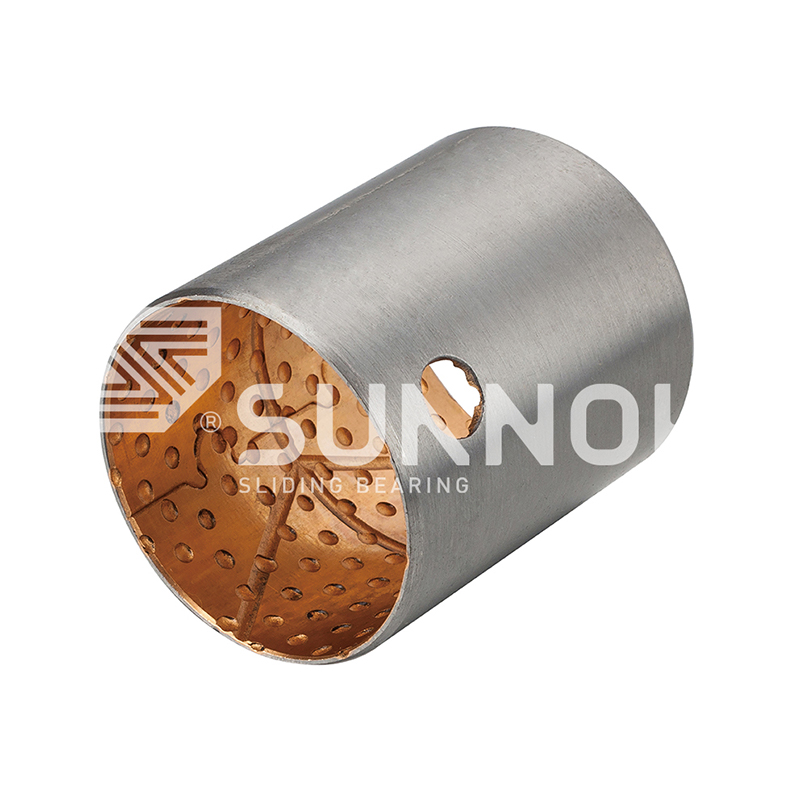 JF-800 Bi-metal Bearing JF-750 Self-Lubricating Lead Free Bi-Metal Bearing for Heavy Duty Engines Low Friction
-
-
-
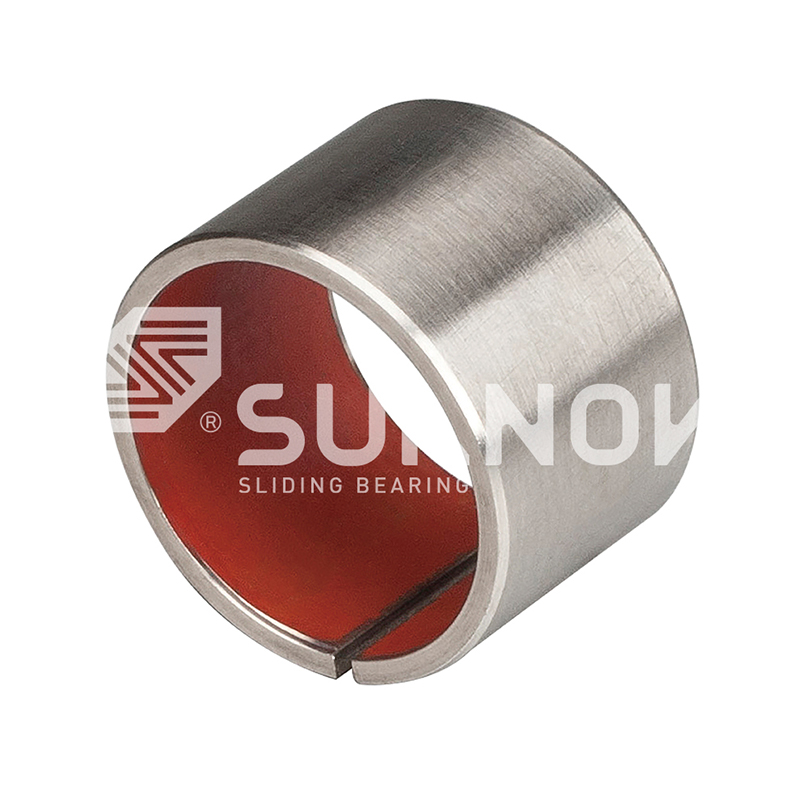
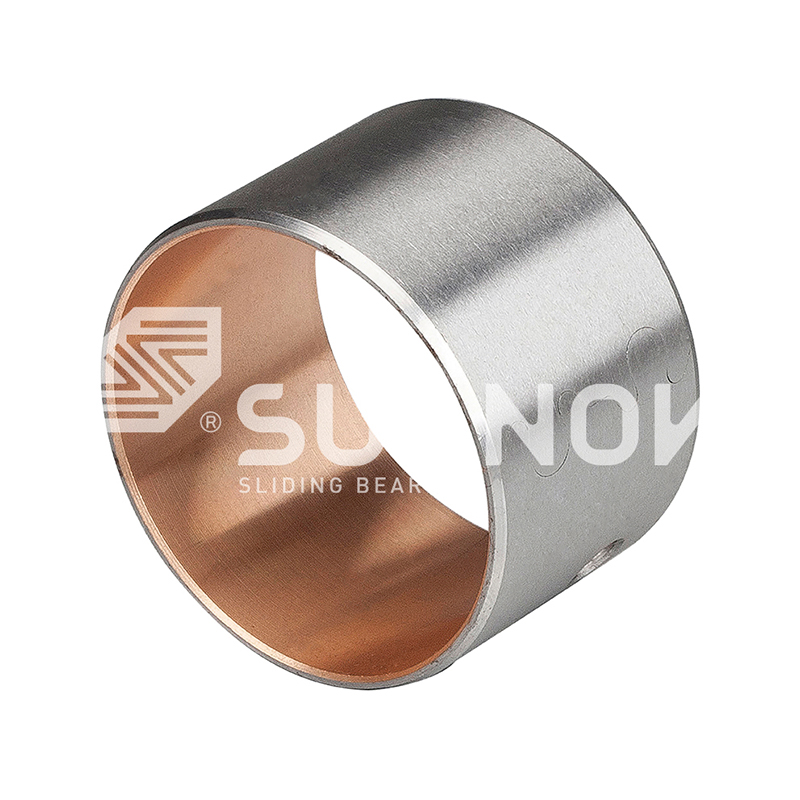 JF-800 Bi-metal Bearing JF-700 Bi-Metal Bearing Heavy Duty Self-Lubricating Sleeve Bushings
-
 SF-2 Boundary Lubricating Bearing SF-2Y Boundary Self-lubricating Bearing - Low Friction Dry Lubricant Bushings for Industrial Machinery
-
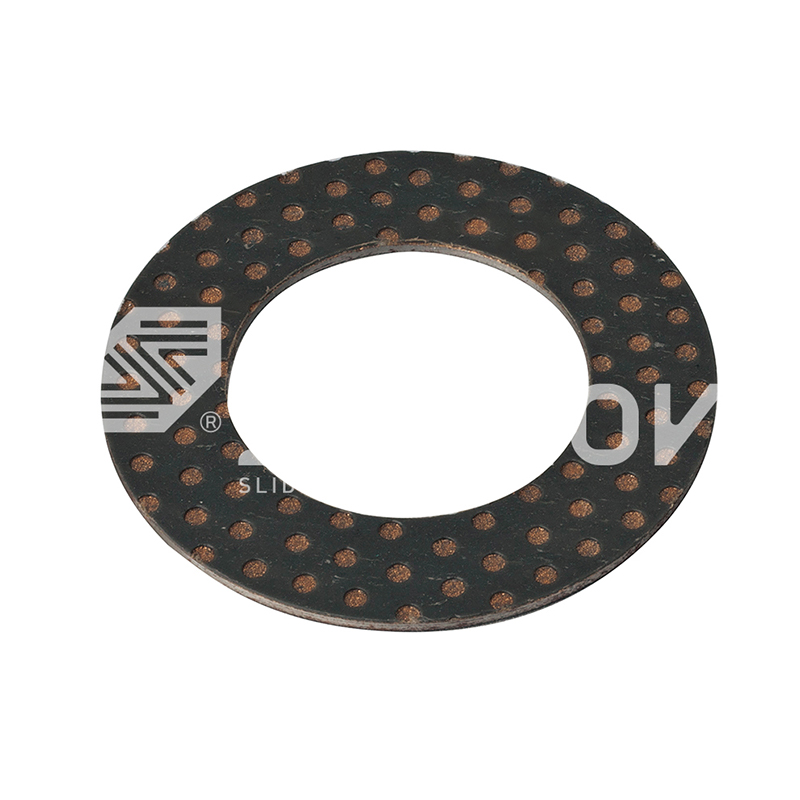 SF-2 Boundary Lubricating Bearing SF-2WC Standard Metric Self-Lubricating Compound Thrust Washer Sliding Washers
Self-Lubricating Bearings for Mining Equipment: Key Selection Considerations
Industry News-Content
- 1 Mining conditions change every selection rule
- 2 Start with load, velocity, and the PV limit
- 3 Four material families cover the majority of mining positions
- 4 Shaft and housing preparation decide real life
- 5 Match the bearing family to the mining machine
- 6 Maintenance expectations change with self-lubricating bearings
- 7 Frequently asked questions
A maintenance planner at an open-pit mine faces a familiar problem: conveyor pulley bearings and excavator pin bushings fail early, not because of missing oil, but because grease cannot reach the sliding surface reliably in a dust-laden, high-shock environment. Self-lubricating bearings remove that dependency, but only when the material family, load rating, PV limit, and shaft surface are selected together.
Self-lubricating bearings are sliding components that embed a solid lubricant, typically graphite or a synthetic compound, in the bearing wall; the relative motion of shaft and bearing transfers a thin lubricating film to the counterface, so the bearing operates without external oil or grease supply.
At Zhejiang Shuangnuo Bearing Technology Co., Ltd., a nearly ten-year-old manufacturer with in-house casting, sintering, and CNC machining, the practical question from mining customers is rarely "does self-lubrication work" but "which specification will survive this specific duty." This article turns four key selection considerations - operating conditions, PV limits, material families, and shaft preparation - into a decision sequence engineers can apply on site.
Mining conditions change every selection rule
Mining duty invalidates selection assumptions that work in clean factories, because contamination, shock, and maintenance access combine to defeat oil-lubricated systems. A bearing on a conveyor return idler or a crusher toggle mechanism sees abrasive dust, water ingress, impact loads several times above steady-state values, and lubrication intervals measured in months or years.
- Abrasive contamination: fine dust enters crevices and forms a lapping paste that wears both shaft and bearing.
- Shock and vibration: crushers and screens impose impact loads that squeeze out oil films and cause edge loading.
- Water and slurry: washdown dilutes grease and triggers corrosion on plain steel shafts.
- No access: pivot points on excavators, drill masts, and longwall shields are impractical to re-lubricate safely.
Typical mining calculations value unscheduled downtime at thousands of dollars per hour; a bearing worth a few tens of dollars can stop a conveyor line or an excavator for an entire shift.
The result is simple logic: if the bearing can avoid external lubricant, one entire failure mode is eliminated. That is the core reason self-lubricating families dominate mining retrofits and new equipment specifications.
Start with load, velocity, and the PV limit
The PV limit is the first engineering filter for self-lubricating bearings; if the operating pressure-times-velocity value exceeds the documented limit of a material family, no coating or mounting detail can prevent premature wear. PV is the product of specific load and sliding velocity, expressed in megapascals times meters per second.
For rotating shafts, the design checks both static load capacity and dynamic PV; for oscillating or reciprocating motion, the average velocity over the working cycle is used. A common design rule is to keep the operating PV below 60 percent of the documented limit, because mining shock loads create local pressure peaks that the average calculation does not reveal.
| Bearing family | Max static load (MPa) | Max PV (MPa m/s) | Temp range (C) |
| JDB600 cast bronze | 120 | 3.0 | -40 to 300 |
| JDB650 brass | 100 | 2.8 | -40 to 300 |
| JF-800 bimetallic | 80 | 3.2 | -40 to 250 |
| FB090 bronze wrapped | 70 | 2.5 | -40 to 200 |
| SF-1 composite | 60 | 3.6 | -40 to 150 |
Typical maximum PV values by bearing family
Design rule: size the bearing so that the calculated PV stays below 60 percent of the data sheet limit, and verify the static load against shock factors from the machine builder.
Four material families cover the majority of mining positions
Four bearing families solve almost every mining sliding-surface problem: cast bronze with embedded graphite, sintered bimetallic with dispersed solid lubricant, bronze-wrapped with graphite plugs, and PTFE-based composite layers on steel. Each family trades load capacity, wear life, counterface demands, and cost.
The JDB650 brass grade, for example, combines cast brass strength with dense graphite plugs, which is why it appears on excavator pins and slider blocks in many mining fleets.
 JDB650 Self-Lubricating Brass Bushing with Solid Graphite InsertsThis brass bushing embeds graphite plugs for maintenance-free operation, handling high loads and slow motion. Its corrosion resistance and stable performance make it a practical choice for demanding positions like excavator pins.View Product →
Cast bronze with embedded graphite
High structural strength, forgiving with shock loads, easy to machine into non-standard sizes. Best for oscillating pins, excavator joints, and guide positions where load is high and motion is slow.
Sintered bimetallic
Steel backing carries the load; a sintered copper alloy layer dispersed with graphite provides the sliding face. Predictable wear in hydraulic pumps and gear pumps.
Bronze-wrapped
A thin bronze strip with solid-lubricant plugs offers compact dimensions and good emergency running properties for space-limited housings and flange configurations.
PTFE-based composite
Lowest friction and highest PV among the four, but lower load capacity; suited to continuous rotation at moderate loads, such as conveyor and fan positions.
Material choice is not only about the bearing: embedded-graphite families demand a hardened shaft, while PTFE composites tolerate softer counterfaces. Matching the bearing to the existing shaft condition often decides the outcome of a retrofit.
Shaft and housing preparation decide real life
Bearing life in mining is decided as much by the shaft as by the bearing; a perfectly specified bushing fails quickly on a soft or rough shaft. Self-lubricating bearings rely on a controlled transfer film, and the film only forms on a sufficiently hard, smooth counterface.
- Shaft hardness: HRC 45 to 55 for embedded-graphite and bimetallic families; below HRC 40, abrasive particles embed in the shaft and wear the bearing faster.
- Surface finish: Ra 0.4 to 0.8 micrometers; rougher surfaces abrade the solid lubricant, smoother surfaces starve the film.
- Housing bore tolerance and roundness: typically H7 for the bore and f7 for the shaft, with a press fit in a rigid housing to prevent rotation.
- Alignment and runout: excessive edge loading concentrates pressure at the bearing ends and triggers localized wear.
A practical rule for mining retrofits: measure the shaft, not only the bearing bore. If the existing shaft is below HRC 40 or has score marks, either specify a harder shaft or switch to a composite family with lower counterface demand.
Because the company casts its own copper alloys and runs more than 80 CNC machines, non-standard mining bushings are machined directly from the material stage, which shortens lead times for retrofit programs.
Match the bearing family to the mining machine
No single self-lubricating product covers every mining position; the duty profile of each machine points to a different family and mounting style. The following assignments reflect common practice across mining equipment fleets.
- Excavator bucket pins and swing bushings: cast bronze or brass with embedded graphite, in flanged and thrust washer configurations.
- Hydraulic pumps and motors on excavators and haulers: sintered bimetallic bearings such as the JF-800 series, which handle high hydrodynamic loads with limited lubrication.
- Conveyor pulleys and idlers: PTFE composite or bimetallic strip bearings for continuous rotation at moderate loads.
- Bucket wear plates and frame liners: flat wear plates from the 200 series, which dissipate sliding wear without grease points.
- Slurry pumps and wash plant equipment: stainless or sealed wrapped bearings for water and solids exposure.
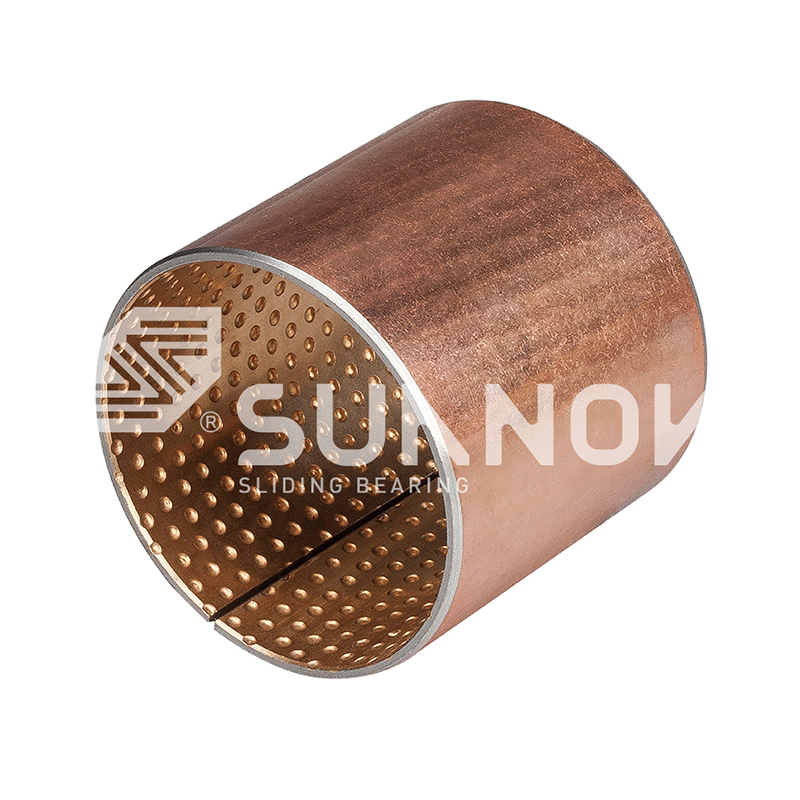 JF-800 Bi-Metal Bearing with CuPb10Sn10 Alloy Lining for Heavy-Duty UseEngineered for heavy-duty, low-speed sliding, this steel-backed bearing features a CuPb10Sn10 surface for excellent wear resistance and supports impact loads, fitting common mining equipment duties.View Product →
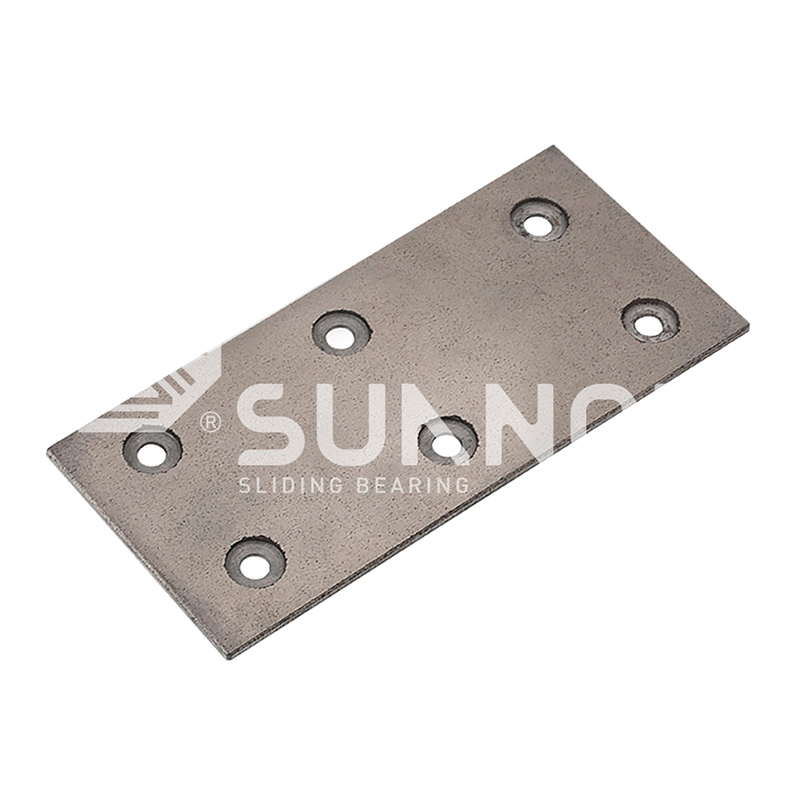 200#P5 Thin Steel Wear Plate with Six Countersunk Graphite Insert HolesA low-profile steel wear plate with graphite inserts and six flush-mounting holes, designed for limited-clearance applications while maintaining high load capacity and eliminating lubrication maintenance.View Product →
Application matching rule: first identify the motion type (continuous rotation, oscillation, reciprocation, or planar sliding), then the load and contamination level, and only then the material family and mounting variant.
For hydraulic components, the documented maintenance cost reductions from solid-lubricated copper alloy bearings are measurable; pumps that ran dry after a seal failure survive until the next planned overhaul when the bearing itself carries a solid lubricant reserve.
Maintenance expectations change with self-lubricating bearings
Self-lubricating does not mean zero maintenance; it means replacing scheduled grease stops with planned inspections and predictable replacement cycles. The solid lubricant is consumed over time, and the transfer film needs stable operating conditions to reform.
Maintenance teams should include the following checks:
- Inspect sliding surfaces at every major overhaul and measure wear against the calculated wear rate.
- Check shaft surfaces for score marks; a polished, graphite-tinted surface indicates healthy film transfer.
- Look for dust ingress around housing seals and clean the external surfaces of the bearing edge.
- Replace at the recommended interval or when wear depth approaches the lubricant pocket depth.
The measurable benefit is a shift from reactive or schedule-based service to wear-based service; fleets using self-lubricating bushings report fewer unplanned stops at pivot points and a corresponding reduction in labor hours.
Frequently asked questions
What PV value should I use to select a self-lubricating bearing for mining equipment?
Use the steady-state load and sliding velocity of the duty cycle, keep the calculated PV below 60 percent of the documented limit, and multiply the static load by a shock factor of 1.5 to 3 for crusher or screen applications.
What shaft hardness does a solid-lubricant-embedded bronze bearing require?
Hardened shafts in the HRC 45 to 55 range with a finish of Ra 0.4 to 0.8 micrometers give the longest life; softer shafts below HRC 40 allow abrasive particles to embed and reduce bearing life sharply.
Can self-lubricating bearings run in water or slurry?
Yes, but only in families designed for it; stainless steel composite and sealed bronze-wrapped variants tolerate moisture, while plain embedded-graphite types wash out under continuous water flow.
How does cast bronze compare with sintered bimetallic for mining?
Cast bronze with embedded graphite handles higher shock loads and can be machined into non-standard sizes, while sintered bimetallic offers a steel backing, tighter dimensional control, and better continuous-running behavior at moderate speeds.
Recommended NEWS:
Self-Lubricating Copper Alloy Bearings: A Comparative Analysis with JDB-600 Casting Bronze and Oil-Retaining Bimetallic Bearings
Self-Lubricating Bronze Bushings: Benefits, Cost Savings, and Selection Guide
The Rise of Self-Lubricating Bearings: A Guide to Maintenance-Free Performance
Self-Lubricating Copper Alloy Bearings: The Future of Solid-Lubricating Bearings and JDB-600 Casting Bronze Bearings
Understanding the Features of JDB650 Self-Lubricating Brass Bushing Oilless Bearings
JDB650 Oilless Bearings: Advanced Self-Lubricating Brass Bushing Technology
Recommended LINS:
Contact Us //
Have Questions? Get in Touch!

Zhejiang Shuangnuo Bearing Technology Co., Ltd. specializes in the production of various self-lubricating copper alloy bushing bearings products
Quick Links
Related Products
Contact
- Add: No. 69, Tingyao East Road, Ganyao Town Industrial Zone, Jiashan County, Zhejiang Province, China
- Tel: +86-15957371801
- Fax: +86-0573-84038630
- Email: [email protected]
[email protected]
© 2024 Zhejiang Shuangnuo Bearing Technology Co., Ltd.
Custom Self-Lubricating Copper Alloy Bearings
