

 русский
 Español
-
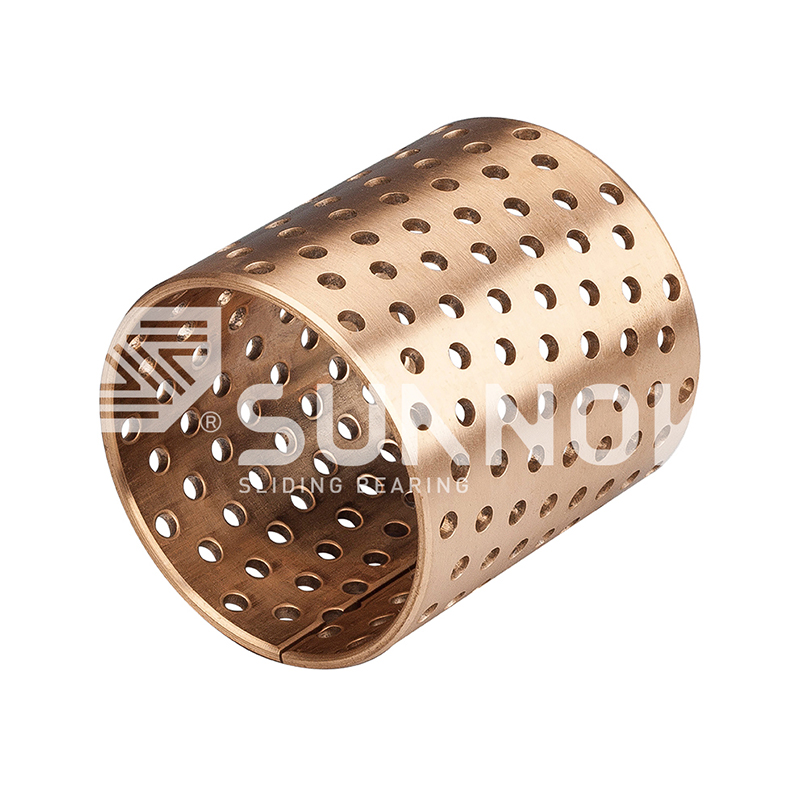 FB090 Bronze Wrapped Bearing FB092 Bronze Wrapped Bearing - Oilless Dry Sliding Bushing Self-Lubricating Bushing
-
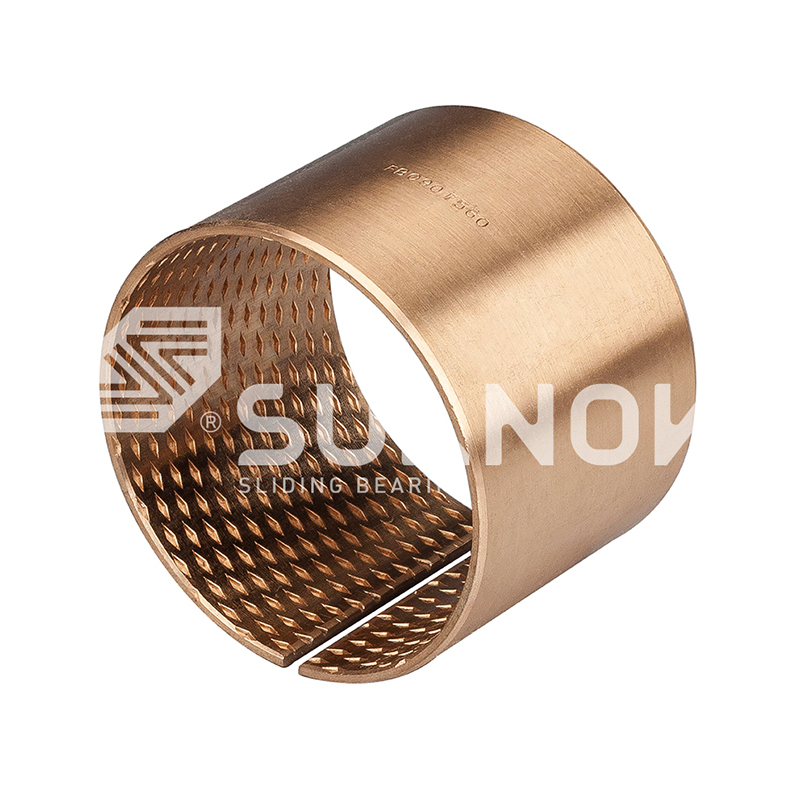 FB090 Bronze Wrapped Bearing FB090 Bronze Wrapped Bearing | Self-Lubricating Bushing & Sleeve
-
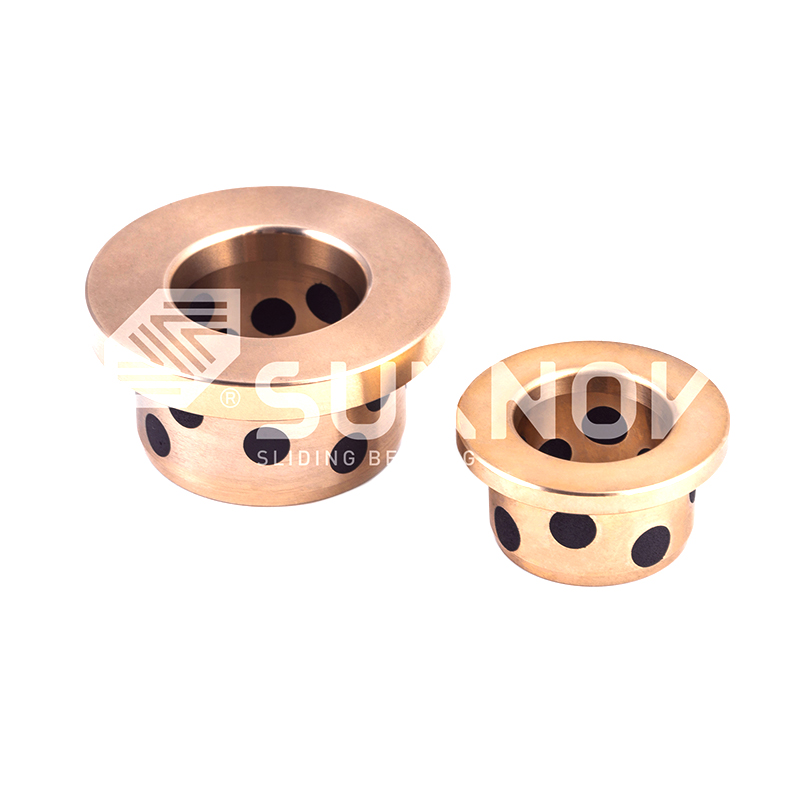 JDB Solid-lubricating Bearing Flanged Graphite Plugged Bronze Bushing, Self Lubricating Oilless Bronze Sleeve Bearing GB71 NAAMS
-
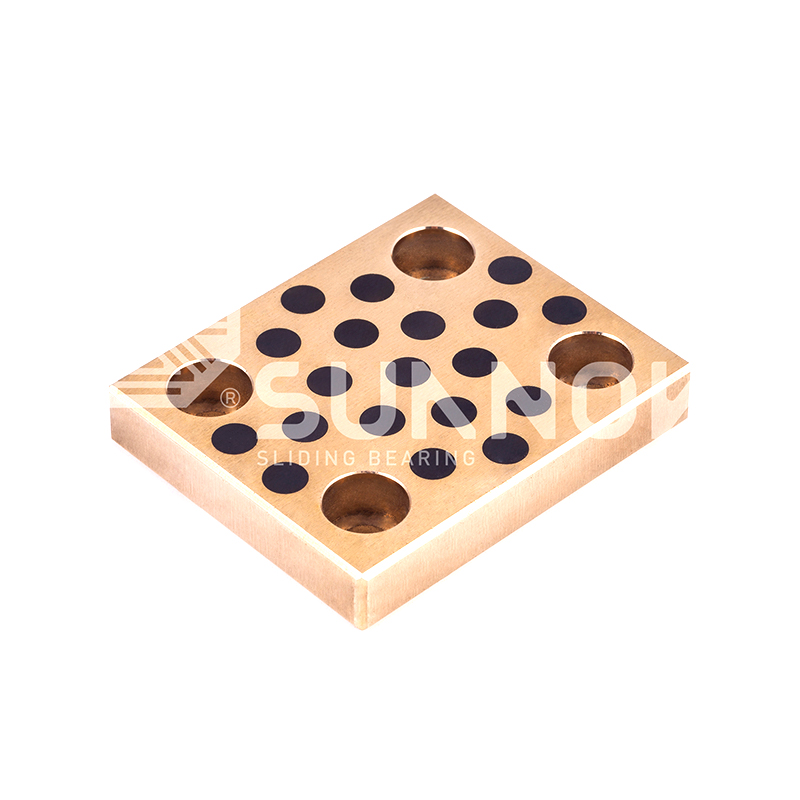 JDB Solid-lubricating Bearing Flangeless Graphite Bronze Wear Block, Square Self Lubricating Bronze Guide Plate JESW
-
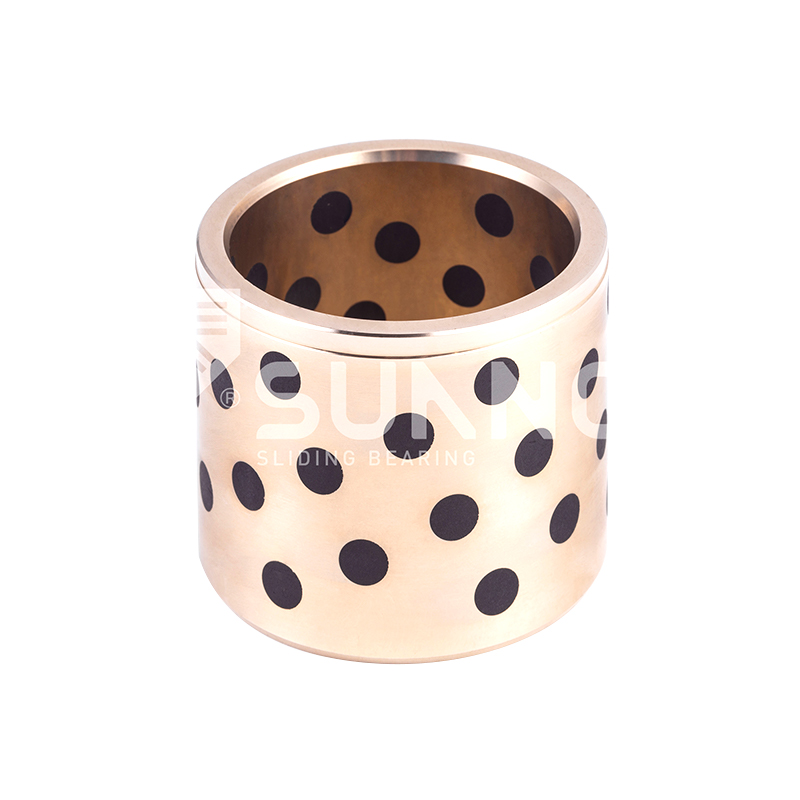 JDB Solid-lubricating Bearing JDB650 Self-Lubricating Brass Bushing Oilless Bearings
-
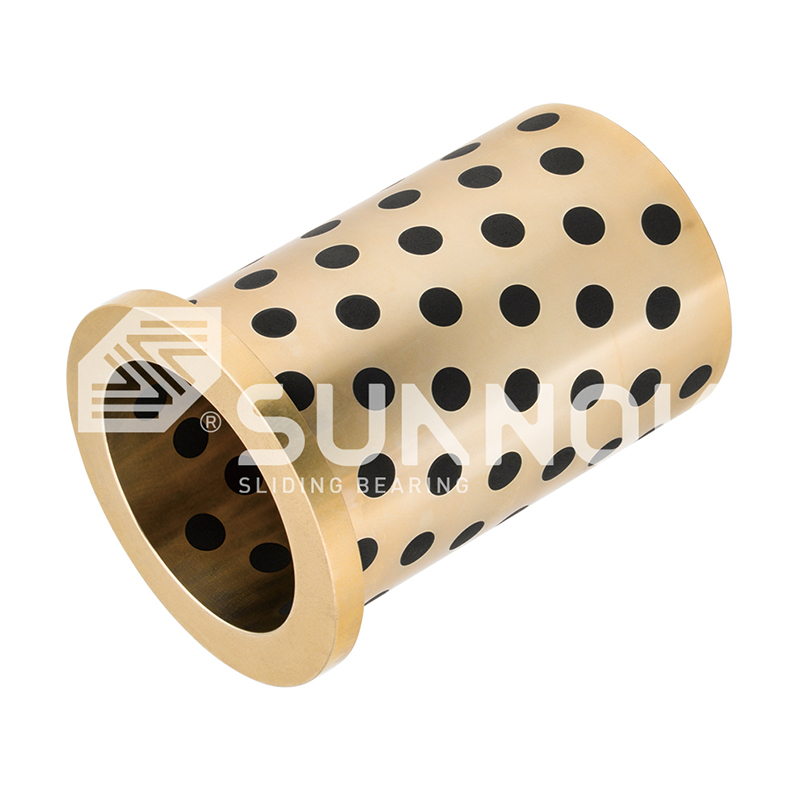 JDB Solid-lubricating Bearing One-Flange Self-lubricating Bronze Bushing Graphite Plugged Sliding Sleeve Bearing JEFW
-
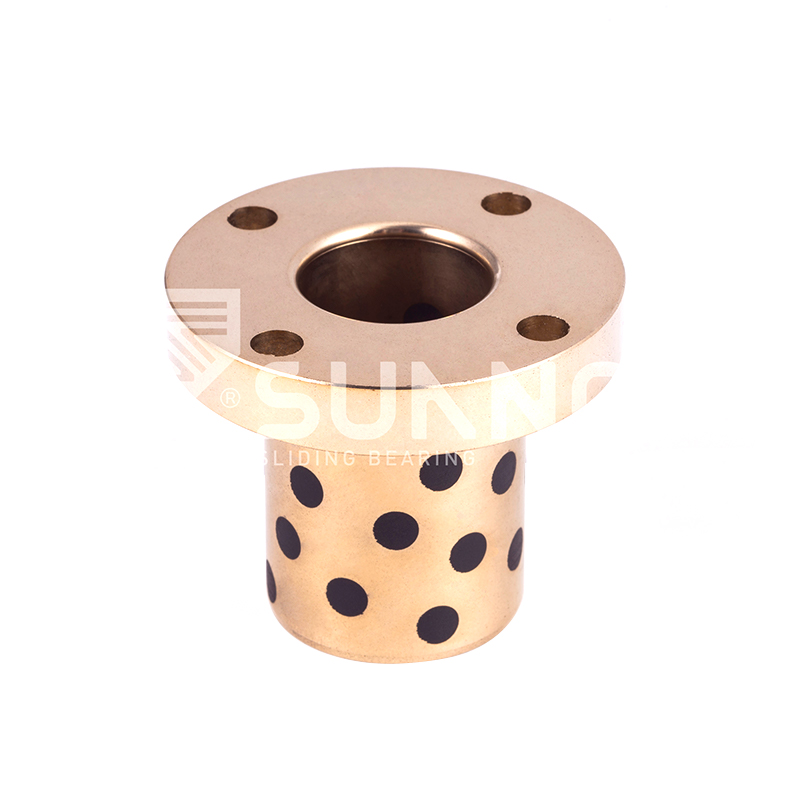 JDB Solid-lubricating Bearing JFB650 Metric Oil Free Self Lubricating Bronze Round Flanged Bearing
-
Bronze Alloy Selection & Self-Lubricating Bearing Performance: Engineer's Guide
Industry News-Content
- 1 The Alloy Matrix Is the Load Path, Not a Housing
- 2 Brass, Tin Bronze, or Aluminum Bronze - What the Choice Changes
- 3 Alloy Properties Set the PV Limit and the Wear Rate
- 4 Match the Alloy to the Application, Not the Catalog Price
- 5 Casting and Verification Decide Whether the Alloy Is Real
- 6 A Practical Alloy Selection Checklist
- 7 Frequently Asked Questions
Replace a worn self-lubricating bushing with a bronze part specified from memory and the machine can fail within weeks, even when the graphite plugs are identical. In one press tool, a maintenance crew found scoring across the guide pin because the new brass matrix had deformed under edge load and loosened its lubricant plugs. That sequence - matrix first, lubricant second - is why bronze alloy selection decides load capacity, wear life, and maintenance cost before any other design input.
Core definition
In a self-lubricating bearing, the bronze alloy matrix is the load-bearing structure that anchors the graphite or MoS2 plugs and conducts frictional heat away from the sliding interface. Its hardness, microstructure, and thermal conductivity set the practical load, speed, and temperature limits of the whole component.
80 HB to 180 HB Raising matrix hardness across that range can more than double the permissible surface pressure in the same bearing geometry - the first sign that alloy choice is a strength decision, not a cost line.
The Alloy Matrix Is the Load Path, Not a Housing
The bronze matrix carries the mechanical load and controls how much pressure the solid lubricant can survive before the bearing becomes a friction problem. In a JDB-style solid-lubricating bearing, graphite or MoS2 plugs sit in drilled pockets. In a sintered bimetallic part, lubricant disperses through a porous bronze layer on a steel back. In both cases the matrix must resist plastic deformation, because a yielding matrix loosens the plugs and starts metal-to-metal contact.
Hardness is the first selection filter. Brass alloys used in self-lubricating bushings typically measure 60 to 90 HB, tin bronze 70 to 110 HB, and aluminum bronze 140 to 200 HB. A designer who knows the static load can narrow the field immediately: moderate loads allow brass, heavy loads demand tin bronze or aluminum bronze.
Design rule of thumb: the lubricant does the sliding, the alloy does the surviving. If the matrix deforms, no plug formulation can save the bearing.
Brass, Tin Bronze, or Aluminum Bronze - What the Choice Changes
Brass, tin bronze, and aluminum bronze each deliver a different balance of strength, wear resistance, shaft compatibility, and cost, so the right grade follows directly from the operating profile.
Brass alloys such as those in the JDB650 self-lubricating brass bushing give good machinability, moderate hardness, and excellent compatibility with steel shafts. They dominate mold guide and ejector applications, including DIN9834 and NAAMS standard guide bearings, where loads stay moderate and alignment precision matters. Brass is also the lowest-cost family of the three.
 JDB650 Self-Lubricating Brass Bushing with Embedded Solid GraphiteThis brass bushing embeds solid graphite lubricants for maintenance-free operation. It suits mold guides and ejector applications where loads stay moderate and alignment precision matters, offering good machinability and compatibility with steel shafts.View Product →
Tin bronze grades such as CuSn6.5P and CuSn10 step up hardness, fatigue strength, and corrosion resistance while keeping strong thermal conductivity. Cast tin bronze parts handle slow, high-load oscillation well, resist seizure in dirty environments, and are the default for pump, press, and heavy-machinery bushings where speed is low and load is continuous.
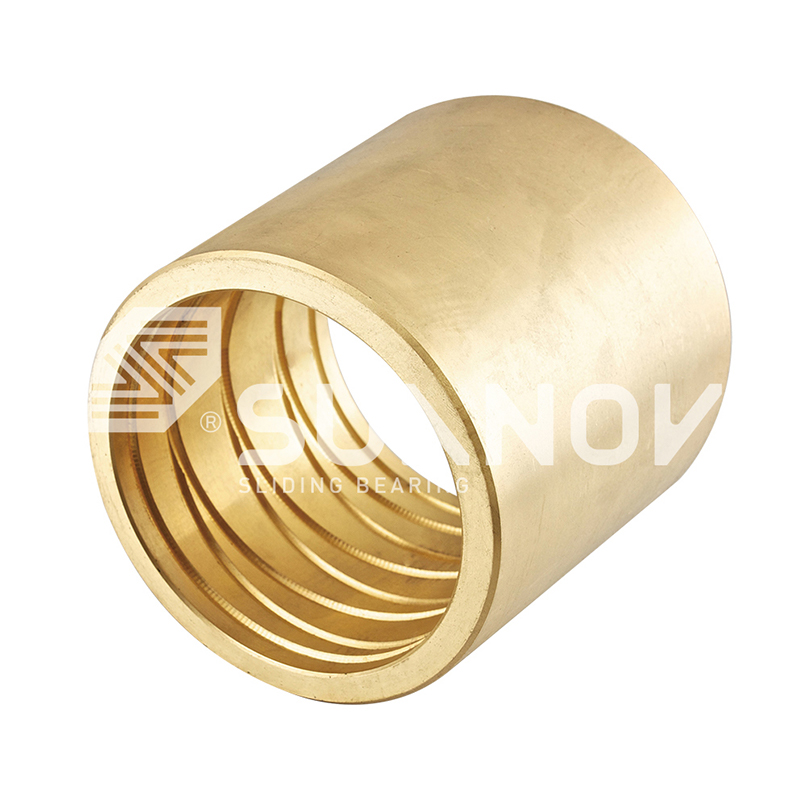 JDB-600 Tin Bronze Bushing with Internal Spiral Oil GroovesFeaturing internal spiral oil grooves for uniform lubrication, this tin bronze bushing provides corrosion resistance and high load capacity. It fits applications with continuous or intermittent oil supply, bridging the gap between bronze families.View Product →
Aluminum bronze (CuAl10Fe3) has the highest hardness and yield strength, the best shock resistance, and strong abrasion tolerance. The trade-offs are harder machining and a stricter counter-face requirement, because a soft shaft wears faster than the bearing. Engineers pair aluminum bronze with hardened or chromed shafts above roughly 45 HRC. For grade-level differences, see this alloy grade comparison for bronze-graphite bearings.
| Property | Brass (CuZn) | Tin bronze (CuSn) | Aluminum bronze (CuAl10Fe3) |
| Typical hardness | 60-90 HB | 70-110 HB | 140-200 HB |
| Static load capacity | Moderate | High | Very high |
| Thermal conductivity | Highest | High | Moderate |
| Shaft compatibility | Excellent | Good | Hardened shaft advised |
| Best application | Mold guides, ejectors | Heavy oscillation, slow speed | Shock loads, abrasive media |
| Relative cost | Lowest | Mid | Highest |
Alloy Properties Set the PV Limit and the Wear Rate
The pressure-velocity (PV) limit is a property of the alloy-lubricant system, not of the lubricant alone, and the alloy side usually fails first. PV equals contact pressure times sliding velocity; above the rating, interface temperature climbs and the solid lubricant plugs deplete quickly.
Thermal conductivity decides how fast frictional heat leaves the sliding zone. Brass conducts roughly 110 W/mK, so it runs cool at moderate loads. Tin bronze sits around 50 to 70 W/mK and still sheds heat well. Aluminum bronze conducts the least of the three, so designers must lower the permissible PV when sliding speed dominates the duty cycle.
2.0 to 4.0 N/mm2 x m/s Typical maximum PV for cast bronze JDB grades with solid lubricant depends on alloy, speed, and counter-face condition. Softer brass sits at the lower end; tin bronze and aluminum bronze extend the ceiling.
Typical maximum PV rating for self-lubricating bronze grades
Indicative maximum PV in N/mm2 x m/s for dry running on ground steel shafts.
Hardness also changes the wear mechanism. A harder matrix resists adhesive wear and keeps plugs seated, which raises the pressure side of the PV equation. But a very hard surface on a soft shaft moves the wear to the counter-face, so hardness pairing matters as much as the bearing's own wear rate.
Match the Alloy to the Application, Not the Catalog Price
Start from the operating envelope - load, motion, temperature, shaft condition - and only then choose the alloy. Starting from price almost always produces a shorter service interval and a higher total cost.
- Mold guides and ejectorsBrass-based JDB650 or steel-embedded JDB5 for moderate loads, high precision, and fast cycling.
- Heavy slow oscillationCast tin bronze JDB600 for crane pivots, press linkages, and construction equipment that sees high static load.
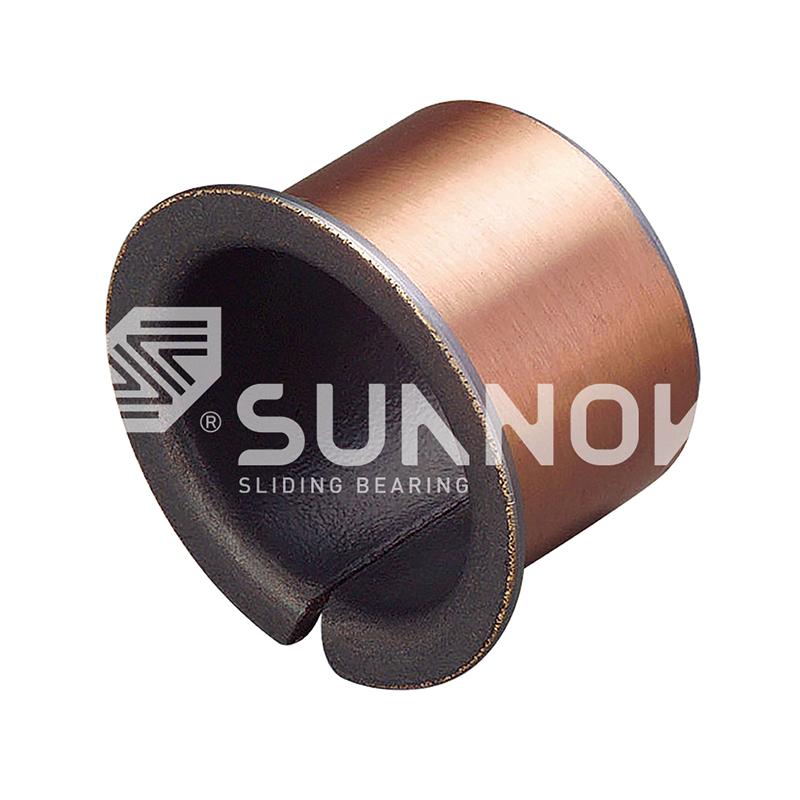
- High-load pumps and gearboxesSteel-backed bimetal JF800, whose sintered bronze layer with dispersed lubricant handles dynamic loads better than a solid bronze part.
- Hydraulic rams and shock dutyAluminum bronze or lead-free bimetal grades when the shaft can be hardened.
Each family has a characteristic failure mode. Brass fails by matrix deformation and plug pull-out when overloaded. Tin bronze fails by thermal scoring when the PV limit is seriously exceeded. Aluminum bronze failures appear as counter-face wear when the mating part is soft. Knowing these patterns makes retrofits predictable.
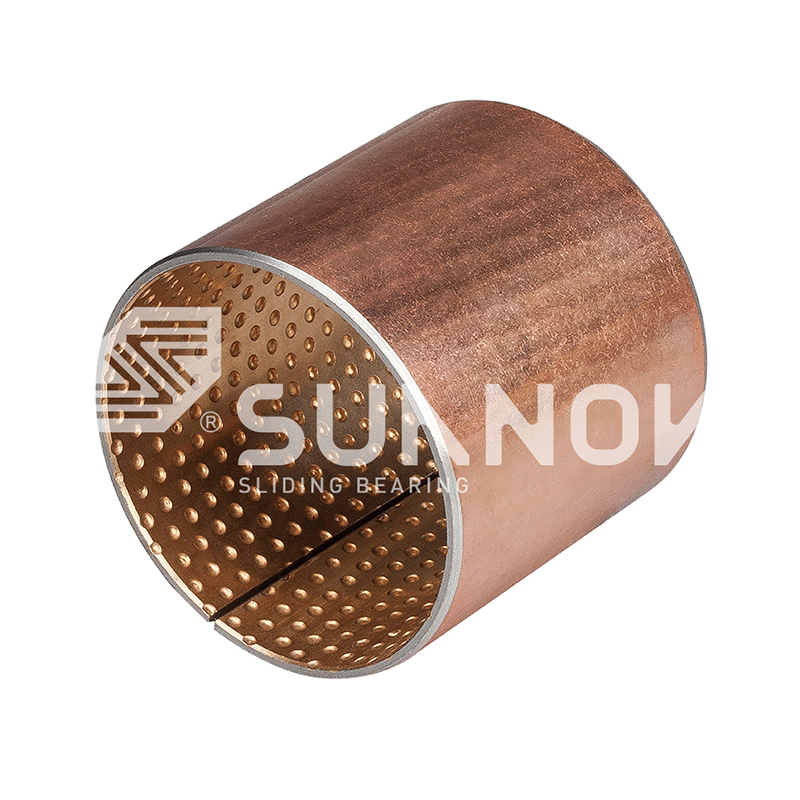 JF-800 Bi-Metal Bearing with CuPb10Sn10 Alloy SurfaceThis steel-backed bearing uses a sintered CuPb10Sn10 lining for heavy-duty, low-speed sliding. Its robust construction handles high impact and extreme loads, while reducing friction and maintenance in demanding industrial environments.View Product →
Casting and Verification Decide Whether the Alloy Is Real
Alloy chemistry on paper means nothing if porosity, segregation, or composition drift weakens the actual part. Centrifugal and continuous casting produce different microstructures, and poorly controlled pours create voids that act as crack starters under cyclic load.
That is why Zhejiang Shuangnuo Bearing Technology Co., Ltd. casts its own copper alloys and runs spectrometer checks before, during, and after each furnace pour, with independent third-party testing of composition and mechanical properties. Customers can request those test reports to verify a grade before installation.
Independent castingIn-house melting removes the supplier-to-supplier variability that hides in bought-in bronze stock.
Full-process spectrometryFurnace-before, furnace-mid, and furnace-after checks flag composition drift early.
Third-party reportsPublished material certificates keep every bearing audit-ready for OEM and maintenance teams.
For design engineers, a spectrometer-verified material certificate is the difference between a generic bushing and a component they can defend in a durability review.
A Practical Alloy Selection Checklist
Five checks are enough to avoid the most common alloy-selection mistakes on new designs and retrofits.
- Confirm the maximum static and dynamic load in N/mm2 at the actual contact area.
- Read the PV rating at the expected operating temperature, not at room temperature.
- Check shaft hardness and finish, and match the bearing matrix to the counter-face before finalizing.
- Account for edge loading, misalignment, and contamination, which can reduce the usable PV rating by 30 percent or more.
- Require a material certificate with spectrometer and mechanical test data, and keep it with the maintenance file.
Cost comparison: a tin bronze or aluminum bronze bushing can outlast a brass part by two to four times in heavy-load duty. The higher alloy price usually becomes the economically correct answer once downtime and labor are priced in.
Frequently Asked Questions
Which bronze alloy is best for self-lubricating bearings?
There is no universal best grade. Brass suits moderate-load mold guides and ejectors; tin bronze suits high-load, slow oscillation; aluminum bronze suits shock loads and abrasive environments. Selection always follows load, speed, shaft condition, and operating temperature.
Why does aluminum bronze wear the shaft faster?
Aluminum bronze is harder and work-hardens quickly, so it can lap a mild steel shaft. If the shaft hardness is below about 45 HRC, use a softer matrix such as tin bronze or specify a hardened or chromed shaft surface.
Can brass replace tin bronze in a loaded bushing?
Only when the PV and edge-load conditions sit clearly inside brass limits. Replacing tin bronze with brass at the same load reduces the safety margin, and overload develops as matrix deformation followed by plug pull-out.
How does alloy hardness affect the PV limit?
Harder matrices resist deformation and keep the solid lubricant plugs seated, which raises the pressure component of the PV limit. A very hard matrix, however, can increase counter-face wear, so hardness must be paired with the shaft specification, not maximized alone.
Recommended NEWS:
Self-Lubricating Copper Alloy Bearings: A Comparative Analysis with JDB-600 Casting Bronze and Oil-Retaining Bimetallic Bearings
Self-Lubricating Bronze Bushings: Benefits, Cost Savings, and Selection Guide
Self-Lubricating Copper Alloy Bearings: The Future of Solid-Lubricating Bearings and JDB-600 Casting Bronze Bearings
JFB650 Oil-free Self-lubricating Bronze Round Flange Bearing: Performance and Application Analysis
In which industries is SF-2 Boundary Self-Lubricating Bearing most widely used?
Why Solid-Lubricating Bronze Bearings Are the Future of Low-Maintenance Machinery
Recommended LINS:
Contact Us //
Have Questions? Get in Touch!

Zhejiang Shuangnuo Bearing Technology Co., Ltd. specializes in the production of various self-lubricating copper alloy bushing bearings products
Quick Links
Related Products
Contact
- Add: No. 69, Tingyao East Road, Ganyao Town Industrial Zone, Jiashan County, Zhejiang Province, China
- Tel: +86-15957371801
- Fax: +86-0573-84038630
- Email: [email protected]
[email protected]
© 2024 Zhejiang Shuangnuo Bearing Technology Co., Ltd.
Custom Self-Lubricating Copper Alloy Bearings
