


 русский
 Español
-
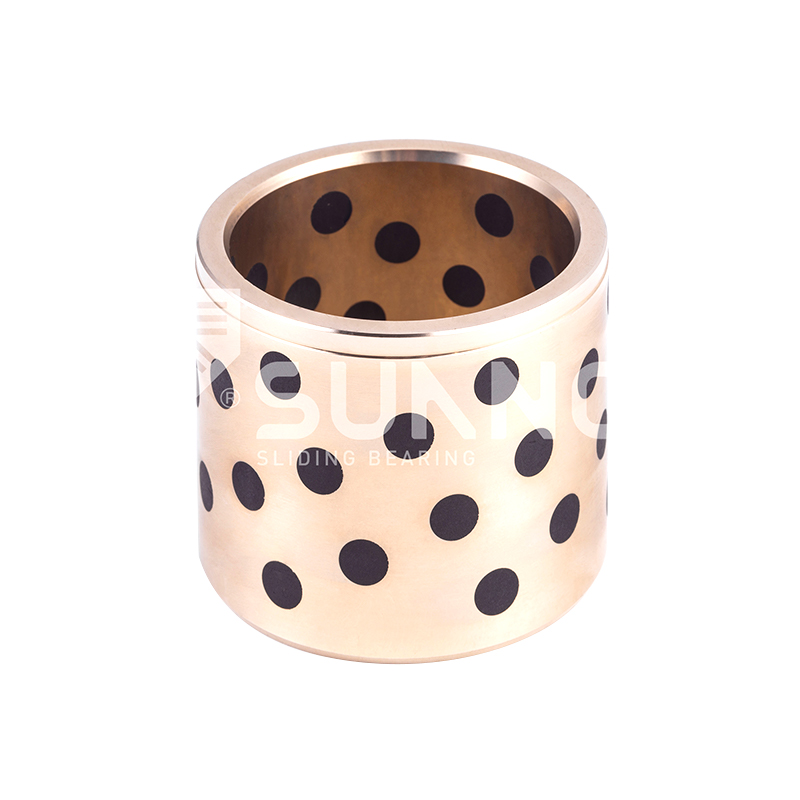 JDB Solid-lubricating Bearing JDB650 Self-Lubricating Brass Bushing Oilless Bearings
-
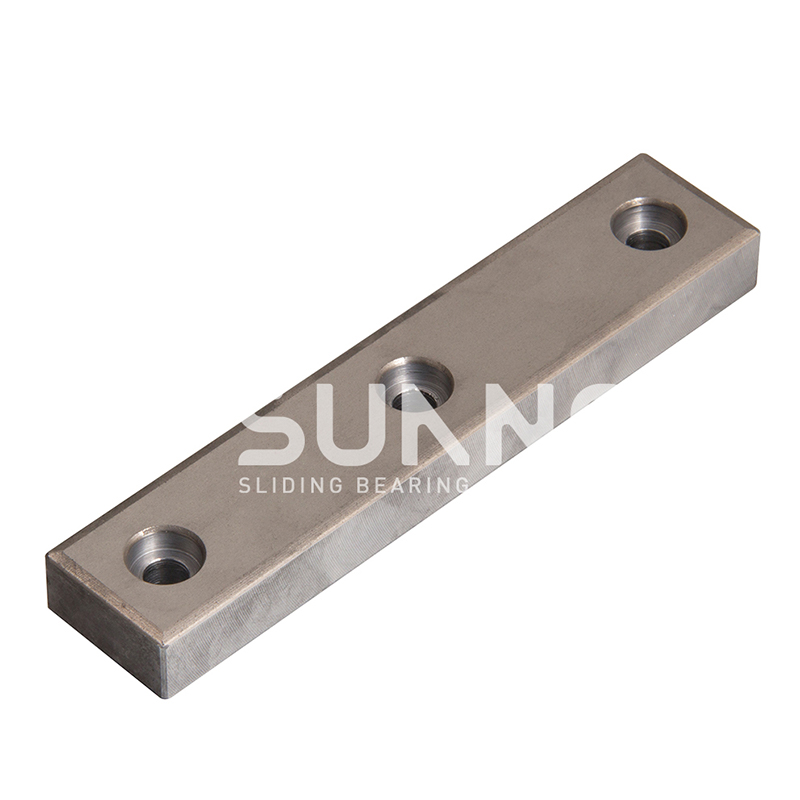 Oil-retaining Bimetallic Bearing Self-Lubricating 200# P20 Steel Graphite Insert Wear Plate / Steel Oilless Wear Strip
-
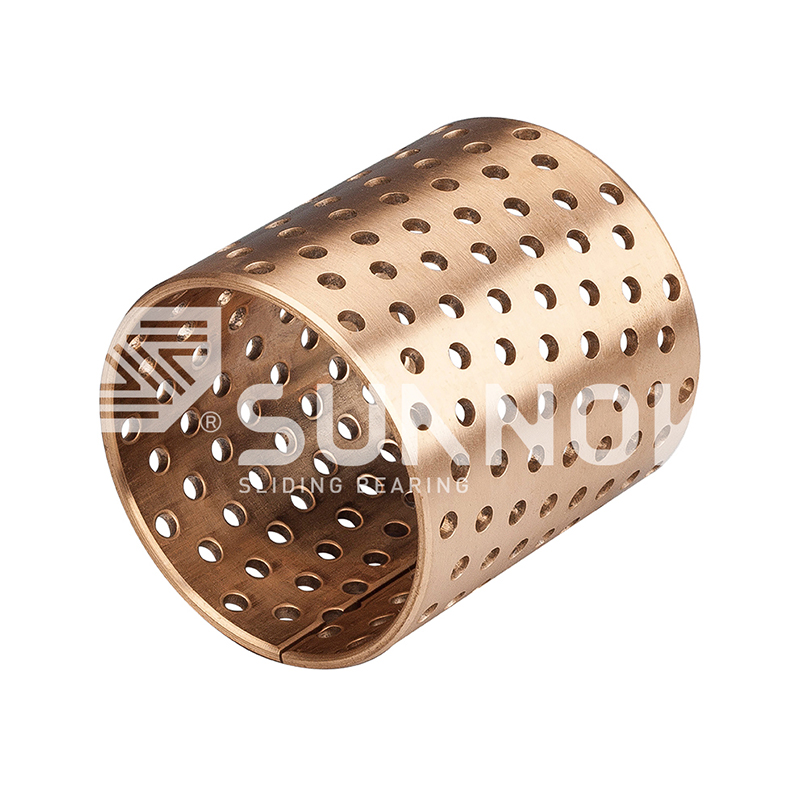 FB090 Bronze Wrapped Bearing FB092 Bronze Wrapped Bearing - Oilless Dry Sliding Bushing Self-Lubricating Bushing
-
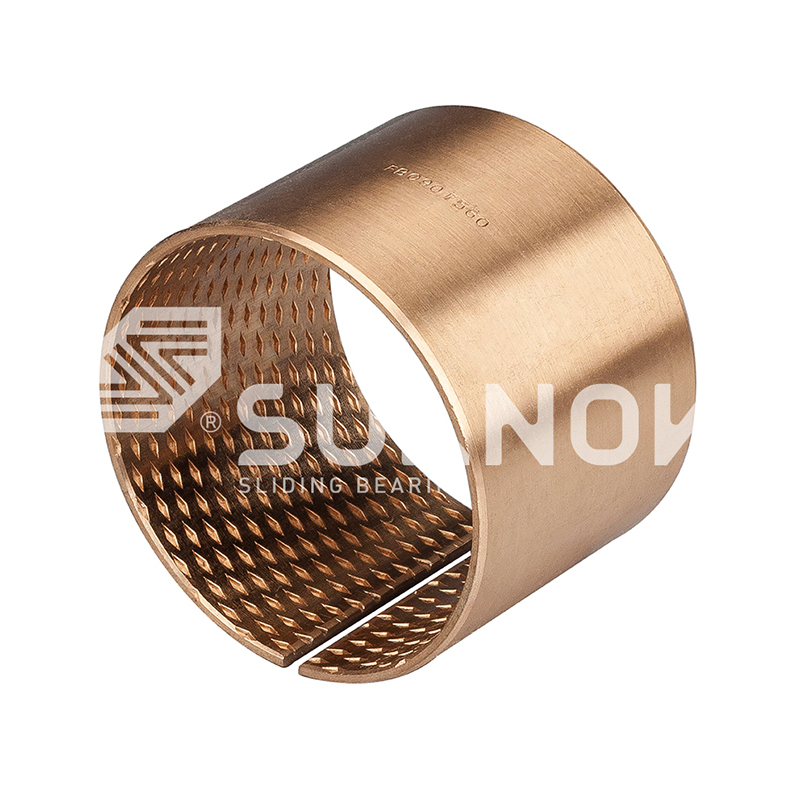 FB090 Bronze Wrapped Bearing FB090 Bronze Wrapped Bearing | Self-Lubricating Bushing & Sleeve
-
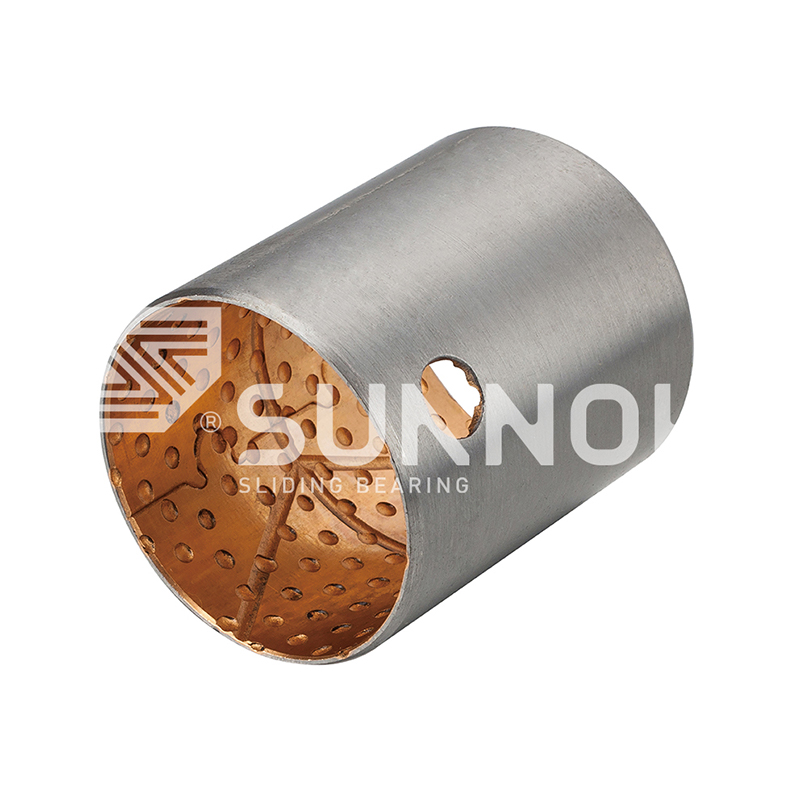 JF-800 Bi-metal Bearing JF-750 Self-Lubricating Lead Free Bi-Metal Bearing for Heavy Duty Engines Low Friction
-
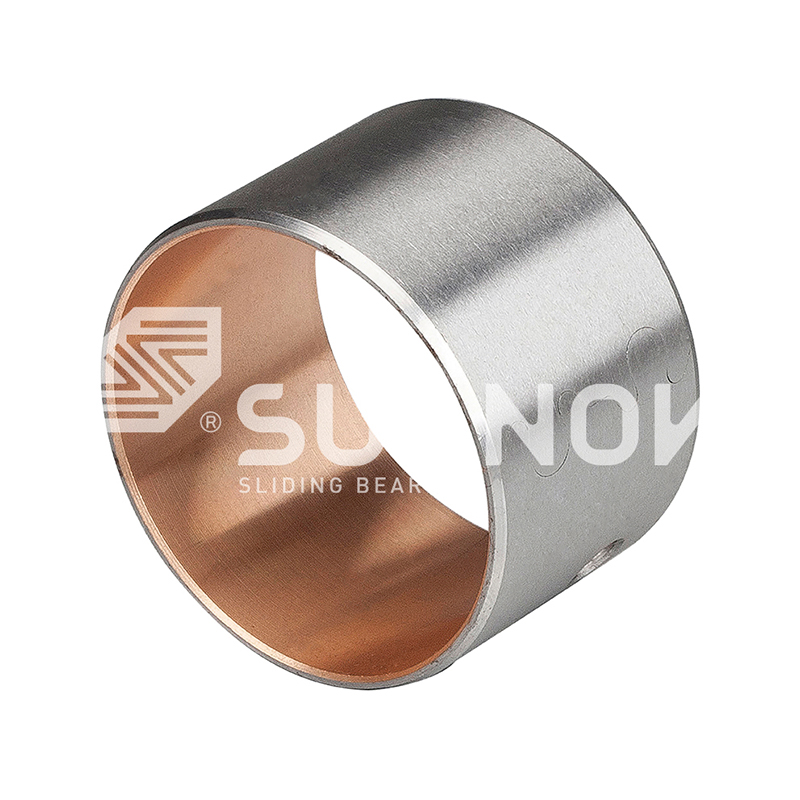 JF-800 Bi-metal Bearing JF-700 Bi-Metal Bearing Heavy Duty Self-Lubricating Sleeve Bushings
-
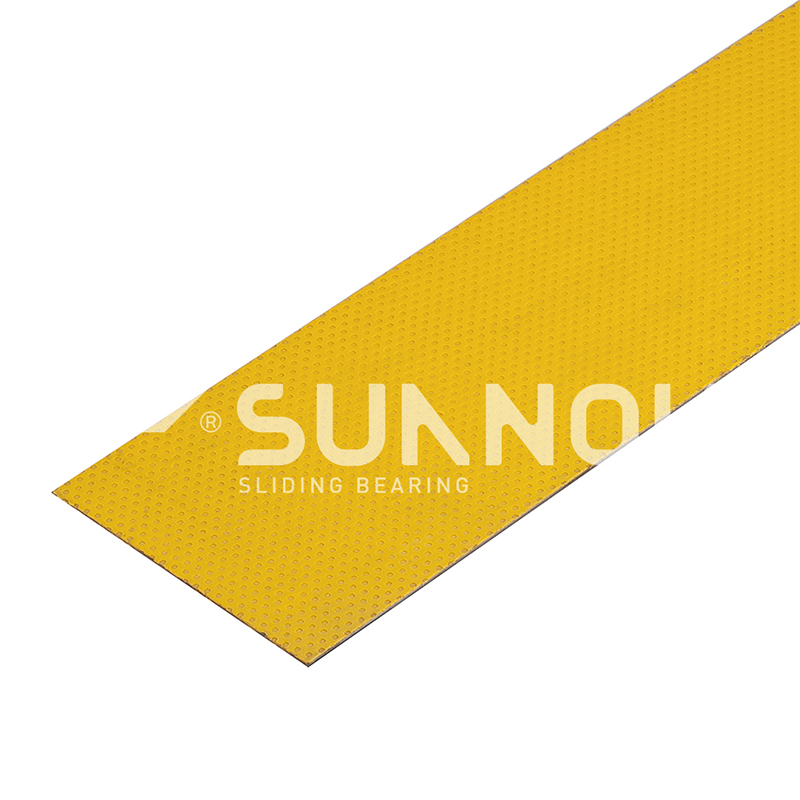 SF-2 Boundary Lubricating Bearing SF-2SP Standard Metric Size Self Lubricating Wear Strip With PTFE
-
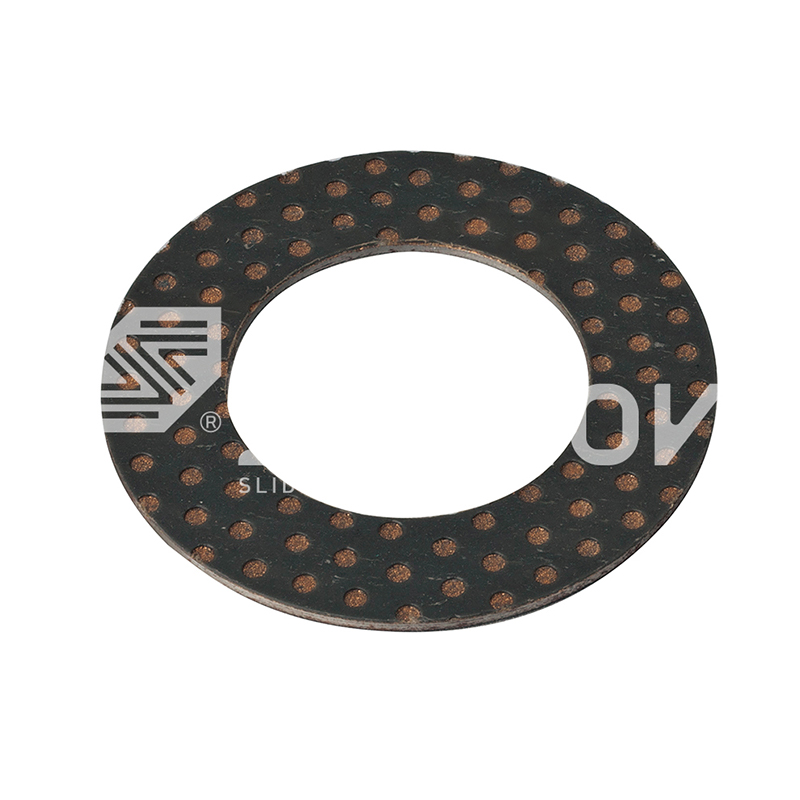 SF-2 Boundary Lubricating Bearing SF-2WC Standard Metric Self-Lubricating Compound Thrust Washer Sliding Washers
What Buyers Should Consider When Sourcing Custom Self-Lubricating Bearings
Industry News-Content
A purchasing engineer opens three quotes for a custom sliding bushing with the same nominal ID, OD, and length. Unit prices differ by nearly 40 percent, yet none of the quote sheets states a material grade, a PV limit, or a required shaft hardness. Six months later the lowest-cost part is pulled from a stamping press with a galled bore and a scored journal. The real cost of that saving includes an unplanned shutdown, two technician shifts, and a replacement shaft.
This sequence repeats across mold shops, hydraulic pump builders, and construction equipment lines. Self-lubricating bearings look simple, yet the specifications inside them decide whether the part survives.
Define the operating envelope before comparing quotes
The first specification to lock down is the mechanical duty, expressed as specific load, sliding velocity, and their product, the PV value. Every material system has a maximum PV above which its solid lubricant film breaks down and wear accelerates sharply.
- Radial load range, including impact and edge-loading peaks
- Sliding velocity and motion type: rotating, oscillating, or reciprocating
- Interface temperature range and ambient conditions
- Shaft material grade, hardness, and surface finish
PV = p x v p in N/mm2, v in m/s. When the calculated PV exceeds the material's dry limit, the bearing overheats, loses its transfer film, and wears exponentially.
Do not let the supplier guess these values. A responsible manufacturer asks about load, speed, and temperature before quoting. If a salesperson prices your part without a single engineering question, the bearing has already been misdesigned.
Match the material system to the duty window
A self-lubricating bearing is not one material class; it is a set of construction families, each with a specific duty window. Cast solid-embedded bearings machine solid lubricant plugs into a bronze or brass body, absorb shock loads, and dominate die guide, ejector, and wear-plate applications.
 JDB650 Self-Lubricating Brass Bushing with Embedded Solid LubricantThis brass bushing uses a CuZn24Al6 alloy with embedded graphite inserts for maintenance-free operation. It suits high-load, low-speed, and medium-to-high temperature environments where external lubrication is impractical.View Product →
Sintered bimetal bearings bond a copper alloy layer with dispersed solid lubricant to a steel backing, combining hard support with a stable running layer for steady high loads.
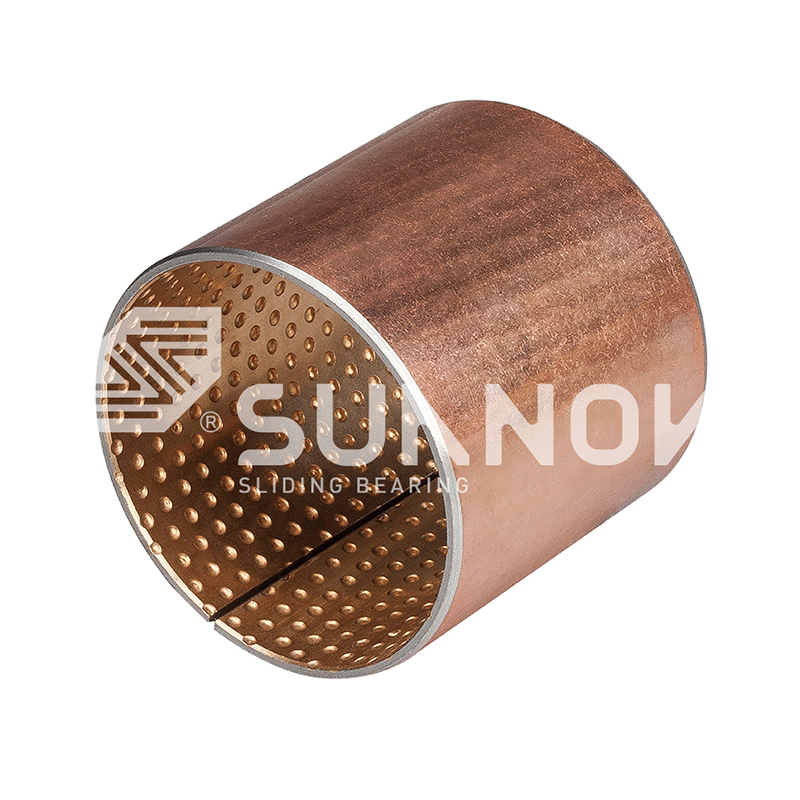 JF-800 Bi-Metal Bearing with CuPb10Sn10 Alloy for Heavy-Duty UseA steel-backed sintered bearing with a lead-tin bronze layer, built for extreme loads and low-speed sliding. It offers strong wear resistance and suits demanding applications in mining, construction, and marine equipment.View Product →
PTFE-lined bearings such as the SF1 type add a low-friction polymer layer for stick-slip, fretting, or start-stop risks.
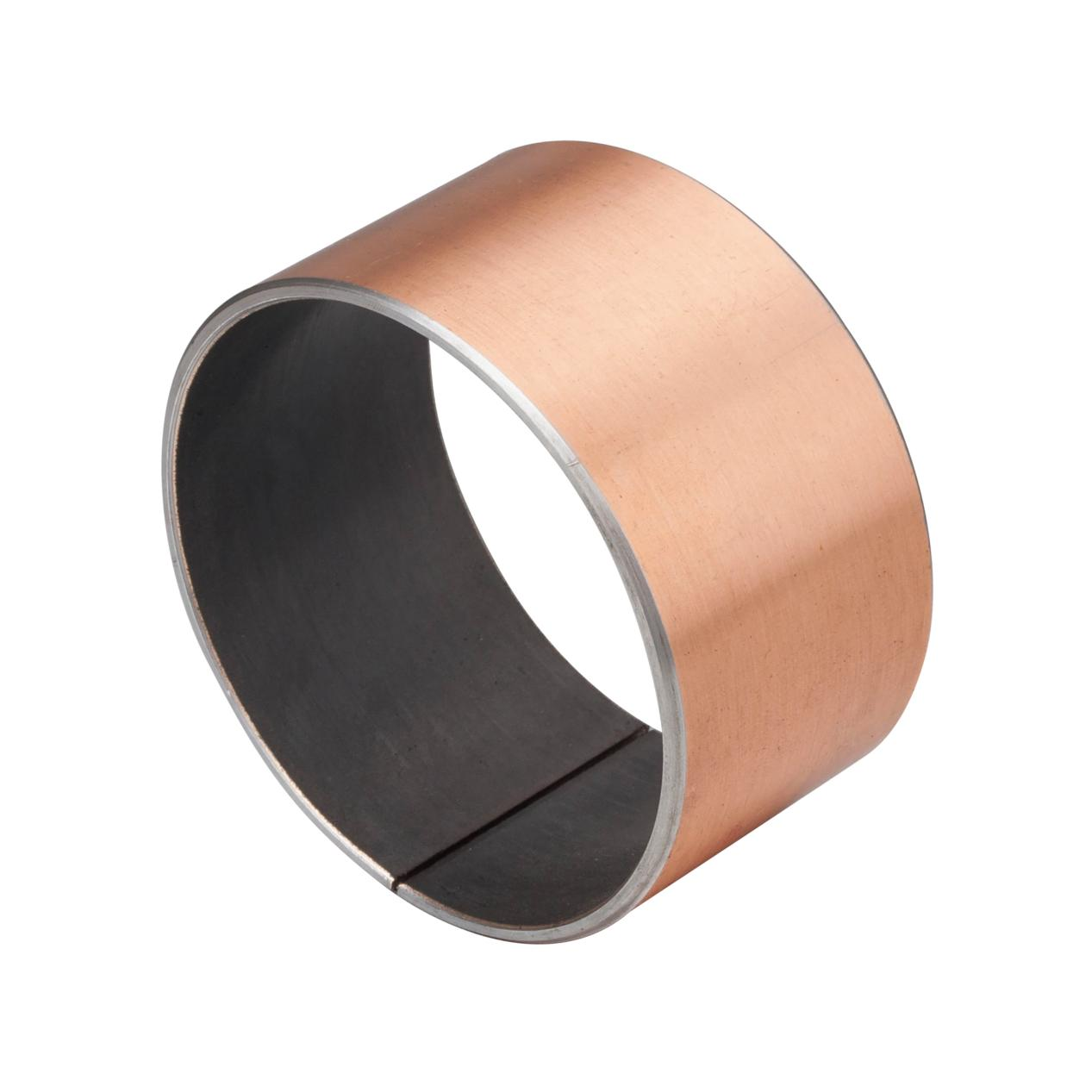 SF-1 Maintenance-Free PTFE-Lined Self-Lubricating BearingA triple-layer composite bearing with steel backing, porous bronze, and PTFE lining. It operates without oil, reduces noise and vibration, and handles heavy loads, making it suitable for textile, automotive, and machinery applications.View Product →
Material grade matters as much as construction. Tin bronze, aluminum bronze, and brass differ in yield strength, wear behavior, and temperature ceiling, and European buyers increasingly request lead-free or REACH-compliant grades. The matrix alloy must be traceable to a standard specification, not described as similar or equivalent.
Representative dry PV limits by material family
Values in MPa-m/s under dry operation. Orientation data for comparison; confirm with the supplier's PV test results.
| Bearing family | Construction | Typical load at low speed | Typical dry PV | Best for |
| Cast embedded | Bronze or brass body with solid lubricant plugs | up to 60 N/mm2 | 2.5 MPa-m/s | Dies, wear plates, oscillating joints |
| Sintered bimetal | Steel backing with sintered copper alloy layer | up to 70 N/mm2 | 2.0 MPa-m/s | Hydraulic pumps, gearboxes, loaders |
| Wrapped bronze | Rolled bronze shell with lubricant pockets | up to 40 N/mm2 | 1.5 MPa-m/s | Moderate-load steady positions |
| PTFE-lined | Backing with PTFE low-friction layer | up to 25 N/mm2 | 3.6 MPa-m/s | Stop-start, reciprocating mechanisms |
Transfer film
Transfer film is the thin layer of solid lubricant mechanically deposited onto the shaft during running-in. It is the real working surface of a self-lubricating bearing. If the shaft finish is too rough or the PV limit is exceeded, the film breaks down and metal-to-metal contact begins.
Review the JDB solid-lubricating bearing product family to see how one construction concept scales from guide pins to heavy wear plates.
Verify tolerances and the standard behind them
Drawing tolerances cause more custom bearing field failures than material selection does. The critical dimensions are the bore fit on the shaft, the interference of the outside diameter in the housing, wall thickness variation, flange squareness, and chamfer geometry.
Custom parts follow a standard or a drawing. In tooling, NAAMS and DIN 9834 define guide bearing geometry; metric flange bearings follow ISO fit conventions. Confirm which standard applies before machining.
| Dimension | Typical specification | Failure mode when wrong |
| Bore ID tolerance | H7 or H8 depending on shaft fit | Shaft scoring and loss of contact area |
| Outer diameter | H7/s6 or similar interference fit | Housing rotation and fretting wear |
| Wall thickness variation | Within 0.05-0.10 mm on precision grades | High local pressure and early wear |
| Flange squareness | Perpendicularity within 0.05 mm | Edge loading on the shaft |
| Chamfer and edge break | 0.3-1.0 mm per drawing | Transfer film scraped off during assembly |
Rule of thumb: a custom bearing's tolerance chain should start from the shaft and housing dimensions at operating temperature, not from nominal drawing values.
Audit the supplier's casting and testing discipline
A supplier's process control is the only reliable predictor of grade consistency. The key question is not whether the supplier machines bearings, but whether it controls the alloy from melt to finished part. A manufacturer that casts its own copper alloys and performs spectrographic checks at three stages can certify the grade.
Zhejiang Shuangnuo Bearing Technology Co., Ltd. casts its own copper alloys, monitors the melt before, during, and after the furnace run with spectrometers, and operates more than 80 CNC machines for finishing. The material never waits on an outside foundry.
Alloy charge and melting
Controlled additions of copper, tin, aluminum, and trace elements.
Furnace spectrographic check
Grade verified before pouring.
Casting
Centrifugal, continuous, or metal-mold casting per part geometry.
Post-cast verification
Second spectrographic check of the solidified alloy.
CNC machining
Bore, OD, flange, and lubricant pockets machined to drawing.
Third-party testing
Composition and mechanical property reports available on request.
Ask for the test report before the purchase order, not after a claim. If a supplier cannot show a third-party composition and mechanical report for the exact melt used in your batch, the alloy is effectively uncontrolled.
Compare total cost of ownership, not unit price
Unit price is the least reliable cost metric for a custom sliding bearing. A bushing that fails at 4,000 hours instead of 12,000 costs more in downtime, labor, and shaft damage than any price difference between suppliers. Convert every quote into a cost per operating hour.
3xWear-life spread observed between a verified casting grade and an unverified equivalent in identical service.
1-2 hLubrication stoppage eliminated per week per bearing point after converting to solid-lubricant bushings.
30%Typical price premium for a certified grade with full test documentation over an uncertified part.
A low-cost supplier that skips furnace-stage checks may pass off-grade material; the difference is invisible in the first hundred hours and destroys the bushing by the first maintenance interval.
Self-lubricating never means zero-maintenance. Shaft finish, alignment, and running-in behavior determine the transfer film, and the film decides the bearing's life. Our analysis of common misconceptions in self-lubricating bronze bearing purchasing covers the specification errors behind field failures.
Frequently asked questions
These are the four questions buyers most often raise before placing a custom order.
What is a PV limit and why does it matter for a custom bearing?
The PV limit is the product of specific pressure in N/mm2 and sliding velocity in m/s above which the solid lubricant film can no longer protect the interface. Above this limit, the bearing overheats and wears rapidly. Your duty calculation must fit inside the approved limit of the material family.
Should we specify an ISO fit or a nominal dimension?
Provide both. State the nominal bore, OD, and length, then add the fit class or the actual shaft and housing dimensions at operating temperature. The supplier needs this information to select machining tolerances that keep the bearing from spinning in the housing or binding on the shaft.
How can we verify the material grade of a custom bearing?
Request a spectrographic composition report from the melt used in your batch plus a third-party report covering composition and mechanical properties. A supplier that controls its own casting can provide these as standard documents. If the report cannot name a standard grade, the material is not certified.
How long should a self-lubricating bushing last?
There is no universal number. Life depends on load, speed, temperature, shaft finish, and duty cycle. A practical approach is to agree on a minimum design life with the supplier, check the PV calculation against real operating data, and validate with one pilot batch before full production.
Bottom line: specify the duty, verify the grade, audit the process, and price the operating life rather than the part.
Recommended NEWS:
Self-Lubricating Copper Alloy Bearings: The Future of Solid-Lubricating Bearings and JDB-600 Casting Bronze Bearings
Self-Lubricating Copper Alloy Bearings: Advantages and Applications in Modern Machinery
Self-Lubricating Copper Alloy Bearings: A Comparative Analysis with JDB-600 Casting Bronze and Oil-Retaining Bimetallic Bearings
The Benefits of Self-Lubricating Copper Alloy Bearings in Reducing Maintenance Costs
How Self-Lubricating Copper Alloy Bearings Improve Performance and Durability
JDB650 Oilless Bearings: Advanced Self-Lubricating Brass Bushing Technology
Recommended LINS:
Contact Us //
Have Questions? Get in Touch!

Zhejiang Shuangnuo Bearing Technology Co., Ltd. specializes in the production of various self-lubricating copper alloy bushing bearings products
Quick Links
Related Products
Contact
- Add: No. 69, Tingyao East Road, Ganyao Town Industrial Zone, Jiashan County, Zhejiang Province, China
- Tel: +86-15957371801
- Fax: +86-0573-84038630
- Email: [email protected]
[email protected]
© 2024 Zhejiang Shuangnuo Bearing Technology Co., Ltd.
Custom Self-Lubricating Copper Alloy Bearings
