


 русский
 Español
-
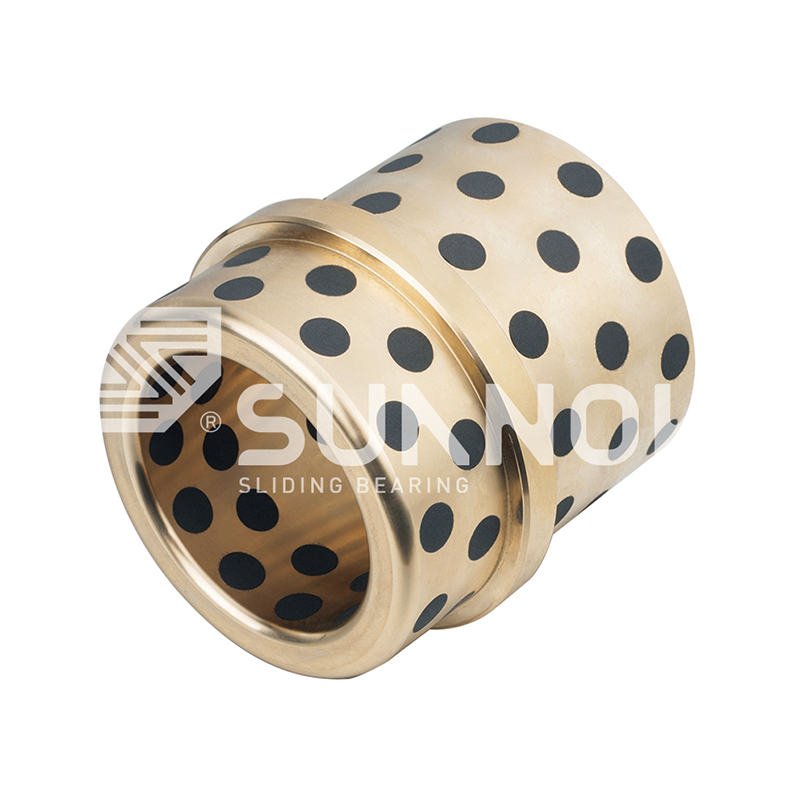 JDB Solid-lubricating Bearing Stepped-Flange Self-lubricating Bronze Bushing Graphite Plugged Sliding Sleeve Bearing JOSG
-
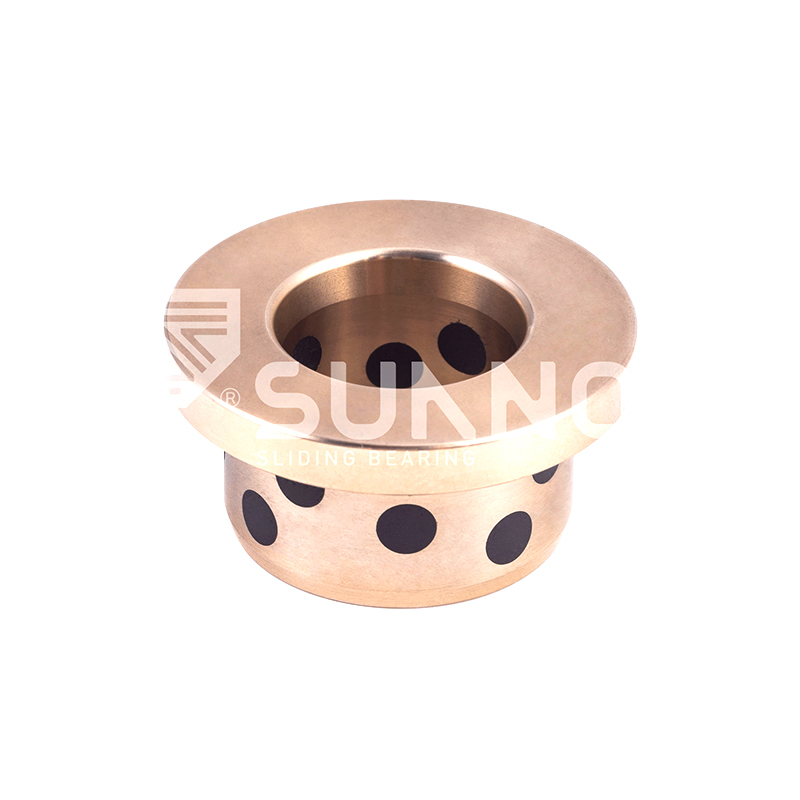 JDB Solid-lubricating Bearing JFBB Metric Self-lubricating Oilless Graphite Flanged Bearings Bushings
-
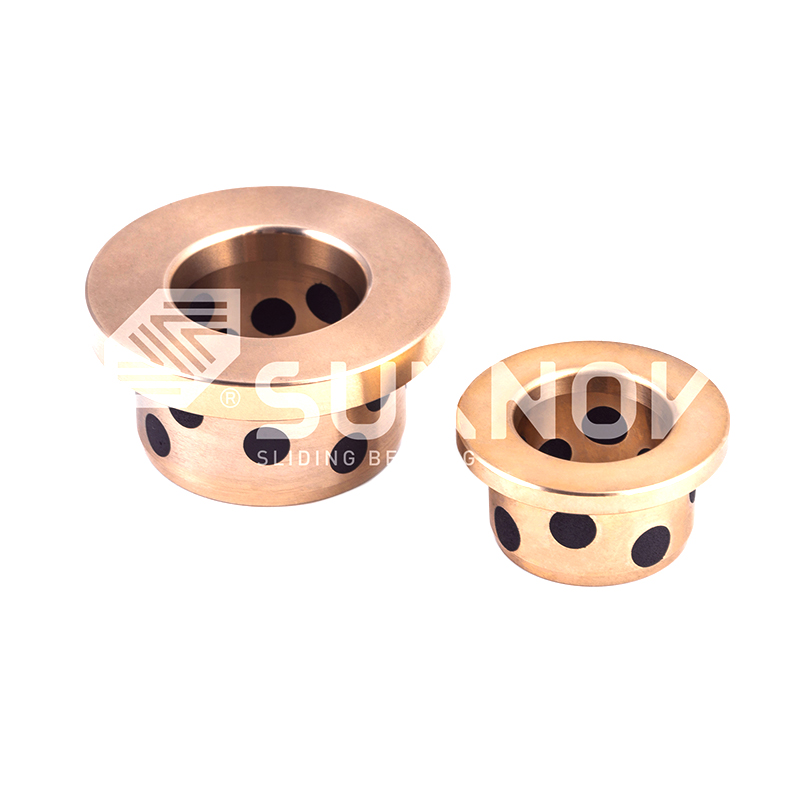 JDB Solid-lubricating Bearing Flanged Graphite Plugged Bronze Bushing, Self Lubricating Oilless Bronze Sleeve Bearing GB71 NAAMS
-
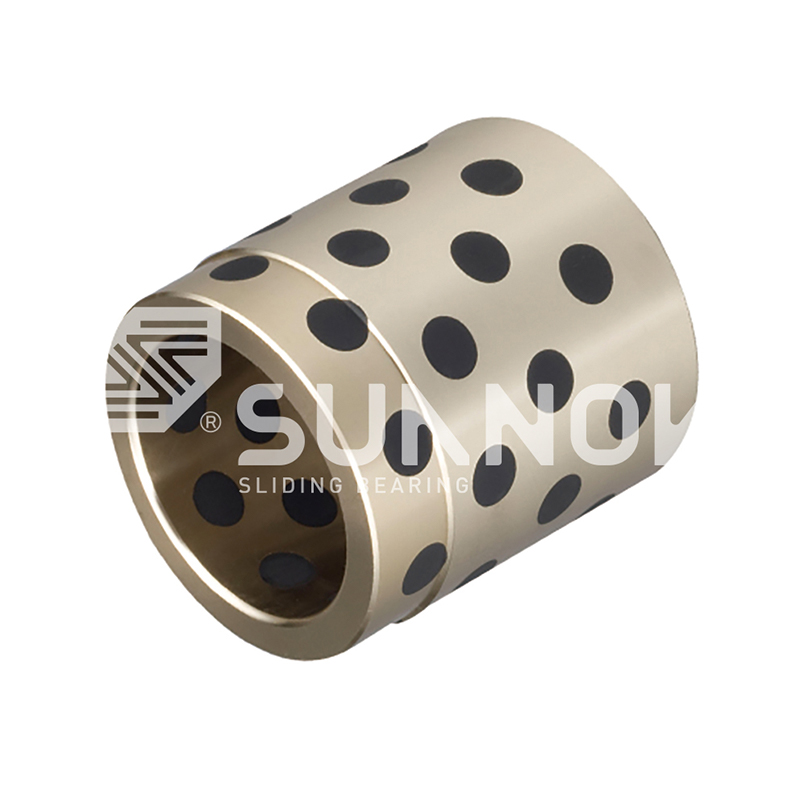 JDB Solid-lubricating Bearing Tubular Self-lubricating Bronze Bushing Graphite Plugged Sliding Sleeve Bearing JPBW, JPBF
-
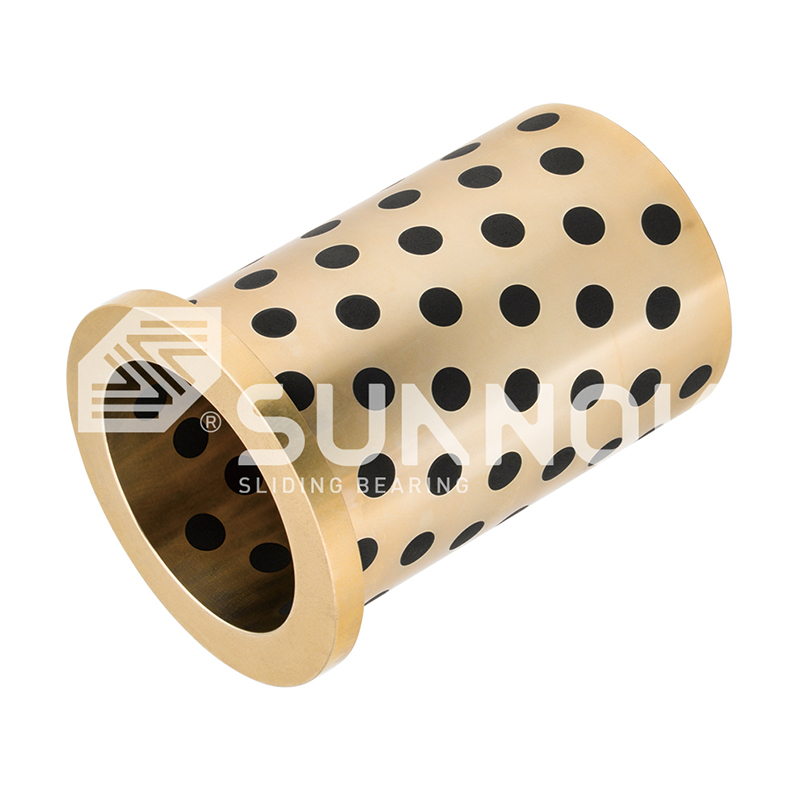 JDB Solid-lubricating Bearing One-Flange Self-lubricating Bronze Bushing Graphite Plugged Sliding Sleeve Bearing JEFW
-
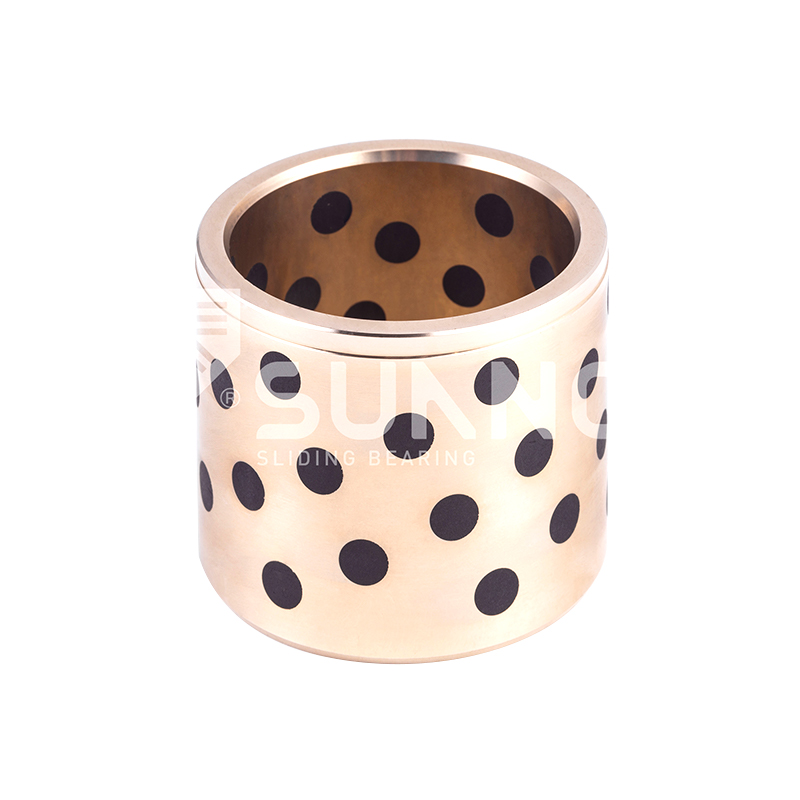 JDB Solid-lubricating Bearing JDB650 Self-Lubricating Brass Bushing Oilless Bearings
-
-
PTFE Composite Bearings vs Graphite Plugged Bronze Bearings: Key Differences
Industry News-Content
- 1 PTFE Composite Bearings: Construction and Operating Principle
- 2 Graphite Plugged Bronze Bearings: Construction and Operating Principle
- 3 Key Differences at a Glance
- 4 Load, PV Limits, and Temperature: The Engineering Trade-offs
- 5 Cost, Maintenance, and Installation Considerations
- 6 How to Choose: A Selection Framework
- 7 Frequently Asked Questions
A carton-sealing line lost six dry-running bushings in four months. The bronze sleeves with graphite plugs smeared, and the scored shafts cost more to recondition than the bushings cost to replace. Switching the low-speed stations to PTFE composite bushings cut friction immediately, until the station beside the heat-seal section failed because the PTFE overlay softened at sustained temperature. That sequence is the standard lesson: PTFE composite bearings and graphite plugged bronze bearings are both self-lubricating, but they occupy different load-speed-temperature windows.
PTFE Composite Bearings: Construction and Operating Principle
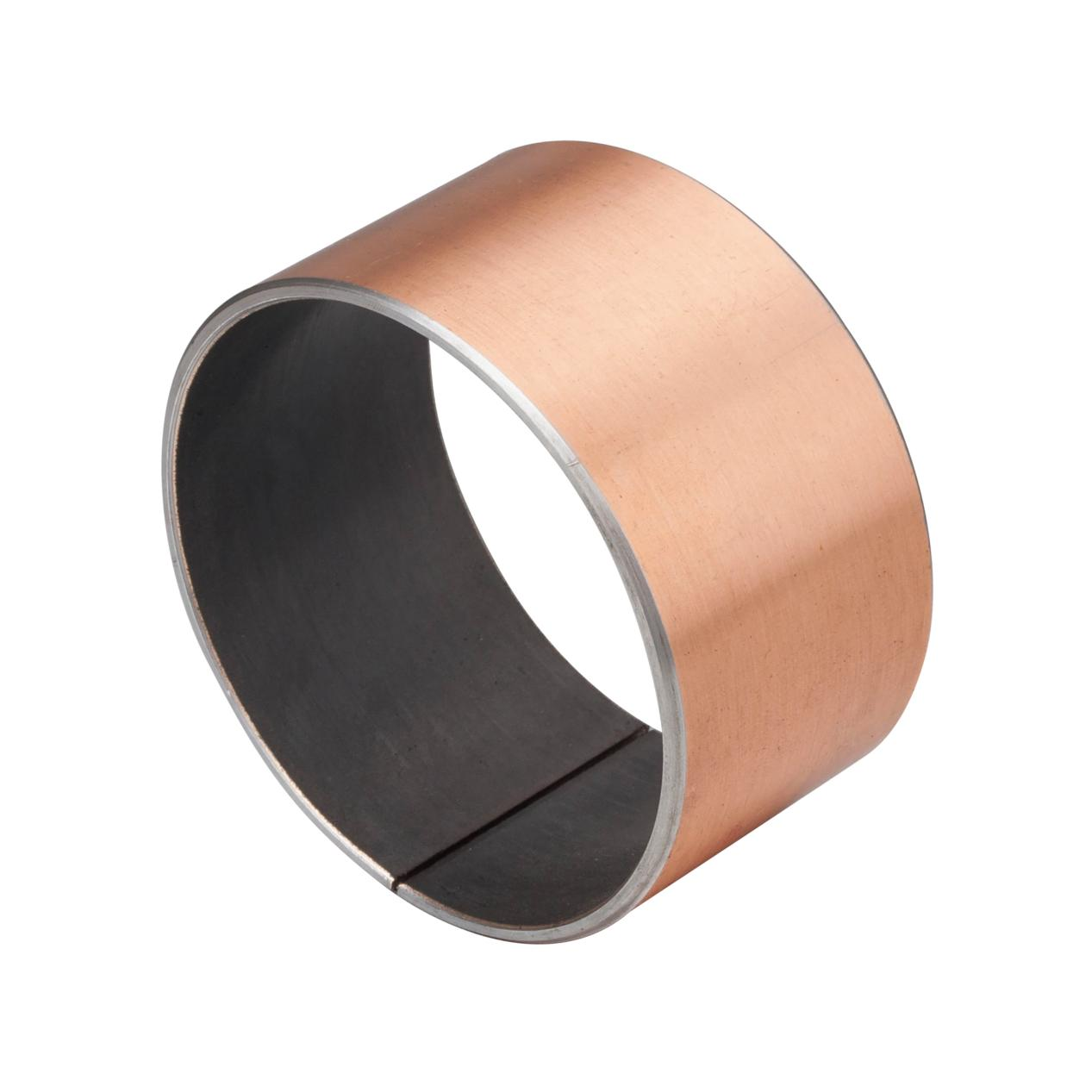
Definition. A PTFE composite bearing is a multi-layer metal-polymer bushing with a steel backing, a sintered porous bronze interlayer, and a thin PTFE-based sliding layer (typically 0.01-0.03 mm thick) that supplies dry lubrication.
A PTFE composite bearing does not rely on an oil film. The steel backing carries the structural load, the porous bronze layer anchors the PTFE mechanically and conducts heat away from the bore, and the PTFE overlay transfers a molecular film to the shaft. Because the overlay is thin, frictional heat travels a short path to the housing, which is why the design reaches high PV values in continuous dry rotation.
Typical performance values:
- Friction coefficient of 0.04-0.08 against a ground shaft, with no stick-slip at start-up.
- Static load capacity up to 250 N/mm²; dynamic capacity around 140 N/mm².
- Dry PV limit around 3.6 N/mm² m/s, among the highest for maintenance-free bushings.
- Continuous service temperature from -200 °C to 280 °C; the overlay softens above this range.
Zhejiang Shuangnuo Bearing Technology Co., Ltd. produces this construction as the SF-1 series, with dedicated variants for hydraulic pumps, gear pumps, textile machines, and reciprocating motion.
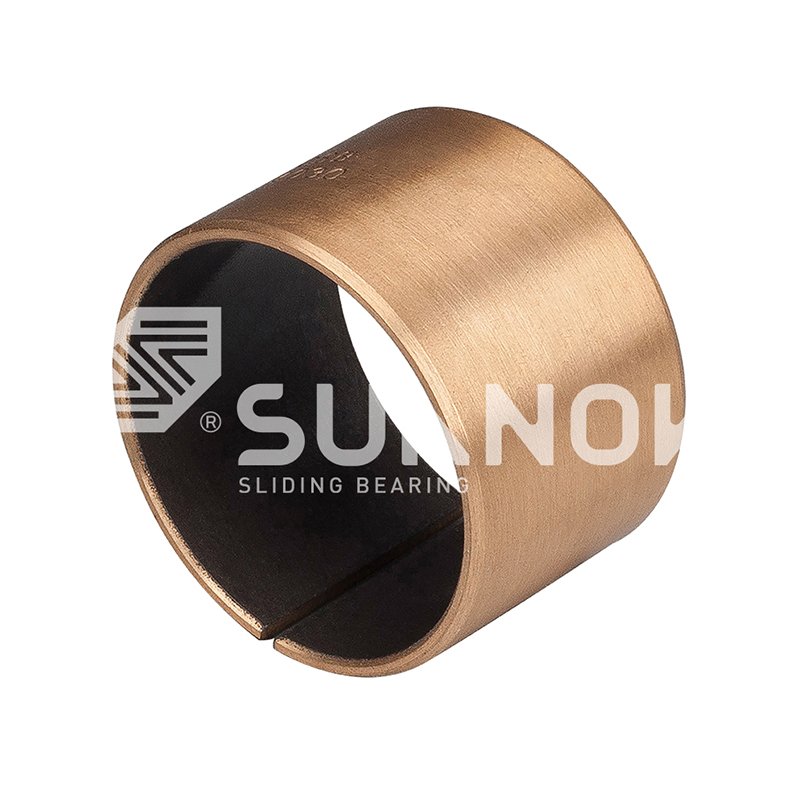
Maintenance-Free SF-1 Self-Lubricating Bearing for Heavy-Duty ApplicationsThis triple-layer composite bearing with steel backing and PTFE lining handles high loads with low noise and no lubrication, fitting machinery like textile, tobacco, and automotive equipment.View Product →Graphite Plugged Bronze Bearings: Construction and Operating Principle
Definition. A graphite plugged bronze bearing is a bronze or brass matrix bushing with solid graphite plugs pressed into drilled holes; the metal matrix carries the load while the plugs form a dry graphite transfer film on the shaft.
The metal matrix is usually tin bronze, aluminum bronze, or brass, selected for the load and corrosive environment. Graphite plugs cover 15-30 percent of the bore area, and the plug-to-metal ratio is a deliberate design parameter. Cast versions such as JDB600 tolerate impact loads and can be bored after installation; wrapped versions such as the FB090 bronze wrapped bearing are economical in standard metric sizes and add flanged, sealed, and steel-backed variants.
Typical performance values:
- Static load capacity up to 300 N/mm²; the bronze matrix, not the lubricant, carries the load.
- Friction coefficient of 0.08-0.15 dry, higher than PTFE composite but stable and predictable.
- Dry PV limit of 2.0-2.5 N/mm² m/s; the usable envelope narrows as speed rises.
- Continuous temperature up to 300 °C, with intermittent peaks near 400 °C before graphite oxidation accelerates.
The FB090 family shows the modular approach: a base bushing, a copper-based FB091, a sealed FB094, and a steel-graphite FB09G. For large bores that need maximum structural stiffness, the cast JDB600 grades remain the standard.
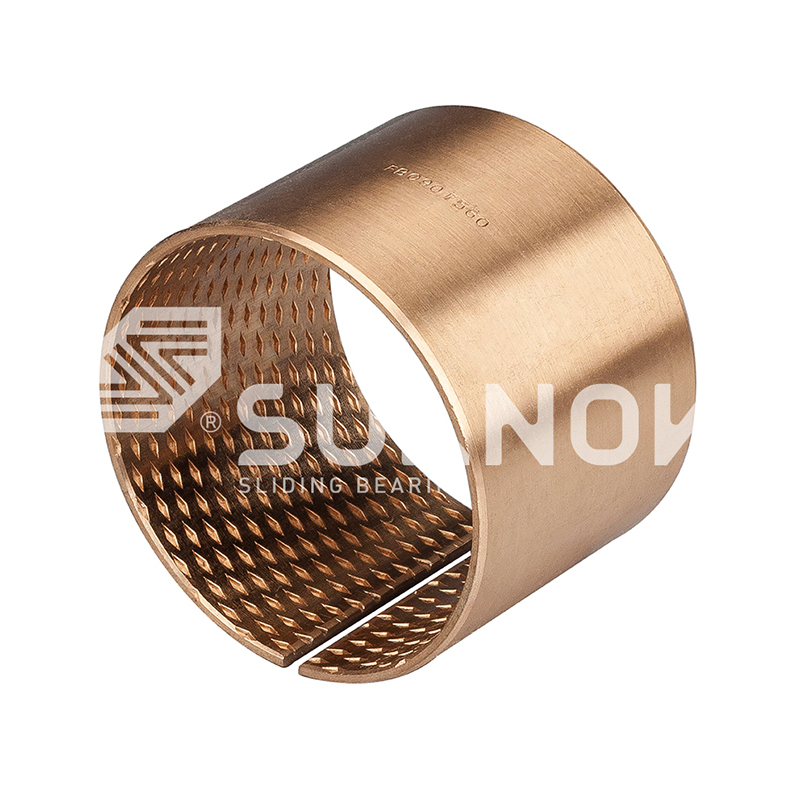 FB090 Bronze Wrapped Bearing with Diamond Lubrication PocketsMade from CuSn8 bronze with diamond-shaped pockets for grease retention, this wrapped bushing suits hoisting, construction, and machine tool applications where high load capacity and corrosion resistance are essential.View Product →
Key Differences at a Glance
Field rule: PTFE composite is selected for low friction and speed; graphite plugged bronze is selected for load, temperature, and contamination tolerance. When an application needs two of those four characteristics, the material choice is already settled.
| Parameter | PTFE Composite | Graphite Plugged Bronze |
| Construction | Steel + sintered bronze + PTFE overlay | Bronze/brass matrix + pressed graphite plugs |
| Lubrication mechanism | PTFE transfer film | Graphite transfer film |
| Friction coefficient, dry | 0.04-0.08 | 0.08-0.15 |
| Max static load | 250 N/mm² | 300 N/mm² |
| Dry PV limit | 3.6 N/mm² m/s | 2.0-2.5 N/mm² m/s |
| Continuous temperature | -200 to 280 °C | Up to 300-400 °C |
| Shaft finish requirement | 0.4-0.8 Ra, often hardened shaft | Up to 1.6 Ra, standard steel shaft |
| Primary failure mode | Overlay extrusion at high temperature | Graphite washout at high sliding speed |
Load, PV Limits, and Temperature: The Engineering Trade-offs
Temperature decides the contest before load does. A PTFE composite bearing generates less frictional heat, with a dry friction coefficient roughly half that of graphite plugged bronze, so it wins wherever continuous rotation pushes the PV limit. Graphite plugged bronze survives sustained temperatures above 280 °C and heavy shock loads, conditions that soften or carbonize a PTFE overlay.
3.6Dry PV limit, PTFE composite (N/mm² m/s)
2.5Top dry PV limit, graphite plugged bronze (N/mm² m/s)
400 °CIntermittent limit, graphite plugged bronze
0.04Minimum dry friction, PTFE composite
PV is pressure times velocity. As that product rises, the bearing must shed heat faster than friction generates it. PTFE composite does this well at moderate speed because of its low friction and thermally conductive bronze layer. Graphite plugged bronze generates more heat per unit of pressure, so bore temperature climbs quickly at higher sliding speeds, and a 300 N/mm² static rating does not mean continuous running at that pressure.
Bars represent typical catalog values for SF-1 type PTFE composite and FB090/JDB type graphite plugged bronze grades.
For a more detailed look at how these limits are derived and how wear rate changes with load, the self-lubricating bronze bushing friction, wear, and PV limit analysis provides measurement-oriented guidance.
Cost, Maintenance, and Installation Considerations
Lifecycle cost, not blank price, separates the two families in service. PTFE composite bushings usually reduce energy loss and shaft wear, but the thin overlay is vulnerable to hard particles and cannot be re-machined after installation. Graphite plugged bronze bushings cost less in large diameters, tolerate dust, and cast grades can be bored after mounting, yet their higher friction raises energy cost in continuous operation.
What affects total cost
- Shaft preparation: PTFE composite demands a ground shaft at 0.4-0.8 Ra and often 45 HRC minimum; graphite plugged bronze runs on standard turned shafts.
- Replacement labor: a scored PTFE overlay fails fast and demands immediate change-out; a graphite plugged bushing wears gradually and cast versions can be re-bored.
- Energy consumption: at a PV of 1.5 N/mm² m/s, the lower friction of PTFE composite can cut drive torque by 20-30 percent in the same bore size.
Both families benefit from documented material control. At Zhejiang Shuangnuo, every copper alloy melt is checked with a spectrometer at the furnace, and third-party test reports are available on request.
How to Choose: A Selection Framework
Work through four conditions in order: duty cycle, temperature, environment, and shaft finish. Each condition eliminates one candidate; the material left at the end is the right bearing.
Choose PTFE composite when
- Continuous rotation at moderate to high speed dominates the duty cycle.
- Start-stop precision matters and breakaway friction must stay low.
- Ambient or component temperature stays below 250 °C.
- The housing can be kept clean of abrasive particles.
Choose graphite plugged bronze when
- Operation is slow oscillation, reciprocation, or intermittent rotation under heavy load.
- Radiant heat or process temperature exceeds 250 °C.
- Dust, sand, or debris cannot be fully excluded from the bearing area.
- A large cast housing makes re-boring after installation valuable.
In practice, a hydraulic pump swashplate favors PTFE composite, specifically the SF-1D variant. A hot stamping die guide favors graphite plugged bronze; JDB650 in brass covers high-temperature guide applications, while FB090 and JDB series cover the rest of the matrix spectrum. For a broader comparison that includes bimetallic and oil-retaining families, the guide to choosing self-lubricating copper alloy bearings is a useful next step.
 JDB650 Graphite-Embedded Brass Bushing for Oilless OperationA brass alloy bushing with solid graphite inserts provides maintenance-free running under high load, low speed, and elevated temperatures, useful for hard-to-access or contamination-sensitive industrial sites.View Product →
Frequently Asked Questions
Can PTFE composite bearings run completely dry?
Yes. The PTFE overlay and the transfer film it deposits on the shaft provide dry lubrication from standstill to moderate speeds, with a dry PV limit around 3.6 N/mm² m/s in SF-1 type construction. Adding oil is unnecessary and can, in some grades, cause the overlay to swell.
What is the maximum temperature for a graphite plugged bronze bearing?
Continuous operation to about 300 °C and intermittent peaks to 400 °C are typical for FB090 and JDB grades, depending on the bronze alloy and plug quality. Above 400 °C, graphite oxidation accelerates and plug life shortens.
Are graphite plugged bronze bearings suitable for high-speed rotation?
Not for continuous high-speed dry running. Their higher friction coefficient generates heat faster than the matrix can conduct away, so bore temperature climbs with speed. For continuous dry rotation above moderate speed, a PTFE composite bearing is the correct choice.
What shaft hardness and finish do these bearings require?
PTFE composite performs best on ground shafts of at least 45 HRC and 0.4-0.8 Ra. Graphite plugged bronze is more forgiving: standard turned steel shafts of 200-350 HB with finishes up to 1.6 Ra are acceptable, which reduces shaft preparation cost.
Recommended NEWS:
Solid-Lubricating Bronze Bearings: A Guide to Performance and Selection
Why Solid-Lubricating Bronze Bearings Are the Future of Low-Maintenance Machinery
JFBB Metric Self-lubricating Oilless Graphite Flanged Bearings Bushings: Oil-free self-lubricating solutions
Self-Lubricating Copper Alloy Bearings: The Future of Solid-Lubricating Bearings and JDB-600 Casting Bronze Bearings
Self-Lubricating Copper Alloy Bearings: A Comparative Analysis with JDB-600 Casting Bronze and Oil-Retaining Bimetallic Bearings
Bronze Bushing Bearing FB090: Key Features & Benefits for Industrial Applications
Recommended LINS:
Contact Us //
Have Questions? Get in Touch!

Zhejiang Shuangnuo Bearing Technology Co., Ltd. specializes in the production of various self-lubricating copper alloy bushing bearings products
Quick Links
Related Products
Contact
- Add: No. 69, Tingyao East Road, Ganyao Town Industrial Zone, Jiashan County, Zhejiang Province, China
- Tel: +86-15957371801
- Fax: +86-0573-84038630
- Email: [email protected]
[email protected]
© 2024 Zhejiang Shuangnuo Bearing Technology Co., Ltd.
Custom Self-Lubricating Copper Alloy Bearings
