


 русский
 Español
-
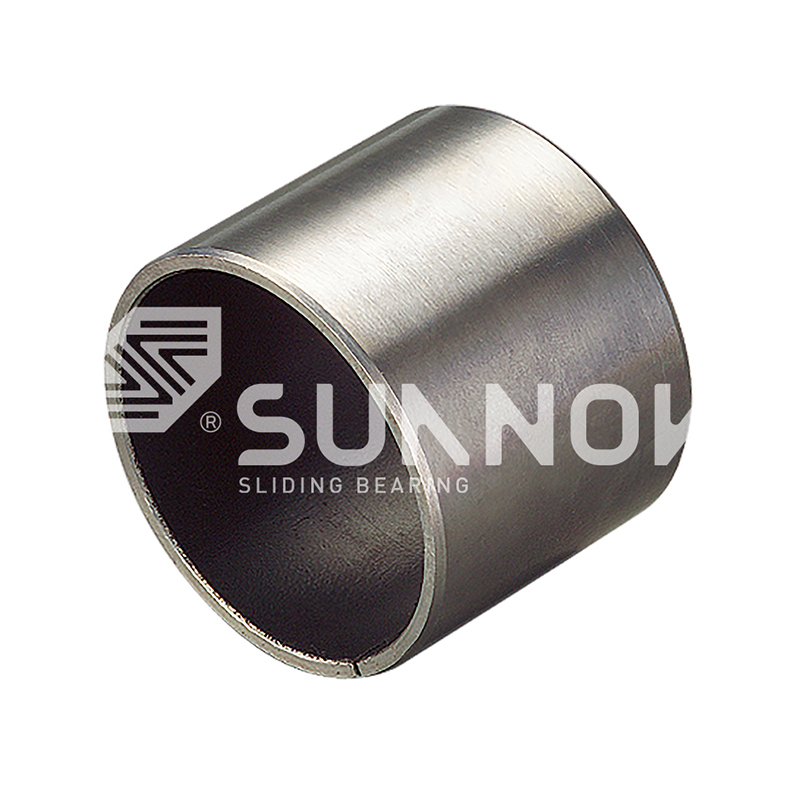 SF-1 Oilless Bearing Self Lubricating SF-1T Metal Gear Pump Bearing Bronze Bushings
 -
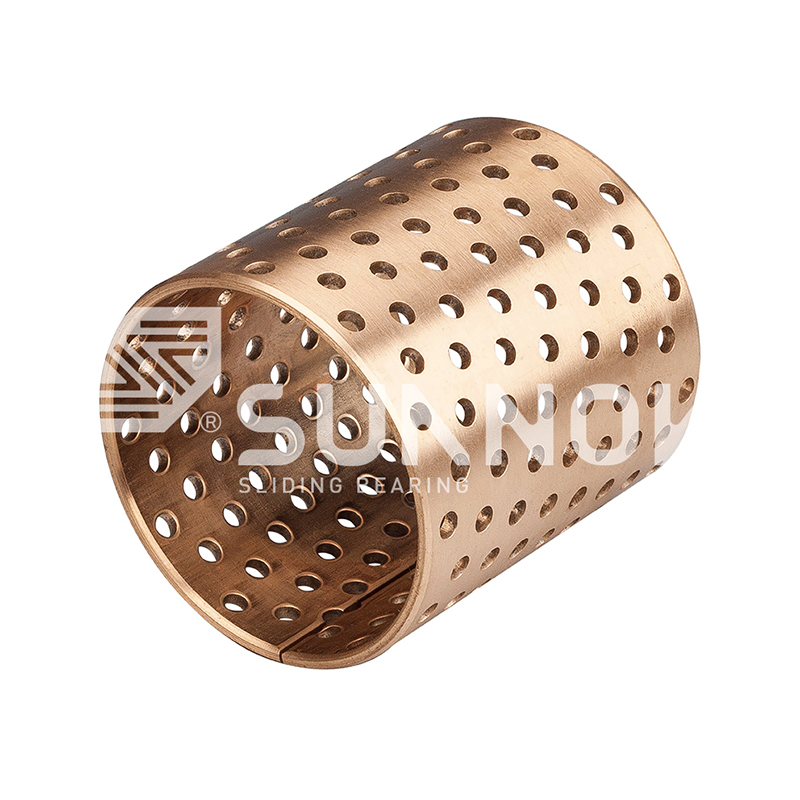 FB090 Bronze Wrapped Bearing FB092 Bronze Wrapped Bearing - Oilless Dry Sliding Bushing Self-Lubricating Bushing
 -
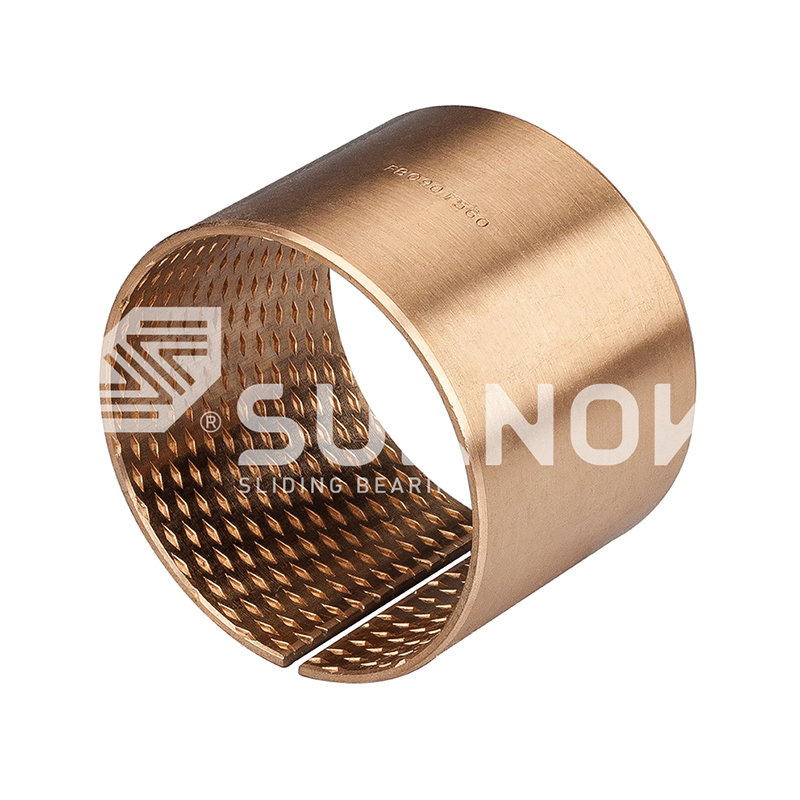 FB090 Bronze Wrapped Bearing FB090 Bronze Wrapped Bearing | Self-Lubricating Bushing & Sleeve
 -
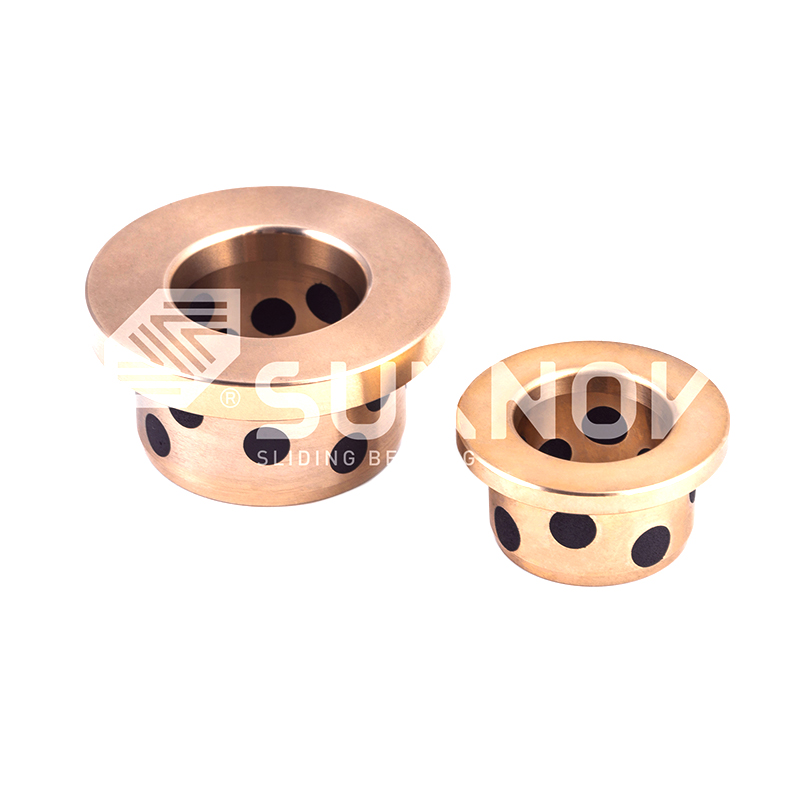 JDB Solid-lubricating Bearing Flanged Graphite Plugged Bronze Bushing, Self Lubricating Oilless Bronze Sleeve Bearing GB71 NAAMS
 -
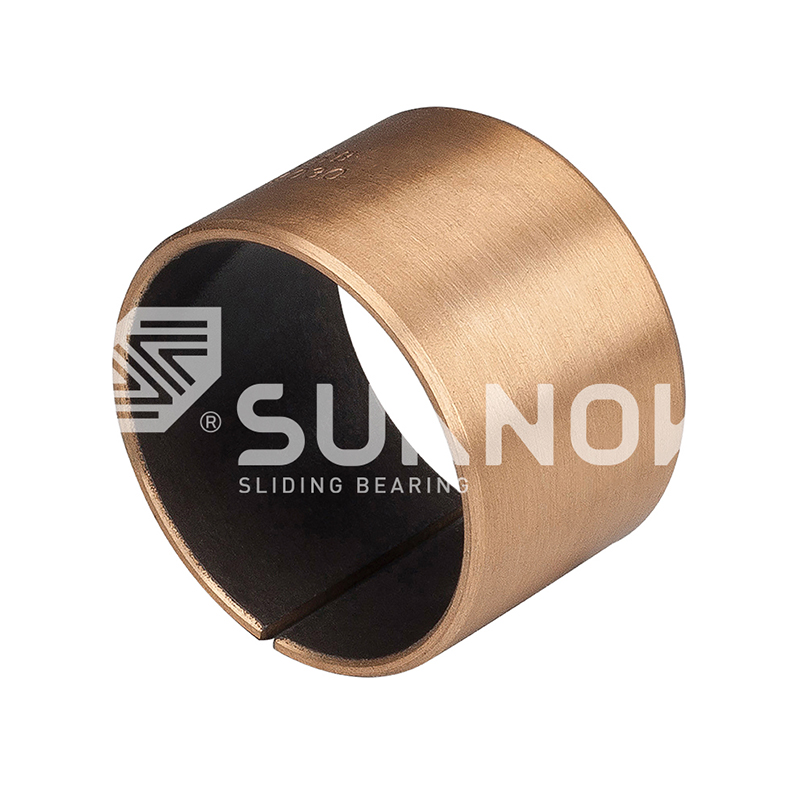
-
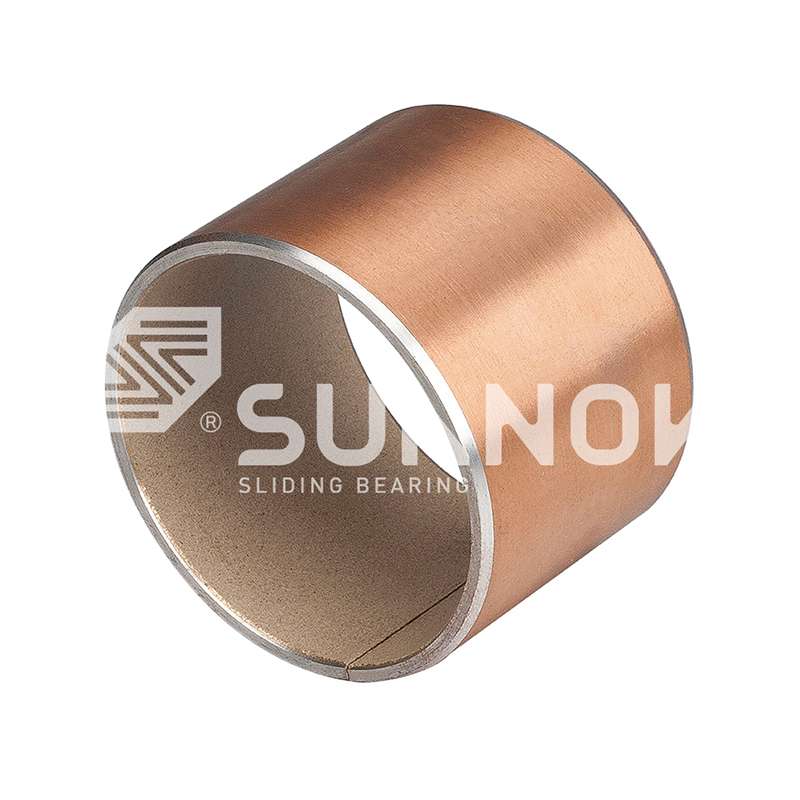 SF-1 Oilless Bearing SF-1P Reciprocating Motion Bronze Self-Lubricating Composite Bearing Bushing
 -
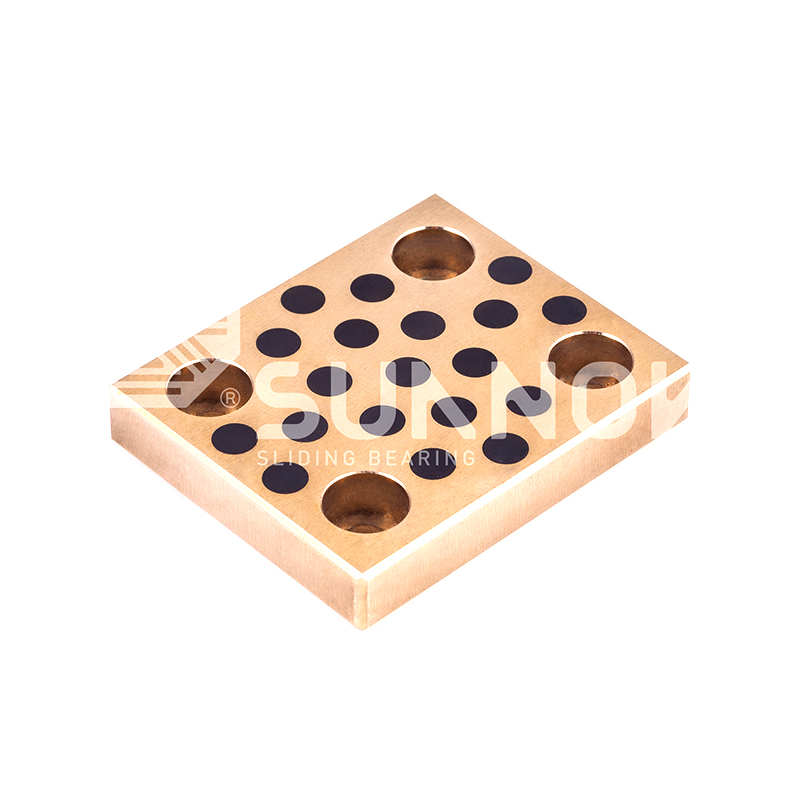 JDB Solid-lubricating Bearing Flangeless Graphite Bronze Wear Block, Square Self Lubricating Bronze Guide Plate JESW
 -
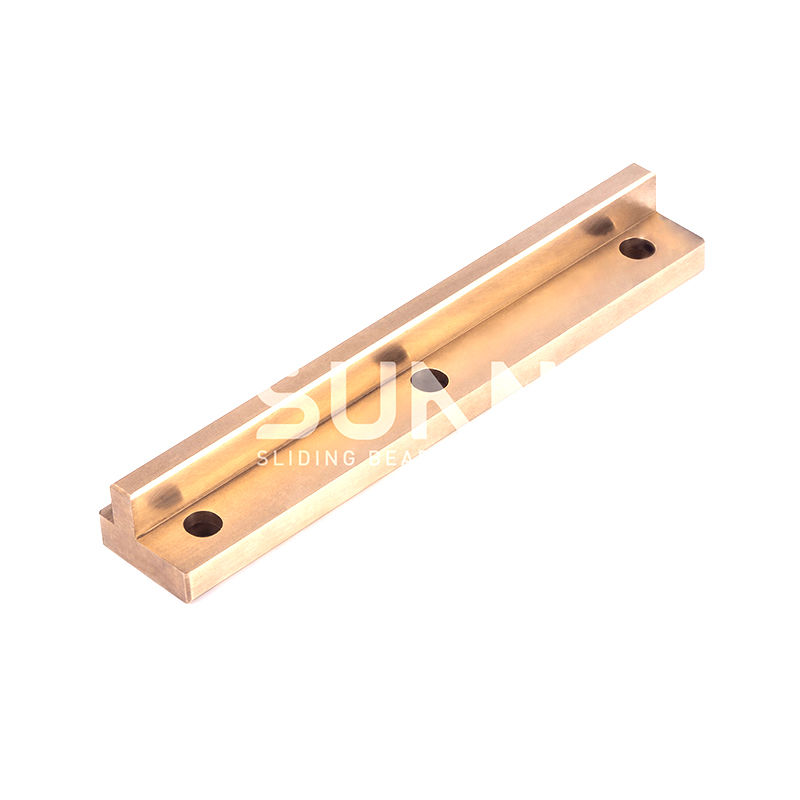 JDB Solid-lubricating Bearing T-Slot Guide Self-lubricating Bronze Slide Plate, JSOL Embedded Bronze Oilless Wear Plate
OEM Self-Lubricating Bronze Bushing Manufacturing: Processes, Materials & QC Guide
Industry News-Content
A die maintenance engineer at an automotive stamping plant pulls a worn ejector guide bushing and finds the part number discontinued. The replacement must match the same bore, the same flange height, and a longer service interval than the original. At that point the task stops being a spare-part order and becomes an OEM self-lubricating bronze bushing manufacturing project: a drawing, a load case, and a material specification that a supplier must convert into a finished, traceable component. Specialist producers such as Zhejiang Shuangnuo Bearing Technology Co., Ltd. handle the entire chain, from alloy melting to final machining.
OEM manufacturing of self-lubricating bronze bushings means producing bushings to a customer's original engineering specification instead of supplying a catalog standard. It covers alloy grade, solid lubricant type and distribution, dimensional tolerances, surface finish, and the test documents that prove the part meets the drawing.
10+ yearsof continuous R&D on self-lubricating copper alloys
80+CNC lathes, turning machines and machining centers in-house
0.05-0.12dry friction coefficient of graphite-embedded bronze
200 MPatypical static load rating for cast bronze grades
What Defines an OEM Self-Lubricating Bronze Bushing
An OEM self-lubricating bronze bushing is defined by its specification, not by its size. The difference from a standard bushing is that every critical attribute, from chemical composition to edge chamfer, is fixed on a drawing and verified against it.
Core characteristics of an OEM specification
- Alloy grade with a controlled chemical composition, such as tin bronze, aluminum bronze, or brass.
- Solid lubricant type (graphite, molybdenum disulfide, or similar) and its pocket pattern in the bearing wall.
- Dimensional tolerances for bore, outside diameter, length, and flange position.
- Surface finish, edge treatment, and cleanliness requirements that protect the transfer film.
- Acceptance data: material certificates, mechanical test results, and third-party inspection reports.
Definition
OEM self-lubricating bronze bushing manufacturing is the production of bronze bushings with embedded solid lubricants, made to a buyer's original specification and verified through composition control, dimensional inspection, and documented testing.
When a part is produced this way, the buyer controls the outcome. When it is produced from a worn sample or a catalog dimension list, the supplier controls the outcome and wear life prediction becomes guesswork.
Three Manufacturing Routes: Cast, Sintered, Wrapped
Three production routes cover virtually all OEM self-lubricating bronze bushings: continuous or centrifugal casting, sintering onto a steel backing, and bronze wrapping.
| Route | How it is made | Typical alloys | Best-fit applications |
| Cast bronze | Melt poured through continuous or centrifugal casting, then machined | Tin bronze, aluminum bronze, brass | High shock loads, thick walls, large diameters, low-volume custom work |
| Sintered bimetallic | Bronze powder sintered onto a steel backing, then finished | Bronze layer on steel with dispersed solid lubricant | Thin walls, mass production, consistent friction, cost-sensitive runs |
| Bronze wrapped | Bronze strip with lubricant pockets rolled to a finished cylinder | Bronze strip with graphite plugs | Light to medium loads, fast delivery, simple bores |
Cast routes dominate when the application needs a thick wall, a heavy interference fit, or a non-standard geometry. In continuous casting the alloy solidifies in a controlled section before machining, which gives dense material with uniform graphite distribution. For buyers who need this route, Zhejiang Shuangnuo produces JDB600 cast bronze self-lubricating bearings as a dedicated product line.
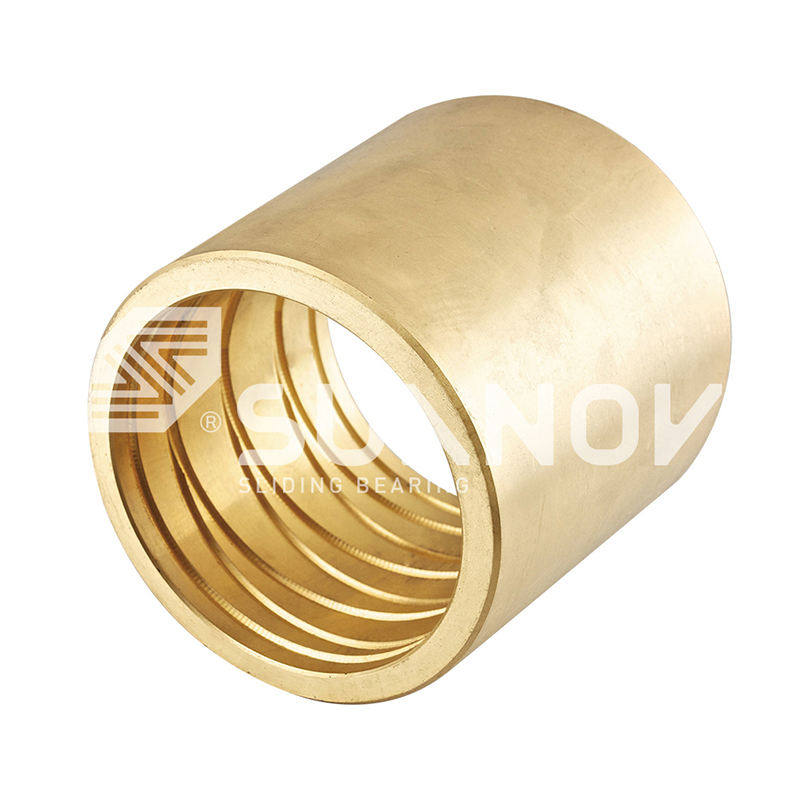 Wholesale JDB-600 Cast Self-Lubricating Bronze Guide Bushing Bearing Suppliers, Zhejiang Shuangnuo Bearing Technology Co., Ltd. Is China JDB-600 Cast Self-Lubricating Bronze Guide Bushing Bearing Suppliers, Company, W...View Product →
Sintered bimetallic bushings use a steel backing for structural strength and a sintered bronze layer for sliding performance. They suit thin-wall designs produced in larger quantities. The SF1 oilless bearings with a sintered bronze layer produced by the company belong to this family and are widely applied in hydraulic and general machinery.
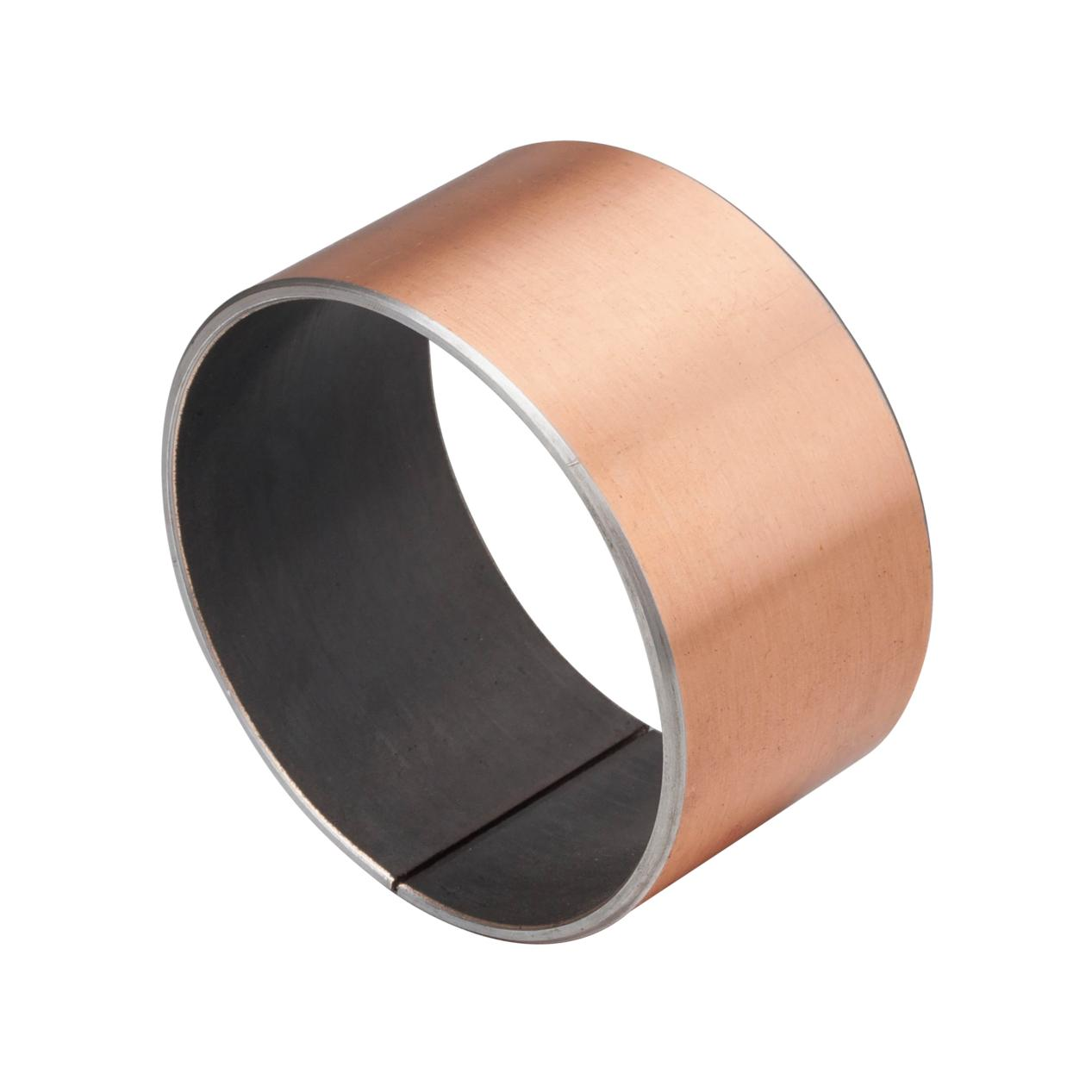 Wholesale Maintenance-Free SF-1 Self-Lubricating Bearing for Heavy Duty ApplicatZhejiang Shuangnuo Bearing Technology Co., Ltd. Is China Maintenance-Free SF-1 Self-Lubricating Bearing for Heavy Duty Applications - Low...View Product →
Wrapped bronze bushings are formed from strip material, which shortens the production chain and lowers cost for straightforward cylindrical parts.
For a cast grade, the alloy is melted, poured, and machined; the solid lubricant is pressed into drilled holes or grooves in a separate operation. For sintered and wrapped grades, the lubricant is built into the material structure during forming.
Alloy and Solid Lubricant Selection
Alloy selection sets the load and temperature ceiling; solid lubricant selection sets friction and wear behavior. Choose the alloy first, then match the lubricant to the environmental conditions.
Alloy families and their limits
Tin bronze is the default for wear resistance and machinability under moderate loads. Aluminum bronze offers higher strength and better seizure resistance under heavy or abrasive conditions. Brass is lower cost and easy to machine, which makes it attractive for guide applications where loads are modest.
Solid lubricants in bronze bushings
Graphite is the most common embedded lubricant. It remains stable in air to roughly 400 C and forms a continuous transfer film on the shaft. Molybdenum disulfide performs better in vacuum or dry-gas environments where graphite loses its low friction. The pocket pattern, whether drilled holes, slots, or a woven mesh, determines how quickly the film rebuilds after wiping.
The chart below compares typical static load ratings by manufacturing route. Exact values depend on wall thickness, alloy condition, and speed, so always validate against the supplier's test data.
0.05 to 0.12
Typical dry friction coefficient range for graphite-embedded bronze running against a hardened steel shaft after transfer film formation.
For brass-based designs with embedded graphite, the JDB650 solid-lubricating brass bushings offered by Shuangnuo are a standard platform for guide and ejector applications.
 Wholesale JDB650 Self-Lubricating Brass Bushing Oilless Bearings Suppliers, CompZhejiang Shuangnuo Bearing Technology Co., Ltd. Is China JDB650 Self-Lubricating Brass Bushing Oilless Bearings Suppliers, Company, We Wh...View Product →
Before finalizing a material grade, compare the operating speed and load against the bearing's PV limit in the technical analysis of PV limit and wear rate for self-lubricating bronze bushings.
Machining, Tolerances, and Surface Finish
Machining accuracy decides whether a self-lubricating bushing runs quietly and wears evenly for its full design life. A bushing with a precise alloy but a rough bore will fail early.
Typical tolerance ranges
Most OEM bushings are specified with an H7 bore for the sliding surface and an interference fit on the outside diameter. Bores are commonly held to plus 0.025 to plus 0.050 mm, while the housing seat requires roundness within a few microns. The shaft side normally uses f7 or g6 clearance.
Surface finish and edge treatment
The bore finish rarely needs to be mirror-polished; a range of 0.8 to 1.6 micrometer Ra preserves lubricant transfer while avoiding premature bedding. Chamfers and deburred edges matter more than most drawings show, because a sharp edge can scrape the graphite film off the shaft on the first strokes. Do not tighten a tolerance without a functional reason, because every additional micron of control adds machining cost.
A 0.01 mm variation in bore roundness can cut the effective contact area and raise local pressure enough to shorten life by a measurable margin. Specify what your assembly needs, not what a machine can achieve.
For practical fitting values, see the installation and tolerance guide for oilless bronze bushings, which covers interference, clearance, and recommended bore preparation steps.
Quality Control That Protects an OEM Program
Reliable OEM supply depends on chemical composition control at the melting stage, not on final inspection alone. If the alloy deviates at the furnace, no amount of machining will recover the load capacity.
At Zhejiang Shuangnuo Bearing Technology Co., Ltd., the alloy is cast in-house and monitored with spectroscopy before, during, and after pouring. The company operates more than 80 CNC lathes, CNC turning machines, and machining centers, which keeps the casting and finishing steps under one roof. Third-party laboratories periodically verify material composition and mechanical properties, and authoritative test reports are available on request.
- Spectrum analysis at the furnace to confirm alloy chemistry before and during the pour.
- Mechanical testing on sample coupons to verify hardness, tensile strength, and elongation.
- Material test certificates that trace a delivery batch back to its melt.
- Independent third-party inspection for programs that require external evidence.
Buyers should quote the certification requirement in the purchase order. A supplier that casts its own alloy and runs furnace-stage spectroscopy can prove the material story; a supplier that buys castings from the market cannot.
How to Structure an OEM Inquiry
The fastest way to obtain an accurate quote is to send a complete specification set rather than a worn sample or a single drawing view. Incomplete inputs produce provisional pricing and later change orders.
- Send a dimensional drawing with tolerances, surface finish, and edge treatment notes.
- State the alloy grade and hardness, or the material composition of the original part.
- Provide load, speed, temperature, and environmental conditions for PV validation.
- Define acceptance criteria: measuring method, material report, third-party certificates.
- Give a volume forecast and target lead time so the supplier can plan casting runs.
| Specification field | Why it matters |
| Bore, outside diameter, length, flange | Defines fit and prevents machining corrections before assembly |
| Alloy grade and hardness | Sets the load ceiling and wear behavior |
| Lubricant type and pocket pattern | Sets friction, temperature range, and film quality |
| Load, speed, temperature, environment | Validates the PV rating and predicted service life |
| Test reports and certificates | Defines acceptance, traceability, and liability boundaries |
When a custom bush is outside standard catalog sizes, provide the closest standard reference and the modified dimensions. That shortens evaluation time and gives the supplier a baseline for tolerance and material behavior. See the guide to custom bronze bushings with non-standard dimensions and tolerances for detail.
Frequently Asked Questions
How long does an OEM self-lubricating bronze bushing last?
Service life is driven by the PV value, shaft hardness, and whether a stable transfer film forms during break-in. Well-designed graphite-embedded bronze bushings commonly run for thousands of hours under steady loads; high-momentary-load applications rely on the same lubricant pockets to rebuild the film after each event.
Can these bushings run completely without oil?
Yes, but the surface still needs a short break-in period during which the embedded lubricant is transferred onto the shaft. After that transfer film forms, the bushing runs dry with a friction coefficient in the 0.05 to 0.12 range against a properly finished steel shaft.
What dimensions must appear on the drawing?
At minimum, the bore, outside diameter, length, flange dimensions, chamfers, and their tolerances. Add surface finish and roundness for the bore, because those directly control film formation and wear uniformity.
How is the alloy quality verified in an OEM program?
Spectroscopy at the melting stage confirms composition before pouring, and periodic third-party testing confirms mechanical properties. Buyers should request material test certificates with each delivery and, for critical programs, an independent inspection report.
If a standard product does not match your load case, send the drawing and operating conditions. Shuangnuo can quote an OEM design based on its own cast alloy, in-house machining, and documented quality control.
Recommended NEWS:
Self-Lubricating Bronze Bushings: Benefits, Cost Savings, and Selection Guide
Understanding Self‑Lubricating Bronze Bushings: A Comprehensive Guide
Self-Lubricating Copper Alloy Bearings: A Comparative Analysis with JDB-600 Casting Bronze and Oil-Retaining Bimetallic Bearings
Self-Lubricating Copper Alloy Bearings: The Future of Solid-Lubricating Bearings and JDB-600 Casting Bronze Bearings
Bronze Bushing Bearing FB090: Key Features & Benefits for Industrial Applications
Bronze Wrapped Bushings for Heavy Machinery: Durable Solutions for Demanding Applications
Recommended LINS:
Contact Us //
Have Questions? Get in Touch!

Zhejiang Shuangnuo Bearing Technology Co., Ltd. specializes in the production of various self-lubricating copper alloy bushing bearings products
Quick Links
Related Products
Contact
- Add: No. 69, Tingyao East Road, Ganyao Town Industrial Zone, Jiashan County, Zhejiang Province, China
- Tel: +86-15957371801
- Fax: +86-0573-84038630
- Email: [email protected]
[email protected]
© 2024 Zhejiang Shuangnuo Bearing Technology Co., Ltd.
Custom Self-Lubricating Copper Alloy Bearings
