


 русский
 Español
-
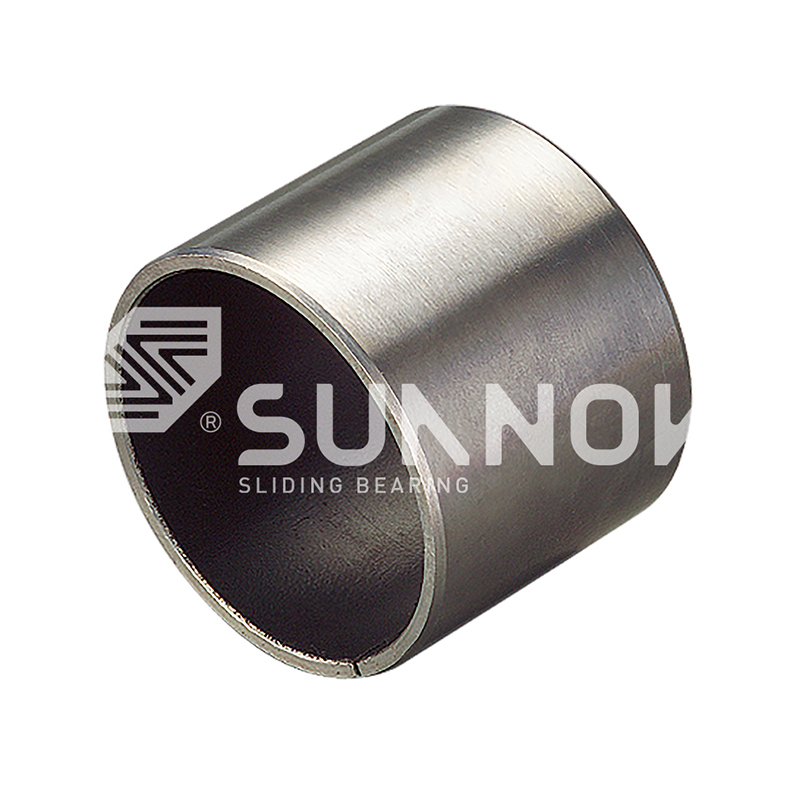 SF-1 Oilless Bearing Self Lubricating SF-1T Metal Gear Pump Bearing Bronze Bushings
 -
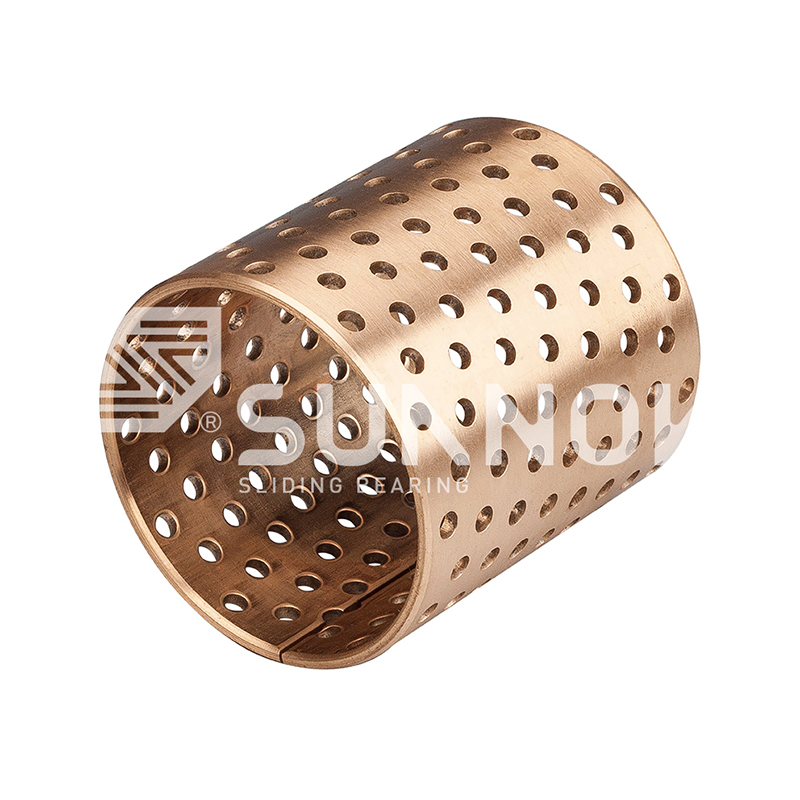 FB090 Bronze Wrapped Bearing FB092 Bronze Wrapped Bearing - Oilless Dry Sliding Bushing Self-Lubricating Bushing
 -
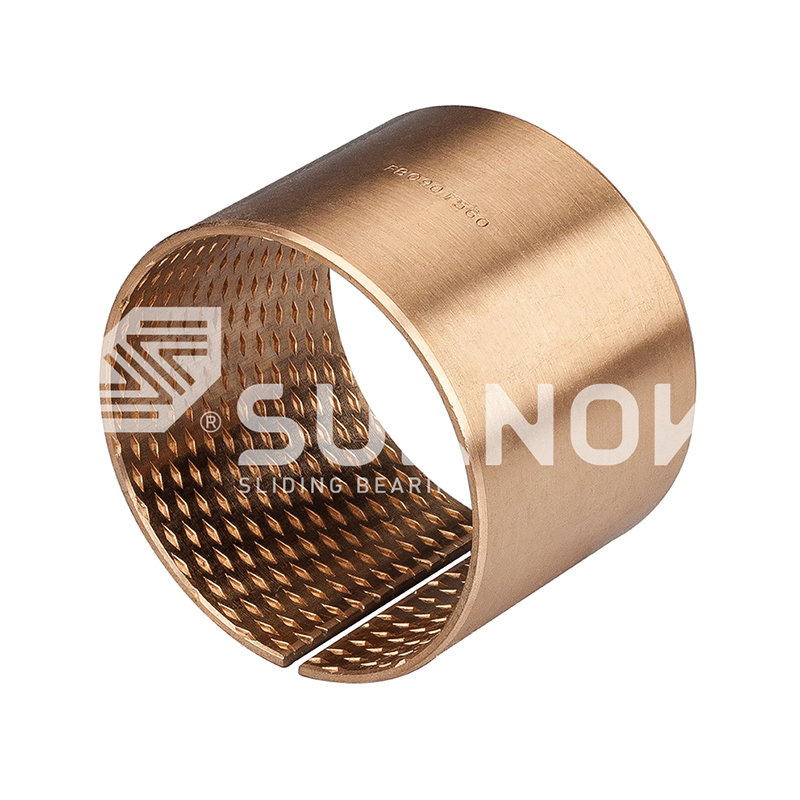 FB090 Bronze Wrapped Bearing FB090 Bronze Wrapped Bearing | Self-Lubricating Bushing & Sleeve
 -
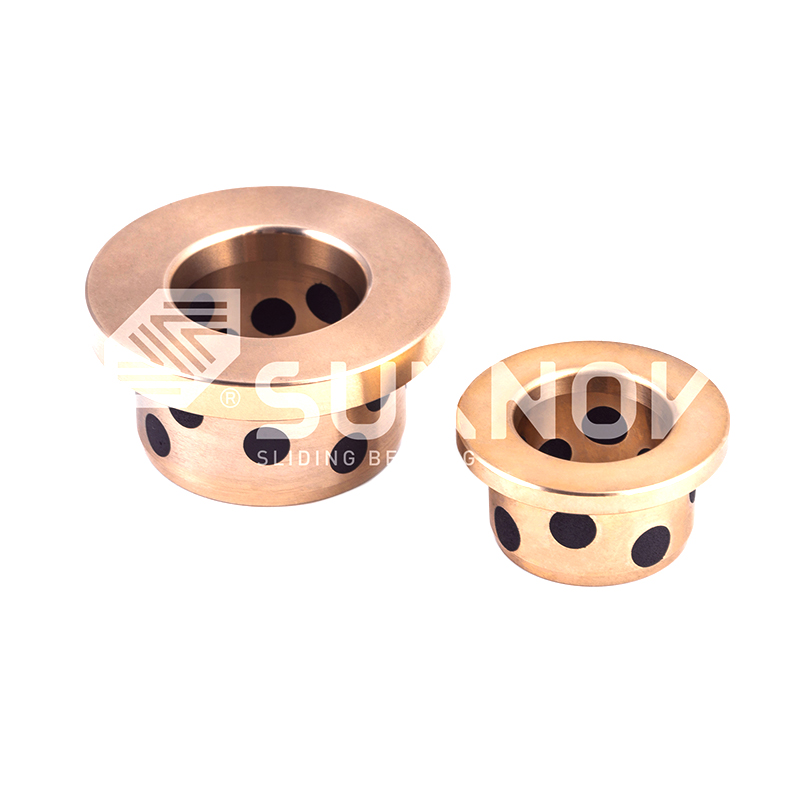 JDB Solid-lubricating Bearing Flanged Graphite Plugged Bronze Bushing, Self Lubricating Oilless Bronze Sleeve Bearing GB71 NAAMS
 -
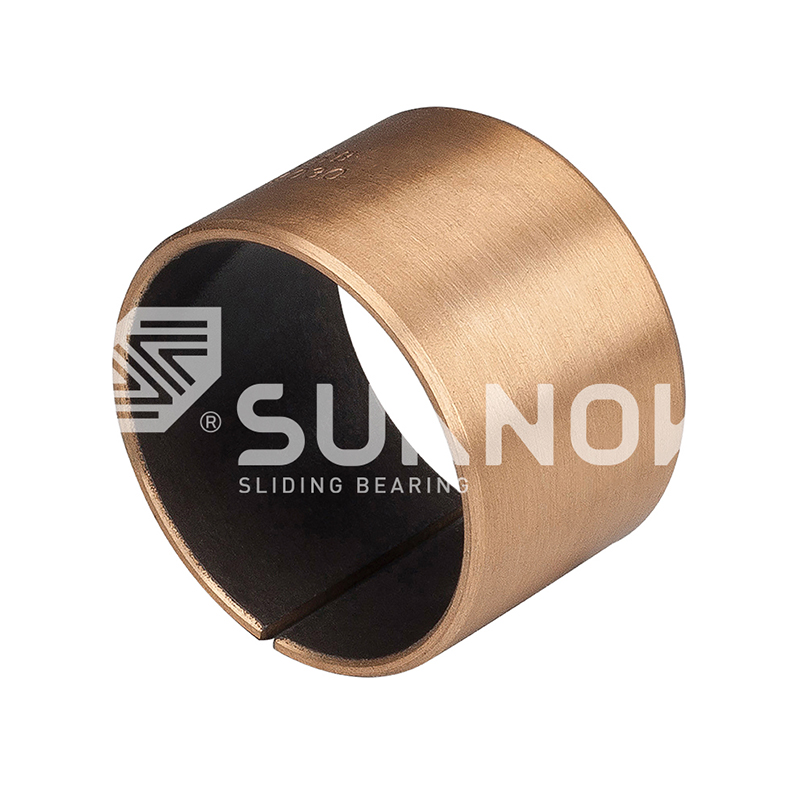
-
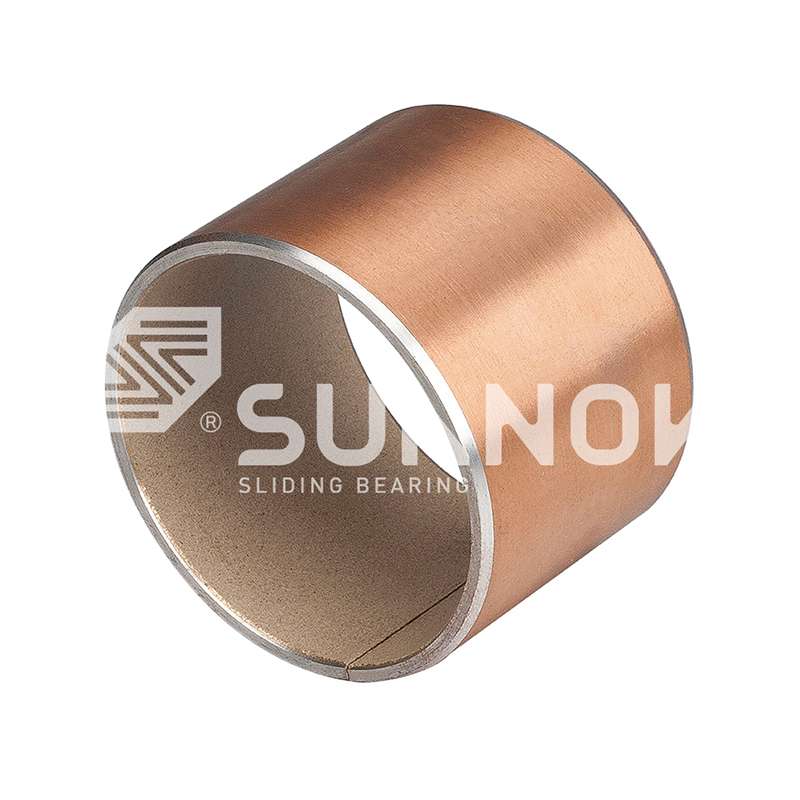 SF-1 Oilless Bearing SF-1P Reciprocating Motion Bronze Self-Lubricating Composite Bearing Bushing
 -
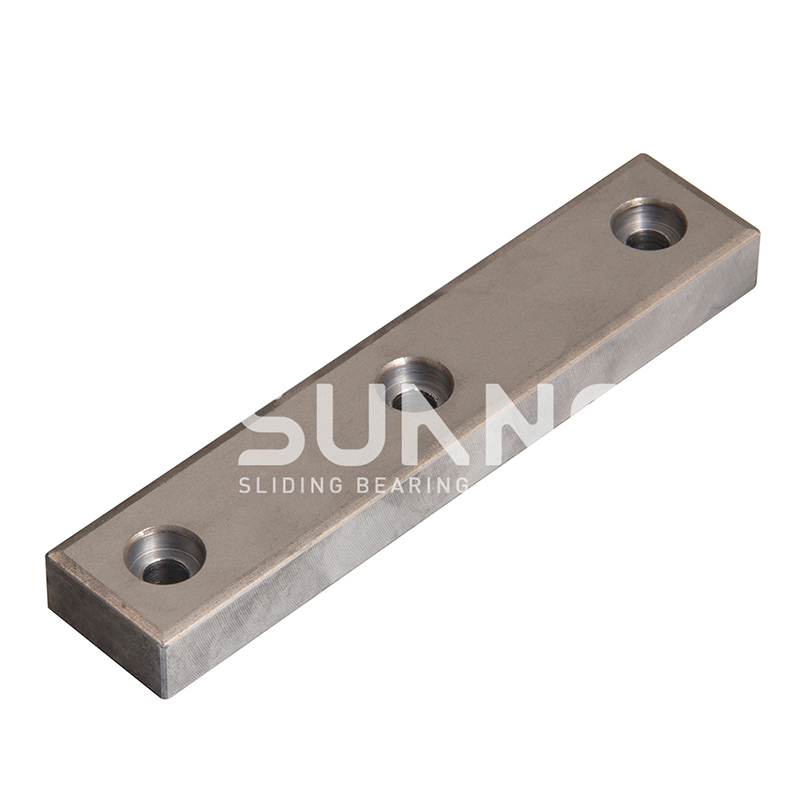 Oil-retaining Bimetallic Bearing Self-Lubricating 200# P20 Steel Graphite Insert Wear Plate / Steel Oilless Wear Strip
 -
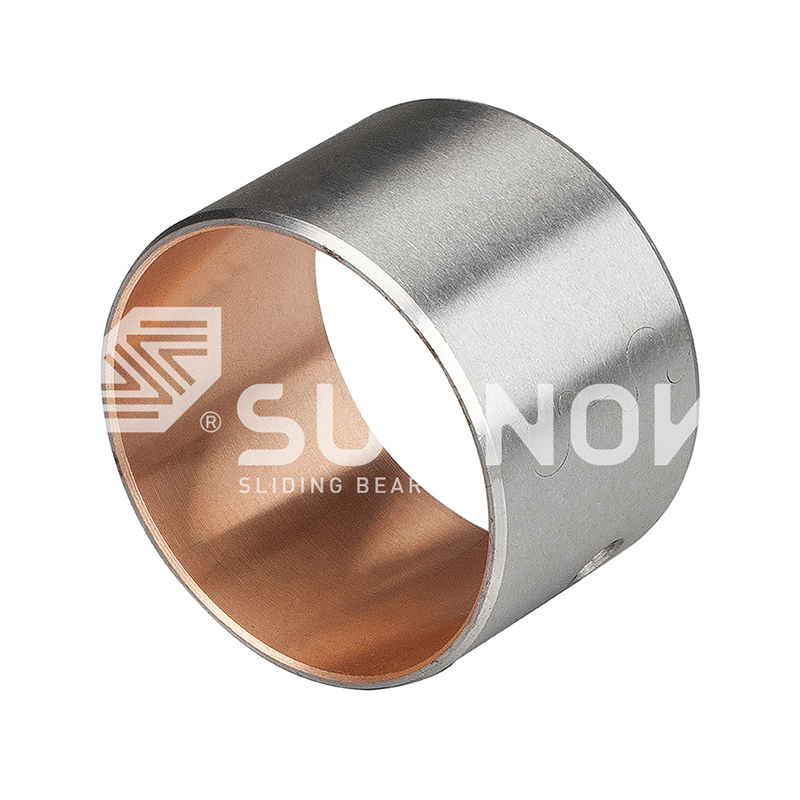 JF-800 Bi-metal Bearing JF-700 Bi-Metal Bearing Heavy Duty Self-Lubricating Sleeve Bushings
Self Lubricating Bronze Bushing Manufacturing: Casting, Sintering & Embedding Explained
Industry News-Content
- 1 Why the manufacturing process decides bushing performance
- 2 Casting processes for bronze bushings
- 3 Embedding solid lubricant into the bronze matrix
- 4 Sintering: steel-backed bimetallic bushings
- 5 Wrapped bushings: a lighter alternative
- 6 Quality control across the production line
- 7 Comparing the four manufacturing routes
- 8 What to look for in a bushing manufacturer
An engineer pulls a failed bushing from a press link: the bore is scored, the outer shell shows galling tracks, and the lubrication line was never specified. The replacement needs to survive without oil, which usually means a self-lubricating bronze bushing. Its performance, however, is decided before it reaches the assembly line — in the foundry and the sintering furnace.
Four manufacturing routes cover nearly every self-lubricating bronze bushing on the market: centrifugal casting, continuous casting, metal mold casting, and powder sintering. Each produces a different material structure, and that structure determines load capacity, wear behavior, dimensional stability, and cost.
Why the manufacturing process decides bushing performance
A bushing is not just a bronze tube with holes. The manufacturing process sets its grain size, porosity, and the bond between the matrix and the solid lubricant. Cast bronze is dense and strong, with coarse grains that resist shock loads; it requires machined pockets for lubricant plugs. Sintered bronze on a steel back starts as powder, so it has controlled porosity that can hold oil or solid lubricant within the layer itself. Wrapped bronze bushings start as a strip, which makes them thin, light, and economical but limits their load capacity.
In short, the process is the specification. Define the load, speed, shaft hardness, and available space first; then choose the process that matches.
Casting processes for bronze bushings
For heavy-duty and large-diameter bushings, casting is the established route. Three methods are used in production, and each has its own metallurgical signature.
Centrifugal casting
Molten bronze is poured into a rotating steel mold. Centrifugal force presses the metal outward, compacting the outer surface while forcing oxides and lighter inclusions toward the bore, where they are removed during machining. The resulting outer layer is dense, fine-grained, and fatigue-resistant, which makes centrifugal casting the preferred process for thick-wall bushings exposed to shock loads and high PV values. This is the route we use for products such as JDB600 cast bronze self-lubricating bushings, where the bronze matrix carries the structural load and machined pockets hold the lubricant.
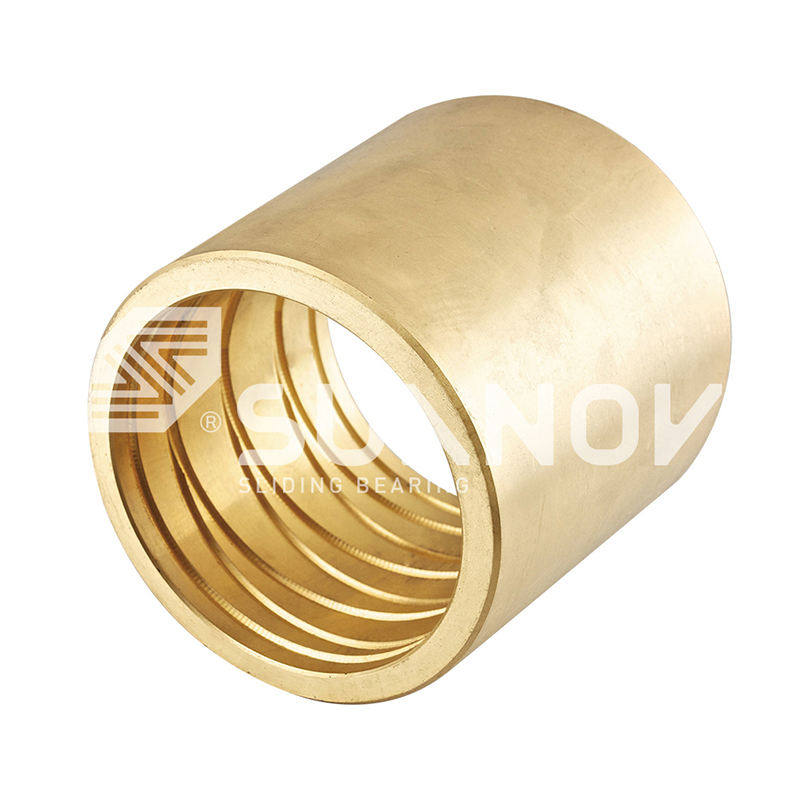 Wholesale JDB-600 Cast Self-Lubricating Bronze Guide Bushing Bearing Suppliers, Zhejiang Shuangnuo Bearing Technology Co., Ltd. Is China JDB-600 Cast Self-Lubricating Bronze Guide Bushing Bearing Suppliers, Company, W...View Product →
Continuous casting
In continuous casting, bronze is melted and drawn through a water-cooled graphite die. Solidification is rapid and controlled, giving the bar a uniform fine grain with very low porosity. Continuous cast rounds are the standard starting point for bushings machined from bar stock, because defects such as shrinkage cavities and segregation are rare. When a production run needs consistent chemistry and mechanical properties over a long length, continuous casting is the safer choice.
Metal mold casting
For simpler geometries and cost-sensitive batches, bronze can be poured directly into permanent steel or cast iron molds. Tooling is inexpensive and the surface quality is acceptable, but the grain structure is less uniform than centrifugal or continuous casting, and fatigue resistance is lower. Metal mold casting is best suited to standard bushings with moderate load requirements.
Regardless of the casting route, the blank still needs machining to reach its final geometry. Turning, boring, and reaming bring the bore to its specified tolerance class — typically H7 for a running fit — and the machined surface finish controls how quickly the solid lubricant film forms on the shaft. If you want a closer look at the practical details, we outlined how casting bronze bushings are produced in a real foundry environment.
Embedding solid lubricant into the bronze matrix
Once the bronze blank is cast and machined, the bearing face is drilled or milled with a defined pattern of pockets. These pockets are then filled with solid lubricant plugs — normally graphite blended with metal powders, and in some grades with molybdenum disulfide. The plug pattern is not decorative: depth, diameter, and spacing are calculated from the bearing's PV limit and duty cycle. Typical lubricant area coverage is 20% to 35% of the sliding surface.
During run-in, the plugs transfer a thin film onto the shaft. That film, not the bronze surface itself, carries the sliding contact. This is why self-lubricating bushings perform well under low speeds and intermittent motion, where oil films are difficult to maintain. Two conditions are critical for the film to form: the shaft should be hardened above roughly 45 HRC, and its surface finish should be held to Ra 0.4 to 0.8 micron. A soft or rough shaft will abrade the plugs before the transfer film stabilizes.
Plug placement follows the bearing's load zones. A flanged bushing, for example, receives plugs in both the bore and the flange face, because the thrust surface generates its own sliding interface. In mold and automation applications, for instance, JDB650 solid lubricating bushings use this embedding principle to provide maintenance-free guidance at ejector and guide positions.
 Wholesale JDB650 Self-Lubricating Brass Bushing Oilless Bearings Suppliers, CompZhejiang Shuangnuo Bearing Technology Co., Ltd. Is China JDB650 Self-Lubricating Brass Bushing Oilless Bearings Suppliers, Company, We Wh...View Product →
Sintering: steel-backed bimetallic bushings
Not every self-lubricating bushing starts as a cast blank. Powder metallurgy builds the part differently: a steel backing with a porous bronze layer sintered onto it.
The manufacturing sequence is straightforward. A steel strip is cleaned, coated with a layer of copper alloy powder, and passed through a furnace at sintering temperature under a controlled atmosphere. The powder particles bond to one another and to the steel, forming a controlled porosity. After sintering, the strip is rolled to final thickness, and the pores are impregnated with oil or loaded with solid lubricant. The result is a bushing that combines the structural strength of a steel shell with the friction behavior of a bronze sliding layer.
Steel-backed bushings are much thinner than cast designs and rely on an interference fit in the housing bore. They are the standard solution for hydraulic pumps, gear pumps, compressors, and automotive components where space is limited. The 200-B oil-retaining bimetallic bearing is a good example of this construction, with solid lubricant dispersed directly in the sintered layer.
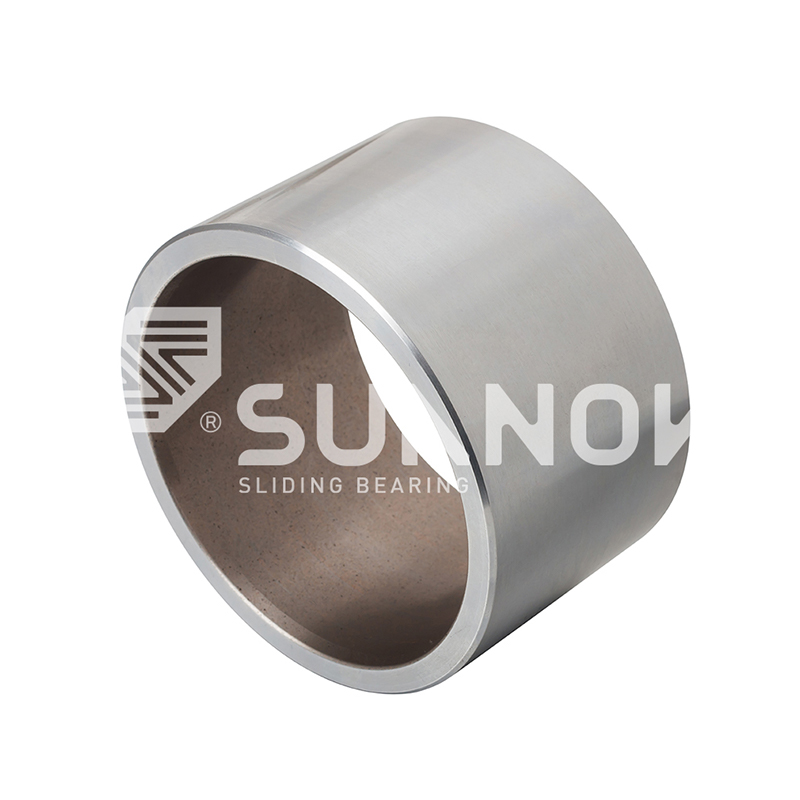 Wholesale 200#B Oil-Retaining Bimetallic Bearing (Steel Backing+Copper Sinter WiZhejiang Shuangnuo Bearing Technology Co., Ltd. Is China 200#B Oil-Retaining Bimetallic Bearing (Steel Backing+Copper Sinter With Solid L...View Product →
The key difference from cast bronze is porosity. A sintered layer acts as a lubricant reservoir; cast bronze has no useful porosity, so lubricant must be supplied by plugs. The trade-off is that sintered layers are thin and less tolerant of edge loading and contamination than a solid cast wall.
Wrapped bushings: a lighter alternative
For light and medium loads, wrapped bushings offer a fast and economical route. A bronze strip with pre-pressed graphite plugs is rolled into a cylindrical shape and formed to the finished diameter. Wall thickness is small, typically 1 to 2.5 mm, and the bushing depends on the housing bore for support. Wrapped bushings press in easily and cost less than cast alternatives, but they cannot match cast designs in shock resistance or load capacity. They are best chosen when weight, cost, and assembly speed outweigh extreme duty requirements.
Quality control across the production line
What separates a reliable bushing from a premature failure is inspection discipline at each stage. In our foundry, every heat is analyzed with a spectrometer in three steps: before pouring, during the pour, and on the finished casting. That sequence catches off-grade tin bronze or brass before it becomes a scored shaft in the field.
Buyers should ask for the same evidence they would demand from any critical component: chemical composition reports, mechanical property values, and dimensional records. If the supplier can also provide test results from an independent laboratory, so much the better. For non-standard parts, dimensional control matters even more, because the fit is being designed together with the part. We cover the practical side of this in our guide to custom bronze bushings with non-standard dimensions and tolerances.
Comparing the four manufacturing routes
The table below is a first-pass comparison. Use it to shortlist process options before talking to a manufacturer.
| Process | Material structure | Typical bushing form | Load capacity | Best suited to |
|---|---|---|---|---|
| Centrifugal casting | Dense, fine-grained outer shell | Thick-wall cylindrical and flanged bushings | High | Heavy machinery, presses, shock loads |
| Continuous casting | Uniform fine grain, very low porosity | Bar stock machined into custom sizes | High | Long production runs, consistent quality |
| Metal mold casting | Adequate density, less uniform grain | Simple standard geometries | Medium-high | Cost-sensitive standard parts |
| Sintered bimetallic | Porous bronze layer bonded to steel | Thin-wall sleeve and flange bushings | Medium-high | Hydraulics, gear pumps, automotive |
| Wrapped bronze | Rolled strip with pressed graphite plugs | Thin-wall sleeve and flange forms | Medium | Light to medium loads, low-cost assemblies |
Cast and sintered designs also age differently. Sintered layers wear smoothly but are thin; cast bronze lasts longer under abrasive and high edge-load conditions. Detailed data on this trade-off is available in our comparison of sintered versus cast bronze bushing longevity.
What to look for in a bushing manufacturer
Start from the conclusion: choose a manufacturer that controls the material from the melt to the finished bore. A factory that melts its own bronze, casts it, and then machines it on the same site can shorten lead times and eliminate the risk of buying blanks of unknown quality from outside sources.
An integrated supplier should be able to show you the following:
- In-house melting and casting capability, ideally covering centrifugal, continuous, and metal mold processes.
- CNC turning, boring, and milling for finished dimensions and surface finish.
- Spectrometer verification of chemistry on every heat.
- Access to independent laboratory test reports for composition and mechanical properties.
- Documented experience with non-standard sizes, tolerances, and custom plug patterns.
That level of control is what allows a JDB solid-lubricating series part to be cast from a custom alloy and machined to tight tolerances within the same production week. It is also the difference between a bushing that fits on arrival and one that requires rework on your assembly line.
A self-lubricating bronze bushing's real specification is written by its manufacturing process. Define the load, speed, shaft hardness, and available space first. Next, match the process. Then ask the supplier for the same evidence you would demand from any critical component — chemistry, mechanics, and dimensions. That sequence will get you a bushing that outlasts the machine it protects.
Recommended NEWS:
Self-Lubricating Bronze Bushings: Benefits, Cost Savings, and Selection Guide
Self-Lubricating Copper Alloy Bearings: The Future of Solid-Lubricating Bearings and JDB-600 Casting Bronze Bearings
Self-Lubricating Copper Alloy Bearings: A Comparative Analysis with JDB-600 Casting Bronze and Oil-Retaining Bimetallic Bearings
Understanding Self‑Lubricating Bronze Bushings: A Comprehensive Guide
Beyond Self-Lubrication: Defining the Performance Limits of Lubricating Bronze Bushings
Common Misconceptions about Self-Lubricating Bronze Bearings and Purchasing Recommendations
Recommended LINS:
Contact Us //
Have Questions? Get in Touch!

Zhejiang Shuangnuo Bearing Technology Co., Ltd. specializes in the production of various self-lubricating copper alloy bushing bearings products
Quick Links
Related Products
Contact
- Add: No. 69, Tingyao East Road, Ganyao Town Industrial Zone, Jiashan County, Zhejiang Province, China
- Tel: +86-15957371801
- Fax: +86-0573-84038630
- Email: [email protected]
[email protected]
© 2024 Zhejiang Shuangnuo Bearing Technology Co., Ltd.
Custom Self-Lubricating Copper Alloy Bearings
