


 русский
 Español
-
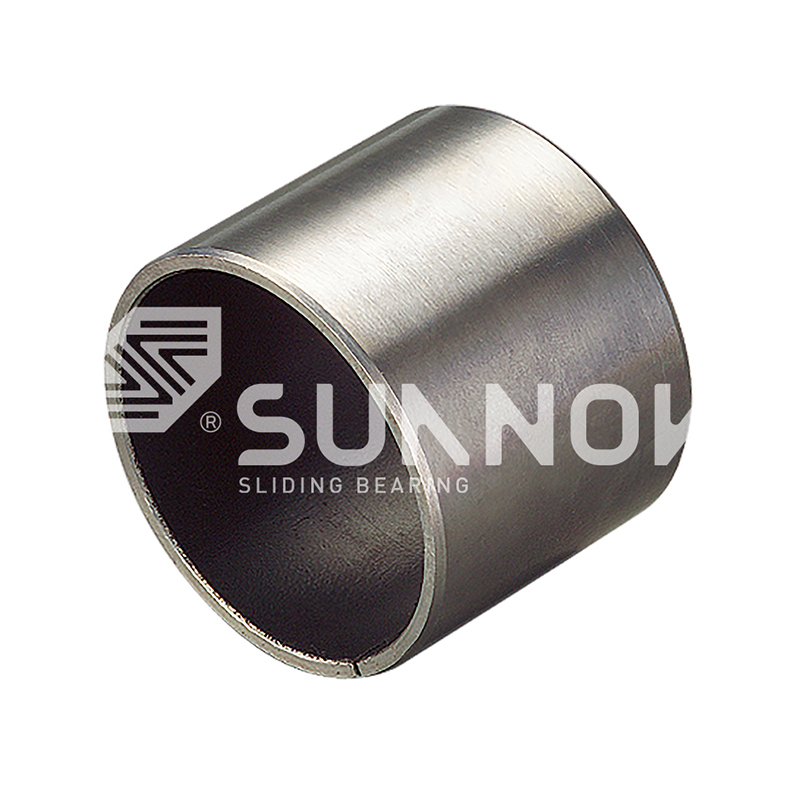 SF-1 Oilless Bearing Self Lubricating SF-1T Metal Gear Pump Bearing Bronze Bushings
 -
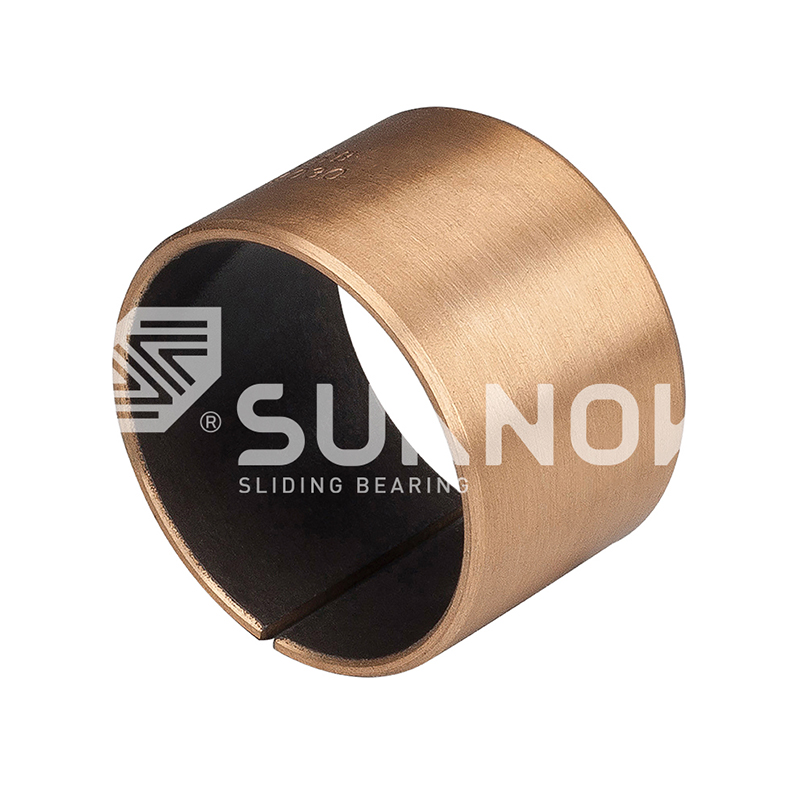
-
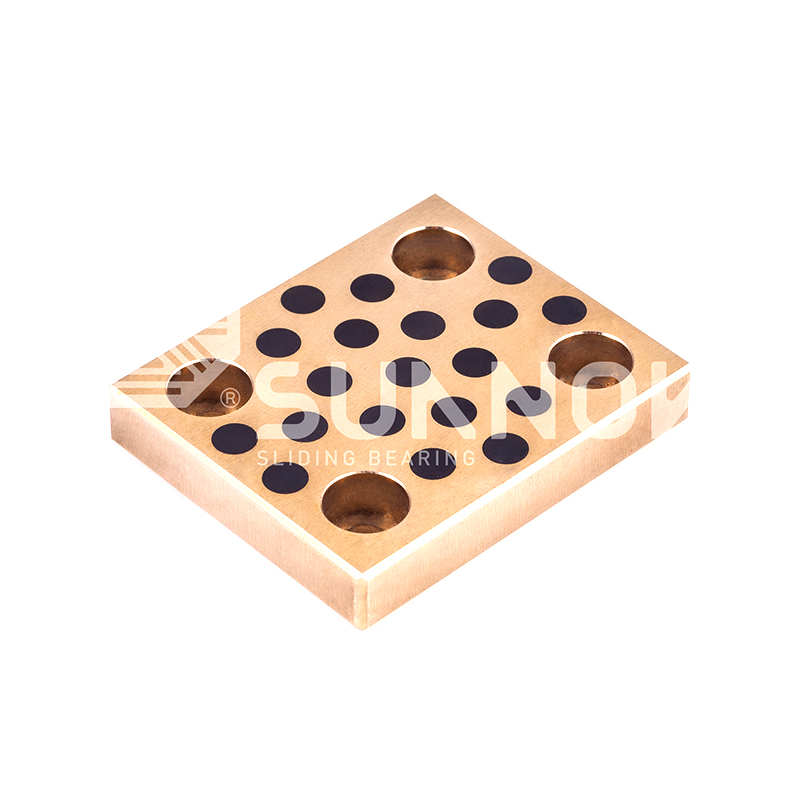 JDB Solid-lubricating Bearing Flangeless Graphite Bronze Wear Block, Square Self Lubricating Bronze Guide Plate JESW
 -
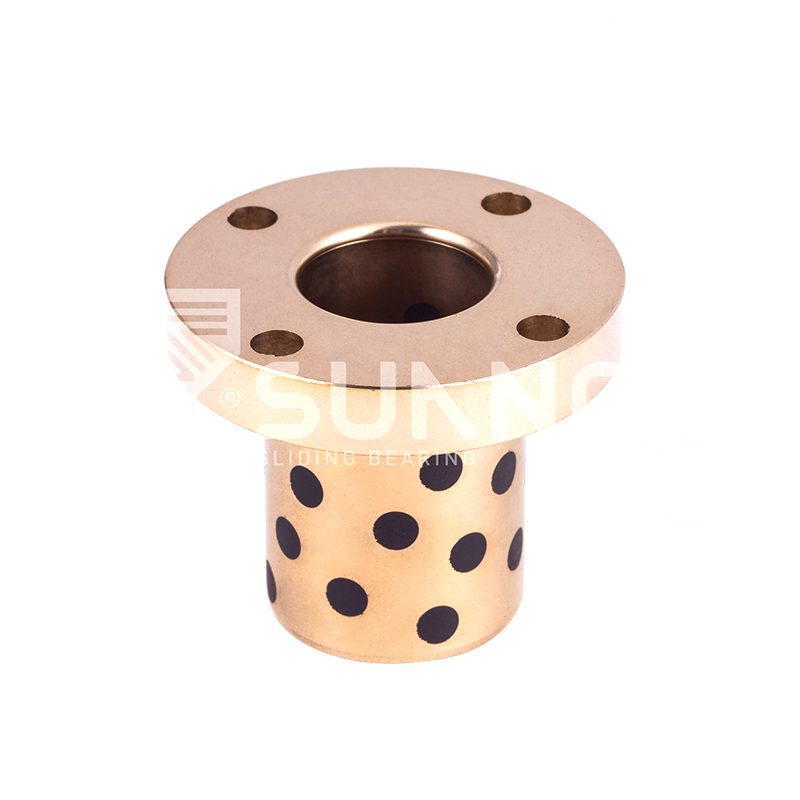 JDB Solid-lubricating Bearing JFB650 Metric Oil Free Self Lubricating Bronze Round Flanged Bearing
 -
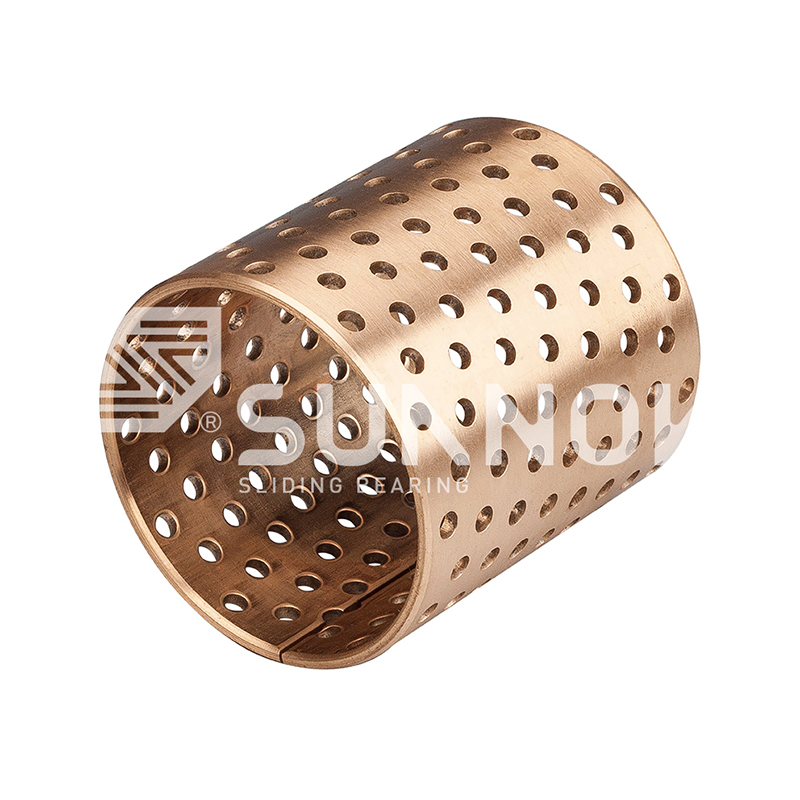 FB090 Bronze Wrapped Bearing FB092 Bronze Wrapped Bearing - Oilless Dry Sliding Bushing Self-Lubricating Bushing
 -
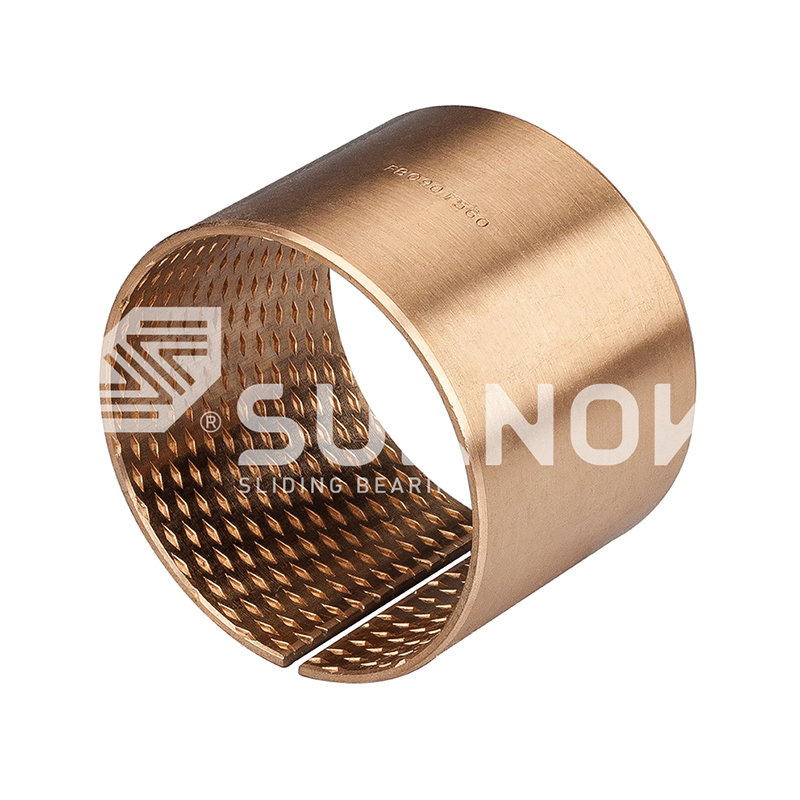 FB090 Bronze Wrapped Bearing FB090 Bronze Wrapped Bearing | Self-Lubricating Bushing & Sleeve
 -
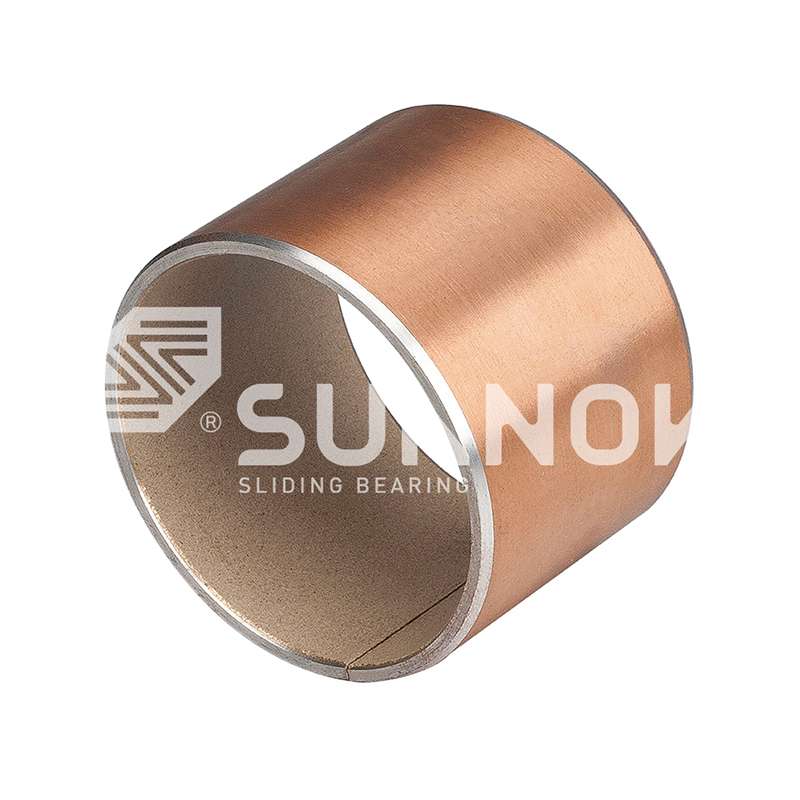 SF-1 Oilless Bearing SF-1P Reciprocating Motion Bronze Self-Lubricating Composite Bearing Bushing
 -
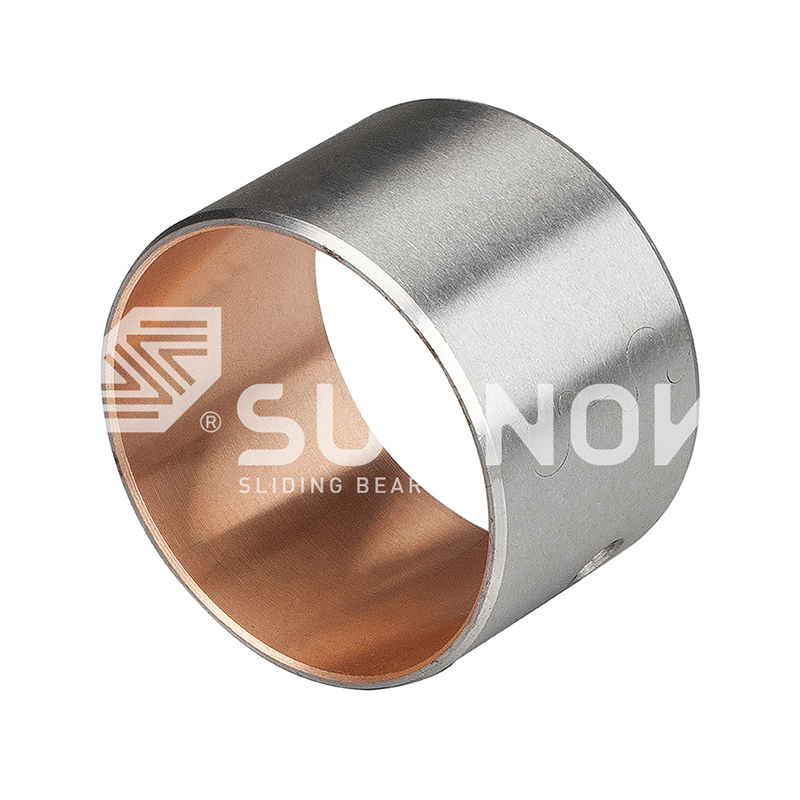 JF-800 Bi-metal Bearing JF-700 Bi-Metal Bearing Heavy Duty Self-Lubricating Sleeve Bushings
What Materials Are Used in Self-Lubricating Bronze Bushings? | Shuangnuo
Industry News-Content
A maintenance engineer replacing a worn bushing on a stamping die usually asks one question first: what is this bushing actually made of? It is not a casual question. The answer determines whether the replacement will survive the same load, whether it can run without external oil, and whether the shaft will wear out prematurely. Materials are the entire story of a self-lubricating bronze bushing.
Every self-lubricating bronze bushing is defined by three material decisions: the base bronze alloy, the solid lubricant embedded in it, and the manufacturing process that combines the two. Change any one of these and you change the bearing's load capacity, operating temperature range, wear rate, and cost.
The Bronze Alloys That Carry the Load
Bronze alloys provide the strength, hardness, and thermal conductivity that allow the bushing to support load without deforming. Self-lubricating bushings are normally built on one of three alloy families: tin bronze, aluminum bronze, or brass.
Tin Bronze
Tin bronze, typically CuSn8 or CuSn10, is the most common base for self-lubricating bushings. It offers a balanced combination of wear resistance, corrosion resistance, and conformability, meaning it can tolerate minor shaft misalignment and absorb small hard particles. Grades with 8 to 12 percent tin maintain good ductility while resisting surface fatigue. Tin bronze bushings run reliably against hardened steel shafts and are the default choice for moderate to high loads in general machinery.
Aluminum Bronze
Aluminum bronze, such as CuAl10Fe3 or CuAl10Fe5Ni5, is harder and stronger than tin bronze. The addition of aluminum and iron raises yield strength and gives the alloy excellent resistance to abrasive wear and shock loads. When a bushing must absorb impact loading in construction machinery, excavator attachments, or heavy presses, aluminum bronze is usually the correct starting point. It works best with hardened and ground shafts, which provide a smooth counter-surface for the harder alloy.
Brass
Brass, a copper-zinc alloy, is the most cost-effective of the three families. It machines well, resists atmospheric corrosion, and delivers steady performance under medium and light loads. Brass-bodied bushings with graphite plugs are widely used in mold guide posts, automation equipment, and agricultural machinery where loads are known and controlled. The JDB650 solid-lubricating brass bushing is a typical example, combining a brass substrate with evenly spaced solid lubricant plugs. For a deeper look at how brass stacks up against tin bronze in bushing service, our alloy grade comparison between tin bronze and brass explains the trade-offs in wear rate and cost.
 Wholesale JDB650 Self-Lubricating Brass Bushing Oilless Bearings Suppliers, CompZhejiang Shuangnuo Bearing Technology Co., Ltd. Is China JDB650 Self-Lubricating Brass Bushing Oilless Bearings Suppliers, Company, We Wh...View Product →
Solid Lubricants That Make the Bushing Self-Lubricating
The self-lubricating property comes from solid lubricants embedded in the bronze matrix. As the shaft rotates, the lubricant transfers a thin film onto the shaft surface, preventing metal-to-metal contact. Three solid lubricants dominate the industry: graphite, molybdenum disulfide, and PTFE.
Graphite
Graphite is the most widely used solid lubricant in bronze bushings. Its layered crystal structure shears easily and forms a stable transfer film on the shaft surface. Graphite maintains its lubricating action up to roughly 400 degrees Celsius in air and is unaffected by water, solvents, and most chemicals. That makes it the preferred choice for continuous dry running, high-temperature zones, and applications where oil cannot be used. Most JDB-type bushings, including wear plates and thrust washers, rely on graphite plugs for this reason.
Molybdenum Disulfide (MoS2)
MoS2 has a lower friction coefficient than graphite and performs especially well in vacuum and inert atmospheres. Its friction behavior is less sensitive to humidity, although it oxidizes near 350 degrees Celsius in air. Manufacturers often blend MoS2 with graphite in lubricant plugs; the combination lowers friction during start-up and extends the working life of the transfer film.
PTFE
PTFE offers the lowest friction coefficient of the three, typically 0.05 to 0.1 against steel, and eliminates stick-slip in slow or reciprocating motion. It is the lubricant of choice in SF1-type composite bushings, where a PTFE mixture is bonded over a sintered bronze layer. The trade-offs are a lower load capacity and an operating temperature limit of approximately 250 degrees Celsius. PTFE-based bearings are best suited for light to medium loads where smooth motion matters more than maximum strength.
How Manufacturing Changes the Material Story
The way the alloy and the solid lubricant are combined is as important as the materials themselves. Three manufacturing routes dominate the market: cast bushings with embedded plugs, sintered bimetal, and wrapped bronze.
Cast Bronze with Embedded Lubricant Plugs
Cast bushings begin with molten bronze, poured through centrifugal, continuous, or permanent-mold casting, then machined to final dimensions. Solid lubricant plugs are pressed into drilled holes in the bronze wall. The cast structure delivers the thickest wall and the highest structural strength, making this route ideal for heavy loads, shock loads, and large-diameter bearings. The JDB600 cast bronze bearing is built this way, with a tin or aluminum bronze body and graphite-based plugs for demanding industrial service.
 Wholesale JDB-600 Cast Self-Lubricating Bronze Guide Bushing Bearing Suppliers, Zhejiang Shuangnuo Bearing Technology Co., Ltd. Is China JDB-600 Cast Self-Lubricating Bronze Guide Bushing Bearing Suppliers, Company, W...View Product →
Sintered Bimetal
Sintered bimetal bushings use a steel backing strip coated with a layer of copper alloy powder, sintered at high temperature to create a porous bronze layer. The pores are then impregnated with oil or solid lubricants. Because the lubricant is distributed throughout the entire layer rather than only at discrete plug positions, sintered bushings maintain low friction even if the surface film is interrupted. The steel backing adds strength and allows the bushing to be press-fitted into a housing without deformation. If you are choosing between the two, our review of sintered versus cast bronze bushings compares their long-term wear behavior in metric sizes.
Wrapped Bronze Construction
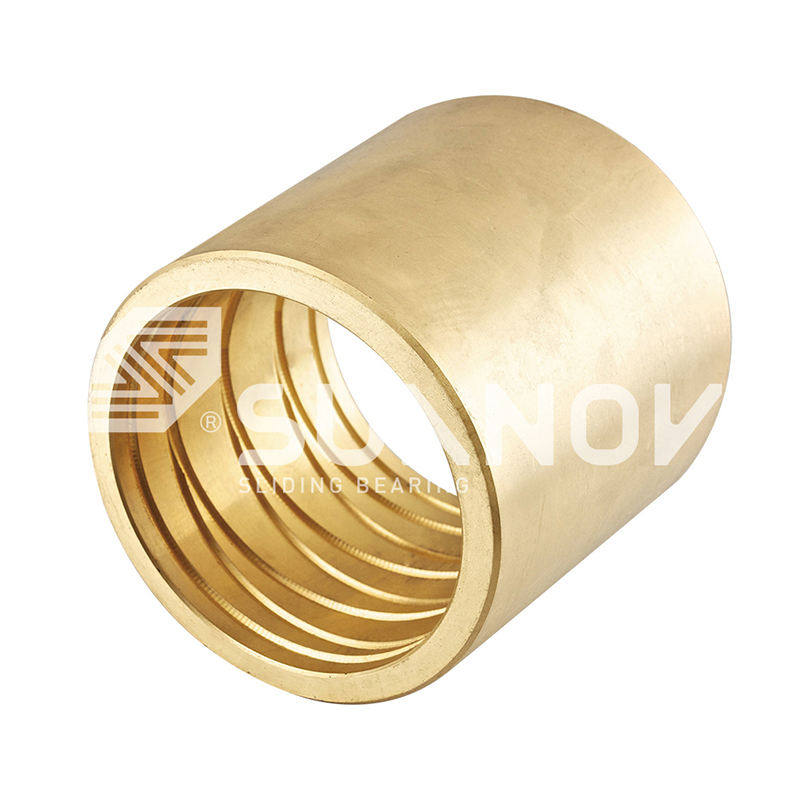
Wrapped bushings are formed by rolling a bronze strip, usually bonded to a steel-backed shell, into a cylinder. The FB090 series is a classic example: the bronze layer forms the sliding surface, and the thin wall keeps the bearing compact and light while the steel back provides dimensional stability. This construction suits high-volume applications such as gearboxes, pumps, and linkage pivots. The FB090 bronze wrapped bearing is available in both plain and flange configurations for these compact installation spaces.
 Wholesale FB090 Bronze Wrapped Bearing | Self-Lubricating Bushing & Sleeve SupplZhejiang Shuangnuo Bearing Technology Co., Ltd. Is China FB090 Bronze Wrapped Bearing | Self-Lubricating Bushing & Sleeve Suppliers, Comp...View Product →
Matching Materials to Operating Conditions
Choosing the right bushing is not about finding a single best material; it is about matching the alloy, lubricant, and construction to the actual duty cycle.
| Alloy family | Typical grades | Load capacity | Best suited for |
|---|---|---|---|
| Tin bronze | CuSn8, CuSn10, CuSn12 | High | General machinery, moderate shaft hardness, corrosion-resistant service |
| Aluminum bronze | CuAl10Fe3, CuAl10Fe5Ni5 | Very high | Heavy impact loads, abrasive environments, hardened shafts |
| Brass | CuZn alloys (H62, H65) | Medium | Mold guides, automation, cost-sensitive steady-load applications |
| Lead-free bronze | CuSn-based without lead | High | Equipment requiring lead-free or RoHS-compliant specifications |
After shortlisting an alloy, verify the PV limit, which defines the combination of pressure and sliding velocity that the bushing can sustain. A bushing with an excellent static load capacity may still fail if the sliding speed generates too much frictional heat. Our guide to self-lubricating bronze bushing friction and wear walks through how PV values are calculated and applied in practical selection.
What to Verify Before You Specify a Material
Material composition is not the only thing that matters: material traceability matters just as much. A bushing machined from the wrong alloy will fail early no matter how well the lubricant performs. When purchasing self-lubricating bronze bushings, confirm the following:
- Spectrochemical analysis confirming the alloy composition against the stated grade.
- Mechanical test reports covering hardness, yield strength, and elongation.
- Dimensional inspection records for the finished bore and flange tolerances.
A manufacturer that casts its own alloys, rather than buying ready-made bar stock, can control composition from the melt onward. Zhejiang Shuangnuo Bearing Technology casts its copper alloys in-house, monitors the melt at every stage, and verifies composition with spectrometers before, during, and after melting. Third-party testing is regularly used to confirm material properties, and test reports are available to customers on request.
The materials in a self-lubricating bronze bushing form a system: the bronze alloy carries the load, the solid lubricant controls friction, and the manufacturing process balances strength with lubricant delivery. Select all three with the application in mind, and a properly specified bushing can run for years without a drop of oil. Start with the alloy, confirm the lubricant, verify the process, and insist on evidence that what was specified is what was delivered.
Recommended NEWS:
Self-Lubricating Bronze Bushings: Benefits, Cost Savings, and Selection Guide
Self-Lubricating Copper Alloy Bearings: A Comparative Analysis with JDB-600 Casting Bronze and Oil-Retaining Bimetallic Bearings
Self-Lubricating Copper Alloy Bearings: The Future of Solid-Lubricating Bearings and JDB-600 Casting Bronze Bearings
Bronze Wrapped Bushings for Heavy Machinery: Durable Solutions for Demanding Applications
Why Solid-Lubricating Bronze Bearings Are the Future of Low-Maintenance Machinery
Zhejiang Shuangnuo Bearing Technology Co., Ltd. to Showcase Advanced Self-Lubricating Bearing Solutions at Kunshan Exhibition 2025
Recommended LINS:
Contact Us //
Have Questions? Get in Touch!

Zhejiang Shuangnuo Bearing Technology Co., Ltd. specializes in the production of various self-lubricating copper alloy bushing bearings products
Quick Links
Related Products
Contact
- Add: No. 69, Tingyao East Road, Ganyao Town Industrial Zone, Jiashan County, Zhejiang Province, China
- Tel: +86-15957371801
- Fax: +86-0573-84038630
- Email: [email protected]
[email protected]
© 2024 Zhejiang Shuangnuo Bearing Technology Co., Ltd.
Custom Self-Lubricating Copper Alloy Bearings
