


 русский
 Español
-
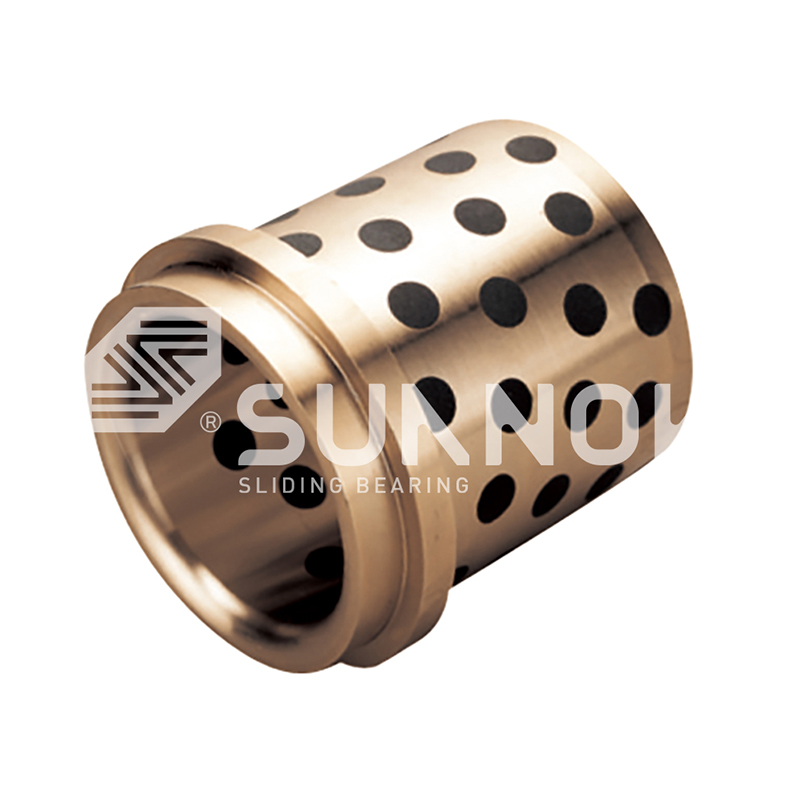 JDB Solid-lubricating Bearing Dual Flange Embedded Graphite Bronze Sleeve Bearing, High Load Maintenance Free Brass Bushing GB61 NAAMS
 -
-
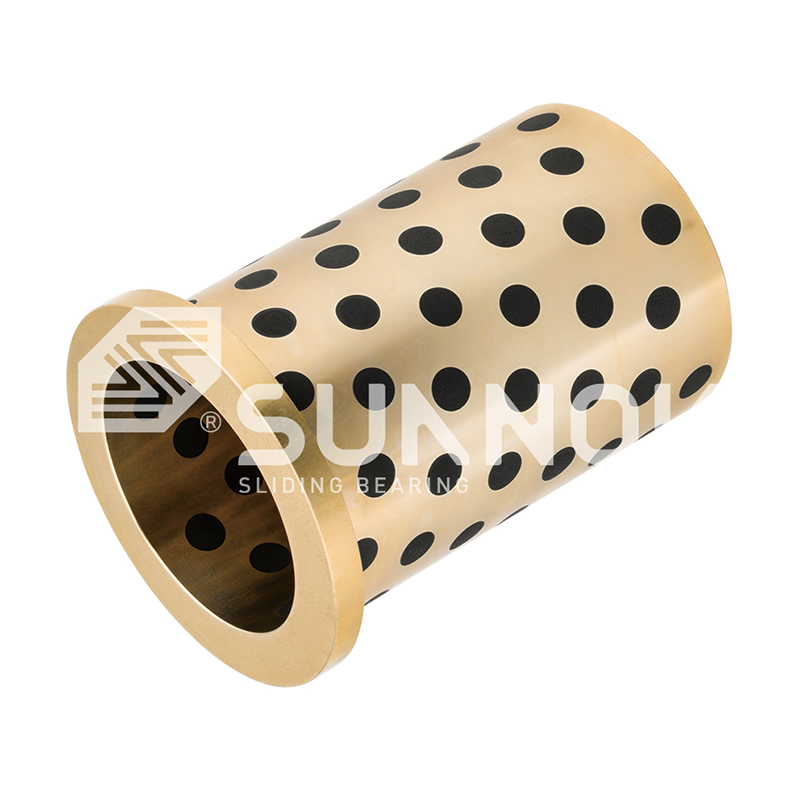 JDB Solid-lubricating Bearing One-Flange Self-lubricating Bronze Bushing Graphite Plugged Sliding Sleeve Bearing JEFW
 -
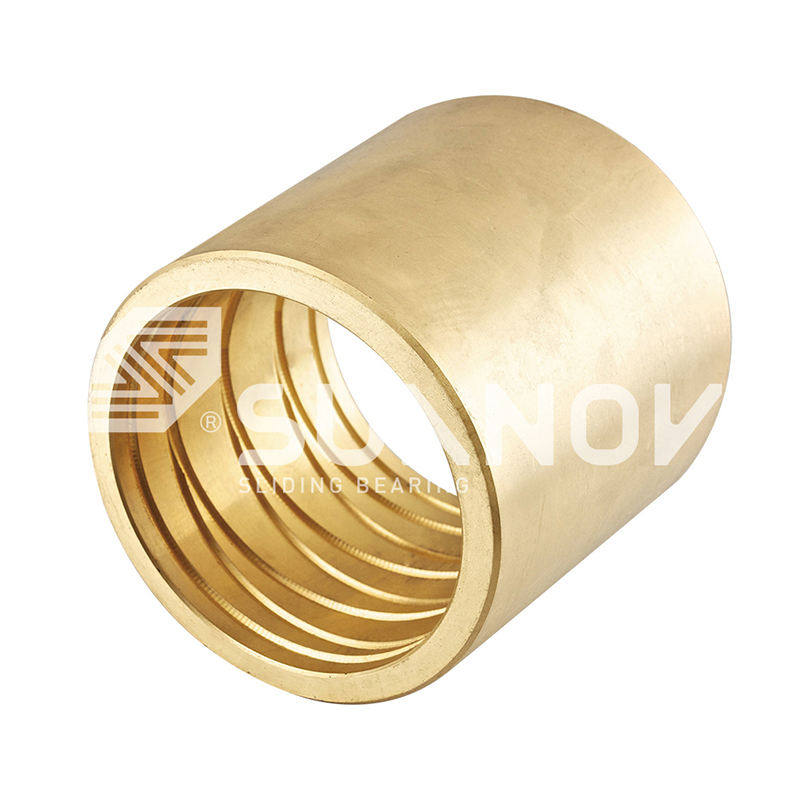 JDB-600 Casting Bronze Bearing JDB-600 Bronze Bushing with Internal Spiral Oil Grooves, Tin Bronze Oil Groove Bushing
 -
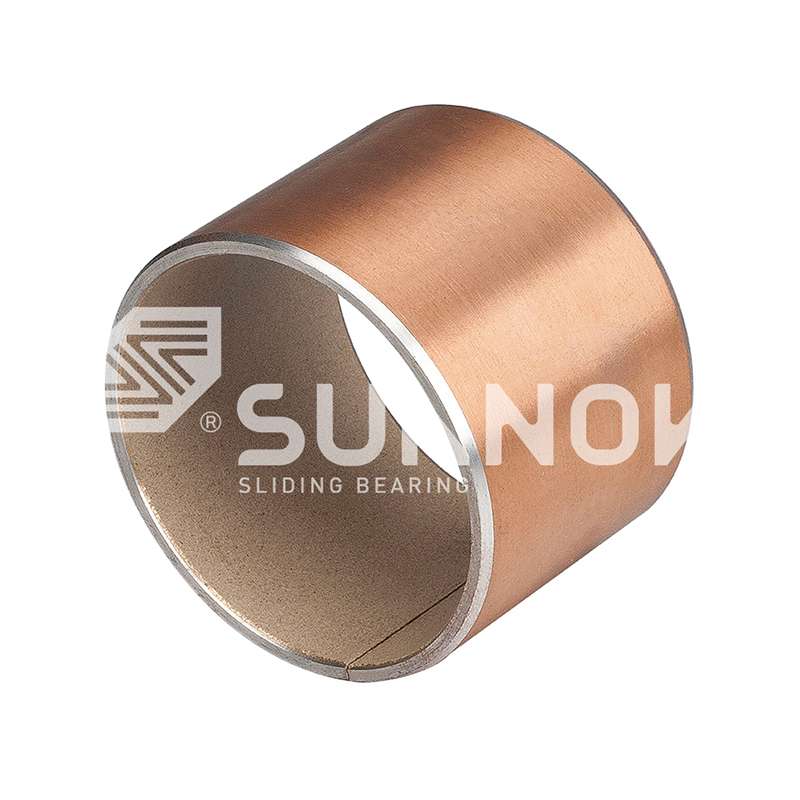 SF-1 Oilless Bearing SF-1P Reciprocating Motion Bronze Self-Lubricating Composite Bearing Bushing
 -
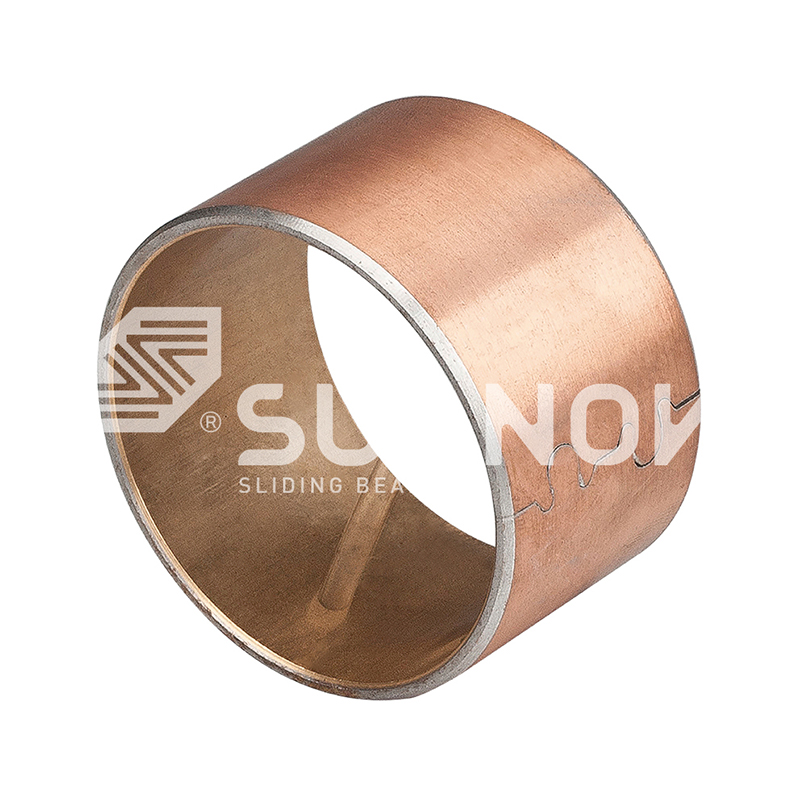 JF-800 Bi-metal Bearing JF-720 Tin Bi-Metal Bearing Bushings Sleeves For Low Friction and Wear-Resistant Applications
 -
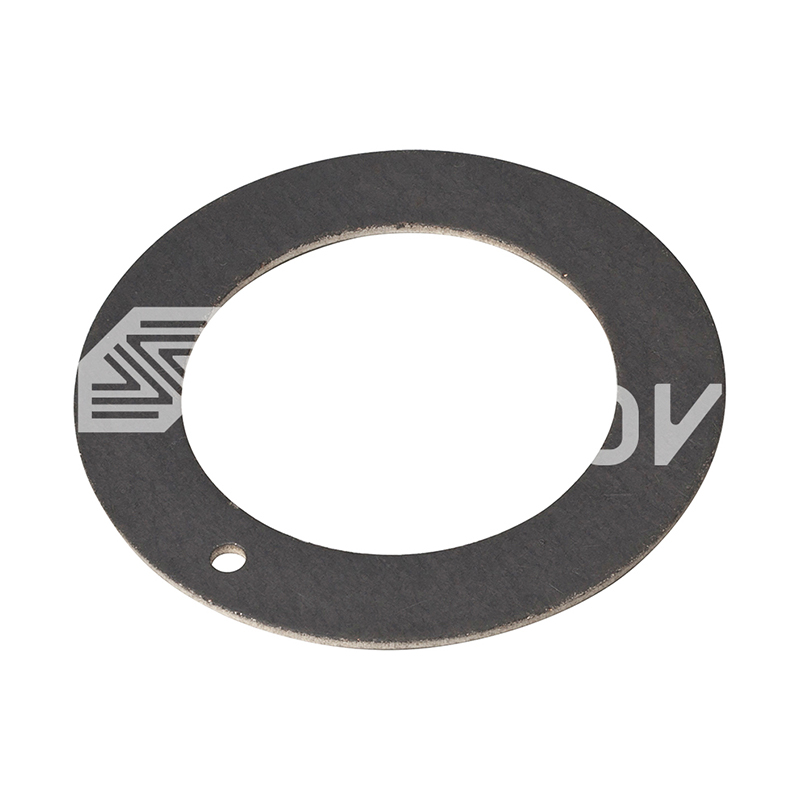 SF-1 Oilless Bearing SF-1 WC Standard Metric Thrust Washer | Low Friction, High Load Bearing
 -
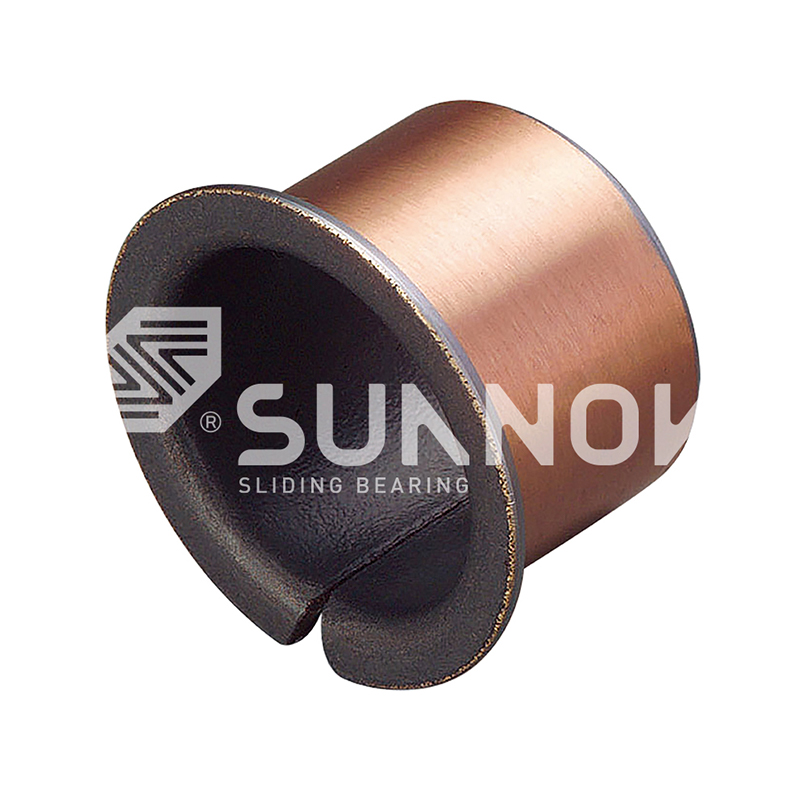
Factors Affecting Bronze Bushing Service Life: Material, Load, and Lubrication
Industry News-Content
- 1 Alloy Grade and Material Structure Set the Starting Point
- 2 Operating Load, Surface Speed, and the PV Limit
- 3 Lubrication Condition and the Transfer Film
- 4 Shaft Hardness and Surface Finish
- 5 Operating Temperature and Environmental Factors
- 6 Fit, Tolerance, and Installation Quality
- 7 Maintenance Planning and Replacement Timing
- 8 Summary of the Key Factors and Control Actions
A bronze bushing that fails after six weeks and one from the same production batch that keeps running for six years can be identical in alloy and dimension. What differs is everything around the bearing: the load it carries, the speed it slides at, the condition of the shaft, the quality of lubrication, the temperature, the contamination level, and the fit achieved during installation. Bronze bushing service life is not a fixed catalogue number; it is the outcome of those interacting factors.
The practical conclusion for engineers and procurement professionals is that premature bushing wear is largely preventable when the factors are reviewed at the specification stage. This article explains each key factor, the mechanism that connects it to wear, and the specific parameters worth verifying before you order.
Alloy Grade and Material Structure Set the Starting Point
The alloy family determines the bushing's hardness, strength, and wear resistance. Three copper alloy families cover most industrial bronze bushing duties, and each behaves differently in service.
| Alloy family | Load capacity | Wear resistance | Typical applications |
|---|---|---|---|
| Tin bronze | Medium–high | Good | General machinery, guides, gearboxes, pumps |
| Aluminum bronze | High | Very good | Heavy equipment, shock loads, mining machinery |
| Brass | Medium | Moderate | Corrosion-resistant parts, low-speed sliding |
Tin bronze is the conventional choice because it combines good embeddability, which means it can absorb small contamination particles without scoring the shaft, with reliable fatigue strength under cyclic load. Aluminum bronze offers higher hardness and load capacity, which suits impact-loaded equipment, but it demands a harder and better finished mating shaft. Brass is economical and easy to machine; its limits appear under continuous heavy load, where its lower yield strength allows the bore to deform and lose support for the shaft.
The casting route matters as much as the nominal grade. Centrifugal and continuous casting produce dense, pore-free structures, while ordinary sand casting can leave internal porosity that shortens fatigue life. Because the same nominal alloy can behave very differently depending on how it was cast, verifying the cast structure is a reasonable procurement requirement. For heavy-duty applications, the denser microstructure of a centrifugally cast bushing provides higher fatigue strength and better resistance to edge loading. When the application also makes re-lubrication difficult, a JDB600 casting bronze bearing, which embeds solid lubricant in a cast bronze matrix, provides both load capacity and a safety margin against lubrication loss.
 Wholesale JDB-600 Cast Self-Lubricating Bronze Guide Bushing Bearing Suppliers, Zhejiang Shuangnuo Bearing Technology Co., Ltd. Is China JDB-600 Cast Self-Lubricating Bronze Guide Bushing Bearing Suppliers, Company, W...View Product →
Operating Load, Surface Speed, and the PV Limit
The most useful design check for a bronze bushing is the PV value, the product of bearing pressure (P) in N/mm² and surface sliding speed (V) in m/s. Every bushing material carries a rated maximum PV for continuous operation. Below that limit, wear is mild and predictable. Above it, interface temperature rises sharply, the lubricant film breaks down, and the wear rate becomes nonlinear: a small increase in load can cause a large reduction in service life.
Why the PV limit matters
The PV limit is a thermal limit, not a cleanliness rating. Frictional heat in a sliding contact is proportional to P multiplied by V, so a high-load, low-speed application and a low-load, high-speed application at the same PV generate the same heat. Exceeding the limit oxidizes the solid lubricant, softens the bronze matrix, and starts an accelerating wear cycle.
Two specification mistakes that shorten life
- Using an average load instead of the peak load. Real operation includes shocks, starting torques, and peak forces; those peaks, not the average, generate the worst-case PV and should always be the design input.
- Ignoring misalignment. Misalignment concentrates pressure onto a small arc of the bushing and raises the local PV far above the calculated value, producing edge wear before the rest of the bushing shows use.
A conservative selection keeps operating PV at or below 60 percent of the catalogue rating, particularly for self-lubricating bushings, where no external oil film is available to buffer short overloads. More detail on wear-rate behavior and limit values is covered in our analysis of oilless bronze bushing PV limits and wear rates.
Lubrication Condition and the Transfer Film
The lubrication state is the strongest single influence on service life. With oil or grease lubrication, a hydrodynamic film separates the bearing surfaces and wear is almost negligible; the practical risks are oil contamination, interrupted supply, and restart after a long standstill. With self-lubricating bronze bushings, the mechanism is different.
How the transfer film works
Solid lubricant embedded in the bearing surface is gradually transferred onto the shaft, where it forms a thin protective film. This film carries the load and prevents metal-to-metal contact. Wear begins when the film is incomplete, not simply when the solid lubricant is consumed.
When the film fails
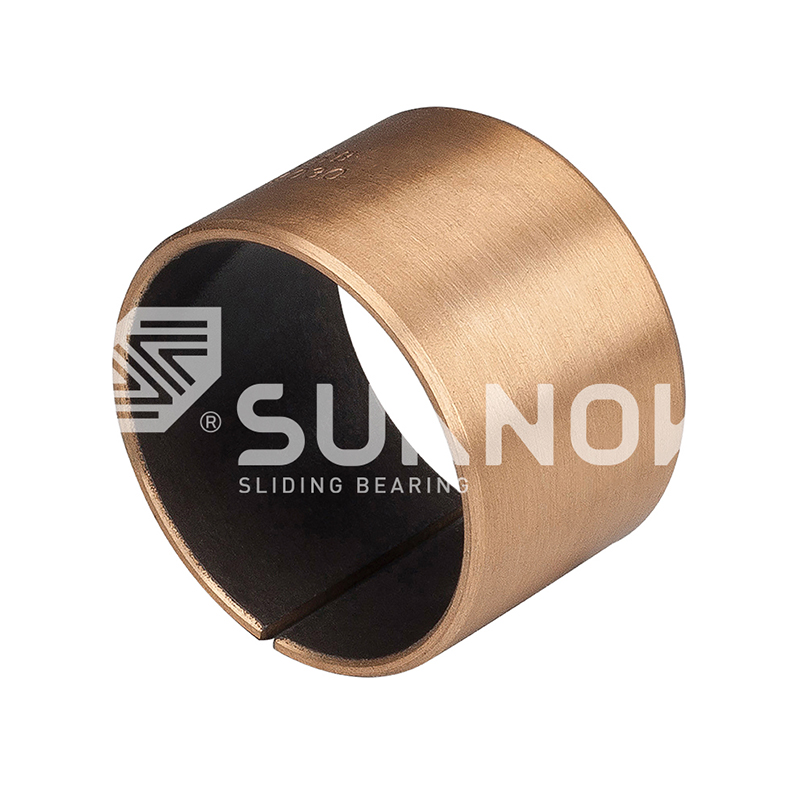
A transfer film forms poorly in several common situations: very smooth or very soft shafts, intermittent operation with long idle periods, contact with washing fluids, and heavy dust ingress. Once bare metal touches bare metal, the wear rate multiplies quickly. The wrapped construction of an FB090 bronze wrapped bearing delivers a uniform solid-lubricant supply and is a practical choice when shaft access for re-lubrication is limited.
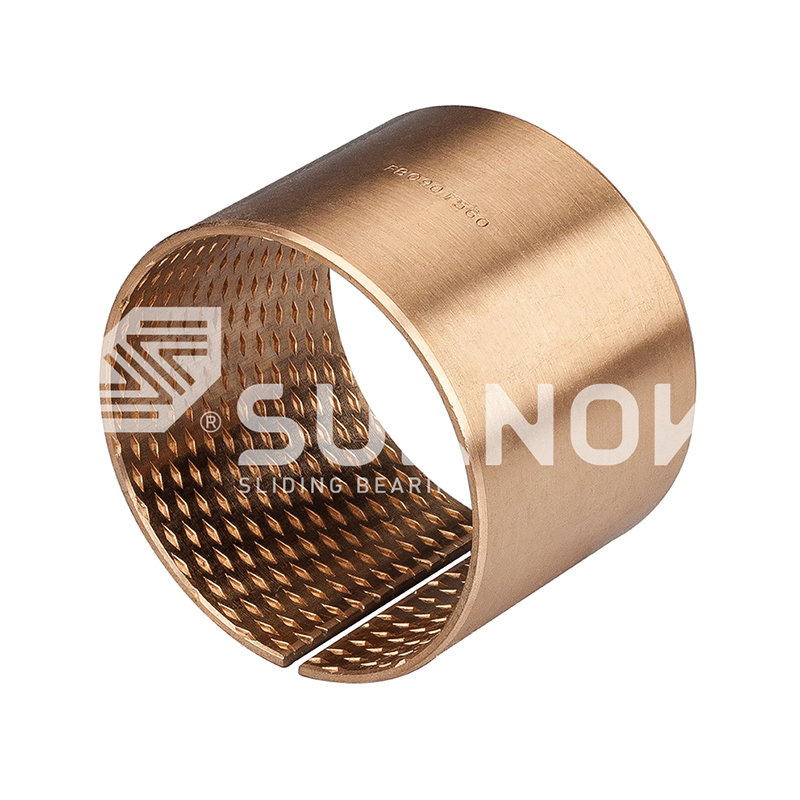 Wholesale FB090 Bronze Wrapped Bearing | Self-Lubricating Bushing & Sleeve SupplZhejiang Shuangnuo Bearing Technology Co., Ltd. Is China FB090 Bronze Wrapped Bearing | Self-Lubricating Bushing & Sleeve Suppliers, Comp...View Product →
Shaft Hardness and Surface Finish
For a bronze bushing to reach its design life, the mating shaft must be hard enough and smooth enough. Most manufacturers recommend a shaft hardness of 45 to 55 HRC for heavily loaded applications and a surface finish between Ra 0.4 and 0.8 µm.
A softer shaft work-hardens, becomes rough, and behaves like abrasive paper on the bushing bore. A rougher finish cuts the transfer film and accelerates two-body abrasion. On the other hand, a polish below Ra 0.2 µm can prevent the transfer film from adhering, so the recommended finish range should be respected rather than exceeded.
Alignment belongs to the same discussion. Angular misalignment causes edge loading at one end of the bushing, which concentrates pressure, prevents a uniform transfer film, and produces a tapered wear pattern in the bore. Measuring shaft runout and housing alignment during installation costs little compared with the cost of repeated bushing replacement.
Operating Temperature and Environmental Factors
Temperature effects
Temperature shortens service life through several mechanisms. Sustained interface heat softens tin bronze and reduces its yield strength, and it accelerates oxidation of the lubricant. For embedded solid-lubricant systems, temperatures above roughly 150°C begin to degrade polymer binders used in the lubricant compound. Thermal expansion of the bushing relative to its housing also changes the effective interference fit.
Contamination and moisture
Contamination is the environmental factor that shortens bushing life most visibly. Abrasive particles from outside, wear debris from the system itself, and moisture that washes away the transfer film all increase wear. Dusty sites, outdoor machinery, and equipment near grinding or casting operations should use shielded bushings, keep cooperating oil systems clean, and protect exposed shaft areas. Our guide to self-lubricating bearings in extreme environments discusses these conditions in more depth.
Fit, Tolerance, and Installation Quality
A bronze bushing must be installed with the correct interference fit. Too loose a fit allows the bushing to rotate in its housing, producing fretting wear on the outside diameter and damaging both the bushing and the housing bore. Too tight a fit removes the clearance needed after pressing, and the bore can close down onto the shaft, causing immediate seizure. Typical press-fit interference for bronze bushings in steel housings ranges from 0.02 to 0.05 mm for medium diameters, but the correct value depends on the alloy, wall thickness, and housing material.
Installation quality also includes bore alignment. Chamfering the housing edge, pressing rather than hammering, and checking the bore with a plug gauge after installation are small steps that prevent damage which is later misdiagnosed as a material problem.
Maintenance Planning and Replacement Timing
Even a correctly selected bushing eventually wears, because some wear is inevitable. The service life target should therefore be tied to an inspection plan. Practical indicators include:
- Measuring the bushing bore at regular intervals to track wear against the maximum allowable clearance.
- Checking the shaft surface for grooves, scoring, or discoloration.
- Watching for unusually high noise or vibration in the assembly.
Replacement should be scheduled from measured wear relative to the maximum allowable clearance, not from the calendar alone. Our guide on when to replace self-lubricating bronze bearings explains the wear limits and inspection procedure in practice.
For applications where inspection access is difficult and unplanned downtime is expensive, choosing a bushing with a higher lubricant volume fraction, such as the JDB650 solid-lubricating brass bushing, extends the maintenance-free interval because the larger lubricant reservoir sustains the transfer film for a longer period.
 Wholesale JDB650 Self-Lubricating Brass Bushing Oilless Bearings Suppliers, CompZhejiang Shuangnuo Bearing Technology Co., Ltd. Is China JDB650 Self-Lubricating Brass Bushing Oilless Bearings Suppliers, Company, We Wh...View Product →
Summary of the Key Factors and Control Actions
The table below summarizes each factor, the failure mode it produces when out of range, and the control action that prevents early failure.
| Factor | Failure mode if out of range | Control action |
|---|---|---|
| Alloy grade | Fatigue cracking, deformation, adhesive wear | Verify alloy grade and cast structure |
| PV value | Overheating, rapid nonlinear wear | Keep operating PV below 60% of rating |
| Lubrication | Metal-to-metal contact, high wear | Maintain transfer film or oil film |
| Shaft hardness and finish | Abrasive wear, poor film adhesion | 45–55 HRC, Ra 0.4–0.8 µm |
| Operating temperature | Softening, lubricant degradation | Confirm thermal limits of lubricant |
| Fit and alignment | Rotation, seizure, edge loading | Use correct interference and alignment |
Bronze bushing service life is a system property, not a material property. The alloy and the casting process set the starting point, but load, speed, lubrication, shaft condition, environment, and installation quality decide where that starting point ends up. Specifying the correct grade is only half the task; reviewing the six factors above is what actually prevents early failure and lowers the cost per operating hour.
Recommended NEWS:
Bronze Wrapped Bushings for Heavy Machinery: Durable Solutions for Demanding Applications
Bronze Bushing Bearing FB090: Key Features & Benefits for Industrial Applications
Self-Lubricating Bronze Bushings: Benefits, Cost Savings, and Selection Guide
The Power of Bronze: Enhancing Durability and Reliability with Solid Bronze Bushings
A Detailed Explanation of the Friction and Wear Resistance of Self-Lubricating Bronze Bearings
Solid-Lubricating Bronze Bearings: Critical Applications and Technical Analysis
Recommended LINS:
Contact Us //
Have Questions? Get in Touch!

Zhejiang Shuangnuo Bearing Technology Co., Ltd. specializes in the production of various self-lubricating copper alloy bushing bearings products
Quick Links
Related Products
Contact
- Add: No. 69, Tingyao East Road, Ganyao Town Industrial Zone, Jiashan County, Zhejiang Province, China
- Tel: +86-15957371801
- Fax: +86-0573-84038630
- Email: [email protected]
[email protected]
© 2024 Zhejiang Shuangnuo Bearing Technology Co., Ltd.
Custom Self-Lubricating Copper Alloy Bearings
